

How to Choose a Sunscreen Without Falling for Safety Misinformation
At a glance
Sunscreen safety headlines often make one filter sound dangerous and another automatically safer. The evidence is more complicated. What matters first is whether a sunscreen provides dependable protection—and whether you can use enough of it consistently. Understanding the differences between UV-filter research, FDA decisions, and actual product performance helps you choose without buying into fear-based claims.
Sunscreen attracts an unusual amount of safety language: hormone disruption, blood absorption, nanoparticles, reef toxicity, foreign filters, contamination, and claims that one entire filter category is safer than another.
Some of those topics deserve serious research. The problem is what happens when a real scientific finding is stripped of dose, study design, regulatory context, or the difference between exposure and demonstrated harm.
That can leave you with a false buying choice: avoid “chemicals” or accept unnecessary risk.
A better sunscreen decision separates four questions:
- Does the product provide the protection you need?
- Is the exact version appropriate for the market where you are buying it?
- What does the available safety evidence actually show?
- Can you tolerate, afford, and use enough of the finished product?
This Briefing focuses primarily on the U.S. market. Other markets are included only where regulatory differences help explain why formulas and filter lists can differ.
In this Briefing
- Start with protection, not the filter debate
- Confirm the exact market version
- What changed in U.S. sunscreen regulation in 2026
- How to interpret sunscreen safety data
- Mineral vs. organic filters without the fear language
- When tinted sunscreen matters
- Choose for your real skin and routine
- Make sure you can apply enough
- Common sunscreen claims to question
- How to compare two sunscreens fairly
- What to do when sunscreen irritates your skin
Start with protection, not the filter debate
The product’s first job is protecting your skin from ultraviolet radiation.
The American Academy of Dermatology recommends choosing a sunscreen that offers:
- broad-spectrum protection;
- SPF 30 or higher;
- water resistance.
Broad spectrum means the sunscreen has met the applicable test for UVA as well as UVB protection. SPF primarily describes tested protection against sunburn-producing UVB radiation.[1]
Neither term tells you whether the sunscreen will feel good on your face, sting your eyes, match your skin tone, or layer well under the rest of your routine. Those questions matter after the protection requirements are met.
Do not confuse a sunscreen’s tested SPF with a capsule advertised as “oral sun protection.” BB’s Sun-Protection Supplements Briefing explains why changes in measured UV-related redness do not make an ingestible product a replacement for sunscreen.
SPF is not a wear-time number
SPF 50 does not last longer than SPF 30 simply because the number is higher.
During continued outdoor exposure, sunscreen needs to be reapplied at least every two hours and sooner according to the product’s water-resistance directions or after the layer has been removed.[1]
Higher SPF can provide higher tested sunburn protection when the product is applied correctly. It does not compensate for routinely using too little, missing areas, or refusing to reapply because the formula is unpleasant.
Water resistance is a specific claim
U.S. sunscreen labels identify either 40 or 80 minutes of water resistance when a product has passed the relevant testing. That is the tested interval for swimming or sweating—not permission to use one application for an entire pool or beach day.[2]
If you are exercising, swimming, sweating heavily, or spending a long day outdoors, choose the formula for that setting rather than assuming your everyday facial sunscreen has to do every job.
Confirm the exact market version
A sunscreen can share a brand name across several countries and still have a different UV-filter system or different regulatory status in each market.
That is not proof that one country’s product is safe and another country’s is dangerous. It reflects different regulatory frameworks.
United States
In the United States, sunscreen is an over-the-counter drug. UV filters are listed as active ingredients in the Drug Facts labeling.
Many U.S. sunscreens are marketed under the OTC monograph system rather than through an individually approved new drug application. FDA explains that a sunscreen conforming to the applicable monograph and other legal requirements can be marketed without product-specific premarket approval.[3]
So “not individually FDA approved” does not mean the same thing as “illegal sunscreen.” The relevant question is whether the U.S. product complies with the pathway under which it is marketed.
European Union
In the European Union, sunscreens are regulated as cosmetics. UV filters permitted for cosmetic products are specified in Annex VI of Regulation (EC) No 1223/2009, with conditions and maximum concentrations where applicable.[4]
Canada
Health Canada currently classifies sunscreens as non-prescription drugs or natural health products depending on the active ingredients. Authorized products carry a Drug Identification Number (DIN) or Natural Product Number (NPN).[5]
South Korea
South Korea treats UV-protective products as functional cosmetics. MFDS states that responsible sellers must obtain the required evaluation or submit the applicable report for safety and effectiveness, including SPF and UVA-protection data when required.[6]
Indonesia
Indonesia offers another useful example of why regulatory differences need context rather than fear language. BPOM Regulation No. 25 of 2025 took effect on October 3, 2025 and gave products that already held cosmetic notification numbers a 12-month transition period to comply with the updated ingredient requirements. BPOM set October 3, 2026 as the compliance deadline for those previously notified products.[7]
The updated sunscreen rules include market-specific conditions that differ from the United States. BPOM now restricts homosalate to facial cosmetics other than propellant sprays and sets different benzophenone-3, or oxybenzone, limits by product type: up to 6% in face, hand, and lip products and 2.2% in body products, with separate conditions for other uses.[7]
That does not mean a U.S. sunscreen containing a different permitted concentration is automatically unsafe. It means Indonesia and the United States use different regulatory frameworks, permitted-use conditions, and evidence-review processes. If a brand sells sunscreen in both markets, verify the ingredient list and active-filter concentrations for the exact version you are considering.
The practical rule is simple: compare the formula sold in the market where you are actually buying it.
Do not combine a Korean ingredient list, a European product page, and a U.S. retailer listing and assume you have verified one identical sunscreen.
What changed in U.S. sunscreen regulation in 2026?
On June 9, 2026, FDA announced that it was adding bemotrizinol, also called BEMT, to the U.S. OTC sunscreen monograph. The final administrative order was issued June 10, took effect August 9, 2026, and permits bemotrizinol at concentrations up to 6% under specified monograph conditions.[8]
FDA concluded that bemotrizinol is generally recognized as safe and effective under those specified conditions. It was the first new sunscreen active ingredient added to the U.S. OTC monograph since the late 1990s.[8]
Did FDA ban oxybenzone in September 2026?
No. On September 10, 2026, FDA announced final order OTC000008-1 removing only aminobenzoic acid (PABA) and trolamine salicylate as active ingredients from the OTC sunscreen monograph. FDA concluded that their risks as sunscreen active ingredients outweigh their benefits. The order is scheduled to take effect September 11, 2027, unless disputed under the statutory process. FDA says it is unaware of any currently marketed U.S. sunscreens containing either filter, so the announcement is not a reason to discard the sunscreen you use.[3]
Oxybenzone was not removed or banned by that decision. FDA’s separate 2021 proposed order requests more safety data for oxybenzone and 11 other longstanding sunscreen filters before the agency makes a final generally recognized as safe and effective (GRASE) determination. A request for more data is not a finding that oxybenzone is unsafe. If you’re checking your sunscreen, look at the active ingredients on the U.S. Drug Facts label rather than relying on a headline that groups all UV filters together.[3]
Bemotrizinol is an organic UV filter. Here, organic describes carbon-based chemistry; it does not mean organically farmed or “natural.”
This change matters, but it does not make every overseas sunscreen containing bemotrizinol a compliant U.S. sunscreen.
A U.S. monograph product still has to satisfy the conditions that apply to the finished drug product, including permitted active concentrations and combinations, dosage form, testing, manufacturing, and labeling requirements. FDA’s final order also includes statutory exclusivity provisions tied to the monograph-order request.[8]
So if you are buying an imported sunscreen, distinguish two separate questions:
- Is the product legitimate and compliant in its home market?
- Is this exact product the U.S.-market version that complies with U.S. requirements?
A difference in market authorization is not, by itself, evidence that the foreign product is toxic.
How should you interpret sunscreen safety data?
The most important rule is to separate detection, biological activity, and demonstrated harm.
They are not the same finding.
Blood detection does not equal toxicity
A 2020 FDA-led randomized clinical trial measured systemic absorption of six sunscreen active ingredients: avobenzone, oxybenzone, octocrylene, homosalate, octisalate, and octinoxate. Forty-eight participants used one of four sunscreen products under standardized maximal-use conditions.[9]
The sunscreen was applied at 2 mg/cm² over 75% of body surface area, once on the first day and four times daily on days two through four. All six tested filters produced plasma concentrations above 0.5 ng/mL.[9]
That sounds alarming if one detail is omitted: 0.5 ng/mL was a regulatory threshold relevant to whether certain additional safety studies could potentially be waived. It was not a toxicity threshold.
The study demonstrated systemic exposure and supported the need for additional safety research. Its authors explicitly stated that the findings did not mean you should stop using sunscreen.[9]
So “this filter was found in blood” is an exposure finding. To establish clinical harm, you need evidence connecting the relevant exposure to an adverse outcome in people.
“More data needed” does not mean “unsafe”
For 12 other longstanding filters—including avobenzone, oxybenzone, octinoxate, octisalate, octocrylene, and homosalate—FDA’s 2021 proposed order says additional data are needed to support a final GRASE determination. FDA’s current 2026 guidance still makes an important distinction: needing more data is not the same as finding those ingredients unsafe.[3]
FDA finalized the PABA and trolamine salicylate proposal in September 2026, but the other proposed GRASE determinations and broader monograph revisions remain pending future FDA orders. The bemotrizinol addition was a separate finalized action.[3][8]
That distinction matters because online claims often convert a regulatory data gap into a finished safety verdict that FDA itself has not made.
A responsible interpretation asks:
- What was detected or observed?
- At what dose and exposure?
- Was the evidence from cells, animals, or people?
- Was the exposure similar to normal sunscreen use?
- Was an actual adverse health outcome demonstrated?
- Did a regulator request more data, restrict the ingredient, or prohibit it?
Those are different levels of evidence.
How should you compare mineral and organic UV filters?
Without turning the categories into a morality test.
In U.S. shopping language:
- Mineral sunscreen generally means formulas using zinc oxide, titanium dioxide, or both.
- Organic-filter sunscreen refers to carbon-based UV filters such as avobenzone, octocrylene, octisalate, bemotrizinol, and others permitted under the relevant market’s rules.
- Hybrid sunscreen combines filter types.
The popular explanation that mineral filters “sit on top and reflect UV” while other filters “absorb UV into your body” is inaccurate.
Experimental optical measurements found that zinc oxide and titanium dioxide protect against UV primarily through absorption, with only a relatively small portion of UV protection coming from reflection. Their scattering and reflection become more prominent in visible wavelengths, which helps explain white cast.[10]
AAD similarly explains that mineral, organic-filter, and hybrid sunscreens all absorb UV radiation, while mineral filters also reflect some radiation.[1]
This does not make the filter categories identical.
Different filters have different absorption profiles, photostability, formulation requirements, irritation potential, environmental behavior, and regulatory histories.
What it does mean is that “reflects = safe” and “absorbs = dangerous” is not a scientifically useful buying framework.
Mineral sunscreen can still be a good sensitive-skin choice
AAD recommends mineral sunscreen as a practical option for sensitive skin.[1]
That is a fit recommendation, not proof that every zinc-oxide or titanium-dioxide formula is universally gentle.
A mineral sunscreen can still feel drying, leave a noticeable cast, pill, emphasize flaking, or contain fragrance or another ingredient you do not tolerate.
An organic-filter sunscreen can be the better purchase when it gives you better eye comfort, a better finish, less cast, or a formula you are much more willing to apply generously.
When does tinted sunscreen matter?
Persistent pigmentation is one situation where the finished sunscreen deserves more than a simple SPF comparison.
AAD recommends tinted broad-spectrum SPF 30 or higher with iron oxides when visible-light protection matters, particularly for melasma and hyperpigmentation in darker skin tones.[11]
But tinted is not a standardized visible-light protection rating.
Two tinted sunscreens can contain different pigments and provide different amounts of visible-light attenuation. A tint also fails as a practical option when the shade is so orange, pink, gray, or ashy that you cannot apply enough of it.
So use iron oxides and a wearable tint as useful shopping clues. Give even more weight to finished-product visible-light testing when a brand provides it.
Choose for the skin and routine you actually have
A sunscreen cannot deliver dependable real-world protection when you hate wearing it.
Pay attention to the problems that change how much you use:
- If your skin is dry: A cream or moisturizing lotion may be easier to wear than a highly mattifying fluid.
- If your skin is oily or acne-prone: A lighter fluid may be more comfortable. A noncomedogenic claim can be a useful filter, but it is not a guarantee against breakouts.
- If your skin is sensitive or reactive: A simple fragrance-free mineral formula is a reasonable starting point, but the complete formula still matters.
- If sunscreen stings your eyes: Filter choice, formula mobility, sweat, and application area can all matter.
- If persistent pigmentation is your concern: Consider a wearable tint with iron oxides.
- If your skin is already irritated by treatments: Avoid a sunscreen finish that makes existing dryness or stinging harder to tolerate.
Do not declare a sunscreen unsafe simply because it irritates your skin. Irritation is a valid reason for you to choose something else. It is not automatically proof that the UV filter category is toxic.
Make sure you can apply enough
The protection on the label comes from standardized testing, not from the tiny amount you might naturally spread over your face.
AAD currently advises most adults to use at least about one ounce of sunscreen for exposed body skin. For the face, it recommends at least one teaspoon, described as approximately enough product to cover the length of the index and middle fingers.[12]
A sunscreen becomes poor value when:
- the texture only looks acceptable in a very thin layer;
- the tint becomes unwearable at the recommended amount;
- it pills badly over your normal skincare;
- it stings enough that you avoid reapplication;
- the bottle is too small for the way you plan to use it;
- the price makes you ration it.
This is why “best sunscreen” lists can only take you so far. A technically elegant product that you underapply is a worse purchase than a less glamorous sunscreen you can use correctly every day.
Which sunscreen claims deserve extra skepticism?
“Chemical-free”
Not meaningful. Zinc oxide, titanium dioxide, water, and every other sunscreen ingredient are chemical substances.
If the brand means “mineral UV filters only,” it should say that.
“Mineral sunscreen reflects UV instead of absorbing it”
Incomplete. Zinc oxide and titanium dioxide provide most of their UV protection through absorption, while also reflecting and scattering some light.[10]
“Anything absorbed into blood is dangerous”
Detection establishes systemic exposure. It does not establish toxicity at the measured exposure.[9]
“FDA needs more data, so the ingredient is unsafe”
FDA explicitly says its request for additional information on several longstanding filters is not a conclusion that those filters are unsafe.[3]
“FDA approved sunscreen”
Ask what the seller means.
Many U.S. sunscreens are legally marketed under the OTC monograph system rather than through product-specific premarket approval. Monograph compliance and individual FDA approval are not the same regulatory pathway.[3]
“Reef safe”
Do not treat this as a standardized environmental certification.
The National Academies concluded that there is no regulatory definition or oversight ensuring that “reef safe” labels are scientifically meaningful or accurate. It also found important gaps in environmental exposure and hazard evidence for UV filters.[13]
Environmental impact is a real research question. A vague front-label phrase does not resolve it.
“Homemade sunscreen is cleaner”
Homemade sunscreen cannot be assumed to provide predictable SPF or uniform protection simply because it contains zinc oxide.
Health Canada explicitly warns against homemade sunscreens because they are unlikely to provide effective, predictable UV protection and recommends authorized products instead.[14]
“Imported means more advanced”
Some foreign-market sunscreens offer filters, textures, or UVA labeling systems you may prefer.
Country of origin is not a performance grade.
An imported product can still be counterfeit, poorly stored, reformulated, difficult to authenticate, or simply poorly suited to your skin. Compare the exact formula, regulatory market, seller, protection claims, and real-use experience.
How should you compare two sunscreens fairly?
Start with the same criteria for both products:
- Is each broad spectrum?
- What is the SPF?
- What water-resistance claim does each carry?
- Are you comparing the same market version?
- Which UV filters does each use?
- Does either contain something you already know you cannot tolerate?
- Which formula works better at a generous application?
- Does either leave a deal-breaking cast or tint?
- Which one is easier to reapply?
- How much product do you receive for the price?
- Will the price make you ration it?
- Are you buying from a seller you trust?
Then decide whether the more expensive or more unusual filter system produces a practical advantage for you.
A sunscreen does not deserve the recommendation merely because it is mineral, organic-filter, Korean, European, premium, “clean,” or made with a newer filter.
Choose the sunscreen that gives you appropriate protection in a formula you can tolerate, afford, and use correctly.
What should you do when sunscreen irritates your skin?
Stop using a product that causes persistent burning, significant swelling, blistering, or a spreading rash.
If the reaction is milder, look at the pattern before deciding that an entire sunscreen category is the problem.
- Eye stinging: The formula may be migrating with facial movement or sweat.
- Dryness or tightness: The overall vehicle may be too drying for your skin.
- Immediate burning: Your skin may already be irritated, or one or more components may not be tolerable.
- Delayed rash: A UV filter, fragrance, preservative, botanical, or another ingredient could be involved.
- Breakouts: The finished formula, friction, incomplete removal, or several simultaneous routine changes can all contribute.
A simple mineral sunscreen can be a useful next trial when other filters repeatedly sting, but it is not a universal cure for sunscreen intolerance.
Seek medical evaluation for severe, blistering, persistent, or worsening reactions. Patch testing can be useful when allergic contact dermatitis is suspected.
The BB Perspective
When you shop for sunscreen, safety misinformation often pushes you toward an easy villain: “chemical” filters, blood absorption, nanoparticles, imported products, or a regulator asking for more data.
You do not need to choose sunscreen by fear-based filter categories. Start with the protection the product actually provides. Confirm that you are evaluating the correct market version. Treat systemic absorption as exposure data, not automatic evidence of harm. Treat regulatory uncertainty as uncertainty unless the regulator has actually reached a safety conclusion. Do not give mineral formulas a scientific exemption from scrutiny simply because the word mineral sounds reassuring.
The 2026 bemotrizinol change shows why your sunscreen guidance needs current evidence rather than slogans: FDA has now added a new organic UV filter to the U.S. monograph under defined conditions, while broader questions about several older filters continue to be evaluated.
Your best sunscreen is one that provides the protection you need, is legitimate for the market where you are buying it, suits your skin, and is practical enough for you to apply generously and reapply. Safety matters. So does describing the evidence accurately.
Last reviewed: October 2026
Sources
American Academy of Dermatology Association. How to Decode a Sunscreen Label. Current dermatologist-reviewed guidance. Accessed September 2026.
The AAD explains the regulated meanings of broad spectrum, SPF, and water resistance, and describes mineral, organic-filter, hybrid, and tinted sunscreens. The label still cannot tell you whether a particular texture will suit your routine. Return to citation.
U.S. Food and Drug Administration. OTC Monograph M020: Sunscreen Drug Products for OTC Human Use. Current monograph framework, as subsequently amended. Accessed September 2026.
The U.S. monograph specifies testing and labeling conditions, including 40- and 80-minute water-resistance claims and reapplication directions. These are regulated terms, unlike a claim that sunscreen is “waterproof.” Return to citation.
U.S. Food and Drug Administration. Questions and Answers: FDA’s Regulatory Actions on Over-the-Counter Sunscreen; Final Administrative Order OTC000008-1: PABA and Trolamine Salicylate. Accessed September 2026.
FDA distinguishes the June 2026 addition of bemotrizinol, the September 2026 action on PABA and trolamine salicylate, and unresolved data requests for other filters, including oxybenzone. FDA does not advise you to discard current sunscreen because of the September action. Return to citation.
European Parliament and Council of the European Union. Regulation (EC) No 1223/2009 on Cosmetic Products, Annex VI. Current legal framework accessed September 2026.
Annex VI specifies permitted UV filters and conditions for EU cosmetic products. The applicable consolidated regulation and amendments—not a different country’s label—determine current EU requirements. Return to citation.
Health Canada. Sunscreens. Current page updated 2026. Accessed September 2026.
Health Canada describes sunscreen authorization using a DIN or NPN and explains why findings of systemic absorption do not automatically establish a safety risk. Return to citation.
Ministry of Food and Drug Safety, Republic of Korea. Functional Cosmetics Approval and Review. Accessed September 2026.
South Korea regulates sun-protective products as functional cosmetics and requires applicable safety and effectiveness review or reporting, including protection data. Return to citation.
Indonesia Food and Drug Authority (BPOM). Socialization of the Impact of BPOM Regulation on Technical Requirements for Cosmetic Ingredients on Notified Cosmetic Products; BPOM Regulation No. 25 of 2025, Technical Requirements for Cosmetic Ingredients. Accessed October 2026.
BPOM’s regulation and public transition notice explain Indonesia’s October 2026 compliance deadline for previously notified cosmetics. Its updated filter conditions distinguish facial and body uses for oxybenzone and restrict the permitted use of homosalate; these market-specific rules do not establish that a compliant U.S. product is automatically unsafe. Return to citation.
U.S. Food and Drug Administration. Final Administrative Order OTC000039: Bemotrizinol. Issued June 10, 2026; corrected August 10, 2026; effective August 9, 2026.
FDA added bemotrizinol at up to 6% under specific OTC monograph conditions, including permitted combinations and dosage forms. The order does not automatically authorize every imported formula containing the same filter. Return to citation.
Matta MK, Florian J, Zusterzeel R, et al. Effect of Sunscreen Application on Plasma Concentration of Sunscreen Active Ingredients: A Randomized Clinical Trial. JAMA. 2020;323(3):256-267. PMID: 31961417.
In this randomized maximal-use trial, 48 people tested four finished sunscreens. Six filters exceeded the FDA’s 0.5 ng/mL plasma threshold for considering whether some further testing could be waived. That value was not a toxicity threshold, and the findings did not establish clinical harm. Return to citation.
Cole C, Shyr T, Ou-Yang H. Metal Oxide Sunscreens Protect Skin by Absorption, Not by Reflection or Scattering. Photodermatology, Photoimmunology & Photomedicine. 2016;32(1):5-10. PMID: 26431814.
The optical study found that zinc oxide and titanium dioxide films absorb most incident UV rather than simply reflecting it. Two authors had Johnson & Johnson consumer-product affiliations, and the results do not establish that every mineral sunscreen performs identically. Return to citation.
American Academy of Dermatology Association. Melasma: Self-Care. Current dermatologist-reviewed guidance. Accessed September 2026.
AAD recommends tinted broad-spectrum SPF 30 or higher with iron oxides for melasma care because visible light can worsen pigmentation. Tint alone is not a standardized measure of visible-light protection. Return to citation.
American Academy of Dermatology Association. How to Apply Sunscreen. Last updated August 15, 2025. Accessed September 2026.
AAD recommends approximately one ounce of sunscreen for exposed body skin for most adults and at least one teaspoon for the face, followed by reapplication every two hours outdoors and after swimming or sweating. Return to citation.
National Academies of Sciences, Engineering, and Medicine. Understanding Sunscreens in Aquatic Environments. Based on the 2022 consensus report Review of Fate, Exposure, and Effects of Sunscreens in Aquatic Environments and Implications for Sunscreen Usage and Human Health.
The National Academies identified significant gaps in evidence on UV filters in aquatic environments and cautioned that “reef safe” has no regulated definition guaranteeing environmental safety. Return to citation.
Health Canada. Health Canada Is Warning Canadians About the Potential Risks of Using Homemade Sunscreens. July 19, 2024.
Health Canada warns that homemade sunscreen cannot be relied upon for consistent tested UV protection. An ingredient such as zinc oxide does not establish the SPF of a homemade mixture. Return to citation.
Related product BeautyBriefs
These BeautyBriefs cover products relevant to the needs discussed in this Beauty Briefing. Inclusion here reflects topic relevance, not a rating or endorsement.
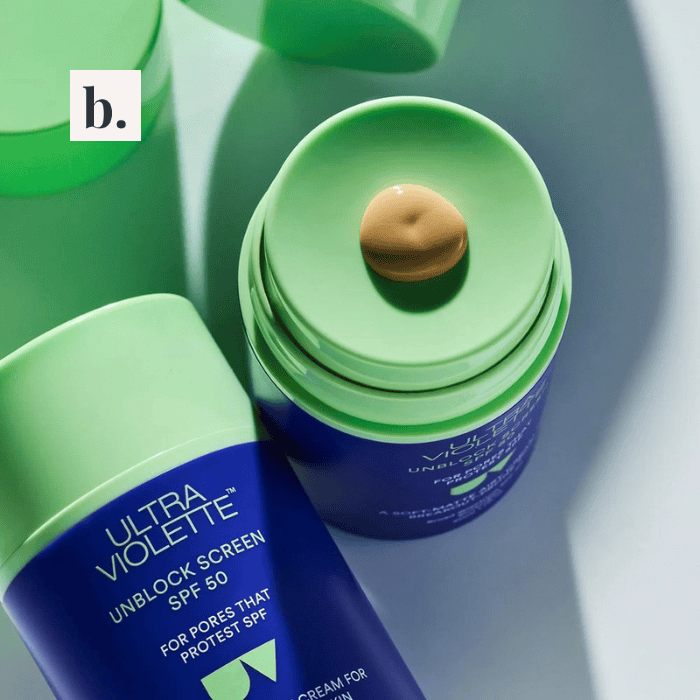
Ultra Violette
Ultra Violette Unblock Screen SPF50 Breakout-Friendly SKINSCREEN
If your skin is oily or breakout-prone and you want a soft-matte SPF 50 sunscreen, Ultra Violette Unblock Screen combines UV filters with a low-shine finish. Its breakout-friendly positioning is not proof…
Read the BeautyBrief
Neutrogena
Neutrogena Clear Face Sunscreen Acne-Prone Skin Broad Spectrum SPF 60 with BEMT
If you have acne-prone skin and want broad-spectrum protection without a heavy finish, Neutrogena Clear Face SPF 60 with BEMT offers a brand-labeled non-comedogenic sunscreen. That claim does not guarantee you will…
Read the BeautyBrief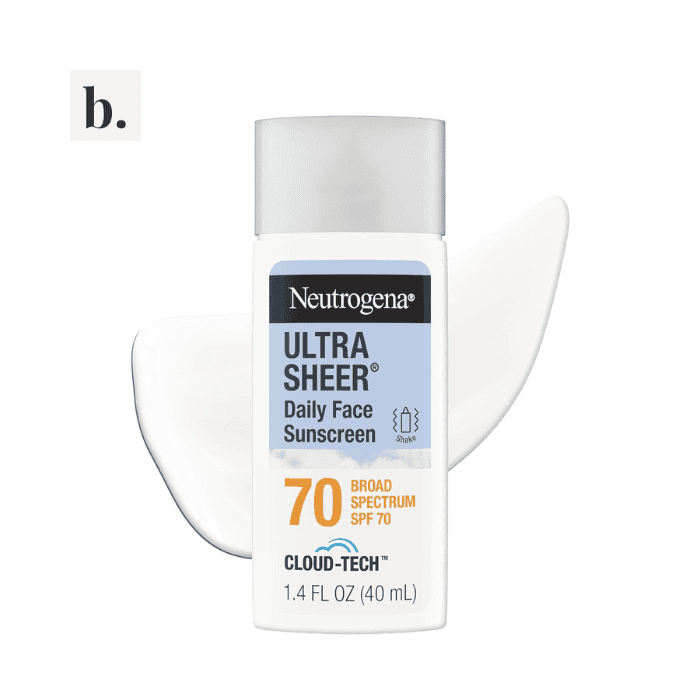
Neutrogena
Neutrogena Ultra Sheer Daily Face Sunscreen SPF 70 with BEMT
If you want a lightweight face sunscreen with high labeled SPF, Neutrogena Ultra Sheer SPF 70 with BEMT combines several UV filters, including bemotrizinol. SPF 70 is a protection rating, not a…
Read the BeautyBrief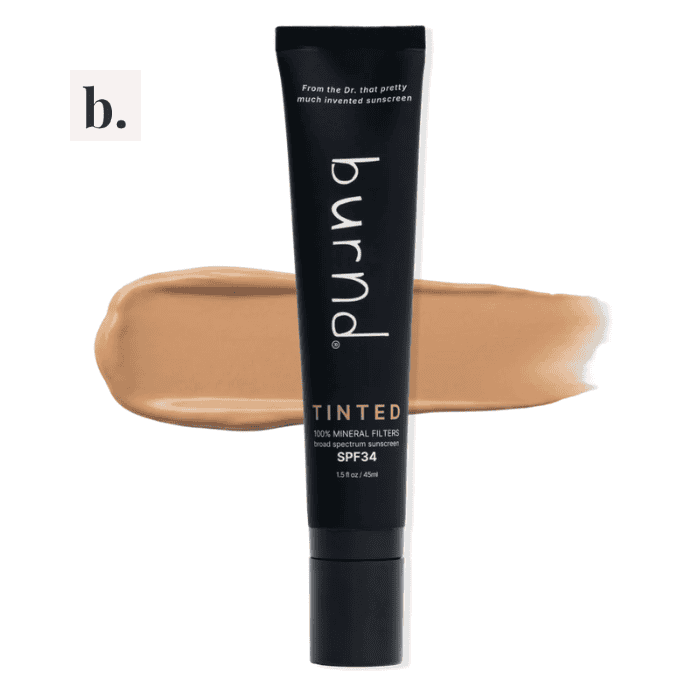
burnd
burnd Tinted SPF 34
If you want a tinted mineral sunscreen with a wearable finish, burnd SPF 34 provides zinc oxide protection and pigment-based coverage. Its photolyase ingredient is not proof that the finished sunscreen reverses…
Read the BeautyBrief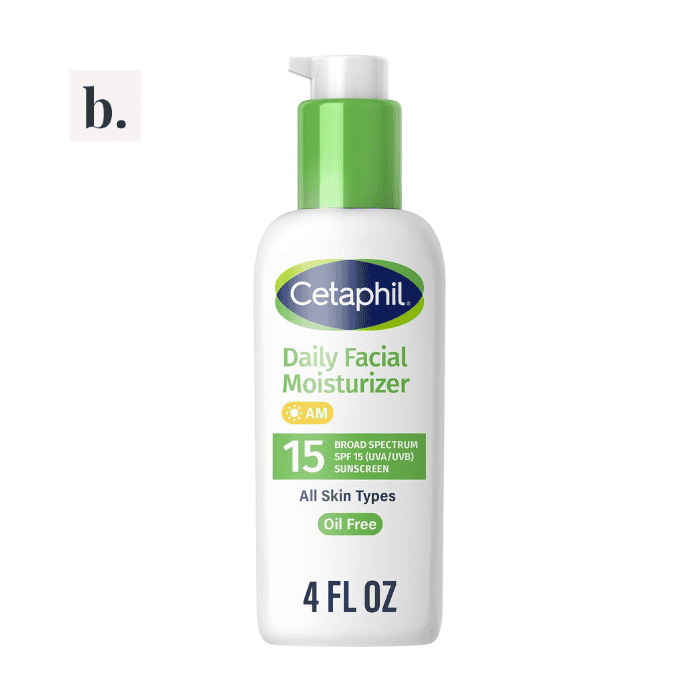
Cetaphil
Cetaphil Daily Facial Moisturizer SPF 15
If you want an easy morning moisturizer with some broad-spectrum UV protection, Cetaphil SPF 15 combines hydration with avobenzone and octocrylene. If sun exposure is a priority, choose a broad-spectrum SPF 30…
Read the BeautyBrief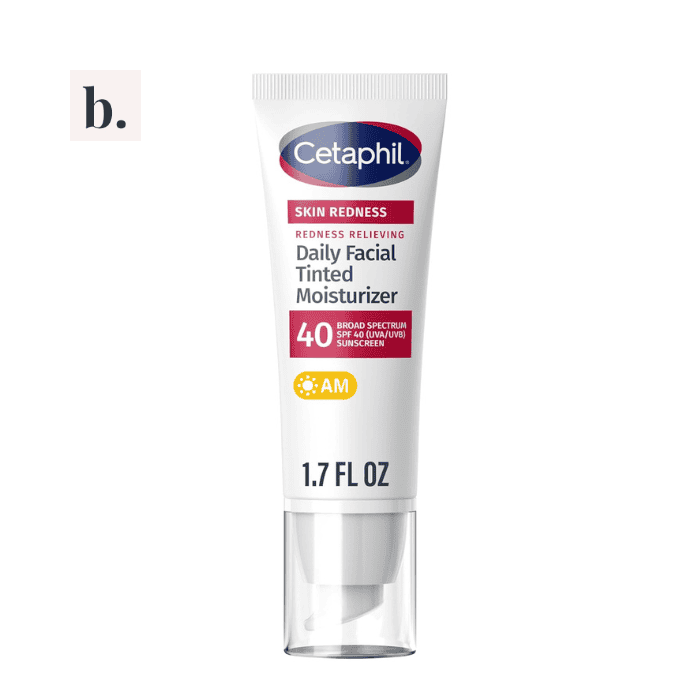
Cetaphil
Cetaphil Redness Relieving Daily Facial Tinted Moisturizer SPF 40
If you want mineral SPF 40 with cosmetic redness coverage, Cetaphil's tinted moisturizer combines zinc oxide, titanium dioxide and color pigments. The tint can make redness less visible without treating its cause,…
Read the BeautyBrief