
Do Sun-Protection Supplements Work Without Sunscreen?
At a glance
Sun-protection supplements promise another layer of defense from UV exposure, with ingredients such as Polypodium leucotomos, carotenoids, and antioxidants leading the category. Some have human studies behind them, but the research measures very different outcomes from an SPF test. Before paying for a bottle, it helps to know what those studies can—and cannot—tell you about real-world sun protection.
A capsule that promises to support your skin in the sun can sound easier than another layer of sunscreen. The catch is that “oral photoprotection” and sunscreen do different jobs.
You may see supplements promoted using human studies where skin responses to controlled UV exposure changed. That is interesting, but it does not give the product a dependable SPF, show how long you can safely stay outside, or make missed sunscreen less important.
If you are deciding where to spend first, sunscreen still comes before a sun supplement. The supplement is an optional extra, not a substitute for protection on exposed skin.
In this Briefing
Can a supplement replace sunscreen?
No.
The American Academy of Dermatology recommends a broad-spectrum, water-resistant sunscreen with SPF 30 or higher on exposed skin, along with shade and protective clothing when possible. When you are outdoors, sunscreen should be reapplied about every two hours and after swimming or sweating.[1]
An oral supplement cannot create that tested layer of UV protection, cover a spot you missed, or tell you when your protection has worn off.
If you see a supplement promising sunscreen-like effects, know that FDA has taken enforcement action against products marketed with those claims. In a 2018 warning letter, the agency cited claims such as broad-spectrum UVA and UVB protection and protection from sun damage as evidence that the product was being marketed as a drug.[2]
You shouldn’t read that as proof that every supplement studied for photoprotection is useless or unlawful. It means a capsule should not be sold—or used—as though it performs the same job as sunscreen.
To understand the sunscreen standards you should prioritize, BB’s sunscreen-buying Briefing explains broad-spectrum SPF, water resistance, skin fit, and why sunscreen claims must be evaluated against actual testing.
What can oral photoprotection realistically do?
When you read oral-photoprotection claims, remember that most human research looks at how skin reacts to a controlled amount of UV exposure rather than whether a supplement prevents sunburn or skin cancer during everyday outdoor life.
If you see MED in a study, it means the minimal erythema dose: the amount of UV needed to produce visible redness. If MED rises after supplementation, it takes more of the tested UV exposure to produce that redness.
To see the breadth of evidence, you can look at a 2025 systematic review of 47 human studies that found the strongest evidence among polyphenols, carotenoid-based supplements, and Polypodium leucotomos. The review also found important limitations, including small studies, short durations, and unanswered questions about dose and how long an ingredient needs to be taken.[3]
You can take oral photoprotection seriously as a research area on that basis. It is not enough to translate a supplement into SPF 15, SPF 30, or any other sunscreen number.
Which sun-supplement ingredients have the best evidence?
Polypodium leucotomos
If you’re comparing PLE supplements, Polypodium leucotomos is a fern extract and one of the better-studied ingredients in this category.
For more context, you can look at a 2025 systematic review that included 21 studies across several dermatologic uses, including 11 randomized controlled trials, and concluded that PLE has potential as an adjunct rather than a replacement for standard care.[4]
You may see a 2026 randomized study cited in support of PLE; it compared two groups of volunteers: one took a specific PLE extract at 480 mg daily, while the other took nicotinamide at 2,000 mg daily. After 30 days, the PLE group had a 26% increase from baseline in the UVA dose needed to cause visible redness. Neither supplement reduced the UVA-induced thymidine-dimer DNA-damage marker measured in skin or urine.[5]
Before you rely on the results, note that the study compared responses within each treatment group before and after supplementation; it did not include a placebo-only group. The result is interesting, but a higher redness threshold is not proof of dependable protection against UV damage or skin cancer.
If you are comparing PLE supplements, look for a clearly identified extract and dose. Do not assume that any fern powder or proprietary “sun complex” matches the material used in published research.
Carotenoids and polyphenols
If you’re considering carotenoids or polyphenols, these also have human evidence for modest changes in photoprotection measures.[3]
The practical limitation is the same: the effect is not an instant shield. Studies generally involve repeated intake over time, and the evidence does not support reducing sunscreen use because you take an antioxidant supplement.
You don’t automatically get a better supplement when a formula has more ingredients. If a product combines carotenoids, vitamins, tea extracts, astaxanthin, and several botanicals, research on one of those ingredients does not prove the finished blend works.
What about beta-carotene?
If your supplement contains beta-carotene, remember that “antioxidant” does not mean harmless or better at a higher dose.
The U.S. Preventive Services Task Force recommends against beta-carotene supplementation for preventing cardiovascular disease or cancer. Its evidence review identifies increased lung-cancer incidence among people who smoke tobacco or have occupational asbestos exposure as an important harm seen with supplemental beta-carotene.[6]
You shouldn’t confuse this result from supplements with eating carotenoid-rich foods. It does mean a concentrated beta-carotene supplement should not be treated as an automatically beneficial beauty add-on.
If a sun supplement contains beta-carotene, the amount and your own risk factors matter more than the fact that the label calls it an antioxidant.
Nicotinamide is a different conversation
You may see nicotinamide, a form of vitamin B3, discussed as an oral-photoprotection ingredient because it has been studied for UV-related skin damage and prevention of certain skin cancers.
Its strongest clinical evidence comes from a much more specific setting than an ordinary beauty supplement. A Phase III trial enrolled 386 people who had already had at least two nonmelanoma skin cancers in the previous five years. During 12 months of treatment, the group taking 500 mg of nicotinamide twice daily developed fewer new nonmelanoma skin cancers than the placebo group.[7]
You should read that as meaningful evidence for a high-risk population. It is not evidence that everyone needs high-dose nicotinamide as “oral SPF,” and it does not replace topical sun protection.
If you are considering nicotinamide because of previous skin cancer, actinic keratoses, or another medical concern, that is a clinician conversation rather than a routine supplement-shopping decision.
How to judge a sun-protection supplement before buying
If you still want an oral photoprotection product, the label should give you enough information to connect the bottle with the evidence.
- Look for an exact dose. A named “solar defense complex” is much harder to evaluate than a clearly listed amount of the studied ingredient.
- Check the ingredient form. Research on a standardized extract does not automatically apply to every powder or botanical carrying the same plant name.
- Prefer human evidence. Cell and animal studies can explain why an ingredient is interesting, but they do not tell you how much practical benefit you will get from a supplement.
- Be skeptical of SPF-like language. A capsule should never make you comfortable using less sunscreen or staying outside longer.
- Compare the monthly cost with the likely benefit. A modest supporting effect is harder to justify when your sunscreen, hat, sunglasses, or UPF clothing still need attention.
When you buy a dietary supplement, remember it is regulated differently from a drug. FDA does not approve them for safety and effectiveness before they are sold, and manufacturers carry the initial responsibility for meeting applicable safety, quality, and labeling requirements.[8]
For your buying decision, that makes transparent dosing and realistic claims especially important in a category built around a benefit you cannot easily see.
If you want to understand the broader dose, study-design, finished-product, and quality questions for ingestible beauty products, see BB’s Beauty Supplements Briefing. A laboratory or ingredient-level finding does not automatically establish the benefit of the finished bottle.
Who should be more cautious?
A long ingredient list is not automatically a virtue when you are taking something orally. High doses and multiple botanicals create more opportunities for side effects or interactions.
Before you start a dietary supplement, FDA advises talking with a doctor, pharmacist, or other healthcare professional because they can have adverse effects or interact with medicines and other supplements.[8]
That is especially important if you take prescription medication, are pregnant or breastfeeding, have a medical condition, or are considering a high-dose formula.
If you have unusual sun sensitivity, a history of skin cancer, or a dermatologist-directed photoprotection plan, do not use a supplement as a reason to change that plan on your own.
Where should you spend your money first?
Put your budget into protection with a clear job first.
Choose a broad-spectrum, water-resistant sunscreen with SPF 30 or higher that you are willing to apply properly. Make reapplication realistic. Add sunglasses, shade, a hat, and protective clothing when they fit the situation.
BB’s Briefing on sunscreen reapplication explains when you need to reapply, including what changes with water and sweat.
Once you’ve covered those basics, an oral photoprotection supplement becomes an optional purchase. The best case is a modest additional effect from a clearly dosed ingredient with relevant human evidence—not invisible sunscreen from a capsule.
The BB Perspective
When you see the phrase sun-protection supplement, remember that oral photoprotection is a legitimate research area but the marketing often promises more than the evidence establishes. PLE, carotenoids, and some polyphenols have human data showing changes in specific UV-response measures; that is different from providing tested SPF protection.
The smartest way to read this category is as optional support. Look for the exact ingredient, dose, and human evidence behind the product, and be wary when a brand turns a modest laboratory or clinical measure into the impression that you are protected from the sun “from within.”
Put your money toward sunscreen and practical sun protection first. A supplement only earns a place after those basics are covered and its evidence is strong enough to justify the added cost.
Last reviewed: October 2026
Sources
American Academy of Dermatology Association. Sunscreen FAQs. Accessed October 2026.
AAD recommends broad-spectrum, water-resistant sunscreen with SPF 30 or higher and advises reapplication approximately every two hours while outdoors and after swimming or sweating. It also recommends shade and sun-protective clothing as additional protection. Return to citation.
U.S. Food and Drug Administration. Napa Valley Bioscience Warning Letter. May 18, 2018.
FDA cited claims including broad-spectrum UVA/UVB protection and prevention or mitigation of sun-related harm as evidence that the supplement was being marketed with drug claims. The warning letter does not establish that all oral-photoprotection ingredients are ineffective; it shows why sunscreen-like prevention claims require a different regulatory basis. Return to citation.
Natarelli N, Aflatooni S, Stankiewicz K, Correa-Selm L, Sivamani RK. Oral Supplements and Photoprotection: A Systematic Review. Journal of Medicinal Food. 2025;28(6):519-541. PMID: 39804624.
The review included 47 human studies of carotenoids, polyphenols, Polypodium leucotomos, vitamins, and other supplements. It found the strongest evidence among polyphenols, carotenoid-based supplements, and PLE while emphasizing small samples, short study durations, and unresolved questions about dose and treatment duration. Return to citation.
Zundell MP, Katz A, Shah M, Burshtein J, Rigel D, Zakria D. The Utility of Oral Polypodium Leucotomos Extract for Dermatologic Diseases: A Systematic Review. Journal of Drugs in Dermatology. 2025;24(4):346-351. PMID: 40196953.
The review included 21 studies, including 11 randomized controlled trials, across photoprotection and several dermatologic conditions. It supports PLE as a potentially useful adjunct but does not establish it as a substitute for topical sunscreen or prove that every commercial PLE supplement performs the same way. Return to citation.
Faisal A, Lerche CM, Douki T, et al. Changes in ultraviolet A radiation-induced thymidine dimers and erythema after oral nicotinamide or Polypodium leucotomos extract in healthy volunteers: a randomized intraindividual trial. Photochemical & Photobiological Sciences. 2026;25(5):845–852. doi:10.1007/s43630-026-00884-2. PMID: 41838346.
Fifty healthy volunteers with Fitzpatrick phototypes I–III were assigned to either nicotinamide 2,000 mg/day or a particular PLE extract at 480 mg/day for 30 days. Both arms showed a 26% within-group increase in UVA minimal erythema dose, but neither reduced thymidine-dimer markers in skin or urine. The trial lacked a placebo-only group, did not measure prevention of real-world sunburn or skin cancer, and cannot establish an equivalent effect for all PLE products. The authors reported no conflicts of interest. Return to citation.
U.S. Preventive Services Task Force. Vitamin, Mineral, and Multivitamin Supplementation to Prevent Cardiovascular Disease and Cancer. June 21, 2022.
USPSTF recommends against beta-carotene supplementation for prevention of cardiovascular disease or cancer and identifies increased lung-cancer incidence among people who smoke tobacco or have occupational asbestos exposure as an important harm observed in trials. This recommendation concerns supplemental beta-carotene, not carotenoids naturally present in foods. Return to citation.
Chen AC, Martin AJ, Choy B, et al. A Phase 3 Randomized Trial of Nicotinamide for Skin-Cancer Chemoprevention. New England Journal of Medicine. 2015;373(17):1618-1626. PMID: 26488693.
The trial randomized 386 participants who had experienced at least two nonmelanoma skin cancers in the previous five years to nicotinamide 500 mg twice daily or placebo for 12 months. The rate of new nonmelanoma skin cancers was 23% lower during treatment, with no evidence of continued benefit after nicotinamide was stopped. The study was funded by Australia’s National Health and Medical Research Council and applies to a high-risk population, not routine cosmetic supplementation. Return to citation.
U.S. Food and Drug Administration. Information for Consumers on Using Dietary Supplements. Accessed October 2026.
FDA explains that it does not approve dietary supplements for safety and effectiveness before marketing and advises consumers to discuss supplement use with a doctor, pharmacist, or other healthcare professional because supplements can have adverse effects or interact with medicines and other supplements. Return to citation.
Related product BeautyBriefs
These BeautyBriefs cover products relevant to the needs discussed in this Beauty Briefing. Inclusion here reflects topic relevance, not a rating or endorsement.
Ultra Violette
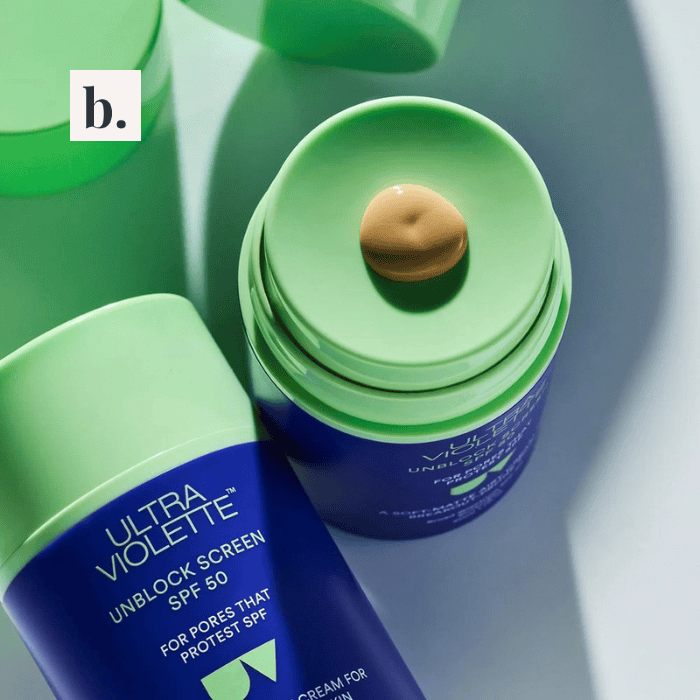
Ultra Violette Unblock Screen SPF50 Breakout-Friendly SKINSCREEN
If your skin is oily or breakout-prone and you want a soft-matte SPF 50 sunscreen, Ultra Violette Unblock Screen combines UV filters with a low-shine finish. Its breakout-friendly positioning is not proof…
Read the BeautyBrief
Neutrogena
Neutrogena Clear Face Sunscreen Acne-Prone Skin Broad Spectrum SPF 60 with BEMT
If you have acne-prone skin and want broad-spectrum protection without a heavy finish, Neutrogena Clear Face SPF 60 with BEMT offers a brand-labeled non-comedogenic sunscreen. That claim does not guarantee you will…
Read the BeautyBrief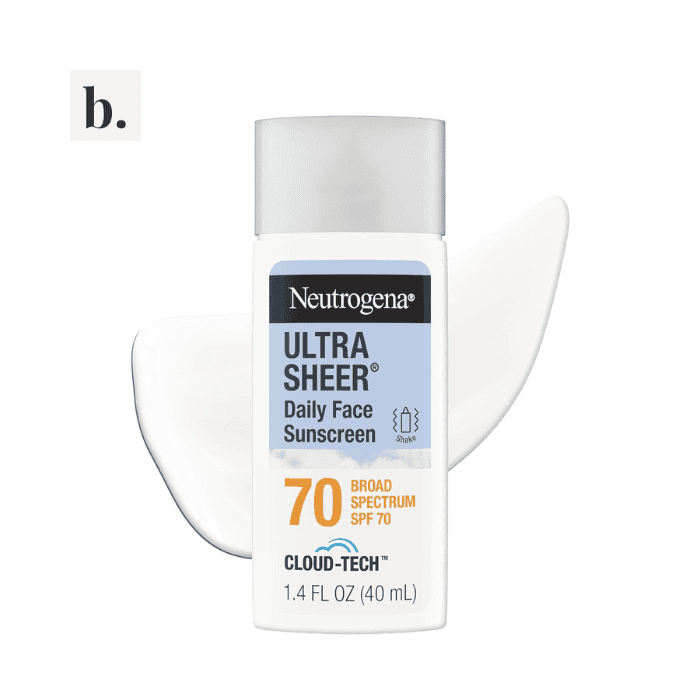
Neutrogena
Neutrogena Ultra Sheer Daily Face Sunscreen SPF 70 with BEMT
If you want a lightweight face sunscreen with high labeled SPF, Neutrogena Ultra Sheer SPF 70 with BEMT combines several UV filters, including bemotrizinol. SPF 70 is a protection rating, not a…
Read the BeautyBrief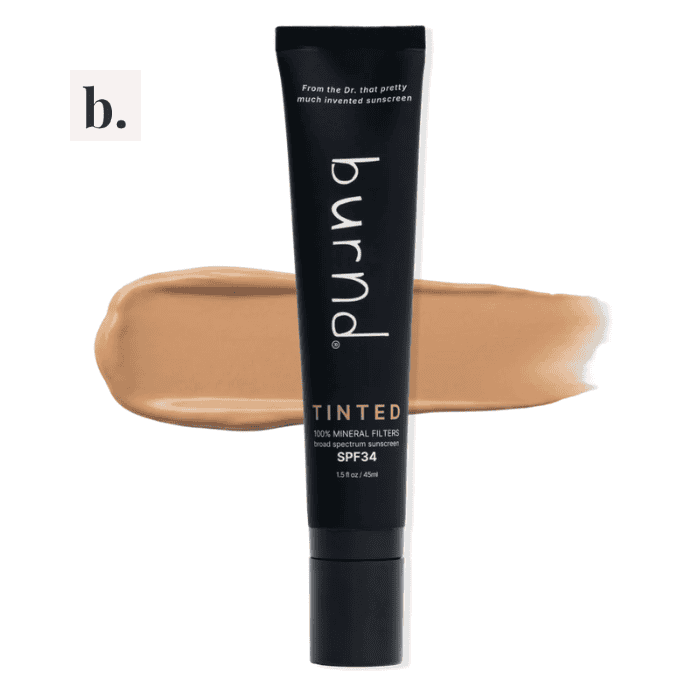
burnd
burnd Tinted SPF 34
If you want a tinted mineral sunscreen with a wearable finish, burnd SPF 34 provides zinc oxide protection and pigment-based coverage. Its photolyase ingredient is not proof that the finished sunscreen reverses…
Read the BeautyBrief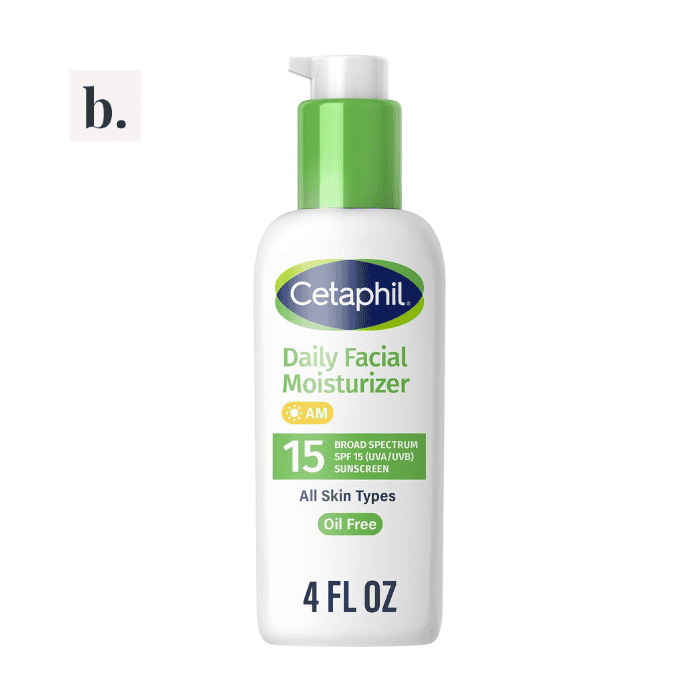
Cetaphil
Cetaphil Daily Facial Moisturizer SPF 15
If you want an easy morning moisturizer with some broad-spectrum UV protection, Cetaphil SPF 15 combines hydration with avobenzone and octocrylene. If sun exposure is a priority, choose a broad-spectrum SPF 30…
Read the BeautyBrief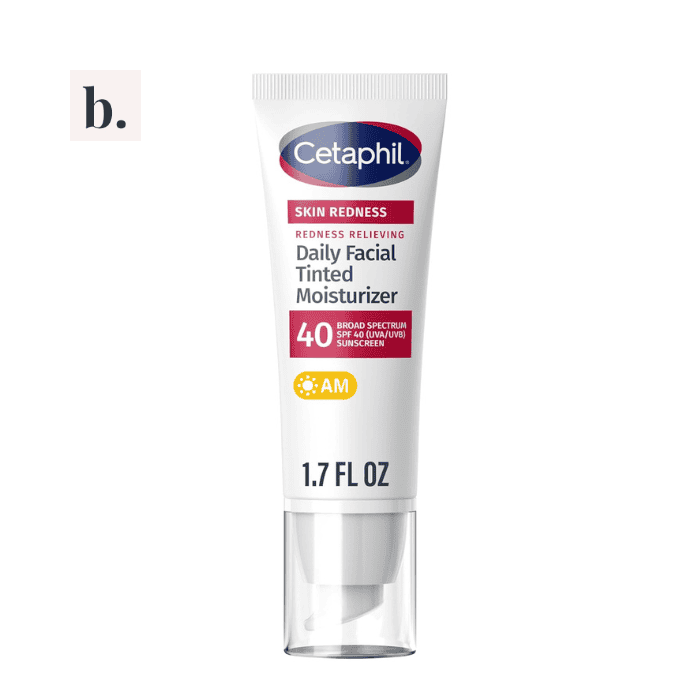
Cetaphil
Cetaphil Redness Relieving Daily Facial Tinted Moisturizer SPF 40
If you want mineral SPF 40 with cosmetic redness coverage, Cetaphil's tinted moisturizer combines zinc oxide, titanium dioxide and color pigments. The tint can make redness less visible without treating its cause,…
Read the BeautyBrief