Cetaphil Daily Facial Moisturizer SPF 15 Review
BeautyBrief™
Brand
Cetaphil
Product
Daily Facial Moisturizer SPF 15
Claims check
The finished-product broad-spectrum SPF 15 label establishes baseline sun protection, while the lightweight glycerin-and-emollient base supports hydration and barrier-conscious daily use; the modest SPF level remains the main limitation.
Shopper fit
- Dry
- Normal
- Combination
- Sensitive
Formula flags
- Silicones
Shopper preferences
- Non-Comedogenic
- Dermatologist-Tested
- Hypoallergenic
Key ingredients
| Avobenzone | At 3%, one of the two labeled sunscreen actives in the finished broad-spectrum SPF 15 formula. |
|---|---|
| Octocrylene | At 10%, the second labeled sunscreen active within the finished broad-spectrum SPF 15 system. |
| Glycerin | Provides dependable humectant hydration within the lightweight moisturizer base. |
| Cyclomethicone | Adds slip and helps the moisturizer spread with a lighter, less tacky feel. |
| Tocopheryl Acetate | Adds supporting antioxidant and skin-conditioning value without materially changing the sunscreen role. |
Price tier
$ Budget
Value check
At the Budget tier, the value is strongest if you want lightweight fragrance-free hydration and baseline broad-spectrum sun protection in one step; higher-SPF options offer more UV-protection margin.
Where to buy
We may earn a commission through these links at no additional cost to you. This does not affect our BeautyBrief.
Bottom line
If you want an easy morning moisturizer with some broad-spectrum UV protection, Cetaphil SPF 15 combines hydration with avobenzone and octocrylene. If sun exposure is a priority, choose a broad-spectrum SPF 30 or higher and reapply as directed instead of treating this SPF 15 moisturizer as all-day protection.
If you want one morning step for hydration and baseline UV protection, Cetaphil Daily Facial Moisturizer SPF 15 combines lightweight hydration with broad-spectrum SPF 15 in one fragrance-free morning step. The current U.S. label uses avobenzone 3% and octocrylene 10% as the sunscreen actives, while glycerin, emollients, silicones, and tocopheryl acetate support moisture and spreadability.[1]
The strongest use case is simple daily hydration plus baseline sun protection for normal, dry, combination, or sensitive skin. The main limitation is the SPF level: broad-spectrum SPF 15 meets the FDA threshold for daily sun-protection labeling, but you have higher-SPF options that provide a greater protection margin during extended outdoor exposure.[2]
What it claims
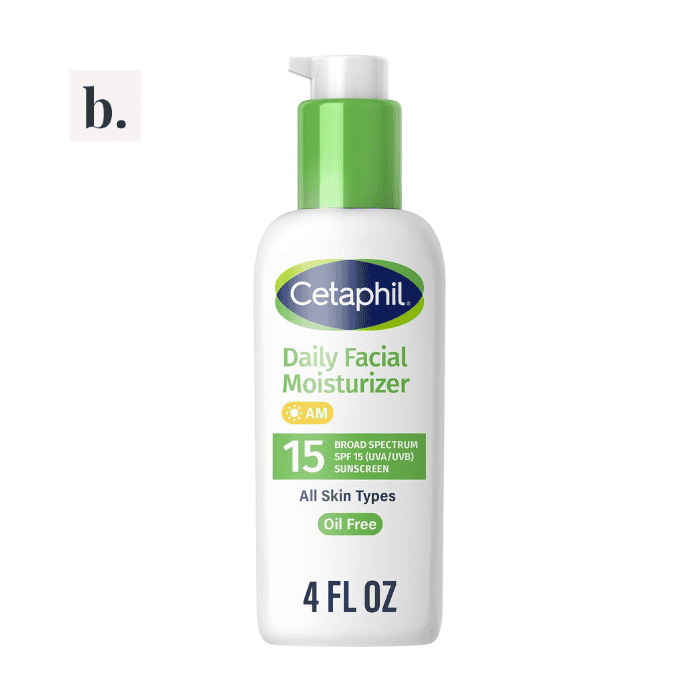
Cetaphil positions this as a lightweight, non-greasy facial moisturizer that hydrates and nourishes, strengthens the skin’s moisture barrier, and provides broad-spectrum UVA/UVB SPF 15 protection. The exact product is also described as dermatologist-tested, hypoallergenic, non-comedogenic, fragrance-free, paraben-free, and oil-free, with positioning for sensitive skin.[1]
Claims vs. formula
The sunscreen claim is established by the finished product’s broad-spectrum SPF 15 label rather than by interpreting the active percentages in isolation. Avobenzone 3% and octocrylene 10% are the labeled sunscreen actives in the current U.S. formula.[1]
The moisturizing claim is also well aligned with the base. Glycerin provides humectant support, while diisopropyl adipate, glyceryl stearate, cyclomethicone, and related emollient ingredients help reduce a dry or tight feel and create a lighter spreadable finish. Cetaphil also explicitly positions the product around retaining moisture and strengthening the moisture barrier.[1]
Tocopheryl acetate adds supporting antioxidant and skin-conditioning value, but it is not a sunscreen active and should not be credited with the labeled SPF. The finished sunscreen system, application amount, and reapplication determine real-world protection.
Ingredients that matter
Avobenzone 3% and octocrylene 10% are the two labeled active filters that work together in this finished broad-spectrum SPF 15 product. The SPF rating comes from the tested finished sunscreen, not from adding ingredient percentages. Glycerin and the emollient base support hydration, while cyclomethicone helps the lotion spread without the weight of a rich cream.[1]
Tocopheryl acetate serves as a supporting skin-conditioning ingredient; it is not one of the sunscreen actives. In practice, the amount you apply, the product’s labeled SPF and how often you reapply matter more for protection than any isolated ingredient in the moisturizer.

Glycerin
If your skin feels dry or tight, glycerin helps your skin hold moisture. You don't need a high percentage or a separate serum when your moisturizer already works well.
Read the IngredientBrief
Vitamin E
Vitamin E is a family of antioxidant and conditioning ingredients used in moisturizers, oils, balms, and broader antioxidant systems. The exact form and finished formula matter more than the vitamin…
Read the IngredientBrief
Tocopheryl Acetate
Tocopheryl acetate is a stable vitamin E derivative used for antioxidant and skin-conditioning functions in cosmetics. It is a supporting ingredient; stand-alone scar, wrinkle, and dark-spot benefits are not established.
Read the IngredientBriefSafety and regulatory context
FDA recommends broad-spectrum sunscreen with SPF 15 or higher as part of regular sun protection and advises reapplication at least every two hours, with more frequent reapplication when swimming or sweating.[2] Cetaphil directs users to apply this moisturizer generously about 20 minutes before sun exposure and reapply frequently, especially after perspiring, swimming, or toweling.[1]
The current Cetaphil page does not identify this formula as water resistant, so a sunscreen specifically labeled water resistant is the more appropriate choice for swimming or heavy sweating.[2]
What to expect in the short term
Expect a lightweight moisturizing finish with built-in sunscreen rather than the feel of a richer cream. The formula is fragrance-free and oil-free, and Cetaphil specifically describes it as lightweight and non-greasy.[1]
As with any sunscreen, applying enough product matters. A thin moisturizer-like layer that is smaller than the labeled sunscreen amount does not give you the protection represented by the SPF number.
What to expect over time
With consistent use, the moisturizer supports daily hydration while the finished sunscreen provides broad-spectrum SPF 15 protection when applied and reapplied as directed. Cetaphil also positions the formula around strengthening the moisture barrier and defending against dryness, tightness, roughness, irritation, and a weakened barrier.[1]
The sunscreen protection is preventive rather than corrective. It does not treat existing pigmentation, wrinkles, or other signs of prior UV exposure.
Who it fits
This is most useful for normal, dry, combination, or sensitive skin that wants a simple fragrance-free morning moisturizer with built-in SPF. The lightweight, oil-free and non-comedogenic format also keeps it more flexible than a rich cream, although you might prefer a more matte sunscreen if your skin is very oily.
The current exact-product page supports BB’s controlled Non-Comedogenic, Dermatologist-Tested, and Hypoallergenic Shopper Preferences.[1]
Compare before you buy
At the Budget tier, the value is strongest if minimizing routine steps matters more than maximizing SPF. The formula gives you moisturizer and broad-spectrum SPF 15 in one straightforward product. If sun protection is the priority, a broad-spectrum SPF 30–50 facial sunscreen gives you more protection margin and is the stronger comparison for extended outdoor exposure.
Final Assessment
If you want a straightforward morning moisturizer with broad-spectrum protection, Cetaphil Daily Facial Moisturizer SPF 15 combines hydration with two labeled sunscreen filters. Its Budget-tier convenience is useful for simple routines, but if you spend significant time outdoors, choose a broad-spectrum SPF 30 or higher and follow the label’s reapplication directions rather than relying on this SPF 15 lotion alone.
Compare Prices
Choose a retailer to view current pricing and availability.
We may earn a commission through these links at no additional cost to you.
Last reviewed: October 2026
Sources
Cetaphil. Daily Facial Moisturizer SPF 15. Current official U.S. product page. Accessed October 8, 2026.
U.S. Food and Drug Administration. Sunscreen: How to Help Protect Your Skin from the Sun. Current FDA consumer guidance. Accessed October 8, 2026.