Neutrogena Clear Face Sunscreen Acne-Prone Skin Broad Spectrum SPF 60 with BEMT Review
BeautyBrief™
Brand
Neutrogena
Product
Clear Face Sunscreen Acne-Prone Skin Broad Spectrum SPF 60 with BEMT
Claims check
If you have acne-prone skin, this sunscreen provides labeled broad-spectrum SPF 60 and a brand-stated non-comedogenic formula, not an acne treatment.
Shopper fit
- Normal
- Combination
- Oily
- Acne-Prone
Formula flags
- None identified
Shopper preferences
- Non-Comedogenic
Key ingredients
| Bemotrizinol | At 6%, adds broad-spectrum UV filtering in the finished SPF 60 active system. |
|---|---|
| Avobenzone | At 3%, contributes UVA absorption to the four-filter formula. |
| Homosalate | At 15%, contributes UVB filtration to the tested broad-spectrum sunscreen. |
| Octisalate | At 5%, adds UVB filtration alongside the other sunscreen actives. |
| Niacinamide | Skin-conditioning ingredient at an undisclosed concentration; the official product page does not demonstrate an added acne-treatment outcome. |
Price tier
$ Budget
Value check
At the Budget tier, you get broad-spectrum SPF 60 in a light, non-comedogenic format, not acne treatment or water resistance.
Where to buy
We may earn a commission through these links at no additional cost to you. This does not affect our BeautyBrief.
Bottom line
If you have acne-prone skin and want broad-spectrum protection without a heavy finish, Neutrogena Clear Face SPF 60 with BEMT offers a brand-labeled non-comedogenic sunscreen. That claim does not guarantee you will never break out, and the product is a sunscreen rather than an acne treatment.
If your skin is acne-prone and you want lighter-feeling sun protection, Neutrogena Clear Face Sunscreen Acne-Prone Skin Broad Spectrum SPF 60 with BEMT is an everyday facial sunscreen marketed for acne-prone skin. Its official U.S. product page lists four sunscreen actives, including 6% bemotrizinol, and explicitly calls the finished product non-comedogenic. The strongest case is its labeled broad-spectrum protection in a lighter-feeling format, not an established ability to treat acne.[1]
Neutrogena directs you to use a water-resistant sunscreen when swimming or sweating. This formula’s 1.4-fl-oz package and the amount needed for proper reapplication are relevant when judging Budget-tier value.

What it claims
Neutrogena positions Clear Face as non-comedogenic, designed for acne-prone skin, and able to deliver an invisible, quickly absorbing, low-shine finish. It highlights Cloud-Tech with bemotrizinol, niacinamide, vitamin E, and feverfew-derived material as part of its daily skincare story. The exact official U.S. product page does not explicitly describe this sunscreen as fragrance-free or suitable for sensitive skin.[1]
The brand reports that 93% of respondents agreed the product layers well with makeup, 91% found it invisible, and 91% agreed it absorbs quickly. The page does not disclose the sample size, full methodology, or comparison conditions. These are manufacturer-reported perceptions, not independently demonstrated superiority over other finished sunscreens.[1]
Claims vs. formula
The official Neutrogena page labels the finished product Broad Spectrum SPF 60 and lists avobenzone 3%, bemotrizinol 6%, homosalate 15%, and octisalate 5%. These filters provide complementary UV absorption; their individual percentages do not by themselves calculate the finished formula’s SPF or establish its UVA advantage over a different sunscreen.[1]
The inactive formula is consistent with the lower-shine positioning. Silica and aluminum starch octenylsuccinate are absorbent texture modifiers, while butyloctyl salicylate, C12-15 alkyl benzoate, and film formers help distribute the sunscreen. Their presence helps explain how the product is designed to feel, but does not prove that every wearer will find it weightless, comfortable around the eyes, or compatible with every makeup routine.
Niacinamide is present in the brand’s ordered ingredient list, but Neutrogena does not disclose its concentration or provide a product-specific clinical result showing that this sunscreen treats existing acne or prevents new breakouts. The brand’s explicit non-comedogenic claim meets BB’s controlled Shopper Preference evidence rule, but it is not a guarantee that no wearer will experience clogged pores or irritation.[1]
Ingredients that matter
Bemotrizinol at 6% combines with avobenzone at 3%, homosalate at 15% and octisalate at 5% to produce the sunscreen’s labeled broad-spectrum SPF 60. You cannot infer the finished product’s protection from one filter percentage in isolation.
Silica and starch help explain the lighter-feeling finish, while niacinamide, tocopheryl acetate and feverfew-derived material support the accompanying skin-conditioning story. None of these ingredients separately proves that the sunscreen treats acne or prevents all breakouts.

Bemotrizinol
Bemotrizinol is a well-supported, photostable UVA/UVB sunscreen filter permitted under the U.S. OTC sunscreen monograph. The finished sunscreen's tested protection, wearability, and application matter more than one filter's percentage.
Read the IngredientBrief
Niacinamide
If your skin feels dry or uncomfortable, niacinamide can support hydration and reduce water loss in a well-formulated product. It also has evidence for uneven tone and visible oiliness, but…
Read the IngredientBrief
Tocopheryl Acetate
Tocopheryl acetate is a stable vitamin E derivative used for antioxidant and skin-conditioning functions in cosmetics. It is a supporting ingredient; stand-alone scar, wrinkle, and dark-spot benefits are not established.
Read the IngredientBriefSafety and regulatory context
The FDA added bemotrizinol to the U.S. over-the-counter sunscreen monograph in June 2026 for use under specified conditions at up to 6%. That is regulatory authorization for the active ingredient in compliant sunscreen products; it is not FDA endorsement of Neutrogena’s specific pore, texture, or comparative marketing claims.[2]
Neutrogena’s exact U.S. product page directs users to apply generously and evenly 15 minutes before sun exposure and reapply at least every two hours. It instructs swimmers and people who sweat to use a water-resistant sunscreen. The brand also warns against application to damaged or broken skin, advises avoiding the eyes, and directs users to stop if a rash develops; use for infants under six months requires asking a doctor.[1]
What to expect in the short term
Neutrogena describes a light, quick-absorbing sunscreen that blends without a white cast and leaves a less-shiny finish. Silica and starch are consistent with that sensory design, but the experience still depends on application amount, other skincare, skin condition, and makeup. The brand’s descriptions do not establish how this sunscreen will feel with your own moisturizer or makeup.
What to expect over time
Consistent, label-directed broad-spectrum sunscreen use helps protect against sunburn and, with other sun-protection measures, reduces the risk of UV-related skin damage. Clear Face is not an acne medication. The available exact-product brand evidence does not establish that its niacinamide produces additional breakout clearance or prevents new acne lesions.[1]
Who it fits
If your skin is acne-prone, oily or combination and you want a daily facial sunscreen with an explicit non-comedogenic claim, Clear Face matches that positioning. The listed ingredients do not name fragrance or parfum, but that observation is not the same as an official fragrance-free claim. Add a moisturizer underneath if your skin needs it, and choose a water-resistant sunscreen if you swim or sweat.
Compare before you buy

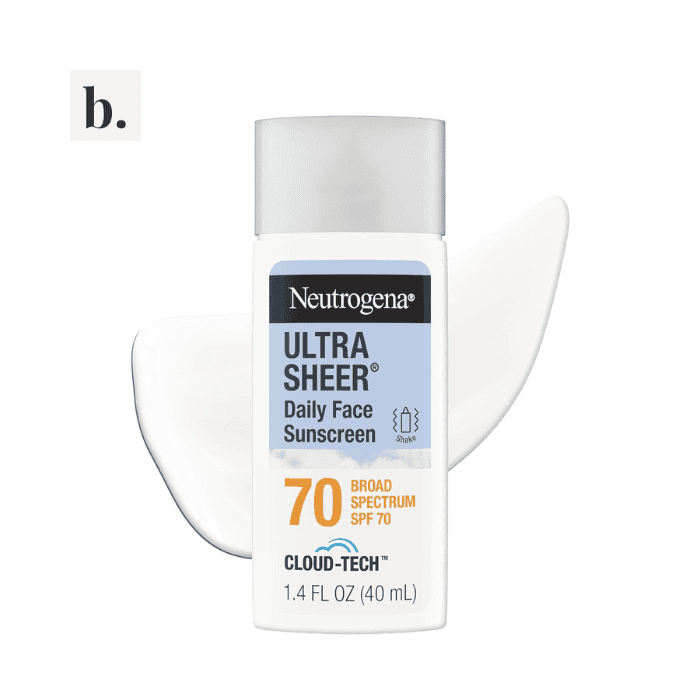
Neutrogena’s Ultra Sheer Daily Face SPF 70 lists the same four sunscreen actives at identical percentages on its official U.S. brand page. The finished formulas differ in inactive ingredients and labeled SPF: Clear Face contains niacinamide and carries an explicit non-comedogenic claim, while Ultra Sheer contains Acetyl Dipeptide-31 Amide. The more useful choice depends on skin fit and wear preferences; the different SPF numbers do not quantify a specific UVA-protection advantage.[3]
Read the BeautyBriefWithin the Budget tier, Clear Face offers a high labeled SPF, a lighter-finish design, and a non-comedogenic claim aimed at acne-prone shoppers. Its 1.4-fl-oz size matters when applying and reapplying generously; niacinamide at an undisclosed concentration does not replace a dedicated acne treatment. If your current broad-spectrum sunscreen suits your skin, you do not need to replace it solely because it lacks bemotrizinol.
Final Assessment
If you have acne-prone skin and prefer a lightweight sunscreen, Neutrogena Clear Face provides broad-spectrum SPF 60 with bemotrizinol and a brand-declared non-comedogenic formula. Its Budget-tier value rests on sun protection and texture suited to your routine, not an acne treatment benefit; the claim cannot guarantee freedom from breakouts, and you still need to reapply as directed.
Where to buy
Choose a retailer to view current pricing and availability.
We may earn a commission through these links at no additional cost to you.
Last reviewed: October 2026
Sources
Neutrogena. Clear Face Sunscreen Acne-Prone Skin Broad Spectrum SPF 60 with BEMT. Official U.S. product page, October 2026.
U.S. Food and Drug Administration. FDA Expands Sunscreen Options for the First Time in 20 Years. June 9, 2026.
Neutrogena. Ultra Sheer Daily Face Sunscreen SPF 70 with BEMT. Official U.S. product page, October 2026.