Neutrogena Rapid Tone Repair Retinol + Vitamin C Correcting Cream Review
BeautyBrief™
Brand
Neutrogena
Product
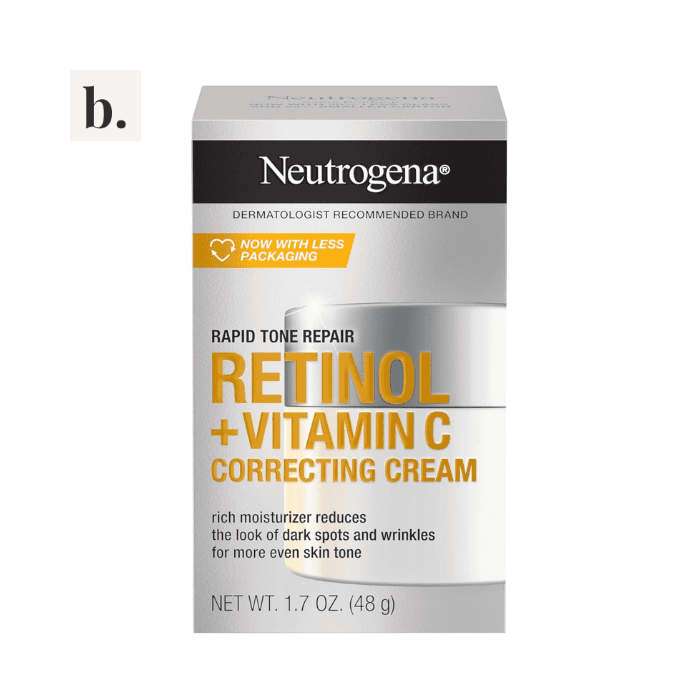
Rapid Tone Repair Retinol + Vitamin C Correcting Cream
Claims check
Neutrogena Rapid Tone Repair combines retinol, a vitamin C derivative and moisturizing ingredients in one cream; retinol concentration is undisclosed and fragrance affects fit.
Shopper fit
- Normal
- Combination
Formula flags
- Fragrance
- Retinoids
- Silicones
Shopper preferences
- None Found
Key ingredients
| Retinol | Provides the formula's strongest basis for gradual improvement in fine lines, texture, and uneven-looking skin, with strength limited by the undisclosed concentration. |
|---|---|
| Ascorbyl Glucoside | Adds a vitamin C derivative for antioxidant, radiance, and tone-support positioning without being equivalent to L-ascorbic acid. |
| Glycerin | Provides humectant hydration within the moisturizer base. |
| Sodium Hyaluronate | Adds another water-binding pathway for plumping hydration. |
| Pentaerythrityl Tetraethylhexanoate | Adds emollient softness and helps the treatment cream function as a moisturizer rather than a bare active serum. |
Price tier
$$ Mid-Range
Value check
At the Mid-Range tier, you get moisturizing retinol care in one step, with fragrance and potency uncertainty as the main tradeoffs.
Where to buy
We may earn a commission through these links at no additional cost to you. This does not affect our BeautyBrief.
Bottom line
If you enjoy a treatment-style moisturizer, Neutrogena Rapid Tone Repair pairs retinol and a vitamin C derivative for a simplified tone-and-texture routine. Its Mid-Range appeal is the all-in-one cream, with gradual retinol introduction and fragrance tolerance important.
Uneven tone and fine lines don’t always call for two separate bottles. Neutrogena Rapid Tone Repair Retinol + Vitamin C Correcting Cream brings retinol, a vitamin C derivative and everyday moisturizing ingredients into one cream.[1]
It’s an appealing shortcut when you want a treatment-style moisturizer, with the brand’s one-week appearance findings adding interest rather than setting a personal deadline.
What it claims
Neutrogena says the cream helps brighten and even skin tone, reduce the look of dark spots and fine lines, smooth texture, and provide long-lasting hydration. The brand also says the finished formula can visibly even tone and reduce the look of fine lines in one week.[1] The public page does not disclose enough study detail to make that one-week result a reliable timeline for every shopper.
Claims vs. formula
The formula has a reasonable ingredient-level basis for gradual treatment benefits. Some controlled retinol studies report visible improvement, but a systematic review found the over-the-counter retinol evidence inconsistent and often methodologically weak.[2] Neutrogena does not disclose the retinol percentage here, so the ingredient supports the direction of the claim without letting you predict the exact strength or timeline for this finished product.
Ascorbyl glucoside is a vitamin C derivative, not the same ingredient as L-ascorbic acid. Vitamin C derivatives can offer useful formulation advantages, but their clinical evidence is less uniform than the evidence for specific tested L-ascorbic acid formulas.[3] That makes the tone-support story reasonable while keeping the one-week dark-spot and fine-line messaging in perspective.
Ingredients that matter
Retinol gives this cream its clearest treatment-oriented pathway for fine lines and uneven texture. Ascorbyl glucoside adds a vitamin C derivative for tone-focused care, while glycerin, sodium hyaluronate and emollients make the base more moisturizing than a straightforward retinol serum.
Added fragrance is part of the formula too. If your skin reacts to scented leave-on products, that may be a more important deciding factor than the convenience of combining actives.

Retinol
Retinol is a well-studied ingredient for fine lines and rough texture, especially when the product is stable and tolerable. You don't need the strongest percentage to find a formula that…
Read the IngredientBrief
Glycerin
Glycerin may be one of the hardest-working ingredients in your moisturizer: it helps your skin retain water and feel softer. A thoughtfully balanced formula matters more than chasing an unusually…
Read the IngredientBrief
Hyaluronic Acid
Hyaluronic acid helps your skin's surface hold water, so a good moisturizer can leave it feeling softer and less tight. You don't need a crowded list of HA derivatives—or an…
Read the IngredientBrief
Vitamin C
Vitamin C is worth considering if dullness or uneven tone is on your mind. Some topical formulas have clinical evidence for brighter-looking skin, but the exact form, stability and overall…
Read the IngredientBriefSafety and regulatory context
Retinol can be irritating while your skin adjusts. Neutrogena warns that mild redness, warmth, tingling, flaking, or dryness can occur, directs beginners to phase the product in gradually, advises reducing frequency if discomfort persists, and says to discontinue use if irritation continues. The brand also directs daytime use of broad-spectrum SPF 30 or higher while using this product.[1]
The exact formula also contains added fragrance. Fragrance is not an automatic negative, but it adds another tolerance variable in a leave-on retinol product.
What to expect in the short term
You get a moisturizer-style treatment step rather than a lightweight retinol serum. Hydration and surface smoothness can show up before longer-term treatment changes, while redness, tingling, flaking, or dryness can occur as your skin adjusts to retinol. Neutrogena directs beginners to introduce the product gradually and to use broad-spectrum SPF 30 or higher during the day.[1]
What to expect over time
Judge this formula over weeks to months, not a few applications. Retinol benefits depend on consistent use and tolerability, and the undisclosed retinol concentration means there is no defensible way to promise a specific pace of improvement from the ingredient list alone.[2] If the formula keeps leaving your skin irritated, reducing frequency or choosing a simpler retinoid formula makes more sense than pushing through discomfort.
Who it fits
If your skin is normal or combination and you want retinol and moisturizer in one step, this cream fits that aim. If your skin is fragrance-sensitive or easily irritated, the combination of retinol and perfume calls for a more cautious introduction. The brand does not document an applicable controlled shopper preference for this exact product.
Compare before you buy
If you already use a retinoid you like, this cream is more likely to duplicate that treatment than add a new benefit. If you want retinol and moisture together, the Mid-Range price is understandable. Compare fragrance tolerance and product feel first; the undisclosed retinol percentage makes exact strength comparisons difficult.
Final Assessment
Rapid Tone Repair makes a practical case for simplifying a tone-and-texture routine with retinol and a vitamin C derivative in one moisturizer. The ingredients are interesting, but visible change takes patience and a formula you can use comfortably. If you enjoy combining skincare steps, the retinol-and-vitamin-C-derivative pairing gives this cream a distinctive role in a streamlined routine.
Compare Prices
Choose a retailer to view current pricing and availability.
We may earn a commission through these links at no additional cost to you.
Last reviewed: October 2026
Sources
-
Neutrogena. Rapid Tone Repair Retinol + Vitamin C Correcting Cream. Current official U.S. product page. Accessed October 15, 2026.
-
Spierings NMK. Evidence for the Efficacy of Over-the-counter Vitamin A Cosmetic Products in the Improvement of Facial Skin Aging: A Systematic Review. Journal of Clinical and Aesthetic Dermatology. 2021.
Used to frame the evidence boundary for cosmetic retinol: some controlled studies report improvement, but results are not transferable to every finished retinol product or concentration.
-
Vasques LI, Vendruscolo CW, Leonardi GR. Topical Application of Ascorbic Acid and its Derivatives: A Review Considering Clinical Trials. Current Medicinal Chemistry. 2023.
Used to distinguish vitamin C derivatives from L-ascorbic acid and to support a more measured interpretation of derivative-level efficacy claims.