
Zinc Oxide in Skincare
Zinc oxide is a well-supported mineral UV filter and a separate skin-protectant active. In sunscreen, tested protection, film formation, tint, texture, and wear matter more than the zinc oxide percentage alone.
- Aliases
- Zinc White, CI 77947, Zincum Oxydatum
- Ingredient category
- Sunscreen Filter
- Most relevant for
- Sun Protection
- Evidence strength
- Well Supported for Providing UVA and UVB protection in properly tested topical sunscreen formulas containing zinc oxide
- Formula matters
- Concentration, dispersion, supporting filters, vehicle, film formation, tint, water resistance, and application amount shape protection and wear. The U.S. 25% maximum is not an SPF or quality score.
- Separate product needed?
- Usually No. You need a sunscreen you will apply correctly, but it does not need to use zinc oxide specifically.
BB takeaway
Zinc oxide is an established sunscreen filter, but percentage is not a shortcut for sunscreen quality. Choose the finished sunscreen with tested protection and a texture, tint, and wear profile you will actually use correctly.
Ingredient evidence does not prove the performance of every finished product containing it.
What is zinc oxide?
Zinc oxide is an inorganic compound used in sunscreens, skin protectants, cosmetics, and other consumer products. On skincare labels, it usually appears as Zinc Oxide.
In the United States, zinc oxide is permitted as an OTC sunscreen active ingredient at concentrations up to 25%. The finished sunscreen still has to meet the applicable testing and labeling requirements for claims such as SPF and Broad Spectrum protection.[1]
FDA added bemotrizinol to the sunscreen monograph in June 2026, with the amendment effective August 9, 2026. That change did not alter zinc oxide’s maximum permitted concentration of 25%.[2]
Zinc oxide also has a separate OTC skin-protectant role. FDA allows it at 1% to 25%, or above 25% through 40% when used in an ointment meeting the applicable monograph conditions.[3]
What does zinc oxide do for skin?
In sunscreen, zinc oxide reduces the amount of ultraviolet radiation reaching the skin. Mineral sunscreens are often described as physical blockers, but zinc oxide protects mainly by absorbing UV radiation, with reflection and scattering contributing less than the familiar “sun shield” description suggests.[4]
The protection comes from the even film formed by the complete sunscreen. Thin application, gaps, rubbing, sweating, swimming, and towel drying can all reduce real-world protection.
In a skin protectant, zinc oxide forms a visible barrier that helps shield skin from moisture and friction. That is why it appears in diaper-rash products, chafing pastes, and thick protective ointments.
Zinc oxide should not be treated as a proven all-purpose treatment for acne, rosacea, dark spots, eczema, scars, or general skin repair. A finished product making one of those claims needs evidence for that exact use.
What the evidence says about zinc oxide skincare
Zinc oxide is well supported for UVA and UVB protection when used in a properly tested sunscreen formula.
FDA permits zinc oxide up to 25% as a sunscreen active, but the percentage does not determine the labeled SPF by itself. SPF and Broad Spectrum claims depend on the performance of the finished sunscreen, not simply the amount of zinc oxide on the Drug Facts panel.[1]
Zinc oxide can be used alone or alongside titanium dioxide, organic UV filters, or other permitted sunscreen filters. Compare complete sunscreens by tested protection, wearability, water resistance when needed, and whether you will apply enough.
For skin protection from moisture or friction, zinc oxide also has a clear regulated role in qualifying OTC barrier products.[3] That role does not mean every zinc oxide cosmetic cream treats redness, inflammation, or barrier damage.
Evidence involving oral zinc, other zinc salts, wound dressings, or cell-culture experiments should not be used to promise that an ordinary zinc oxide skincare product will clear acne or heal damaged skin.
How zinc oxide form and formulation affect results
A higher zinc oxide percentage is not automatically a better sunscreen.
Particle dispersion, film formation, supporting filters, vehicle, water resistance, and how evenly the product sets on skin all affect finished-product performance.
Particle size also affects appearance. Smaller, well-dispersed particles can reduce white cast, while larger particles or less elegant dispersion can look chalkier or more opaque.
The rest of the formula determines much of the wearing experience. Silicones, oils, powders, waxes, film formers, and tint pigments can change slip, dryness, pilling, transfer, shine, and how well the sunscreen works under makeup.
Tinted zinc oxide sunscreens can reduce visible white cast and may be more wearable on medium and deep skin tones, but a tint is not automatically inclusive. Shade depth and undertone still need to fit the wearer.
Some sunscreens use nano-sized zinc oxide to improve transparency. Australia’s Therapeutic Goods Administration states that current evidence indicates zinc oxide nanoparticles in sunscreen do not penetrate deeply into skin and are unlikely to cause harm when used as directed.[5]
Dermal safety does not answer every inhalation question. Loose powders, sprays, or mists create a different exposure than lotions, creams, or sticks.
Who may benefit from zinc oxide skincare?
A zinc oxide sunscreen can be a good choice when you prefer a mineral-only formula or simply find a particular zinc oxide sunscreen more comfortable and wearable than alternatives.
A tinted version can be especially useful when an untinted mineral sunscreen leaves a white, gray, or ashy cast. Test the finish in daylight and around eyebrows, facial hair, and dry patches before deciding that it is truly invisible.
A zinc oxide skin protectant can make sense on areas exposed to dampness, rubbing, or chafing when you want a substantial visible barrier.
You do not need zinc oxide specifically if your current broad-spectrum sunscreen is comfortable, easy to apply generously, and easy to reapply. The sunscreen you use correctly is a better purchase than a mineral formula you apply too thinly because you dislike its texture or cast.
Zinc oxide side effects and irritation risk
Zinc oxide itself is generally well tolerated on skin. The most common problems with zinc oxide products are practical rather than toxicologic: white cast, dryness, pilling, collecting around facial hair, difficult spread, transfer, or a heavy finish.
The complete formula can still sting or irritate. Fragrance, preservatives, essential oils, drying powders, other active ingredients, or the vehicle may be the real cause.
Current regulator reviews continue to support the dermal safety of zinc oxide nanoparticles in sunscreens used as directed.[5] That should not be stretched into a blanket statement about inhaling zinc oxide powders or sprays.
Follow the warnings on the exact sunscreen or skin-protectant label, and stop using a product that causes persistent burning, swelling, severe itching, or a worsening rash.
How to use zinc oxide in your skincare routine
For sunscreen, follow the directions on the finished product. Apply an even, generous layer before sun exposure and reapply according to the label, especially after swimming, sweating, or towel drying.[6]
Sunscreen belongs at the end of the morning skincare routine and before makeup. Give moisturizer time to settle so the sunscreen can form an even film rather than sliding or pilling.
For a zinc oxide barrier paste, apply it only where a thick protective layer makes sense and follow the product directions.
Do not use a heavy zinc oxide paste to force skin through an irritating acid, retinoid, or overloaded routine. Reducing the source of irritation is usually the better fix.
How long does zinc oxide take to work?
A zinc oxide sunscreen protects while an adequate, even layer remains on the skin. It does not need weeks of use to “build up” protection.
Protection falls when the film is too thin, rubbed away, or removed by sweat, water, or towel drying. That is why correct application and reapplication matter more than chasing a higher zinc oxide percentage.
A zinc oxide barrier paste also forms a protective layer as soon as it is applied. That does not mean the cause of chafing, moisture exposure, or irritation has been solved.
What can you use with zinc oxide?
Zinc oxide can be combined with other sunscreen filters inside a finished sunscreen. Formulators may use mixed-filter systems to balance UVA/UVB protection, transparency, texture, and wear.
It also works with ordinary moisturizers. Keep layers beneath sunscreen light enough that the sunscreen can spread and set evenly.
Heavy oils or balms can make some sunscreens slide, separate, or pill. That is usually a finished-product layering problem rather than a chemical incompatibility with zinc oxide.
For a barrier paste, a plain moisturizer can sit underneath when needed. For stronger moisture sealing without a white cast, petrolatum may be the more practical choice.
How to choose a zinc oxide product
For sunscreen, start with the tested claims rather than the active percentage.
Look for Broad Spectrum labeling, an SPF that fits your needs, and water resistance when swimming or sweating is part of the day.
Then judge whether you can use the sunscreen generously. Spread, eye comfort, white cast, tint, pilling, dryness, shine, and reapplication all matter because a sunscreen you dislike is easy to underapply.
Do not assume “mineral,” “physical,” “reef safe,” “chemical-free,” or “non-toxic” means the sunscreen is automatically safer or better. Those marketing terms do not replace finished-product testing or good wearability.
For a skin protectant, choose a product labeled for the job you actually need. A high-zinc paste can be useful for moisture and friction while being excessive as an everyday facial moisturizer.
Zinc oxide alone does not justify Premium pricing. Pay more only when the finished sunscreen gives you a meaningful advantage in tint, texture, comfort, stability, water resistance, packaging, or ease of correct application.
Do you need a separate zinc oxide sunscreen?
Usually, no.
You need a sunscreen that provides appropriate tested protection and that you can apply generously and consistently; it does not have to use zinc oxide.
A zinc oxide sunscreen can be an excellent choice when you prefer its filter system or wearing experience. It is not automatically the better choice simply because it is mineral.
A moisturizer, primer, or makeup product that happens to contain zinc oxide should only be treated as sunscreen when it carries sunscreen labeling and is used according to those directions.
The BB Perspective
Zinc oxide is an established UV filter and a separate skin-protectant active with clear, useful jobs.
The biggest shopping mistake is using the zinc oxide percentage as a shortcut for sunscreen quality. Tested protection, film formation, tint, texture, water resistance, and whether you will apply enough tell you far more.
Choose the finished sunscreen you will actually wear correctly. If that happens to be zinc oxide, the ingredient has earned its place.
Last reviewed: September 2026
Sources
U.S. Food and Drug Administration. OTC Monograph M020: Sunscreen Drug Products for Over-the-Counter Human Use. Effective August 9, 2026.
The sunscreen monograph lists zinc oxide at up to 25% as a permitted sunscreen active and requires the finished product to meet the applicable sunscreen testing and labeling conditions. The percentage is a permitted maximum, not an SPF or quality score. Return to citation.
U.S. Food and Drug Administration. Final Administrative Order OTC000039: Amending OTC Monograph M020. Issued June 2026; effective August 9, 2026.
This final order added bemotrizinol as a permitted sunscreen active ingredient. It did not change zinc oxide’s existing maximum concentration of 25%. Return to citation.
This monograph lists zinc oxide as a skin-protectant active at 1% to 25%, and above 25% through 40% when used in an ointment. That barrier role applies to qualifying OTC products and does not establish broader cosmetic claims for every zinc oxide cream. Return to citation.
Cole C, Shyr T, Ou-Yang H. Metal oxide sunscreens protect skin by absorption, not by reflection or scattering. Photodermatology, Photoimmunology & Photomedicine. 2016;32(1):5-10. doi:10.1111/phpp.12214. PMID:26431814.
This optical study found that zinc oxide and titanium dioxide protect mainly by absorbing UV radiation rather than by reflecting or scattering most of it. It explains filter behavior rather than comparing individual commercial sunscreens. Thomas Shyr and Hao Ou-Yang were affiliated with Johnson & Johnson Consumer and Personal Care Products Inc.; the authors declared no conflicts of interest. Return to citation.
Therapeutic Goods Administration. Sunscreen ingredients. Current September 2026.
The Australian regulator states that current evidence indicates zinc oxide nanoparticles used in sunscreens do not penetrate deeply into skin and are unlikely to cause harm when used as directed. This supports dermal safety context and does not make mineral sunscreens automatically superior to other filter systems. Return to citation.
U.S. Food and Drug Administration. Sunscreen: How to Help Protect Your Skin from the Sun. Current September 2026.
FDA consumer guidance directs sunscreen application before sun exposure and reapplication at least every two hours, with more frequent reapplication after swimming or sweating. These directions apply to finished sunscreens rather than zinc oxide as a stand-alone ingredient. Return to citation.
Products featuring Zinc Oxide
These evaluated products list Zinc Oxide among the Key Ingredients that meaningfully shape the formula. Inclusion here reflects ingredient relevance, not an endorsement or rating.
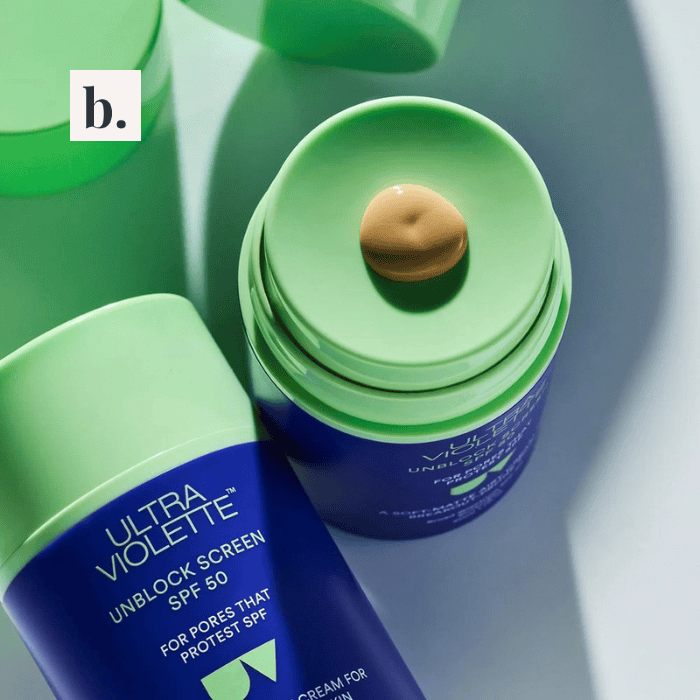
Ultra Violette
Unblock Screen SPF50 Breakout-Friendly SKINSCREEN
If your skin is oily or breakout-prone and you want a soft-matte SPF 50 sunscreen, Ultra Violette Unblock Screen combines UV filters with a low-shine finish. Its breakout-friendly positioning is not proof…
Read the BeautyBrief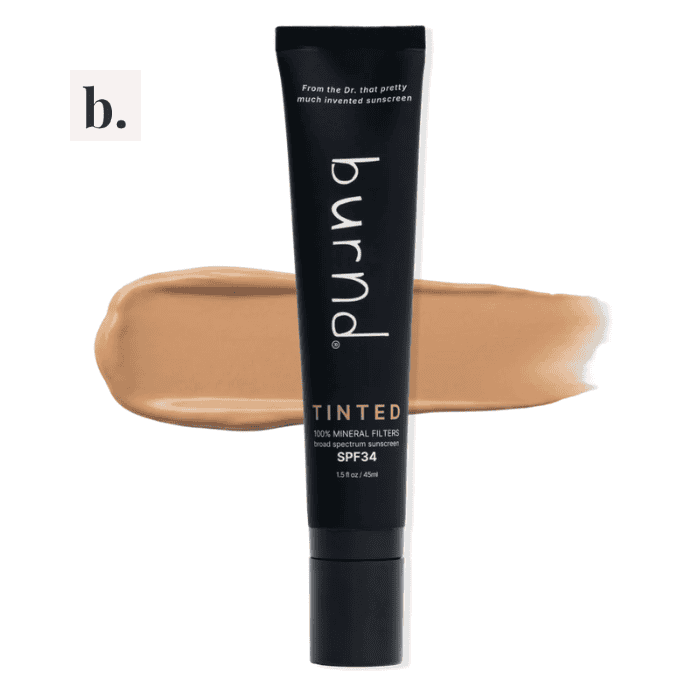
burnd
Tinted SPF 34
If you want a tinted mineral sunscreen with a wearable finish, burnd SPF 34 provides zinc oxide protection and pigment-based coverage. Its photolyase ingredient is not proof that the finished sunscreen reverses…
Read the BeautyBrief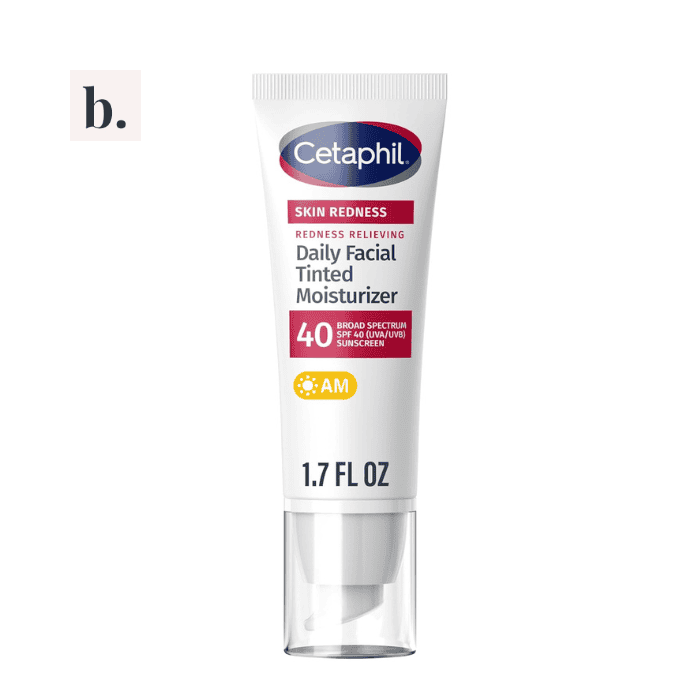
Cetaphil
Redness Relieving Daily Facial Tinted Moisturizer SPF 40
If you want mineral SPF 40 with cosmetic redness coverage, Cetaphil's tinted moisturizer combines zinc oxide, titanium dioxide and color pigments. The tint can make redness less visible without treating its cause,…
Read the BeautyBrief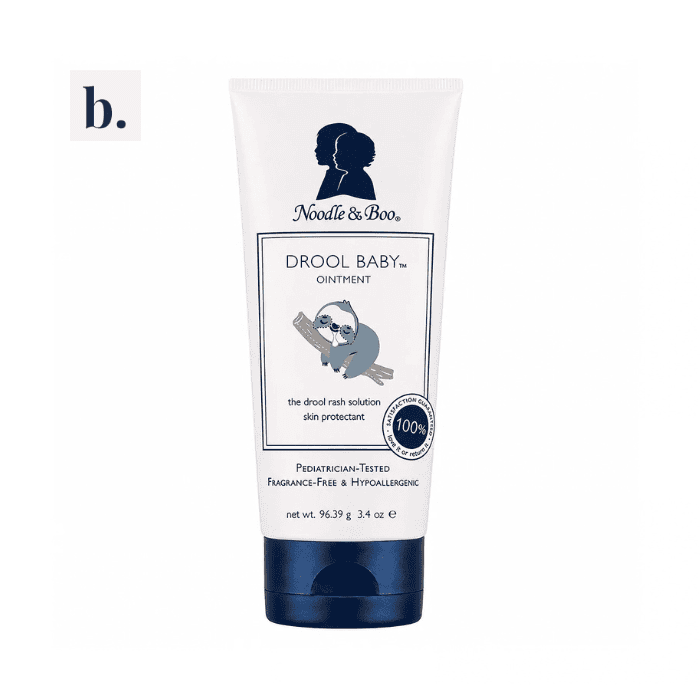
Noodle & Boo
Drool Baby
If your baby's cheeks or chin need a moisture-resistant barrier from repeated drool, Noodle & Boo Drool Baby uses 2% zinc oxide with occlusive ingredients. Its fragrance-free formula suits protective care, but…
Read the BeautyBrief