
Petrolatum in Skincare
Petrolatum is a well-supported occlusive and emollient that reduces water loss and helps protect dry, chapped, or exposed skin. Its main tradeoff is a heavy finish, not weak performance.
- Aliases
- Petroleum Jelly, White Petrolatum
- Ingredient category
- Emollient, Occlusive
- Most relevant for
- Dryness, Skin Barrier Support
- Evidence strength
- Well Supported for Reducing water loss and temporarily protecting dry or chapped skin with topical petrolatum
- Formula matters
- Concentration, drug versus cosmetic status, vehicle, supporting humectants and emollients, application area, and finished texture determine usefulness; the 30% to 100% OTC range is not an ideal target for ordinary facial moisturizers.
- Separate product needed?
- Sometimes. Plain petrolatum can be useful for lips, hands, heels, friction points, and targeted dry patches, but most people do not need it as a separate full-face step.
BB takeaway
Petrolatum is one of skincare's most dependable low-cost occlusives. Use it when you need stronger sealing power, but do not mistake heavier texture or a higher percentage for automatically better skincare.
Ingredient evidence does not prove the performance of every finished product containing it.
What is petrolatum?
Petrolatum is a semi-solid mixture of highly refined hydrocarbons commonly known as petroleum jelly. Cosmetic and drug labels may list Petrolatum or White Petrolatum.
In the United States, petrolatum and white petrolatum at 30% to 100% can serve as active ingredients in qualifying over-the-counter skin-protectant products.[1] That drug role is separate from petrolatum’s use as an emollient and occlusive in ordinary cosmetics.
A moisturizer can contain petrolatum without being an OTC skin-protectant drug. Concentration, labeling, claims, and the finished product determine which role applies.
What does petrolatum do for skin?
Petrolatum forms a strong occlusive film that slows transepidermal water loss, helping skin hold on to moisture.
That makes it especially useful for dry lips, chapped hands, rough heels, flaky patches, friction-prone areas, and skin that needs stronger protection from moisture loss.
Petrolatum does not add water to skin in the same way a humectant such as glycerin does. It is more useful for keeping moisture from escaping.
This is why it often works well over damp skin or over a moisturizer containing humectants, emollients, and barrier-supporting ingredients.
What the evidence says about petrolatum skincare
Petrolatum is well supported for reducing transepidermal water loss and temporarily protecting dry, chapped, or exposed skin.
FDA OTC Monograph M016 lists petrolatum and white petrolatum at 30% to 100% as skin-protectant active ingredients in qualifying products.[1] That is strong regulatory support for a narrow protective role, not proof that every cosmetic containing petrolatum provides the same drug-level use.
Direct human testing also supports its occlusive effect. In a 2025 randomized within-person study involving 54 adults, petrolatum increased stratum-corneum hydration and significantly reduced transepidermal water loss after application.[2]
A randomized crossover study in 51 people with dry skin also separated the roles of glycerol and petrolatum inside an emollient cream. The petrolatum component improved barrier function by reducing water loss, while glycerol contributed more directly to increased hydration.[3]
A 2024 dermatology review describes petroleum jelly as a long-established moisturizer with broad dermatologic use, low allergenicity, and a strong safety record.[4]
Petrolatum also produces measurable barrier-related biological changes after occlusion, including effects on barrier proteins and stratum-corneum structure.[5] Those findings support a barrier-supportive role without turning petrolatum into a stand-alone treatment for eczema or every form of barrier damage.
For your routine, petrolatum is a dependable way to seal in moisture. Whether you need it depends on your dryness and how comfortable you find its heavier finish.
How petrolatum form and formulation affect results
Pure or nearly pure petrolatum gives you the strongest, most obvious occlusive layer. It also feels the heaviest and shiniest.
In a cream, lotion, lip treatment, or balm, petrolatum can be blended with water, humectants, emollients, waxes, silicones, and emulsifiers. Those ingredients change spread, finish, comfort, and how practical the product is during the day.
A complete moisturizer can also do more than petrolatum alone. Hyaluronic acid, panthenol, and ceramides can contribute hydration or barrier support while petrolatum helps slow moisture loss.
Ingredient-list position gives only a rough clue to richness. It does not reveal the exact concentration or how occlusive the finished product will feel.
For OTC skin protectants, 30% to 100% has a specific regulatory meaning. That range should not be treated as the ideal concentration for an everyday facial moisturizer.
Who may benefit from petrolatum skincare?
Petrolatum makes the most sense when skin needs stronger sealing power than a typical lotion provides.
Dry lips, chapped hands, rough elbows and heels, friction-prone areas, isolated flaky patches, and very dry skin are common situations where it can be useful.
Normal, combination, or oily skin may prefer petrolatum only on selected areas rather than over the entire face.
The available dermatology literature does not support treating petrolatum itself as an automatic pore-clogging ingredient.[4] That does not mean every petrolatum-containing balm will suit acne-prone skin; the complete formula and how broadly you apply it still matter.
Petrolatum side effects and irritation risk
Petrolatum itself is generally well tolerated. The main drawbacks are practical: heaviness, shine, stickiness, transfer, and a film that some people dislike.
True allergy appears uncommon. In a petrolatum-containing product, fragrance, flavoring, preservatives, botanical extracts, or medicated ingredients may be more likely sources of irritation than plain white petrolatum.
Petroleum origin is not the same as industrial-grade petroleum exposure. Cosmetic and pharmaceutical petrolatum is highly refined, and government safety reviews distinguish refined consumer-grade materials from less refined petroleum substances.[6]
Use cosmetic, pharmaceutical, or OTC petrolatum from reputable manufacturers. Do not substitute industrial petroleum products.
How to use petrolatum in your skincare routine
For facial dryness, petrolatum usually works best as the final step over moisturizer.
Start with a small amount and press a thin layer onto the areas that need extra protection rather than coating the entire face by default.
For lips, hands, elbows, heels, and small dry patches, you can apply it directly to clean skin or over a hydrating product. Applying it after washing or bathing can help hold on to water already present in the skin.
Do not use petrolatum to force your skin through an irritating routine. If an acid, retinoid, or benzoyl peroxide product causes persistent burning or peeling, reduce the source of irritation rather than simply sealing it underneath a thicker layer.
How long does petrolatum take to work?
Petrolatum begins forming an occlusive film as soon as it is applied, so skin can feel softer and less exposed quickly.
Measured reductions in water loss can occur soon after application, but visible improvement in chapping, roughness, or cracking depends on what caused the problem and whether that trigger continues.[2]
Petrolatum cannot correct ongoing overexfoliation, untreated dermatitis, infection, or repeated exposure to an irritant by itself.
What can you use with petrolatum?
Petrolatum pairs especially well with humectants and moisturizers because it performs a different job from them.
Applying it over glycerin, hyaluronic acid, panthenol, or a ceramide moisturizer can combine hydration with stronger protection against moisture loss.
It can also be used strategically on selected dry areas while the rest of the routine stays lighter.
Use more caution when the skin underneath is already irritated by strong actives. Petrolatum does not neutralize an aggressive formula, and extra occlusion can make some topical treatments feel more intense.
How to choose a petrolatum product
Start by deciding how much occlusion you actually need.
Plain white petrolatum gives strong sealing power, a short ingredient list, and low cost. The tradeoff is a heavy, shiny finish.
A cream or balm containing petrolatum can be easier to wear while still adding meaningful moisture protection.
For highly reactive skin, look for a fragrance-free formula with few unnecessary extras. For lips, check for flavoring, fragrance, cooling ingredients, or botanical extracts that can make already chapped skin sting.
For acne-prone skin, judge the complete product rather than rejecting petrolatum automatically. Using plain petrolatum on lips or an isolated dry patch is very different from spreading a multi-ingredient balm over the entire face.
Petrolatum alone does not justify Premium pricing. Pay more only when the finished product gives you a meaningful advantage in texture, supporting ingredients, packaging, tolerability, or usability.
Do you need a separate petrolatum product?
Sometimes.
A small container of plain petrolatum is genuinely useful if you regularly deal with chapped lips, rough hands, heels, friction-prone spots, or occasional areas that need stronger sealing power.
You probably do not need a separate petrolatum step if your current moisturizer already controls dryness or if you dislike heavy ointment textures.
For everyday facial dryness, a balanced moisturizer you will use consistently can be more practical than a separate occlusive layer.
The BB Perspective
Petrolatum is one of skincare’s most effective low-cost occlusives.
Its value is not complicated: it reduces water loss and provides strong surface protection. The mistake is assuming that more occlusion is always better or that every petrolatum-containing product is automatically a barrier-repair treatment.
Keep plain petrolatum around when you regularly need targeted sealing power. Otherwise, choose the moisturizer that best solves the dryness problem and treat petrolatum as one useful tool rather than a required step.
Last reviewed: September 2026
Sources
The current monograph lists petrolatum and white petrolatum at 30% to 100% as active ingredients in qualifying OTC skin-protectant products. This concentration range has a specific drug-regulatory meaning and does not establish an ideal petrolatum percentage for ordinary cosmetic moisturizers. Return to citation.
Rubio-Santoyo A, Sanabria-de la Torre R, Montero-Vílchez T, Girón-Prieto MS, Gómez-Farto A, Arias-Santiago S. Effects of Extra Virgin Olive Oil and Petrolatum on Skin Barrier Function and Microtopography. Journal of Clinical Medicine. 2025;14(13):4675. doi:10.3390/jcm14134675. PMID:40649050. PMCID:PMC12251406.
This randomized within-person study included 54 healthy adults. Petrolatum increased stratum-corneum hydration and reduced transepidermal water loss, supporting a direct occlusive effect under the tested conditions. The study involved healthy forearm skin and should not be treated as evidence for treating a skin disease. The study received a University of Granada research grant. Coauthor Almudena Gómez-Farto was employed by a biotechnology and pharmaceutical research company; the other authors reported public-sector affiliations or no conflicts. Return to citation.
Vaillant L, Georgescou G, Rivollier C, Delarue A. Combined effects of glycerol and petrolatum in an emollient cream: A randomized, double-blind, crossover study in healthy volunteers with dry skin. Journal of Cosmetic Dermatology. 2020;19(6):1399-1403. doi:10.1111/jocd.13163. PMID:31532576.
This randomized crossover study involved 51 volunteers with dry skin and compared a complete emollient cream with versions missing glycerol, petrolatum, or both. The petrolatum component contributed to reduced transepidermal water loss, while glycerol contributed more directly to hydration. The study supports formula-first moisturizing because the ingredients performed complementary jobs. Three authors received investigator fees, and Alain Delarue was employed by Pierre Fabre. Return to citation.
Kamrani P, Hedrick J, Marks JG, Zaenglein AL. Petroleum jelly: A comprehensive review of its history, uses, and safety. Journal of the American Academy of Dermatology. 2024;90(4):807-813. doi:10.1016/j.jaad.2023.06.010. PMID:37315800.
This dermatology review covers petrolatum manufacturing, moisturizing and occlusive properties, allergenicity, comedogenicity, wound care, and common safety misconceptions. It provides broad ingredient-level context rather than evidence for any one retail product. Three authors reported no conflicts; Andrea Zaenglein disclosed an editor-in-chief role with Pediatric Dermatology. Return to citation.
Czarnowicki T, Malajian D, Khattri S, et al. Petrolatum: Barrier repair and antimicrobial responses underlying this “inert” moisturizer. Journal of Allergy and Clinical Immunology. 2016;137(4):1091-1102.e7. doi:10.1016/j.jaci.2015.08.013. PMID:26431582.
This mechanistic human study included healthy participants and people with atopic dermatitis and found barrier-related biological changes after petrolatum occlusion. It supports barrier-related activity but was not a long-term consumer moisturizer trial and does not establish petrolatum as a stand-alone eczema treatment. Support included the Helmsley Charitable Trust, American Dermatological Association, NIH/NCRR, Dermatology Foundation, and Rockefeller University. Senior authors J. G. Krueger and E. Guttman-Yassky disclosed relationships with multiple pharmaceutical companies. Return to citation.
This government assessment considered refining, residual polycyclic aromatic hydrocarbons, consumer exposure, and health evidence for petrolatum and related waxes. It concluded that expected general-population exposure to the assessed consumer-grade materials did not pose a risk to human health. This safety conclusion applies to assessed refined materials, not industrial petroleum products. Return to citation.
Products featuring Petrolatum
These evaluated products list Petrolatum among the Key Ingredients that meaningfully shape the formula. Inclusion here reflects ingredient relevance, not an endorsement or rating.
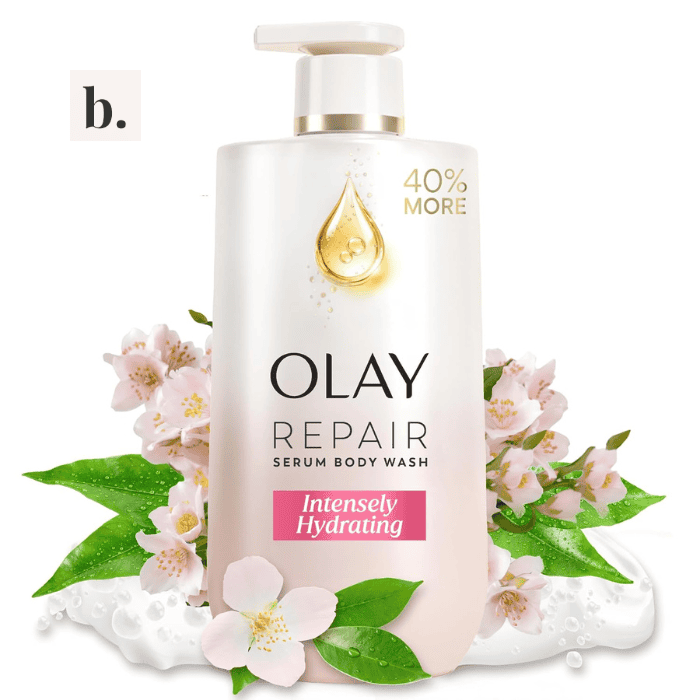
Olay
Intensely Hydrating Body Wash with Hyaluronic Serum Complex
If you want a conditioning body wash for skin that feels dry after showering, Olay Intensely Hydrating Body Wash provides petrolatum and other skin-softening ingredients in a rinse-off formula. Fragrance and isothiazolinone…
Read the BeautyBrief
e.l.f. Cosmetics
e.l.f. Spicy Bundt Nice Silky Body Cream – POP Tromsø Collection
If you like a spice-and-orange scented body cream, this formula combines glycerin, emollients, silicones and petrolatum. Its Budget value rests on scent and texture, while perfume and aromatic oils limit its fit…
Read the BeautyBrief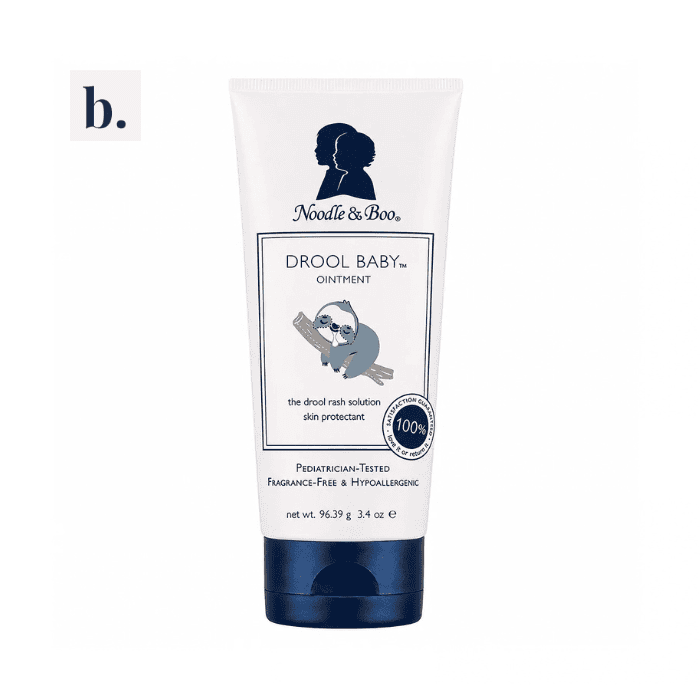
Noodle & Boo
Drool Baby
If your baby's cheeks or chin need a moisture-resistant barrier from repeated drool, Noodle & Boo Drool Baby uses 2% zinc oxide with occlusive ingredients. Its fragrance-free formula suits protective care, but…
Read the BeautyBrief
Beverly Hills MD
Total Recovery Night Eye Cream
If your eye area feels dry or crepey, Total Recovery offers a rich moisturizing formula with caffeine and conditioning peptides. Its Premium value depends on comfort rather than an expectation of lifting…
Read the BeautyBrief
Amazon Basics
Acne Treatment Face Wash
If your oily or acne-prone skin already tolerates 10% benzoyl peroxide, Amazon Basics gives you a Budget medicated wash. Fragrance, menthol and the label's irritation warnings make a gentler formula a better…
Read the BeautyBrief