

Tanning Oil With SPF vs. Regular Sunscreen: Is Either Safe If You Want a Tan?
At a glance
Tanning oils can range from products with little or no UV protection to legitimate broad-spectrum sunscreens in an oil format. That makes the front-of-bottle language less useful than the sunscreen label itself. If your goal is getting color outdoors, the more important question is whether sunscreen can make intentional tanning safe—or whether a different product gives you the look without requiring the UV exposure.
A tan can look like a temporary glow, but after ultraviolet exposure it is evidence that your skin has responded to injury. CDC states that any change in skin color after UV exposure, whether a tan or a burn, is a sign of injury rather than health.[1]
That changes the tanning-oil comparison. The useful question is not whether an oil feels more summery than a lotion. It is whether the product provides dependable broad-spectrum protection at an SPF you can apply correctly—and whether you are using it for sun protection or as permission to stay in direct UV exposure until your skin tans.
In this Briefing
- Is either option safe for intentional tanning?
- What separates tanning oil from sunscreen?
- What SPF does and does not tell you
- When an oil-format sunscreen can make sense
- Why low-SPF tanning oils are a poor trade-off
- What water resistance actually means
- How to use spray formulas more reliably
- A better route if you want color
- How to use sunscreen outdoors
- Which one should you buy?
Is either option safe if you are intentionally trying to tan?
No sunscreen makes deliberate UV tanning safe.
UVA and UVB both contribute to skin damage. CDC notes that excessive UV exposure can lead to premature skin aging and skin cancer, and a visible tan is itself a sign that UV exposure has injured the skin.[1][2]
You can also tan without burning. Avoiding a sunburn does not mean the exposure was harmless.
Sunscreen reduces how much UV reaches your skin when you are outdoors. It should not be used to extend deliberate sun exposure until you become tan.
What separates tanning oil from regular sunscreen?
The word oil does not determine whether a product protects your skin. The sunscreen labeling does.
In the U.S., products marketed to protect skin from UV exposure with sunscreen active ingredients and SPF claims are regulated as over-the-counter sunscreen drugs. FDA labeling distinguishes broad-spectrum products and permits water-resistance claims only when the required testing has been completed.[3]
So an oil-format product can be a legitimate sunscreen. A lotion, cream, stick, or spray can also give you less protection than expected in real life if you apply it too thinly or unevenly.
For an outdoor sunscreen, look for:
- SPF 30 or higher
- Broad-spectrum protection
- Water resistance when you will be swimming or sweating
- A format you can apply generously and evenly
The American Academy of Dermatology recommends those basic protection features and notes that sunscreen format is largely a matter of personal preference.[4]
What does SPF tell you?
SPF is primarily a measure of protection against UVB-related sunburn. It does not tell you how many hours you can safely remain in direct sun.
FDA explains that SPF testing compares the UV dose needed to produce sunburn on protected skin with the dose needed on unprotected skin. A higher number means greater tested sunburn protection, but the label is not a countdown clock.[5]
SPF alone is also incomplete. Look for broad spectrum, which indicates that the product has passed FDA’s test covering UVA as well as UVB wavelengths.[3]
And remember that the SPF on the bottle comes from standardized testing at a specified application amount. Applying a very thin coat, skipping areas, or relying on a quick spray mist can leave you with substantially less real-world protection than the label suggests.
Can an SPF 30 or higher tanning oil be a reasonable sunscreen?
Yes—if it is actually formulated and labeled as the kind of sunscreen you need.
If an oil is broad spectrum, SPF 30 or higher, water resistant when your activity calls for it, and easy for you to apply generously and evenly, the oil texture itself is not a reason to reject it.
This distinction matters because products sold with words such as tanning oil, sun oil, or glow oil can offer very different levels of UV protection.
Check the Drug Facts and front label rather than relying on the product name. If it is broad spectrum SPF 30 or higher, evaluate it as a sunscreen. If it has no SPF, a very low SPF, or lacks broad-spectrum protection, it is a poor choice for prolonged outdoor exposure.
The UV filters can vary. U.S. sunscreens may use mineral filters such as zinc oxide and titanium dioxide or organic UV filters. Filter category is not the most useful shortcut here. Choose a finished sunscreen with appropriate labeled protection and a texture you will use correctly.
Why are low-SPF tanning oils a poor trade-off?
Because they combine relatively weak protection with the kind of activity most likely to involve prolonged UV exposure.
FDA labeling rules allow broad-spectrum SPF 15 or higher products to carry certain skin-cancer and early-aging risk-reduction claims when they are used as directed with other sun-protection measures. AAD recommends broad-spectrum, water-resistant SPF 30 or higher for exposed skin.[3][4]
An SPF 4 or SPF 6 tanning oil falls far below that AAD recommendation.
Products with no sunscreen protection are even easier to judge. FDA requires suntanning preparations without sunscreen ingredients to warn that they do not protect against sunburn and that repeated unprotected tanning exposure can increase the risk of skin aging, skin cancer, and other harmful effects even when you do not burn.[6]
If protecting your skin is the priority, choosing minimal protection so you can tan more readily is not a useful compromise.
What does “water resistant” actually mean?
It does not mean waterproof.
FDA does not permit sunscreens to be labeled “waterproof” or “sweatproof.” Products that pass the required test may say they are water resistant for either 40 or 80 minutes while swimming or sweating.[3]
The 40- or 80-minute claim tells you how long the product maintained its tested SPF under the standardized water-resistance procedure. It does not tell you how long you can safely stay outdoors.
Follow the product directions. For water-resistant sunscreens, FDA labeling calls for reapplication after the stated 40 or 80 minutes of swimming or sweating, immediately after towel drying, and at least every two hours during continued exposure.[3]
Are spray tanning oils harder to use correctly?
They can be, mainly because it is harder to judge whether you applied enough and covered every area evenly.
AAD recommends spraying generously until the skin glistens and then rubbing the sunscreen in for even coverage. It also advises against spraying sunscreen directly around the face or mouth; spray it into your hands first and then apply it to the face.[7]
AAD also advises avoiding inhalation, windy application conditions, and use near heat, open flames, or while smoking when using aerosol sunscreens.[7]
If you know your usual spray-sunscreen technique is one quick mist over your legs, a lotion or non-aerosol oil that you deliberately spread may make it easier to get complete coverage.
What if you want the color but not the UV exposure?
Use a sunless tanning product.
Dihydroxyacetone, or DHA, is the color additive commonly used in self-tanning lotions and creams. FDA permits DHA for external application to the body, where it darkens the appearance of the skin without requiring UV exposure.[8]
That color does not automatically provide sun protection. A self-tanner only gives you sunscreen protection when it also contains approved sunscreen ingredients and carries an SPF claim.[8]
Keep the two jobs separate:
- Self-tanner or wash-off bronzer: creates the color.
- Sunscreen: reduces UV exposure when you go outdoors.
If you use a DHA spray or commercial spray-tan booth, follow precautions to avoid inhalation and exposure to the eyes, lips, and mucous membranes. FDA has not approved DHA for those exposure routes.[8]
How should you use sunscreen when you expect to be outside?
Choose a broad-spectrum, water-resistant SPF 30 or higher and apply it generously to all exposed skin before going outdoors.
AAD says most adults need about 1 ounce—roughly a shot-glass amount—to cover exposed body skin, although the amount varies with body size and how much skin is uncovered.[9]
Reapply at least every two hours while outdoors and immediately after swimming or sweating, while also following the product’s specific 40- or 80-minute water-resistance directions when applicable.[3][9]
Sunscreen should be one part of sun protection rather than the only part. CDC and FDA also recommend shade, protective clothing, hats, sunglasses, and limiting time in strong direct sun.[1][5]
You also do not need to choose between “mineral” and “chemical” sunscreen based on fear-based marketing. The practical priority is broad-spectrum protection, adequate SPF, correct application, and a formula you will use in the needed amount. BB’s Briefing on choosing sunscreen without falling for safety misinformation explains that comparison in more detail.
So, which should you buy?
If you are choosing between a low-SPF tanning oil and a broad-spectrum SPF 30 or higher sunscreen, choose the sunscreen.
If the “tanning oil” itself is a broad-spectrum SPF 30 or higher sunscreen and is water resistant when you need that feature, the oil format can be a reasonable choice. Use it for protection—not as a tool for extending deliberate UV exposure until you tan.
Skip no-SPF tanning oils for sun protection, and do not pay for a low-SPF product mainly because it promises an easier UV tan.
If what you actually want is bronzed-looking skin, a self-tanner is the more direct purchase because it separates the color from the UV exposure.
The BB Perspective
Tanning oil is not automatically bad sunscreen, and lotion is not automatically good sunscreen. The meaningful distinction is whether the finished product gives you broad-spectrum SPF 30 or higher, the water resistance your activity requires, and a format you will apply generously and evenly.
What sunscreen cannot do is make intentional UV tanning safe. A tan is still evidence of UV injury, even when you did not burn.
If color is the goal, let a self-tanner handle the color and let sunscreen handle sun protection. That is a much clearer trade than choosing deliberately weak UV protection so your skin can tan more easily.
Last reviewed: October 2026
Sources
Centers for Disease Control and Prevention. Reducing Risk for Skin Cancer. Updated June 17, 2026. Accessed September 2026.
CDC states that UV exposure damages skin cells and that any change in skin color after UV exposure, whether a tan or a burn, is a sign of injury rather than health. It also recommends combining sunscreen with shade, protective clothing, hats, and sunglasses. Return to citation.
Centers for Disease Control and Prevention. Ultraviolet Radiation. Accessed September 2026.
CDC describes UVA and UVB radiation and the health effects associated with excessive UV exposure, including premature skin aging and skin cancer. BB uses this source for general UV-risk context rather than to distinguish the performance of individual sunscreen formats. Return to citation.
U.S. Food and Drug Administration. Labeling and Effectiveness Testing: Sunscreen Drug Products for Over-the-Counter Human Use — Small Entity Compliance Guide. Accessed September 2026.
FDA guidance explains broad-spectrum labeling and the 40- or 80-minute water-resistance testing framework. It also specifies reapplication after the labeled period of swimming or sweating, immediately after towel drying, and at least every two hours. Sunscreens cannot be labeled waterproof or sweatproof. This is regulatory and testing guidance rather than a comparison of oil and lotion sunscreen textures. Return to citation.
American Academy of Dermatology Association. Sunscreen FAQs. Accessed September 2026.
AAD recommends broad-spectrum, water-resistant sunscreen with SPF 30 or higher and states that sunscreen format is largely a matter of personal preference. It also states that there is no safe way to tan. It discusses lotions, creams, gels, sticks, and sprays and emphasizes choosing a product that can be used correctly and consistently. Return to citation.
U.S. Food and Drug Administration. Sunscreen: How to Help Protect Your Skin from the Sun. Accessed September 2026.
FDA explains what SPF represents, why SPF should not be interpreted as a safe-exposure timer, the role of broad-spectrum protection, and the need to combine sunscreen with other sun-protection measures. Return to citation.
U.S. Food and Drug Administration. Required Warning Statement for Tanning Products Without Sunscreen. Accessed September 2026.
FDA requires suntanning preparations without sunscreen ingredients to warn that they do not protect against sunburn and that repeated unprotected tanning exposure can increase the risk of skin aging, skin cancer, and other harmful effects even without a burn. Return to citation.
American Academy of Dermatology Association. How to Use Stick and Spray Sunscreens. Accessed September 2026.
AAD recommends spraying generously until the skin glistens and then rubbing the sunscreen in for even coverage. It advises avoiding inhalation, spraying sunscreen into the hands before applying it to the face, avoiding windy conditions, and keeping aerosol sunscreen away from heat, open flames, and smoking. Return to citation.
U.S. Food and Drug Administration. Sunless Tanners & Bronzers. Accessed September 2026.
FDA permits DHA as a color additive for external application to the body and explains that sunless tanning products do not provide UV protection unless they also contain sunscreen ingredients and carry an SPF claim. FDA also notes that DHA is not approved for use around the eyes, on lips or mucous membranes, or through inhalation or ingestion, which is particularly relevant to spray applications. Return to citation.
American Academy of Dermatology Association. How to Apply Sunscreen. Last updated August 15, 2025. Accessed September 2026.
AAD states that most adults need about 1 ounce of sunscreen to cover exposed body skin, with more sometimes needed depending on body size. It recommends applying sunscreen before going outdoors and reapplying every two hours and after swimming or sweating. BB avoids relying on the page’s face-specific volume conversion and instead emphasizes generous, even application and product-label directions. Return to citation.
Related product BeautyBriefs
These BeautyBriefs cover products relevant to the needs discussed in this Beauty Briefing. Inclusion here reflects topic relevance, not a rating or endorsement.
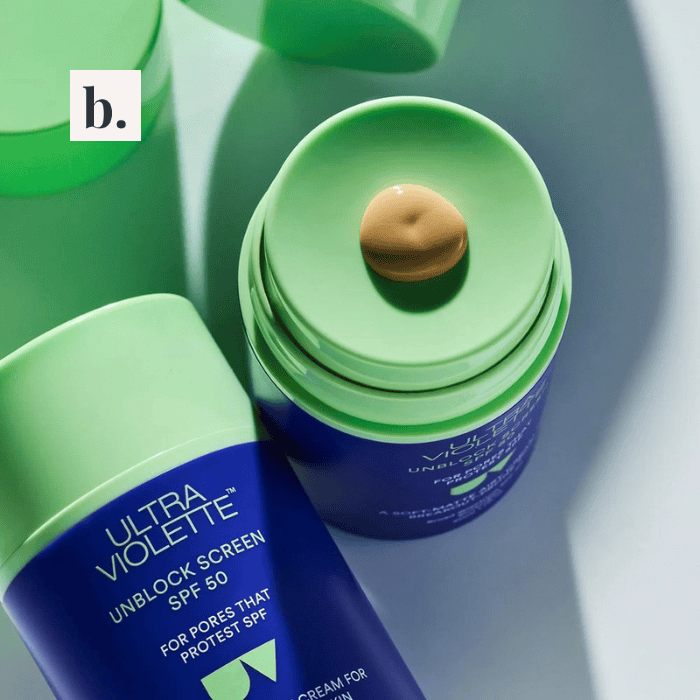
Ultra Violette
Ultra Violette Unblock Screen SPF50 Breakout-Friendly SKINSCREEN
If your skin is oily or breakout-prone and you want a soft-matte SPF 50 sunscreen, Ultra Violette Unblock Screen combines UV filters with a low-shine finish. Its breakout-friendly positioning is not proof…
Read the BeautyBrief
Neutrogena
Neutrogena Clear Face Sunscreen Acne-Prone Skin Broad Spectrum SPF 60 with BEMT
If you have acne-prone skin and want broad-spectrum protection without a heavy finish, Neutrogena Clear Face SPF 60 with BEMT offers a brand-labeled non-comedogenic sunscreen. That claim does not guarantee you will…
Read the BeautyBrief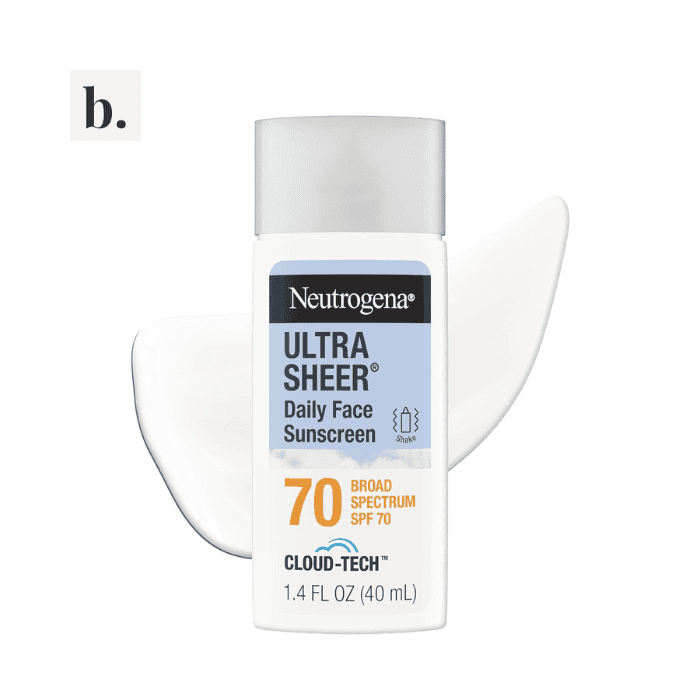
Neutrogena
Neutrogena Ultra Sheer Daily Face Sunscreen SPF 70 with BEMT
If you want a lightweight face sunscreen with high labeled SPF, Neutrogena Ultra Sheer SPF 70 with BEMT combines several UV filters, including bemotrizinol. SPF 70 is a protection rating, not a…
Read the BeautyBrief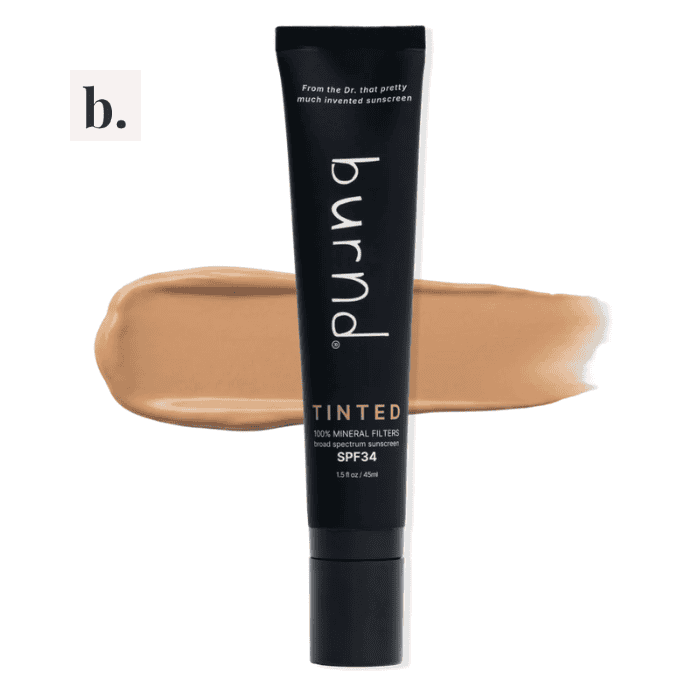
burnd
burnd Tinted SPF 34
If you want a tinted mineral sunscreen with a wearable finish, burnd SPF 34 provides zinc oxide protection and pigment-based coverage. Its photolyase ingredient is not proof that the finished sunscreen reverses…
Read the BeautyBrief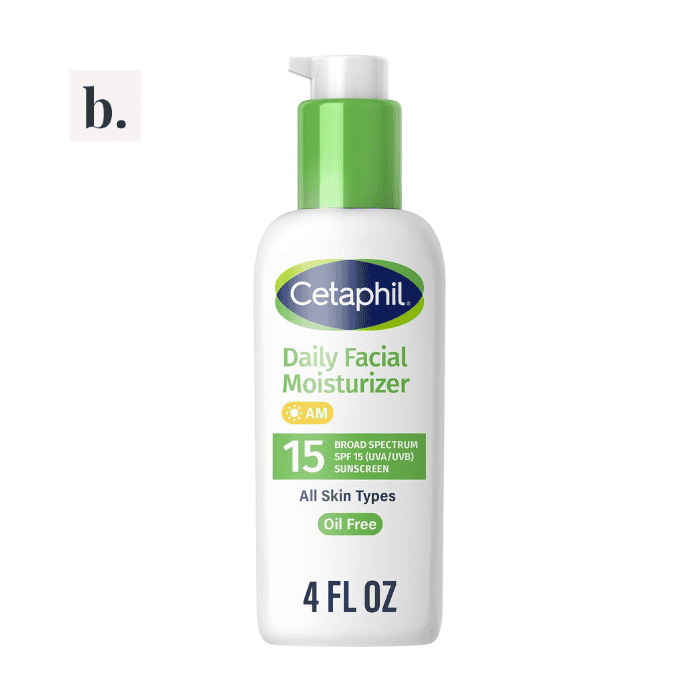
Cetaphil
Cetaphil Daily Facial Moisturizer SPF 15
If you want an easy morning moisturizer with some broad-spectrum UV protection, Cetaphil SPF 15 combines hydration with avobenzone and octocrylene. If sun exposure is a priority, choose a broad-spectrum SPF 30…
Read the BeautyBrief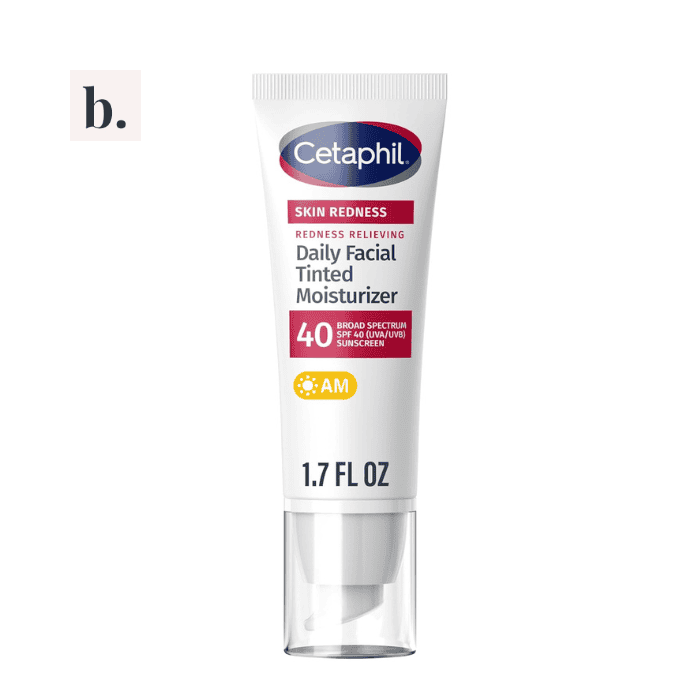
Cetaphil
Cetaphil Redness Relieving Daily Facial Tinted Moisturizer SPF 40
If you want mineral SPF 40 with cosmetic redness coverage, Cetaphil's tinted moisturizer combines zinc oxide, titanium dioxide and color pigments. The tint can make redness less visible without treating its cause,…
Read the BeautyBrief