

Do All Tinted Sunscreens Protect Against Visible Light?
At a glance
Two tinted sunscreens can look nearly identical on the shelf yet provide different levels of visible-light protection. That matters when you’re shopping for melasma or persistent dark spots. But neither SPF, shade depth, nor an iron-oxide listing tells the whole story. What can the research actually tell you about the sunscreen you’re considering—and how do you choose one you’ll wear consistently?
A beige, bronze, or deep tint does not automatically tell you how well a sunscreen protects against visible light.
Some tinted sunscreens use a pigment system designed to reduce the visible light reaching skin. Others use just enough color to soften white cast or make the sunscreen look more flattering. The finished products can perform very differently even when both say tinted on the front.
Your first priority is still broad-spectrum UV protection. Visible-light protection is an added consideration that becomes especially relevant when melasma or persistent pigmentation is one of your main concerns.
In this Briefing
Why does visible light matter for pigmentation?
Sunlight contains ultraviolet radiation as well as visible light. Visible light spans roughly 400 to 700 nanometers and includes the wavelengths we see as violet, blue, green, yellow, orange, and red.
Visible light can contribute to hyperpigmentation, and melasma is one of the clearest situations where this matters clinically. If you are trying to keep melasma from worsening, the American Academy of Dermatology recommends a tinted sunscreen containing iron oxide along with broad-spectrum SPF 30 or higher.[1]
This matters especially if you have a darker skin tone, because visible light can contribute to more persistent pigmentation.[1]
You do not automatically need tinted sunscreen. If pigmentation is not one of your concerns, an untinted sunscreen that you apply generously and consistently may be the better product for you.
And visible-light protection does not replace UV protection. Start with a sunscreen that already gives you the broad-spectrum protection you need.
What do SPF and broad spectrum tell you?
They tell you about ultraviolet protection—not visible-light protection.
SPF is based on protection against sunburn under standardized testing and therefore primarily reflects UVB protection. A U.S. sunscreen can use the broad spectrum label only when it passes FDA’s UVA-related broad-spectrum test.[2]
Neither the SPF number nor the broad-spectrum designation is a U.S. rating for visible-light protection.
That means a broad-spectrum SPF 50 can be an excellent sunscreen for UVA and UVB and still give you little information about how much visible light the finished product attenuates.
The UV filter category does not settle the question either. A sunscreen may use zinc oxide, titanium dioxide, organic UV filters, or a combination. Those ingredients determine the UV-filter system. They do not, by themselves, prove a particular level of visible-light protection.
Why isn’t “tinted” enough information?
Because tint describes appearance, not a standardized protection level.
A tinted sunscreen may:
- reduce white cast;
- blend more naturally into the skin;
- even the appearance of skin tone;
- provide light cosmetic coverage;
- help attenuate visible light.
It may do several of those things at once. The label does not tell you how strongly it does the last one.
A 2026 laboratory study compared commercial tinted sunscreens using transmittance spectroscopy across high-energy visible blue light from 415 to 455 nanometers. The products showed different levels of blocking even though all were tinted.[3]
That is the strongest reason not to treat the word tinted as a protection grade.
The study also has limits that matter. It was an in vitro comparison on test plates, not a clinical trial showing long-term pigmentation outcomes in people, and it tested a blue-light portion of the visible spectrum rather than the entire 400-to-700-nanometer range. Two authors were La Roche-Posay/L’Oréal employees, and the third disclosed research and consulting ties to L’Oréal.[3]
So use the result as evidence that formulation matters—not as a universal ranking system for every tinted sunscreen on the market.
What do iron oxides tell you?
Iron oxides are red, yellow, and black mineral pigments widely used to create sunscreen tints. They may appear on ingredient labels as iron oxides or color-index numbers such as CI 77491, CI 77492, and CI 77499.
They are useful because pigmentary materials can attenuate visible wavelengths that ordinary UV filters do not adequately address.
In the 2026 commercial-product comparison, stronger high-energy visible-light blocking correlated with higher iron-oxide levels in the formulas tested. The best-performing group also used iron oxides alongside zinc oxide and titanium dioxide.[3]
But that does not give you a simple shopping formula such as “more iron oxide equals better sunscreen.” The same study found that darker-looking tints were not automatically the strongest performers. The complete pigment and UV-filter system mattered.[3]
A 2025 review reached the same broader conclusion: tinted sunscreens can improve visible-light photoprotection, but there is still no universally accepted visible-light protection metric, and the optimal pigment composition remains unresolved.[4]
You also cannot reliably calculate a sunscreen’s iron-oxide concentration from the ingredient list. Brands generally do not disclose the percentage of each pigment.
Treat iron oxides as a strong positive clue when visible-light protection matters. Treat finished-product testing as stronger evidence.
Do tinted sunscreens actually help melasma in people?
Yes, there is human evidence supporting visible-light-protective tinted sunscreen in melasma—but it does not mean every tinted product will perform the same way.
In a randomized double-blind trial published in 2014, 68 people with melasma received either a broad-spectrum SPF 50-or-higher sunscreen containing iron oxide for visible-light protection or a UV-only sunscreen. Everyone also used 4% hydroquinone. Sixty-one completed eight weeks of treatment, and the visible-light-protective group showed greater improvements in melasma scores, colorimetry, and measured melanin than the UV-only group.[5]
That trial supports adding visible-light attenuation to a melasma regimen. It does not isolate the sunscreen as the only reason for improvement because both groups also used hydroquinone.
A newer 2025 randomized, investigator-blinded study compared a tinted Bioderma sunscreen designed for visible-light protection with a closely matched untinted sunscreen in 42 women with melasma during five summer months. Both had nearly identical SPF and UVA protection. Forty-one participants completed the study. Participants were 93% Fitzpatrick skin phototype III and 7% phototype IV.[6]
After five months, measured pigmentation contrast between melasma-affected and unaffected skin decreased significantly from baseline in the tinted group, but not in the untinted group. That finding does not establish superiority on every clinical measure: physician-scored mMASI improved in both groups without a significant difference between them.[6]
That nuance matters. The study supports a visible-light benefit on objective pigmentation measures, but it does not show that every clinical outcome was better with tint.
It was also funded by NAOS, the parent company of Bioderma; three authors were current or former NAOS employees, and another disclosed honoraria from multiple skincare and pharmaceutical companies.[6]
Taken together, the clinical evidence supports the strategy of visible-light-protective tinted sunscreen for melasma. It still does not justify assuming that any beige-tinted product gives you the same protection.
Why does shade match matter?
Because sunscreen only helps when you can use enough of it.
A tint that looks too orange, gray, pink, pale, or dark can push you toward applying a thinner layer than the product directions call for. That weakens the real-world value of even a technically strong formula.
Shade diversity is a known limitation in tinted sunscreen. The 2025 review specifically identifies inadequate shade ranges for skin of color as one of the major barriers to broader use.[4]
Multiple shades are therefore useful mainly because they increase the odds that you can find one you will apply properly. A larger shade range does not automatically mean the sunscreen provides stronger visible-light protection.
Check the tint in natural daylight and pay attention to the areas where mismatch becomes obvious: hairline, jaw, ears, and neck.
Also ask whether the formula:
- spreads evenly at a generous application;
- pills over the skincare you normally use;
- collects in dry areas or lines;
- stings around the eyes;
- becomes too greasy or too drying during the day;
- transfers so heavily that you avoid using enough.
A sunscreen with promising pigment technology is still a poor purchase if the shade or texture makes correct use unrealistic.
What should a brand prove?
If a brand makes a specific visible-light or blue-light protection claim, give the claim more weight when the company explains what it actually tested.
Useful information includes:
- The finished sunscreen was tested. Ingredient-level evidence is weaker than data on the product you can buy.
- The wavelength range is stated. A test limited to 415–455 nm is not the same as testing the entire visible spectrum.
- The method is described. Laboratory transmittance, induced-pigmentation testing, and long-term melasma outcomes answer different questions.
- The comparator is clear. An untinted vehicle or similarly strong UV sunscreen gives the result more meaning.
- The shade or pigment system is identified. Protection may differ across shades when pigment levels change.
- The company discloses limitations. Visible-light testing still lacks one universally accepted regulatory metric.[4]
Give vague “blue-light defense” language less weight when the brand does not tell you whether it tested the finished product, what wavelengths were measured, or whether the claim relates to sunlight-induced pigmentation at all.
You should not have to fill in missing evidence simply because the product contains iron oxides.
How should you choose a tinted sunscreen for discoloration?
Start with the sunscreen basics:
- Broad-spectrum SPF 30 or higher.
- Water resistance when you will be swimming or sweating.
- A texture you can apply generously and reapply when needed.
- A shade that works at the amount you actually need to use.
If melasma or persistent hyperpigmentation is a major concern, then add the visible-light questions:
- Does the formula contain iron oxides?
- Does the brand provide finished-product visible-light or pigmentation testing?
- Does it explain what its visible-light claim means?
- Can you wear the tint consistently without underapplying?
Do not pay more simply because the sunscreen is tinted. The premium makes more sense when it buys you a better shade match, stronger finished-product evidence, a more wearable texture, or another advantage that improves real use.
And if no tinted sunscreen matches your skin well enough to use correctly, do not sacrifice basic UV protection chasing the tint. A broad-spectrum sunscreen you will apply properly is still more useful than a tinted sunscreen you barely use.
The BB Perspective
Tinted sunscreen is one of the few beauty categories where pigment can do more than improve appearance. If you are managing melasma or persistent hyperpigmentation, an iron-oxide-containing formula can add visible-light protection that ordinary UV labeling does not describe.
But tinted is not a standardized protection rating. Recent laboratory testing shows substantial variation among commercial tinted sunscreens, and current reviews still highlight the lack of a universal visible-light testing metric. Human melasma studies support the strategy, not every individual tinted formula.
So do not buy the tint alone. Buy strong UV protection first, then look for iron oxides, a shade you can apply generously, and credible finished-product evidence when the brand makes a visible-light claim. The best sunscreen is the one whose protection you can understand and whose shade you can actually wear.
Last reviewed: October 2026
Sources
American Academy of Dermatology Association. Melasma: Self-Care. Last updated September 12, 2023. Accessed September 2026.
AAD recommends broad-spectrum, water-resistant SPF 30 or higher for melasma and specifically advises using a tinted sunscreen containing iron oxide because visible light can worsen melasma, particularly in people with darker skin tones. This is dermatologist-reviewed patient guidance rather than comparative testing of individual commercial tinted sunscreens. Return to citation.
U.S. Food and Drug Administration. Labeling and Effectiveness Testing: Sunscreen Drug Products for Over-the-Counter Human Use — Small Entity Compliance Guide. Accessed September 2026.
FDA guidance explains the U.S. broad-spectrum sunscreen test and labeling requirements. Broad spectrum reflects UVA protection relative to UVB protection within the UV range; the regulation does not create a visible-light protection rating. BB uses this source to distinguish regulated UV labeling from separate visible-light claims. Return to citation.
Dumbuya H, Podimatis K, Grimes P. Evaluation of Tinted Sunscreens Protection Against Blue Light Using Transmittance Spectroscopy In Vitro Technique. Photodermatology, Photoimmunology & Photomedicine. 2026;42(2):e70075. PMID: 41821151.
This laboratory study compared commercial tinted sunscreens using transmittance spectroscopy across high-energy visible light from 415 to 455 nm. Blocking varied among products and correlated with iron-oxide levels in the formulas tested; darker tint alone did not predict stronger performance. The study did not test long-term pigmentation outcomes in people or the entire visible-light spectrum. Dumbuya and Podimatis were employees of La Roche-Posay/L’Oréal, and Grimes disclosed research and consulting ties to L’Oréal. Return to citation.
He M, Chen X, Jin S, Zhang C. Visible Light Protection: An Updated Review of Tinted Sunscreens. Photodermatology, Photoimmunology & Photomedicine. 2025;41(4):e70033. PMID: 40552645.
This review evaluated recent visible-light and tinted-sunscreen research and concluded that tinted sunscreens can outperform non-tinted products for visible-light photoprotection and melasma management. It also emphasizes major limitations: no unified visible-light protection metric, uncertainty about optimal pigment composition, and inadequate shade diversity for many darker skin tones. The work received public research funding from Chinese national, municipal, and clinical-research programs. Return to citation.
Castanedo-Cazares JP, Hernandez-Blanco D, Carlos-Ortega B, Fuentes-Ahumada C, Torres-Álvarez B. Near-Visible Light and UV Photoprotection in the Treatment of Melasma: A Double-Blind Randomized Trial. Photodermatology, Photoimmunology & Photomedicine. 2014;30(1):35-42. PMID: 24313385.
Sixty-eight patients with melasma were randomized to SPF 50-or-higher UV-visible-light sunscreen containing iron oxide or a UV-only sunscreen while all participants also used 4% hydroquinone. Sixty-one completed eight weeks, and the UV-visible-light group showed greater improvements in MASI, colorimetry, and measured melanin. Because both groups used hydroquinone, the study evaluates visible-light photoprotection as an addition to treatment rather than sunscreen as the sole therapy. The research was funded by the Dermatology Department of Hospital Central Dr. Ignacio Morones Prieto in Mexico. Return to citation.
Polena H, Queille-Roussel C, Graizeau C, Duteil L, Sayag M, Passeron T. Comparison of Visible Light-Protective Tinted Sunscreen to Untinted Sunscreen to Protect Melasma Patients During Summer: A Prospective Randomized Investigator-Blinded Study. Journal of Cosmetic Dermatology. 2025;24(10):e70450. PMID: 41014037.
This five-month randomized, investigator-blinded study compared a Bioderma tinted sunscreen with dedicated visible-light pigments against a closely matched untinted UV sunscreen in 42 women with melasma; 41 completed the study. Objective pigmentation-uniformity measures improved more with the tinted sunscreen, while mMASI scores improved in both groups without a significant between-group difference. The study was funded by NAOS Ecobiology Company; several authors were current or former NAOS employees, and Thierry Passeron disclosed honoraria from multiple skincare and pharmaceutical companies. Return to citation.
Related product BeautyBriefs
These BeautyBriefs cover products relevant to the needs discussed in this Beauty Briefing. Inclusion here reflects topic relevance, not a rating or endorsement.

Oak Essentials
Oak Essentials Antioxidant Hand Serum
If your hands look dry, Oak Essentials Hand Serum offers humectants and emollients for softness. Its Premium value depends on the scented finish, not unproven cellular regeneration.
Read the BeautyBrief
Neutrogena
Neutrogena Rapid Wrinkle Repair Retinol Regenerating Cream
If your skin tolerates retinol and fragrance, Rapid Wrinkle Repair offers a moisturizing format for gradual fine-line care. Its Mid-Range value rests on texture and convenience rather than a disclosed retinol concentration.
Read the BeautyBrief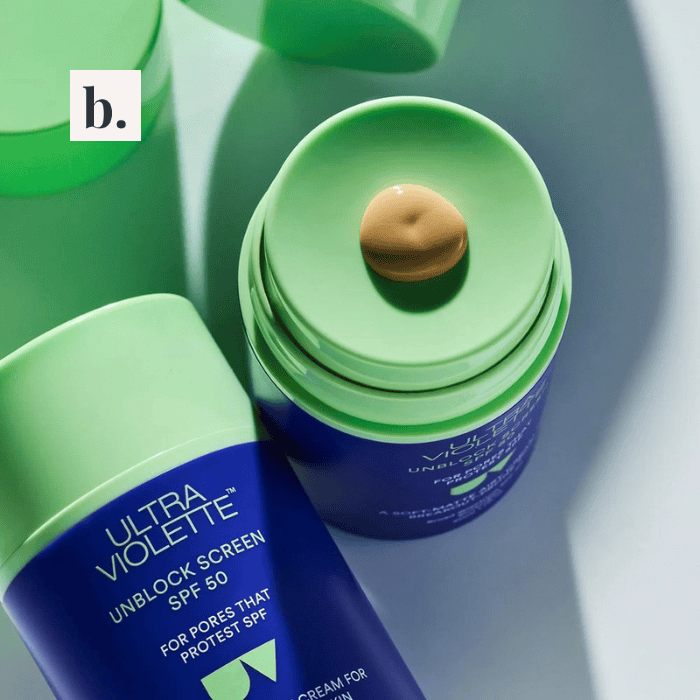
Ultra Violette
Ultra Violette Unblock Screen SPF50 Breakout-Friendly SKINSCREEN
If your skin is oily or breakout-prone and you want a soft-matte SPF 50 sunscreen, Ultra Violette Unblock Screen combines UV filters with a low-shine finish. Its breakout-friendly positioning is not proof…
Read the BeautyBrief
Neutrogena
Neutrogena Clear Face Sunscreen Acne-Prone Skin Broad Spectrum SPF 60 with BEMT
If you have acne-prone skin and want broad-spectrum protection without a heavy finish, Neutrogena Clear Face SPF 60 with BEMT offers a brand-labeled non-comedogenic sunscreen. That claim does not guarantee you will…
Read the BeautyBrief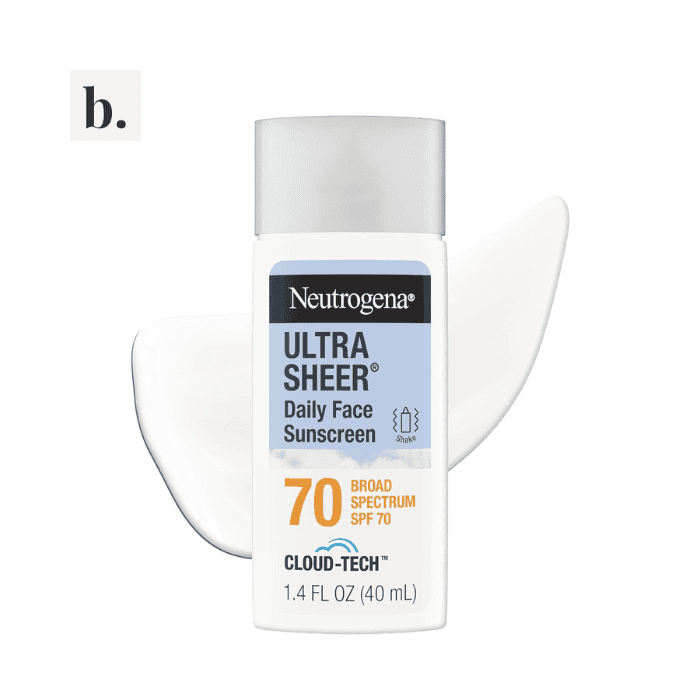
Neutrogena
Neutrogena Ultra Sheer Daily Face Sunscreen SPF 70 with BEMT
If you want a lightweight face sunscreen with high labeled SPF, Neutrogena Ultra Sheer SPF 70 with BEMT combines several UV filters, including bemotrizinol. SPF 70 is a protection rating, not a…
Read the BeautyBrief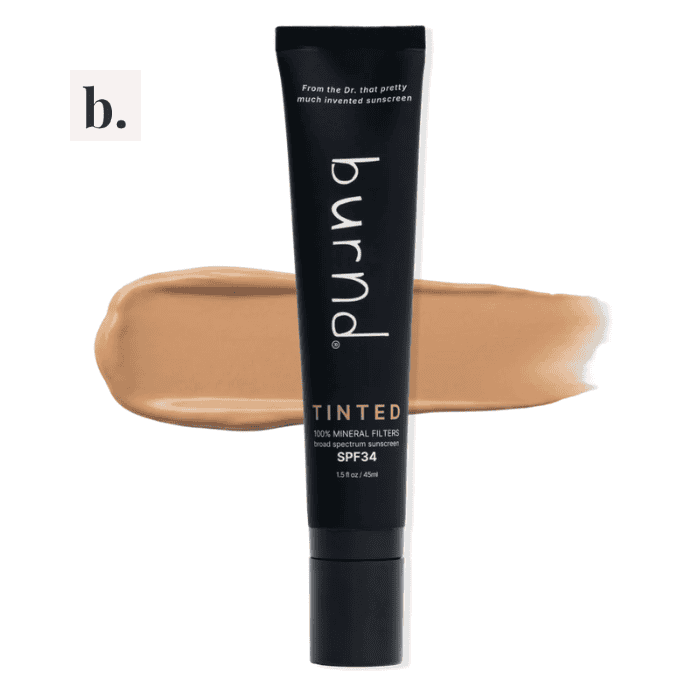
burnd
burnd Tinted SPF 34
If you want a tinted mineral sunscreen with a wearable finish, burnd SPF 34 provides zinc oxide protection and pigment-based coverage. Its photolyase ingredient is not proof that the finished sunscreen reverses…
Read the BeautyBrief