

Bemotrizinol Sunscreen in the U.S.: What You Need to Know
At a glance
Bemotrizinol gives U.S. sunscreen formulators a new broad-spectrum UV filter, but it does not make every sunscreen that contains it automatically better. For you, the useful change is more choice: brands have another way to build high-protection formulas with different textures and filter combinations. The finished sunscreen still has to suit your skin and be practical enough to use correctly.
Bemotrizinol sunscreen has gone from an international-sunscreen talking point to something you can now buy in the U.S..
In June 2026, the U.S. Food and Drug Administration added bemotrizinol, also called BEMT, to the over-the-counter sunscreen monograph. U.S. launches followed after the final order took effect.[1]
The practical question is no longer simply whether the filter is allowed in the U.S. It is which U.S. formulas you can buy, how they differ, and whether switching would solve a problem with the broad-spectrum sunscreen you already use.
What changed for your sunscreen choices in the U.S.?
FDA’s final order added bemotrizinol at concentrations up to 6% to OTC Monograph M020, the federal framework used by many U.S. nonprescription sunscreens. FDA describes it as the first new sunscreen active added to the monograph since the late 1990s.[1]
That does not mean every foreign sunscreen containing bemotrizinol is now a U.S.-market sunscreen. A finished product still has to meet the applicable U.S. conditions for permitted active combinations, dosage form, testing, manufacturing, and labeling.[2]
You now have more sunscreen choices. Brands now have another filter to work with when balancing protection, texture, stability, white cast, and everyday wear.
What does bemotrizinol actually do?
Bemotrizinol is a broad-spectrum organic UV filter used as a sunscreen active. In this context, organic describes its chemistry; it does not mean the sunscreen is natural or organically certified. FDA permits bemotrizinol at concentrations up to 6% under the conditions established in the current U.S. sunscreen monograph.[2]
The filter is only one part of the finished sunscreen. Real-world performance depends on the full active system, how those filters are formulated together, the tested SPF and broad-spectrum performance, the film the sunscreen forms on skin, and whether the formula remains comfortable enough to apply generously.
Bemotrizinol is an organic UV filter, not a mineral filter such as zinc oxide. When a sunscreen contains both BEMT and zinc oxide, it uses a hybrid filter system. BB’s organic UV filters ingredient page explains how this category differs from mineral filters.
If you want the ingredient-level science, BB’s Bemotrizinol ingredient page covers the filter itself. This Briefing focuses on the buying decision.
How can you identify bemotrizinol on a U.S. sunscreen label?
Look for bemotrizinol and its percentage under Active ingredients in the U.S. Drug Facts label. BEMT is a shorter name for the filter, but a brand’s mention of BEMT is not a substitute for checking the full active-filter list on the exact product you plan to buy. This matters especially when U.S. and imported versions are sold under similar names.[2]
Does bemotrizinol make a sunscreen better?
Not automatically.
A sunscreen containing bemotrizinol can still feel heavy, sting your eyes, pill under makeup, leave an unwanted finish, irritate your skin, or be expensive enough that you ration it. A sunscreen without bemotrizinol can still provide strong broad-spectrum protection in a formula you use consistently.
The filter expands formulation options. It is not a quality seal.
When comparing products, give more weight to the complete formula and tested protection than to seeing BEMT on the Drug Facts panel.
Which bemotrizinol sunscreens can you buy in the U.S.?
The U.S. options below were checked against official brand information on October 9, 2026. Three have launched; a fourth is announced for 2027. Retail stock changes, so verify the U.S. version and seller before buying.
BB’s three published BeautyBrief reviews compare the finished formulas, shopper fit, evidence behind added skincare claims, and value. Choose the review that matches your priorities:
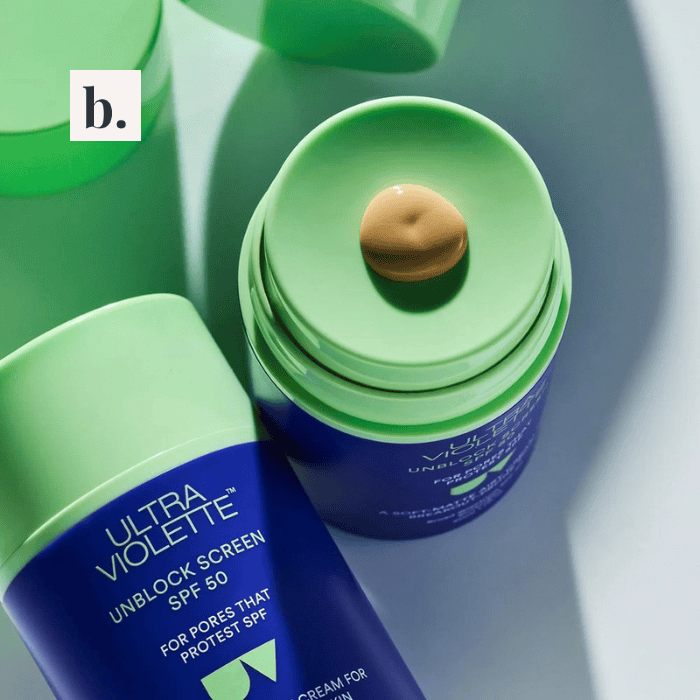
- Ultra Violette Unblock Screen SPF 50 — Read the BeautyBrief. Mid-Range. A hybrid sunscreen with 3% bemotrizinol, 10% zinc oxide, and 6% octocrylene, designed for a soft-matte finish on oilier or acne-prone skin. Its 21-person blemish study is limited evidence, not proof of acne treatment; the product is not labeled water-resistant.
- Neutrogena Ultra Sheer Daily Face Sunscreen SPF 70 — Read the BeautyBrief. Budget. A lightweight facial sunscreen with 6% bemotrizinol, avobenzone, homosalate, and octisalate. The added peptide has no established extra collagen-building benefit for this finished product, and the sunscreen is not labeled water-resistant.
- Neutrogena Clear Face Sunscreen SPF 60 — Read the BeautyBrief. Budget. The same four sunscreen actives and percentages as Ultra Sheer, with niacinamide and an exact-product non-comedogenic claim. It is not an acne treatment or a water-resistant sunscreen.
All three carry labeled broad-spectrum sun protection. The differences worth comparing are finish, skin fit, complete formula, and evidence for extra claims—not bemotrizinol concentration alone.[3][4][5]
Ultra Violette Unblock Screen SPF 50
Ultra Violette launched Unblock Screen SPF 50 in the U.S. on August 31, 2026.[6] The formula uses 3% bemotrizinol with 10% zinc oxide and 6% octocrylene.[3]
The brand positions it for oily, acne-prone, and reactive skin with a soft-matte finish. Its dermatologist-supervised 28-day evaluation involved 21 people, so the blemish and shine results are small, brand-reported finished-product data rather than proof that bemotrizinol itself improves acne.[3]
BB’s BeautyBrief assessment: The hybrid filter system and soft-matte design differentiate this Mid-Range sunscreen for oilier skin. Its small brand-reported study does not establish an acne-treatment benefit. The 50 mL size and lack of a water-resistance claim matter when judging value and intended use.
Neutrogena Ultra Sheer Daily Face Sunscreen SPF 70
Neutrogena’s U.S. bemotrizinol launch includes Ultra Sheer Daily Face SPF 70, which uses 6% bemotrizinol with 3% avobenzone, 15% homosalate, and 5% octisalate. Neutrogena positions it as a lightweight, quick-absorbing daily facial sunscreen.[4]
Neutrogena says its Cloud-Tech system provides 1.5 times higher UVA protection than standard U.S. sunscreen formulations and gives the formula a lightweight, fast-drying finish. Those are company claims about this finished formula, not benefits you should assume from every sunscreen containing bemotrizinol.[4]
BB’s BeautyBrief assessment: Ultra Sheer is a Budget-tier choice for everyday facial SPF 70 with a less greasy finish. Acetyl Dipeptide-31 Amide is included, but a separate collagen-building outcome has not been demonstrated for this sunscreen. The 1.4 fl oz bottle and lack of water resistance are practical limitations.
Neutrogena Clear Face Sunscreen SPF 60
Clear Face SPF 60 uses the same four sunscreen actives and the same 6% bemotrizinol concentration as the Ultra Sheer formula. Neutrogena positions Clear Face specifically for acne-prone skin and includes niacinamide; the official U.S. product page describes this exact formula as non-comedogenic and suitable for sensitive skin.[5]
BB’s BeautyBrief assessment: Clear Face is designed more specifically for acne-prone skin, with a documented non-comedogenic claim. Niacinamide is present at an undisclosed amount, so this Budget SPF should not be treated as an acne treatment. Its 1.4 fl oz size and lack of water resistance are additional tradeoffs.
Kenvue confirms that both Neutrogena sunscreens launched on Amazon and announced wider U.S. retail availability for October 2026. That rollout schedule is not a guarantee that every store has stock.[7]
Ultra Violette Fave Screen SPF 50
Ultra Violette has announced Fave Screen SPF 50 for a January 2027 U.S. launch. The brand says it will use 5% bemotrizinol in a lightweight milky format.[6]
Because it is not yet a current shopping option, treat it as an announced product rather than a present-tense shopping choice.
Is 6% bemotrizinol better than 3%?
No simple percentage rule works here.
FDA permits bemotrizinol at concentrations up to 6%, but a higher percentage does not independently tell you the sunscreen’s SPF, exact UVA protection, texture, eye comfort, water resistance, or overall wearability.[2]
Unblock Screen uses 3% bemotrizinol as part of a hybrid filter system that also includes zinc oxide and octocrylene. The Neutrogena formulas use 6% alongside avobenzone, homosalate, and octisalate. Those are different formulas built around different filter combinations.[3][4]
The useful comparison is the finished sunscreen, not one percentage in isolation.
Does bemotrizinol mean better UVA protection?
Bemotrizinol gives formulators another broad-spectrum filter, so it can contribute to a strong UVA and UVB protection system. But the presence of BEMT alone does not tell a U.S. shopper exactly how much UVA protection a finished product provides.
U.S. labels identify whether a sunscreen meets the applicable broad-spectrum requirement, but they do not give you a simple front-label UVA protection number that allows every formula to be compared filter by filter.[2]
Neutrogena says its Cloud-Tech formulas provide 1.5 times higher UVA protection than standard U.S. sunscreen formulations.[4] That is a finished-product company comparison. It should not be converted into the broader claim that every 6% bemotrizinol sunscreen provides 1.5 times the UVA protection of every sunscreen without it.
Is bemotrizinol safer than older U.S. sunscreen filters?
FDA concluded that there are conditions under which bemotrizinol at concentrations up to 6% is generally recognized as safe and effective for use as a nonprescription sunscreen active.[2]
That does not establish that older permitted sunscreen filters are unsafe.
FDA’s determination covers bemotrizinol use under the monograph conditions in adults and children ages 6 months and older. That is a finding about the sunscreen active under specified conditions, not a promise that every finished formula will suit sensitive skin. Check the product’s directions and warnings; ask a health professional before using sunscreen on an infant younger than 6 months.[1]
FDA explicitly says its request for additional data on several longstanding sunscreen ingredients is not a conclusion that those ingredients are unsafe. The agency continues to recommend sun-protection measures, including sunscreen, rather than advising you to avoid older filters simply because more safety information has been requested.[8]
So the buying decision should not become “bemotrizinol is safe, everything older is dangerous.” That is not what the regulatory record says.
Will bemotrizinol sunscreen feel lighter or sting less?
Possibly in some formulas. Not because BEMT guarantees it.
Brands are already using bemotrizinol in different filter systems and emphasizing different textures, which is exactly why the finished formula matters more than the filter name alone.
Eye stinging, heaviness, dryness, pilling, shine, and white cast depend on the complete formula and how it behaves on your skin. Ultra Violette and Neutrogena are using BEMT in notably different filter systems, so you should expect different wear experiences rather than one standard “bemotrizinol feel.”
Can you use a bemotrizinol sunscreen for swimming or sweating?
Bemotrizinol itself does not make a finished sunscreen water-resistant. In the U.S., a sunscreen must meet testing requirements to claim Water Resistant (40 minutes) or Water Resistant (80 minutes). Check that claim on the exact label before choosing a sunscreen for the pool, beach, or a sweaty workout.[9]
Directions for Ultra Violette Unblock Screen and both Neutrogena BEMT face sunscreens tell you to use a water-resistant sunscreen when swimming or sweating. These are daily facial options rather than substitutes for a sunscreen with a tested water-resistance claim. Follow each product’s reapplication directions; no sunscreen is waterproof.[3][4][5]
Where can you buy bemotrizinol sunscreen in the U.S.?
Start with an official U.S. product page or an authorized seller. Ultra Violette offers Unblock Screen on its U.S. website. Kenvue says the two Neutrogena BEMT formulas launched on Amazon, with wider U.S. retail distribution planned for October 2026. Check the brand’s current product information and seller before ordering rather than assuming every retailer carries them.[3][7]
On a U.S. monograph sunscreen containing BEMT, bemotrizinol appears as an active sunscreen ingredient in the Drug Facts labeling with its concentration listed.[2]
Do not assume an imported sunscreen becomes a U.S.-market product merely because it contains the same filter. Different countries can use different active combinations, concentrations, labels, and regulatory pathways.
BB’s broader Briefing on choosing sunscreen without falling for safety misinformation explains how to compare market versions and filter claims without turning regulatory differences into fear-based shopping rules.
How should you choose a bemotrizinol sunscreen?
Use the same buying standards you would apply to any sunscreen:
- Start with tested protection. Bemotrizinol is useful only as part of a finished sunscreen that provides the protection you need.
- Check the full active system. Do not judge the formula from the BEMT percentage alone.
- Match the finish to your skin. If your skin is oily, dry, acne-prone, or reactive—or you wear makeup—you may prefer a different texture.
- Check water resistance when it matters. A daily office sunscreen and a beach-day sunscreen do not have to be the same product.
- Watch for claims that belong to the finished product. Acne, dark-spot, anti-aging, hydration, and sensory claims need evidence for that formula; bemotrizinol itself does not establish them.
- Consider value in terms of actual use. A sunscreen is poor value if the texture, package, or price makes you apply too little or avoid reapplication.
Do you need to replace your current sunscreen with a bemotrizinol sunscreen?
No.
If you already use a broad-spectrum sunscreen that suits your skin, wears well, and is easy for you to apply correctly, the arrival of bemotrizinol does not make that product obsolete.
The new filter matters because it expands choice. It may help produce a formula that solves a problem you currently have—such as an unpleasant finish, limited filter options, or poor everyday wear—but there is no reason to replace a sunscreen you already use successfully just to obtain one newer active ingredient.
The BB Perspective
Bemotrizinol is meaningful for U.S. sunscreen shopping because it expands the formulation toolbox after decades with few new filter options. That is worth paying attention to.
But you do not wear isolated UV filters. You wear a finished sunscreen.
Do not choose a sunscreen simply because the label says BEMT, because the formula uses the maximum 6%, or because a brand calls the technology next-generation. Start with protection, then compare the whole formula: finish, tolerability, water resistance, skin fit, evidence behind extra claims, amount of product, and whether you can use it generously without resenting the experience or the cost.
The strongest outcome of bemotrizinol entering the U.S. market is not that you need a new sunscreen. It is that you now have more ways to find one you will actually want to wear.
Last reviewed: October 2026
Sources
U.S. Food and Drug Administration. FDA Expands Sunscreen Options for the First Time in 20 Years. June 9, 2026. FDA announced the addition of bemotrizinol to the OTC sunscreen monograph and described it as the first new active added since the late 1990s. Return to citation.
U.S. Food and Drug Administration. Final Administrative Order OTC000039. June 2026. The order adds bemotrizinol at concentrations up to 6% under specified conditions and sets requirements relevant to legally marketed U.S. monograph sunscreens. Return to citation.
Ultra Violette. Unblock Screen SPF 50 Breakout-Friendly SKINSCREEN. Official U.S. product page. Accessed October 2026. Used to verify the 3% bemotrizinol, 10% zinc oxide, and 6% octocrylene active system; the brand-reported 21-person, 28-day evaluation; and the finished-product positioning and testing details reported by the brand. Return to citation.
Kenvue Professional. Neutrogena Ultra Sheer Daily Face Sunscreen Broad Spectrum SPF 70. Official U.S. professional product page. Accessed October 2026. Used to verify the active ingredients, sensitive-skin positioning, and company-reported UVA and sensory claims. Return to citation.
Kenvue Professional. Neutrogena Clear Face Sunscreen Acne Prone Skin Broad Spectrum SPF 60. Official U.S. professional product page. Accessed October 2026. Used to verify the active ingredients, niacinamide, non-comedogenic claim, and acne-prone and sensitive-skin positioning. Return to citation.
Ultra Violette. Ultra Violette Becomes First Brand in the US to Launch a Sunscreen Containing Newly FDA-Approved Filter Bemotrizinol. PR Newswire. August 31, 2026. Used to verify the Unblock Screen U.S. launch date and the announced January 2027 launch and 5% bemotrizinol positioning for Fave Screen SPF 50. Return to citation.
Kenvue. Neutrogena Launches New Sunscreen Technology with Cloud-Tech. September 17, 2026. Used to verify Amazon launch availability, planned October nationwide retail expansion, and company positioning of the two new formulas. Return to citation.
U.S. Food and Drug Administration. Questions and Answers: FDA’s Regulatory Actions on Over-the-Counter Sunscreen. Current FDA page checked October 9, 2026. FDA states that requests for additional data on several longstanding filters do not mean the agency has concluded those ingredients are unsafe. Return to citation.
U.S. Food and Drug Administration. Sunscreen: How to Help Protect Your Skin from the Sun. Checked October 2026. FDA explains that water-resistance claims require testing for 40 or 80 minutes, no sunscreen is waterproof, and reapplication instructions must be followed. Return to citation.
Related product BeautyBriefs
These BeautyBriefs cover products relevant to the needs discussed in this Beauty Briefing. Inclusion here reflects topic relevance, not a rating or endorsement.
Ultra Violette
Ultra Violette Unblock Screen SPF50 Breakout-Friendly SKINSCREEN
If your skin is oily or breakout-prone and you want a soft-matte SPF 50 sunscreen, Ultra Violette Unblock Screen combines UV filters with a low-shine finish. Its breakout-friendly positioning is not proof…
Read the BeautyBrief
Neutrogena
Neutrogena Clear Face Sunscreen Acne-Prone Skin Broad Spectrum SPF 60 with BEMT
If you have acne-prone skin and want broad-spectrum protection without a heavy finish, Neutrogena Clear Face SPF 60 with BEMT offers a brand-labeled non-comedogenic sunscreen. That claim does not guarantee you will…
Read the BeautyBrief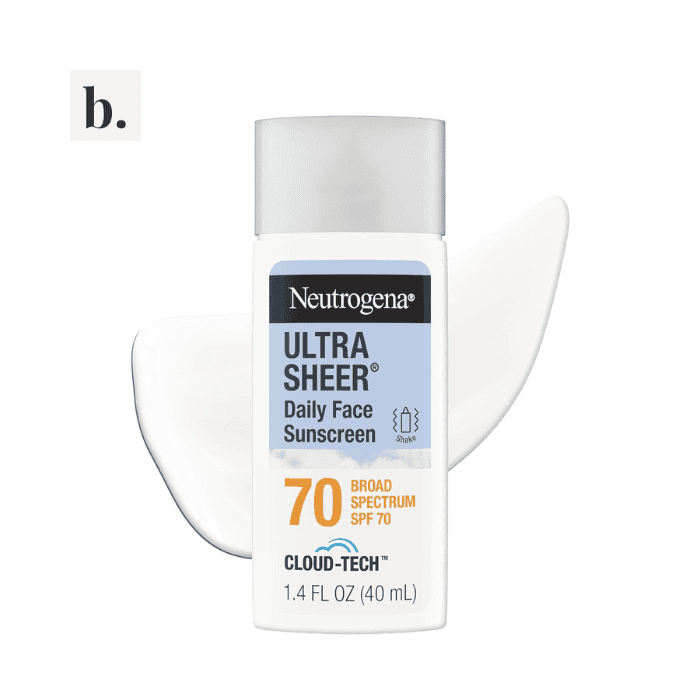
Neutrogena
Neutrogena Ultra Sheer Daily Face Sunscreen SPF 70 with BEMT
If you want a lightweight face sunscreen with high labeled SPF, Neutrogena Ultra Sheer SPF 70 with BEMT combines several UV filters, including bemotrizinol. SPF 70 is a protection rating, not a…
Read the BeautyBrief
burnd
burnd Tinted SPF 34
If you want a tinted mineral sunscreen with a wearable finish, burnd SPF 34 provides zinc oxide protection and pigment-based coverage. Its photolyase ingredient is not proof that the finished sunscreen reverses…
Read the BeautyBrief
Cetaphil
Cetaphil Daily Facial Moisturizer SPF 15
If you want an easy morning moisturizer with some broad-spectrum UV protection, Cetaphil SPF 15 combines hydration with avobenzone and octocrylene. If sun exposure is a priority, choose a broad-spectrum SPF 30…
Read the BeautyBrief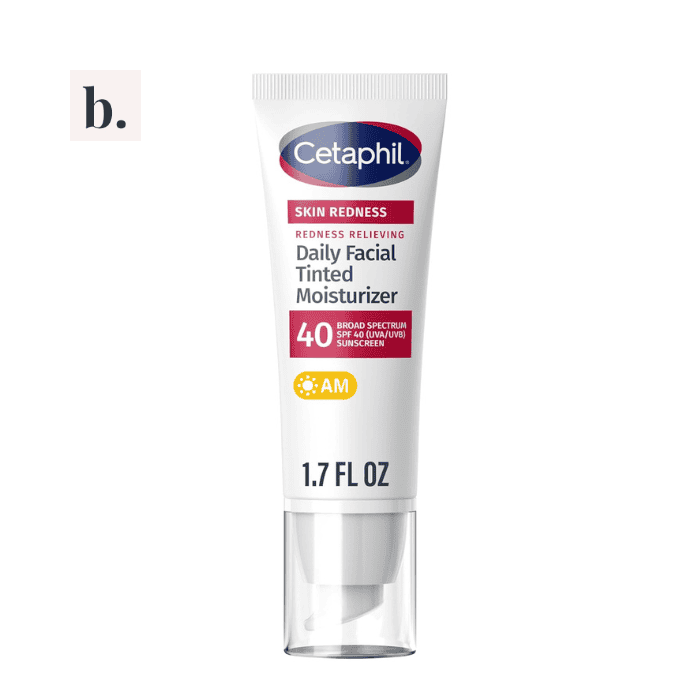
Cetaphil
Cetaphil Redness Relieving Daily Facial Tinted Moisturizer SPF 40
If you want mineral SPF 40 with cosmetic redness coverage, Cetaphil's tinted moisturizer combines zinc oxide, titanium dioxide and color pigments. The tint can make redness less visible without treating its cause,…
Read the BeautyBrief