

How Long Does Sunscreen Last?
At a glance
Does SPF 50 buy you more hours than SPF 30? Do you really need to reapply if you spend the afternoon indoors? And can sunscreen expire even when it looks fine? These questions involve two different timelines: how long protection stays on your skin and how long the formula remains dependable in its container.
Sunscreen has two different timelines.
The first is the layer on your skin. Water, sweat, towels, rubbing, movement, and simply wearing the product outdoors can disrupt that layer, which is why sunscreen needs to be reapplied.
The second is the product in the bottle. Sunscreen is an over-the-counter drug in the United States, and its age, storage, expiration date, and physical condition matter when you are deciding whether you can still rely on the labeled protection.
The mistake is turning either timeline into a simple equation. SPF 50 does not mean 50 hours. A water-resistant sunscreen does not protect indefinitely in water. And a bottle that still looks normal is not automatically trustworthy after its expiration date.
In this Briefing
- How long sunscreen lasts on your skin
- How long water-resistant sunscreen lasts
- What sweat, towels, and rubbing change
- Whether you need to reapply every two hours indoors
- Why SPF 50 does not last longer than SPF 30
- Whether mineral sunscreen lasts longer
- Why application amount matters
- How long sunscreen lasts in the bottle
- What heat and storage can do
- How to choose a sunscreen you can actually reapply
- When to replace the bottle
How long does sunscreen last on your skin?
When you are outdoors, use two hours as the general maximum reapplication interval.
FDA sunscreen labeling requires non-water-resistant products to direct users to reapply at least every two hours and to use a water-resistant sunscreen when swimming or sweating. Water-resistant sunscreens also direct users to reapply at least every two hours, plus after their labeled swimming or sweating interval and immediately after towel drying.[1]
AAD gives the same practical advice: reapply sunscreen every two hours while outdoors and immediately after swimming or sweating.[2]
Do not interpret this as sunscreen working perfectly for 119 minutes and failing at minute 120. The two-hour direction is a practical reapplication rule for continued outdoor exposure, not an on-off expiration timer for the film on your skin.
What happens during those two hours matters. A sunscreen layer that has been rubbed, washed, wiped, or sweated away needs attention sooner than one that has remained relatively undisturbed.
How long does sunscreen last in water?
Read the water-resistance statement on the Drug Facts label.
In the United States, a sunscreen can be labeled water resistant only after standardized testing. The label specifies either 40 minutes or 80 minutes of water resistance while swimming or sweating.[1]
Those numbers are not permission to swim for 40 or 80 minutes and then keep relying on the same application for the rest of the day.
For a water-resistant sunscreen, FDA labeling directs you to reapply:
- after 40 or 80 minutes of swimming or sweating, according to the label;
- immediately after towel drying;
- at least every two hours during continued sun exposure.
A sunscreen without a water-resistance claim should not be your first choice for swimming or heavy sweating. FDA labeling specifically directs users of non-water-resistant sunscreen to choose a water-resistant product for those activities.[1]
“Waterproof” and “sweatproof” are not permitted U.S. sunscreen claims because they overstate how long the product remains protective.[3]
What do sweat, towels, and rubbing change?
They can disrupt the sunscreen layer before the ordinary two-hour outdoor interval is finished.
If you are exercising, working outdoors, or sweating heavily, choose a water-resistant product and follow its 40- or 80-minute directions.
Towel drying is especially clear: FDA labeling requires water-resistant sunscreens to instruct users to reapply immediately afterward.[1]
Other friction is less precisely timed but still matters in real use. Wiping your face repeatedly, rubbing with clothing, adjusting straps, wearing equipment, or washing your hands can physically disturb the layer on those areas.
If you are going to remain exposed, reapply where the sunscreen has obviously been removed rather than waiting for the clock to reach two hours.
Exposure also changes the stakes. EPA recommends extra caution around water, snow, and sand because those surfaces reflect UV radiation and can increase sun exposure.[4]
On a long beach, pool, snow, or high-UV day, correct application and timely reapplication matter more than squeezing extra time out of one coat.
Do you need to reapply sunscreen every two hours indoors?
Not simply because two hours have passed.
AAD states its two-hour reapplication guidance in the context of being outdoors.[2]
If you apply sunscreen in the morning and spend most of the day indoors away from meaningful sunlight, there is no need to treat the clock as though you were outside continuously.
Window exposure is different. UVA can pass through window glass, so time beside a sunny window or prolonged daytime driving can expose the same areas of skin even when you are technically indoors.[5]
Use your actual day to make the decision.
A morning commute followed by eight hours away from windows is different from working beside a bright window all afternoon. A quick walk from the office to your car is different from leaving for several hours outdoors.
If you are heading back into meaningful sun exposure later in the day, reapplying before you go outside is often more useful than automatically reapplying every two hours at your desk.
How long does SPF 50 last compared with SPF 30?
SPF 50 does not give you a longer reapplication interval than SPF 30.
The American Academy of Dermatology explains that SPF is a measure of sunburn protection under standardized conditions. It is not a measure of how many hours you can remain in the sun before reapplying.[6]
Both SPF 30 and SPF 50 sunscreens generally need to be reapplied at least every two hours while you are outdoors, and sooner according to water-resistance directions or after the sunscreen layer has been removed.[1]
That does not make SPF 30 and SPF 50 identical. The higher SPF reflects a higher level of tested sunburn protection when the product is applied correctly.
What it does not do is turn SPF into time. SPF 50 is not “50 hours of protection,” and doubling SPF does not double the number of hours before reapplication.
Does mineral sunscreen last longer than other sunscreen?
Not simply because it uses mineral UV filters.
A sunscreen containing zinc oxide or titanium dioxide still follows the reapplication and water-resistance directions on its label. The same is true for products using organic UV filters or combinations of filters.
There is no separate U.S. reapplication rule that lets a zinc-oxide sunscreen stay on indefinitely while another filter type must be reapplied.
The practical differences come from the finished product: how evenly it spreads, whether it stays comfortable, whether it is water resistant, whether it rubs off easily, and whether you are willing to use enough of it.
Choose filter systems based on the complete sunscreen and your needs, not on the idea that one category is exempt from normal wear.
How much sunscreen do you need for the label protection?
The protection on the label assumes the standardized amount used in sunscreen testing. If you begin with a thin or patchy application, waiting two hours to reapply does not restore the protection you never applied in the first place.
AAD says most adults need at least one ounce—about enough to fill a shot glass—to cover exposed body skin. For the face, AAD currently advises at least one teaspoon, approximately the amount needed to cover the length of the index and middle fingers.[2]
Body size and exposed area vary, so treat those as practical reference amounts rather than a guarantee that exactly the same quantity fits everyone.
Coverage matters just as much as volume. Remember areas such as:
- ears;
- neck and hairline;
- tops of the feet;
- backs of the hands;
- exposed scalp.
A sunscreen that feels comfortable only when you apply a very thin layer may not be the best product for you, regardless of its SPF.
How long does sunscreen last in the bottle?
Start with the printed expiration date.
FDA says not to use sunscreen after that date. If a sunscreen has no expiration date, FDA says to consider it expired three years after purchase. If you do not know how old the sunscreen is, discard it.[7]
This three-year rule does not mean every undated bottle is automatically good for exactly three years after you first open it. It means manufacturers can omit an expiration date only when stability testing supports at least three years of stability.
For an undated sunscreen, writing the purchase month and year on the bottle is more reliable than trying to remember later.
Opening the bottle also does not create one universal U.S. discard countdown that replaces the Drug Facts labeling. Follow the printed expiration date when there is one, the product’s storage directions, and any manufacturer guidance relevant to that exact package.
Can heat damage sunscreen before the expiration date?
Excessive heat and direct sun are not good storage conditions for sunscreen.
FDA-required sunscreen labeling includes the instruction to protect the product in its container from excessive heat and direct sun.[1]
FDA also recommends keeping sunscreen shaded or wrapping the container in a towel when you are outside for long periods.[7]
That makes a parked car, sunny windowsill, or routinely hot garage a poor long-term storage spot.
A single warm trip does not give you enough information to declare a bottle ruined. Repeated or prolonged heat exposure creates more uncertainty because the product has spent time outside the storage conditions it was designed for.
Physical changes are another warning sign. Replace or question a sunscreen that:
- separates and does not remix as directed;
- develops an unusual odor;
- changes substantially in color or texture;
- has a damaged, leaking, or poorly closing package.
The reverse is important too: an expired sunscreen can still look normal. Appearance does not override the expiration date.
How do you choose a sunscreen you will actually reapply?
Start with the protection you need: broad-spectrum SPF 30 or higher. Choose water resistance when you will swim or sweat.[2]
Then judge the sunscreen as a product you may have to use more than once in the same day.
Ask whether it:
- spreads easily at a generous application;
- feels comfortable around your eyes;
- works over the skincare you normally wear;
- reapplies without excessive pilling or buildup;
- comes in a package that makes repeated use practical;
- contains enough product for the way you plan to use it.
Price does not buy a longer reapplication interval. U.S. SPF, broad-spectrum, and water-resistance claims are tied to standardized labeling and testing requirements.
A higher price may still buy something useful—a better texture, tint, finish, dispenser, or shade match. Those features matter when they help you apply the product correctly and reapply it without dreading the process.
A beautiful sunscreen you ration because it is expensive can be poorer value than a less glamorous one you use generously.
When should you replace sunscreen?
Replace the bottle when:
- it has passed the printed expiration date;
- it has no expiration date and was purchased three or more years ago;
- you do not know how old it is;
- the package is damaged or no longer closes properly;
- the formula has developed a substantial unexplained change in odor, color, texture, or consistency;
- its storage history involves enough prolonged excessive heat or direct sun that you no longer trust it;
- there is not enough product left for the application you need.
Do not save a nearly empty bottle for a long outdoor day when it cannot cover the exposed skin you need to protect.
And do not use an online batch-code estimate to extend an expired sunscreen. In the United States, sunscreen is an OTC drug. The labeled expiration and FDA drug guidance deserve more weight than a cosmetic-age calculator.
The BB Perspective
Most sunscreen timing questions become much easier once you stop treating SPF as a clock.
SPF 50 does not last longer than SPF 30. Mineral filters do not exempt you from reapplication. Water resistance gives you a tested 40- or 80-minute swimming-or-sweating interval, not all-day protection. And the two-hour rule is a practical outdoor reapplication standard, not a requirement to restart a timer all day when you are indoors away from UV exposure.
Choose the sunscreen you can apply generously, keep on your skin, and reapply when your actual exposure requires it. Then treat the bottle like the OTC drug it is: follow the expiration date, respect storage directions, and replace it when its age or condition is no longer trustworthy.
The sunscreen that lasts best is not the one with the biggest SPF number. It is the one you can use correctly from the first application to the last.
Last reviewed: October 2026
Sources
U.S. Food and Drug Administration. Labeling and Effectiveness Testing: Sunscreen Drug Products for Over-the-Counter Human Use — Small Entity Compliance Guide. Accessed September 2026.
FDA sunscreen labeling guidance requires products to include appropriate application and reapplication directions. Water-resistant sunscreens state whether they have demonstrated 40 or 80 minutes of water resistance and direct users to reapply after that period of swimming or sweating, immediately after towel drying, and at least every two hours. Non-water-resistant products direct users to reapply at least every two hours and to use a water-resistant sunscreen when swimming or sweating. The required labeling also tells users to protect the container from excessive heat and direct sun. Return to citation.
American Academy of Dermatology Association. How to Apply Sunscreen. Last updated August 15, 2025. Accessed September 2026.
AAD recommends broad-spectrum, water-resistant SPF 30 or higher, applying sunscreen before going outdoors, using enough product for full coverage, and reapplying every two hours when outdoors or immediately after swimming or sweating. AAD says most adults need at least about one ounce for exposed body skin and currently advises at least one teaspoon for the face, described as approximately the amount needed to cover the length of the index and middle fingers. BB uses this source for practical application rather than treating SPF as a measure of wear time. Return to citation.
U.S. Food and Drug Administration. Tips to Stay Safe in the Sun: From Sunscreen to Sunglasses. Accessed September 2026.
FDA explains that sunscreens cannot be labeled “waterproof” or “sweatproof,” that water-resistance claims specify 40 or 80 minutes under standardized testing, and that products cannot claim more than two hours of protection without reapplication unless the claim is appropriately supported. Return to citation.
U.S. Environmental Protection Agency. Sun Safety Tips. Last updated January 27, 2026. Accessed September 2026.
EPA recommends extra caution near water, snow, and sand because these surfaces reflect UV radiation and can increase sun exposure. It also recommends shade, protective clothing, and regular sunscreen reapplication as part of broader sun protection. Return to citation.
American Academy of Dermatology Association. Sunscreen FAQs. Current dermatologist-reviewed guidance. Accessed September 2026.
AAD explains that UVA rays can pass through window glass, while its general two-hour reapplication advice is framed around outdoor exposure. BB uses these points to avoid imposing an automatic two-hour indoor timer while still recognizing that prolonged sunny-window or driving exposure can matter. Return to citation.
American Academy of Dermatology Association. How to Decode a Sunscreen Label. Accessed September 2026.
AAD explains that higher-number SPFs do not last longer than lower-number SPFs and that sunscreen should still be reapplied approximately every two hours when outdoors. BB uses this source to correct the common idea that SPF 50 buys a longer wear interval than SPF 30. Return to citation.
U.S. Food and Drug Administration. Sunscreen: How to Help Protect Your Skin From the Sun. Current FDA consumer guidance, including September 2026 sunscreen updates. Accessed September 2026.
FDA states that U.S. sunscreens are nonprescription drugs. Sunscreen should not be used after a printed expiration date; when no expiration date appears, it should be considered expired three years after purchase, and sunscreen of unknown age should be discarded. FDA also advises protecting sunscreen from excessive heat and direct sun. Return to citation.
Related product BeautyBriefs
These BeautyBriefs cover products relevant to the needs discussed in this Beauty Briefing. Inclusion here reflects topic relevance, not a rating or endorsement.
Ultra Violette
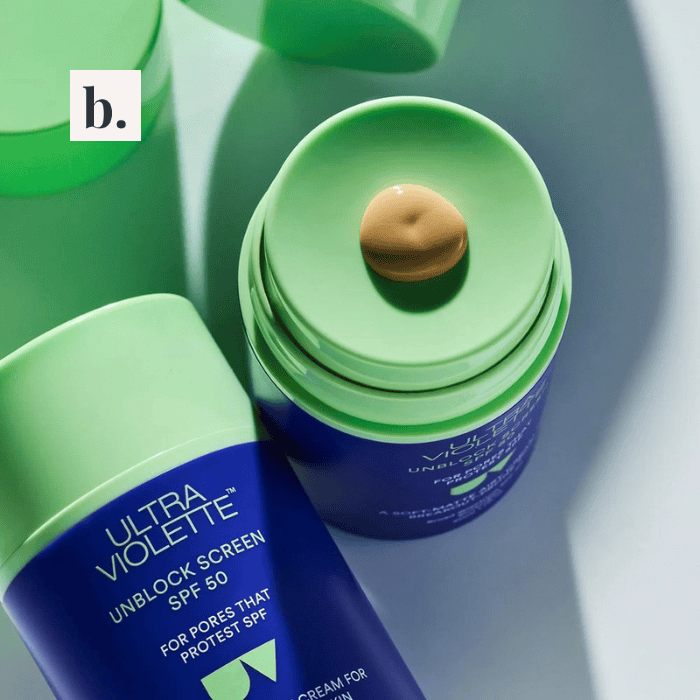
Ultra Violette Unblock Screen SPF50 Breakout-Friendly SKINSCREEN
If your skin is oily or breakout-prone and you want a soft-matte SPF 50 sunscreen, Ultra Violette Unblock Screen combines UV filters with a low-shine finish. Its breakout-friendly positioning is not proof…
Read the BeautyBrief
Neutrogena
Neutrogena Clear Face Sunscreen Acne-Prone Skin Broad Spectrum SPF 60 with BEMT
If you have acne-prone skin and want broad-spectrum protection without a heavy finish, Neutrogena Clear Face SPF 60 with BEMT offers a brand-labeled non-comedogenic sunscreen. That claim does not guarantee you will…
Read the BeautyBrief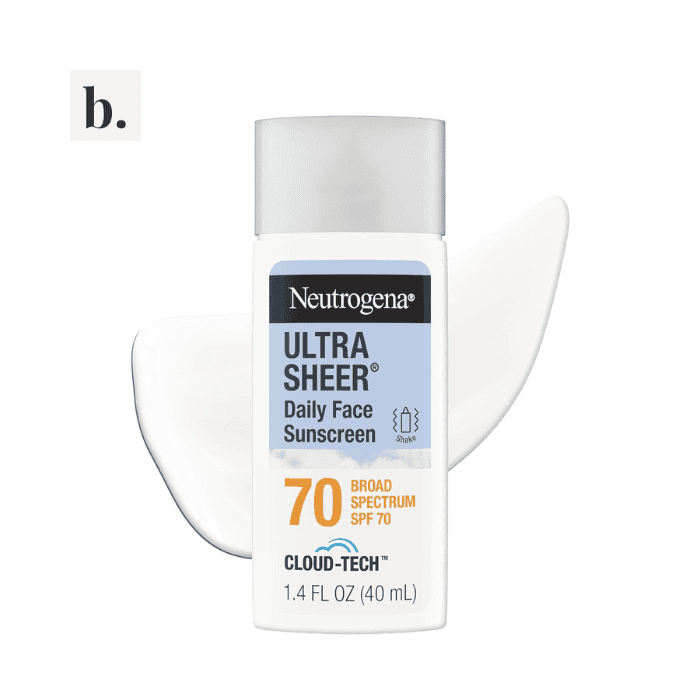
Neutrogena
Neutrogena Ultra Sheer Daily Face Sunscreen SPF 70 with BEMT
If you want a lightweight face sunscreen with high labeled SPF, Neutrogena Ultra Sheer SPF 70 with BEMT combines several UV filters, including bemotrizinol. SPF 70 is a protection rating, not a…
Read the BeautyBrief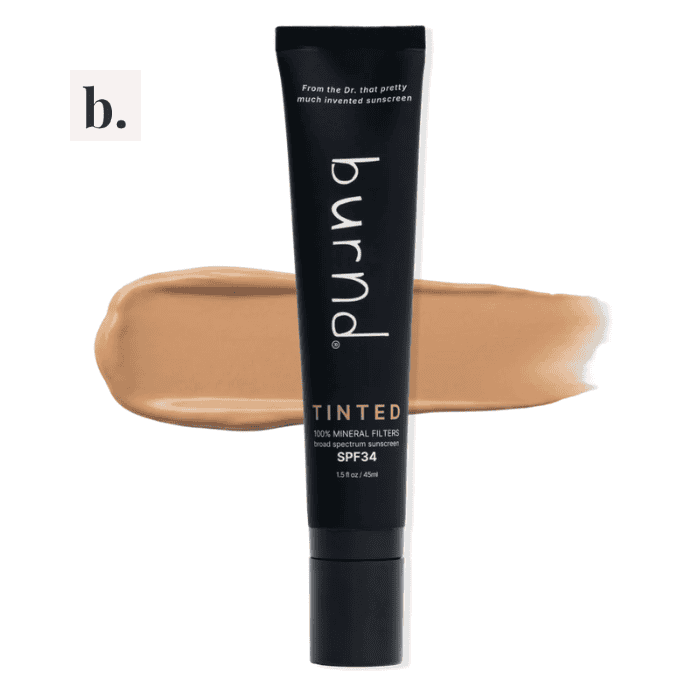
burnd
burnd Tinted SPF 34
If you want a tinted mineral sunscreen with a wearable finish, burnd SPF 34 provides zinc oxide protection and pigment-based coverage. Its photolyase ingredient is not proof that the finished sunscreen reverses…
Read the BeautyBrief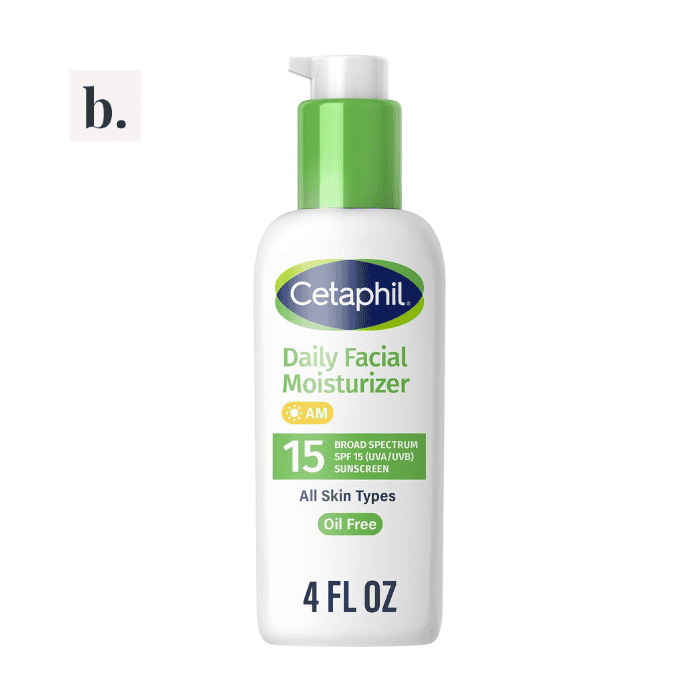
Cetaphil
Cetaphil Daily Facial Moisturizer SPF 15
If you want an easy morning moisturizer with some broad-spectrum UV protection, Cetaphil SPF 15 combines hydration with avobenzone and octocrylene. If sun exposure is a priority, choose a broad-spectrum SPF 30…
Read the BeautyBrief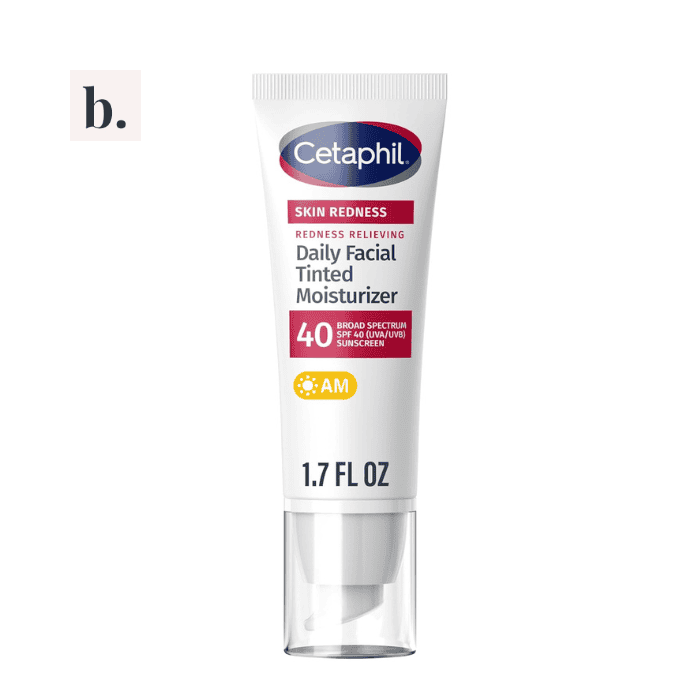
Cetaphil
Cetaphil Redness Relieving Daily Facial Tinted Moisturizer SPF 40
If you want mineral SPF 40 with cosmetic redness coverage, Cetaphil's tinted moisturizer combines zinc oxide, titanium dioxide and color pigments. The tint can make redness less visible without treating its cause,…
Read the BeautyBrief