

What Age Should You Start Tretinoin for Wrinkles?
At a glance
Social media often treats 25 or 30 as a deadline for starting tretinoin if you want to prevent wrinkles. The clinical evidence does not give us a magic birthday. Most wrinkle research asks whether tretinoin improves skin that already shows photoaging, which leaves a different question for you: when does adding a prescription retinoid actually make sense?
There is no evidence-based age at which every adult should start prescription tretinoin or another retinoid for wrinkles.
Tretinoin has strong evidence for improving visible sun-related skin aging, and dermatologists also prescribe it for acne. What the research does not give us is a proven preventive deadline such as 25, 30, or 35.[1]
So the useful question is not whether you are starting early enough. It is whether tretinoin has a clear job to do in your routine now—and whether the benefits justify the irritation, prescription, and ongoing use for you.
In this Briefing
Why there is no magic age to start tretinoin
Skin does not reach a birthday when tretinoin suddenly becomes necessary.
The American Academy of Dermatology advises you to choose skincare in your 20s around the concerns you actually have. Retinoids are among the options for acne, mild fine lines, dark spots, and uneven texture, but that guidance does not tell every healthy adult to begin prescription tretinoin at a specific age.[2]
The U.S. prescribing information for one tretinoin cream used for photoaging is similarly specific. Tretinoin Cream, USP (Emollient) 0.05% is indicated as an adjunct for fine facial wrinkles, mottled hyperpigmentation, and rough texture when a broader skin-care and sun-protection program has not been enough. Its label explicitly says the product does not eliminate wrinkles, repair sun-damaged skin, or reverse photoaging.[3]
That is evidence for treating existing visible changes. It is not an instruction to begin tretinoin before those changes appear.
What does the tretinoin wrinkle research actually show?
The strongest evidence is for treating photodamaged skin—skin that already shows visible changes associated with long-term sun exposure.
A 2025 systematic review and meta-analysis of eight randomized trials found that topical tretinoin improved both fine and coarse facial wrinkles caused by photodamage compared with vehicle formulas.[1]
Longer-term trial evidence also shows improvement in multiple signs of established facial photodamage when tretinoin is used over time.[4]
What those studies do not answer is the question behind “start at 25” advice. We do not have decades-long randomized trials assigning wrinkle-free young adults to different starting ages and showing that one age produces meaningfully better long-term cosmetic outcomes.
That distinction matters. Evidence that tretinoin treats photoaging is not the same as evidence that everyone benefits from starting it as young as possible.
Does starting tretinoin in your 20s make sense?
It can, when there is a reason to use it.
If a dermatologist prescribes tretinoin for acne, you may start long before wrinkles are a concern. If fine lines, uneven pigmentation, or rough texture are already concerns, a retinoid may also make sense because those are among the problems the category is used to address.[2]
What your 20s do not create is an automatic anti-aging deadline.
If you have no concern that calls for prescription treatment, the evidence does not show that turning 25 creates a need to add tretinoin solely because you are afraid of falling behind.
That matters because tretinoin is not a consequence-free preventive step. Dryness, peeling, burning, stinging, and redness are familiar tradeoffs. They are easier to justify when the treatment has a clear purpose in your routine.
Is it too late to start in your 30s, 40s, or later?
No. Much of the wrinkle evidence comes from people who already had visible photodamage when treatment began.[1]
There is one label limitation that is easy to misread. For Tretinoin Cream, USP (Emollient) 0.05%, effectiveness for its photoaging indication has not been established in people older than 50 or in people with moderately to heavily pigmented skin.[3]
That describes the evidence behind that specific formulation and indication. It does not establish that tretinoin stops working after 50 or that people with darker skin cannot benefit from retinoids.
AAD specifically notes that people of all skin colors can benefit from retinoids. It also cautions that irritation can trigger hyperpigmentation in darker skin, making tolerability especially important.[5]
If you are starting later, you have not missed a special window. The useful question is whether a retinoid fits your concern, skin tolerance, and medical history now.
What matters more for wrinkle prevention?
Consistent sun protection has clearer direct preventive evidence than choosing an early tretinoin birthday.
In a randomized trial involving 903 adults younger than 55, daily broad-spectrum sunscreen use was associated with lower odds of worsening skin-aging scores over 4.5 years than discretionary sunscreen use (odds ratio 0.76; 95% confidence interval 0.59–0.98). This is commonly described as 24% less skin aging, but it does not mean individual wrinkles became 24% smaller.[6]
AAD recommends broad-spectrum, water-resistant sunscreen with SPF 30 or higher. If your sunscreen use is inconsistent, improving that habit has clearer direct preventive evidence than worrying that you should have started tretinoin several years earlier.[2]
If you prefer mineral sunscreen, zinc oxide is one of the filters you may see. The more important decision is choosing a sunscreen you will apply adequately and consistently. BB’s Briefing on choosing sunscreen explains what matters beyond the filter name.
What are the tradeoffs of starting early?
The biggest one is irritation.
Tretinoin can cause redness, peeling, burning, stinging, and dryness. The prescribing information for the emollient 0.05% cream also warns that using more than directed does not produce faster or better results and can cause marked irritation.[3]
AAD recommends approaching retinoids gradually rather than assuming a stronger option or more frequent use is automatically better. That matters even more when irritation tends to leave lingering discoloration.[5]
A plain moisturizer can make your retinoid routine easier to tolerate. Ingredients such as ceramides can be useful when dryness is the problem, but tretinoin does not require an elaborate “recovery” routine.
When the benefit you are chasing is purely hypothetical prevention, persistent irritation is a meaningful cost. Earlier is not automatically better if the routine becomes difficult enough that you cannot use it consistently.
What changes during pregnancy or when trying to conceive?
Pregnancy changes the decision regardless of age.
The American College of Obstetricians and Gynecologists states that systemic absorption from topical retinoids is low but that their use is generally recommended to be avoided during pregnancy.[7] AAD likewise advises avoiding retinoids, including tretinoin, during pregnancy.[8]
If you are pregnant, trying to conceive, or planning a pregnancy, tell the clinician who prescribes your tretinoin so your treatment plan can be updated appropriately. Do not make prescription changes based only on a skincare article.
When does tretinoin make sense for wrinkles?
The best starting point is a reason, not an age.
- You have a concern a retinoid is used to address. Acne, fine lines, uneven pigmentation, and rough texture can all make the conversation more relevant.
- You can tolerate it well enough to use it consistently. Persistent irritation can outweigh the appeal of an aggressive routine.
- You are already serious about sun protection. Tretinoin does not replace sunscreen.
- Your prescriber agrees it fits your skin and medical history. The appropriate product, strength, and schedule are individual medical decisions.
If you are 25 with no meaningful reason to use tretinoin, there is no evidence-based deadline forcing you to start for wrinkle prevention. If you are 35, 45, or older and beginning to see visible photoaging, you have not missed a proven anti-aging window.
The goal is not to start as young as possible. It is to use tretinoin when it has a clear purpose, the tradeoffs make sense, and you can use it appropriately.
The BB Perspective
Tretinoin does not need to enter your routine on a schedule set by your birthday. Its strongest evidence is for treating acne and visible photoaging—not for proving that every wrinkle-free adult benefits from beginning at 25.
If prevention is your priority, consistent sun protection has the clearer direct evidence. Tretinoin becomes more compelling when it has an actual job to do and fits a routine you can tolerate.
Do not let an arbitrary age deadline turn a prescription treatment into a beauty requirement. Starting for the right reason matters more than starting young.
Last reviewed: October 2026
Sources
Huang HY, Lee LTJ. Tretinoin for Photodamaged Facial Skin: Systematic Review and Meta-Analysis of Randomized Controlled Trials. Dermatology Practical & Conceptual. 2025;15(4):e20255172. doi:10.5826/dpc.1504a5172. PMID: 41236273.
The review included eight randomized trials with 1,361 participants and follow-up ranging from 16 weeks to two years. Tretinoin improved fine and coarse facial wrinkles caused by photodamage compared with vehicle treatments. The included studies evaluated treatment of existing photodamage; they did not test whether beginning tretinoin at a particular age before wrinkles appear prevents more future aging. Return to citation.
American Academy of Dermatology Association. Dermatologist-Recommended Skin Care for Your 20s. Updated February 23, 2023. Accessed September 2026.
AAD recommends choosing skincare around the concerns a person actually has. It discusses retinoids for acne, mild fine lines, dark spots, and texture and recommends broad-spectrum, water-resistant sunscreen with SPF 30 or higher. The guidance does not establish a universal age for beginning prescription tretinoin to prevent wrinkles. Return to citation.
DailyMed, U.S. National Library of Medicine. Refissa (Tretinoin Cream, USP [Emollient] 0.05%) Prescribing Information. Accessed September 2026.
This label covers one specific prescription tretinoin formulation used as an adjunct for fine facial wrinkles, mottled hyperpigmentation, and rough texture. It states that the product does not eliminate wrinkles, repair sun-damaged skin, or reverse photoaging and documents irritation risk. Effectiveness for this indication was not established in people older than 50 or in people with moderately to heavily pigmented skin; those limitations belong to this formulation’s evidence base and should not be generalized to tretinoin as a whole. Return to citation.
Kang S, Bergfeld W, Gottlieb AB, et al. Long-Term Efficacy and Safety of Tretinoin Emollient Cream 0.05% in the Treatment of Photodamaged Facial Skin: A Two-Year, Randomized, Placebo-Controlled Trial. American Journal of Clinical Dermatology. 2005;6(4):245-253. PMID: 16060712.
The trial randomized 204 adults with moderate-to-severe facial photodamage to tretinoin emollient cream 0.05% or vehicle for up to two years. Tretinoin produced greater improvements in several clinical signs of established photodamage. The study supports treatment after visible photodamage is present; it does not identify an age at which wrinkle-free adults should begin tretinoin preventively. Return to citation.
American Academy of Dermatology Association. Retinoid or Retinol?. Accessed September 2026.
AAD discusses retinoids for mild acne, pigmentation irregularities, fine lines, and wrinkles and emphasizes gradual use because irritation is common. It states that people of all skin colors can benefit from retinoids while noting that irritation in darker skin can trigger hyperpigmentation. This is general dermatology guidance rather than a trial of a particular tretinoin regimen or starting age. Return to citation.
Hughes MCB, Williams GM, Baker P, Green AC. Sunscreen and Prevention of Skin Aging: A Randomized Trial. Annals of Internal Medicine. 2013;158(11):781-790. doi:10.7326/0003-4819-158-11-201306040-00002. PMID: 23732711.
This randomized community trial included 903 adults younger than 55. Over 4.5 years, the odds of worsening skin-aging scores on the study’s microtopography measure were lower with daily broad-spectrum sunscreen than with discretionary use (odds ratio 0.76; 95% confidence interval 0.59–0.98). This is a relative odds estimate, not a measurement of a 24% reduction in individual wrinkle size or depth. Some outcome data were missing and the study had modest power for moderate effects. Primary funding came from Australia’s National Health and Medical Research Council. Return to citation.
American College of Obstetricians and Gynecologists. Skin Conditions During Pregnancy. Accessed September 2026.
ACOG states that topical retinoids have low systemic absorption but that use is generally recommended to be avoided during pregnancy. It advises discussing acne treatment choices with an ob-gyn and dermatologist when needed. Return to citation.
American Academy of Dermatology Association. Dermatologist-Approved Pregnancy Skin Care. Accessed September 2026.
AAD advises avoiding retinoids, including tretinoin, during pregnancy and recommends telling an obstetrician and dermatologist about prescription skincare when pregnant or trying to become pregnant so treatment can be updated appropriately. Return to citation.
Related product BeautyBriefs
These BeautyBriefs cover products relevant to the needs discussed in this Beauty Briefing. Inclusion here reflects topic relevance, not a rating or endorsement.

Allies of Skin
Allies of Skin The Lab Drop 10/10/10 Multi GF Exo Advanced Recovery Ampoules
If you are considering Allies of Skin Lab Drop 10/10/10 Ampoules for visible aging, its growth-factor and exosome-themed complexes make an ambitious treatment story. The brand's reported improvements do not establish biological…
Read the BeautyBrief
Schaf
Schaf Moisturizer 3.0
If you prefer a fragrance-free cream, Schaf Moisturizer 3.0 offers rich emollience alongside niacinamide and bakuchiol. Its Premium value rests on how the texture and ingredient blend suit you, not established retinoid-level…
Read the BeautyBrief
Oak Essentials
Oak Essentials Antioxidant Hand Serum
If your hands look dry, Oak Essentials Hand Serum offers humectants and emollients for softness. Its Premium value depends on the scented finish, not unproven cellular regeneration.
Read the BeautyBrief
Neutrogena
Neutrogena Rapid Wrinkle Repair Retinol Regenerating Cream
If your skin tolerates retinol and fragrance, Rapid Wrinkle Repair offers a moisturizing format for gradual fine-line care. Its Mid-Range value rests on texture and convenience rather than a disclosed retinol concentration.
Read the BeautyBrief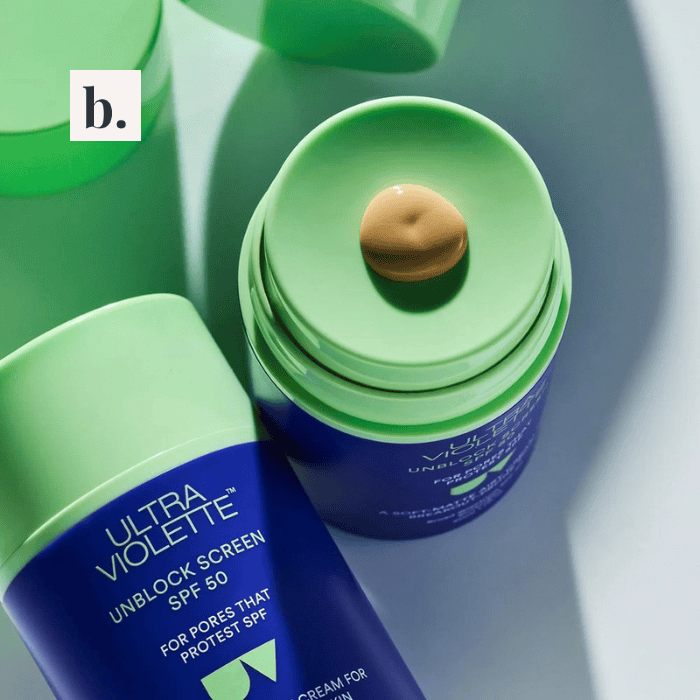
Ultra Violette
Ultra Violette Unblock Screen SPF50 Breakout-Friendly SKINSCREEN
If your skin is oily or breakout-prone and you want a soft-matte SPF 50 sunscreen, Ultra Violette Unblock Screen combines UV filters with a low-shine finish. Its breakout-friendly positioning is not proof…
Read the BeautyBrief
Neutrogena
Neutrogena Clear Face Sunscreen Acne-Prone Skin Broad Spectrum SPF 60 with BEMT
If you have acne-prone skin and want broad-spectrum protection without a heavy finish, Neutrogena Clear Face SPF 60 with BEMT offers a brand-labeled non-comedogenic sunscreen. That claim does not guarantee you will…
Read the BeautyBrief