

What Does Regenerative Skincare Actually Mean?
At a glance
Regenerative skincare sounds more specific than it is. The term can describe products built around familiar moisturizers, peptides, growth factors, exosomes, or other technologies with very different levels of evidence. Before paying more, separate the visible result you want from the medical-sounding story around it—and check whether the finished product has evidence that matches the claim.
In beauty marketing, regenerative usually points to renewal, repair, longevity, firmer-looking skin, or younger-looking skin.
Some products use technologies with credible human research behind them. Others use the same language to make ordinary cosmetic benefits sound more advanced. The word regenerative is not a performance guarantee, and it does not tell you how much a product will change your skin.
The useful buying question is simpler: what visible result are you paying for, and does the actual formula have evidence strong enough to support it?
In this Briefing
- What “regenerative” actually means
- What these products can realistically do
- Ingredients marketed as regenerative
- Growth factors and exosomes
- How newer technologies compare with established ingredients
- When paying more makes sense
- When to save your money
- How to judge a regenerative claim
- Do you need regenerative skincare?
What does “regenerative skincare” actually mean?
In the U.S., the word regenerative does not by itself determine how FDA classifies a product. Whether something is regulated as a cosmetic or a drug depends largely on its intended use and the claims made for it.[1]
That matters because cosmetic language and medical-sounding language can blur together quickly in this category. FDA specifically identifies claims that a product will “regenerate cells” as an example of language that can establish drug intent.[1]
A moisturizer that makes dry skin look smoother is offering a cosmetic benefit. A product that says it literally regenerates cells, rebuilds tissue, or restores lost structure is making a much more ambitious claim.
Do not assume the more medical-sounding product works better. Often, the useful cosmetic benefit is much simpler than the story built around it.
What can regenerative skincare realistically do?
Strip away the regenerative language and look at the concern underneath it.
A formula can improve dryness, rough texture, uneven-looking tone, or the appearance of fine lines when its ingredients, format, and evidence support those outcomes. It can also make skin feel more comfortable or look smoother. Those are worthwhile cosmetic results. They are not proof that skin has literally been regenerated.
For familiar options, start with the job you need the product to do. Retinoids are used for visible photoaging and acne, while vitamin C is used for antioxidant and brightening support. Ceramides and glycerin are more relevant when dryness and barrier comfort are the priority.
None of those benefits needs a regenerative label to count.
Which ingredients are usually marketed as regenerative?
The label gets attached to a wide range of ingredients, but a few show up repeatedly.
Retinoids are sometimes folded into renewal or longevity positioning even though their value can be evaluated without regenerative framing.
Peptides are a broad family. Evidence varies by the specific peptide, concentration, delivery system, and complete formula, so the word peptide alone is not a performance guarantee.
Growth factors have a meaningful amount of human facial research, but results are modest overall and the formulas studied vary substantially.[2]
PDRN (polydeoxyribonucleotide) refers to DNA-fragment preparations, not extracellular vesicles. Plant-derived and salmon-derived materials require their own source-specific evidence. BB’s plant-derived versus salmon PDRN comparison examines how source, characterization, delivery, and finished-product testing affect the buying decision.
Exosomes and other extracellular vesicles are newer and more difficult to compare. A 2026 scoping review found promising reported results, but human evidence remains limited and commercial products vary in source, processing, delivery method, and the information brands disclose about what is actually in the product.[3]
For the difference between exosomes and other extracellular vesicles—and why one product’s study does not validate another—read What Are Exosomes in Skincare?
That variety is exactly why the ingredient name matters less than the finished formula and the evidence attached to the product you are considering.
Are growth-factor and exosome serums more advanced?
They are more technically novel. That is not automatically the same as more effective.
A systematic review of topical growth-factor preparations found generally modest improvements in texture, fine lines, and overall facial appearance, with substantial differences among products and study methods.[2]
Exosomes come with an additional complication: some human studies pair them with microneedling, lasers, or another delivery procedure. Results from a procedure-assisted treatment should not be treated as proof that an at-home topical serum will perform the same way.[3]
For the practical distinction between everyday topical use and procedure-assisted studies, see Do Exosome Serums Work Without Microneedling?
If a premium or luxury serum is being sold mainly on growth-factor or exosome technology, look for testing on the actual formula—or evidence that closely matches the ingredient source and delivery method being sold.
“Contains exosomes” is not enough information to justify a higher price.
How does regenerative skincare compare with established anti-aging ingredients?
Newer does not automatically mean stronger.
A 2024 systematic review of clinical anti-aging research gave retinol and vitamin C Grade A recommendations among the ingredients assessed. Growth factors received Grade C because the evidence was less consistent.[4]
That does not make growth factors or exosomes pointless. It means they have more to prove when they cost substantially more than established options.
If fine lines and texture are your main concern, a suitable retinoid deserves consideration before a specialty regenerative serum. If you want antioxidant support, vitamin C is a more established place to start. If dryness is making skin look rough or lined, a well-chosen moisturizer can matter more than adding another specialty serum.
Regenerative products make the most sense as optional additions after the main jobs in your routine are already covered.
When can a regenerative product be worth paying more for?
A premium makes more sense when it buys something you can actually identify in the product—not simply a more sophisticated story.
- Testing on the actual formula: Human data show an improvement you care about.
- A meaningful delivery system: The brand has evidence that its technology improves stability or delivery, rather than simply naming the technology.
- Better tolerability: The formula lets you use an effective ingredient more consistently.
- Protective packaging: The package meaningfully helps preserve a formula that is difficult to keep stable.
- Better usability: The texture or finish solves a real problem for you and makes regular use easier.
Those are advantages you can connect to the product in your hand. A proprietary complex, a cell diagram, or the word regenerative is not.
When should you save your money?
Be more skeptical when the promise becomes dramatic but the evidence becomes vague.
Language such as “cellular regeneration,” “rebuilds skin from within,” or “reactivates youth” can make a cosmetic sound closer to a medical treatment than the evidence supports. FDA guidance draws a line between ordinary appearance claims and claims intended to affect the structure or function of the body.[1]
Also look at what is doing the practical work in the formula. If a high-priced cream is mostly delivering moisturization and familiar supporting ingredients, compare it with simpler moisturizers before paying for regenerative positioning.
BB’s Briefing on whether luxury serums are worth it uses the same standard: a premium should buy you a meaningful advantage, not simply a more expensive explanation.
How to judge a regenerative skincare claim before buying
You do not need to understand every pathway on a brand’s science page. A few practical questions tell you much more.
- What visible result is being promised? Hydration, smoother texture, brighter-looking tone, fewer visible fine lines—or something much harder to prove?
- Was the actual product tested? Research on an ingredient is not the same as testing on the serum in your cart.
- Was the research done in people? Cell and animal studies can make a technology interesting without showing what it will do on your face.
- Was there a useful comparison? A formula improving from baseline is less convincing than outperforming a similar control.
- Does the delivery method match? Procedure-assisted results do not automatically transfer to simple at-home application.
- What does the higher price buy? Better evidence, stability, delivery, tolerability, or usability gives you a reason to pay more.
If the case for the product gets weaker as soon as you move beyond the word regenerative, the marketing is probably doing more work than the formula.
When the product is marketed with exosome technology, BB’s How to Evaluate Exosome Skincare Claims applies this checklist to the exact vesicle source, finished formula, delivery method, and measured outcome.
Do you need regenerative skincare in your routine?
No. You are not missing an essential skincare category if you do not own a regenerative serum.
Cover the basics for the concern you actually want to improve first. After that, a well-supported growth-factor, peptide, or exosome product can be a reasonable optional purchase when the exact formula, evidence, and price make sense.
That is a better reason to buy one than worrying that your routine has become outdated.
The BB Perspective
Regenerative skincare is worth watching, but the label itself tells you very little. Growth factors have human evidence for modest visible improvements, while exosome research is still difficult to translate across products and delivery methods.
Established ingredients and a well-built basic routine deserve priority. A regenerative product earns extra consideration only when the finished formula gives you a clear advantage in evidence, delivery, tolerability, usability, or another benefit that matters to you.
Buy the supported result, not the futuristic language. If the regenerative story is the main reason a product costs more, the evidence should show what that premium gives you.
Last reviewed: September 2026
Sources
U.S. Food and Drug Administration. Is It a Cosmetic, a Drug, or Both? (Or Is It Soap?). Accessed September 2026.
FDA explains that intended use helps determine whether a product is regulated as a cosmetic, drug, or both. It specifically lists claims that a product will “regenerate cells” as an example of language that can establish drug intent. This guidance addresses regulatory classification and claims; it does not determine whether a particular cosmetic formula works. Return to citation.
Quinlan DJ, Ghanem AM, Hassan H. Topical growth factor preparations for facial skin rejuvenation: A systematic review. Journal of Cosmetic Dermatology. 2023;22(7):2023-2039. doi:10.1111/jocd.15644. PMID: 37222303.
The review included 33 studies, including nine randomized controlled trials, with 1,180 participants using 23 different topical growth-factor preparations. Reported improvements were generally modest, only nine studies used a placebo or active control, and three comparative randomized trials found no statistically significant differences between treatments. The products and outcome measures varied substantially, which limits how confidently results from one formula can be generalized to another. Return to citation.
Knauer G, Chang A, Gupta A, et al. Clinical Evidence and Commercial Landscape of Topical Exosomes for Skin Rejuvenation: A Scoping Review. Aesthetic Surgery Journal. Published online July 7, 2026. doi:10.1093/asj/sjag141. PMID: 42411735.
The review screened 2,394 articles and identified 18 human studies of topical exosomes for skin rejuvenation. Ten studies paired exosomes with a delivery procedure and eight studied topical use alone. Reported benefits included changes in wrinkles, elasticity, hydration, pigmentation, collagen, and elastin, but the authors concluded that human evidence remains limited and heterogeneous. Their review of commercial products also found little disclosure about exosome isolation, processing, or shelf life. Return to citation.
Lau M, Mineroff Gollogly J, Wang JY, Jagdeo J. Cosmeceuticals for antiaging: a systematic review of safety and efficacy. Archives of Dermatological Research. 2024;316(5):173. doi:10.1007/s00403-024-02908-2. PMID: 38758222.
The review included 32 clinical studies with 1,236 participants. Retinol and vitamin C received Grade A recommendations among the ingredients assessed, while growth factors received Grade C. The authors noted a limited number of randomized controlled trials and a need for longer-term safety and efficacy data, so the grading should be read as a comparison within this review rather than a universal ranking of all anti-aging ingredients. Return to citation.
Related product BeautyBriefs
These BeautyBriefs cover products relevant to the needs discussed in this Beauty Briefing. Inclusion here reflects topic relevance, not a rating or endorsement.

Allies of Skin
Allies of Skin The Lab Drop 10/10/10 Multi GF Exo Advanced Recovery Ampoules
If you are considering Allies of Skin Lab Drop 10/10/10 Ampoules for visible aging, its growth-factor and exosome-themed complexes make an ambitious treatment story. The brand's reported improvements do not establish biological…
Read the BeautyBrief
Schaf
Schaf Moisturizer 3.0
If you prefer a fragrance-free cream, Schaf Moisturizer 3.0 offers rich emollience alongside niacinamide and bakuchiol. Its Premium value rests on how the texture and ingredient blend suit you, not established retinoid-level…
Read the BeautyBrief
Oak Essentials
Oak Essentials Antioxidant Hand Serum
If your hands look dry, Oak Essentials Hand Serum offers humectants and emollients for softness. Its Premium value depends on the scented finish, not unproven cellular regeneration.
Read the BeautyBrief
Neutrogena
Neutrogena Rapid Wrinkle Repair Retinol Regenerating Cream
If your skin tolerates retinol and fragrance, Rapid Wrinkle Repair offers a moisturizing format for gradual fine-line care. Its Mid-Range value rests on texture and convenience rather than a disclosed retinol concentration.
Read the BeautyBrief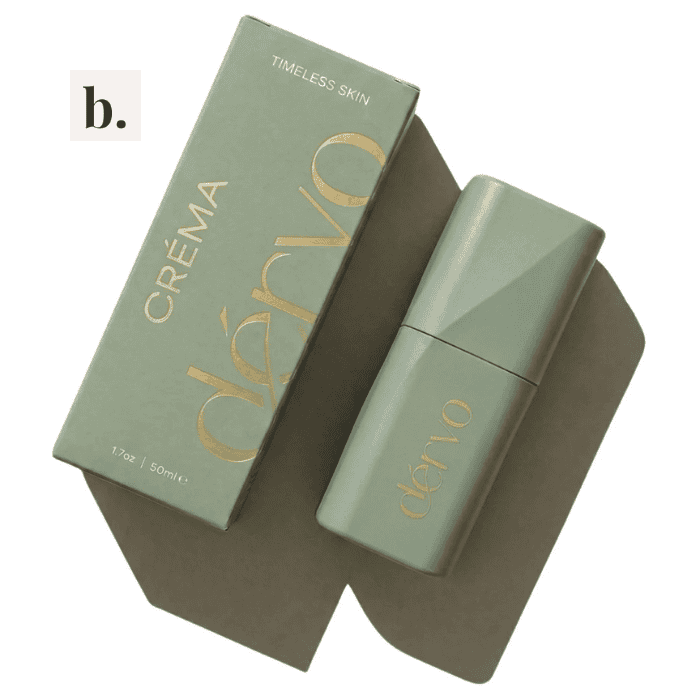
Dérvo
Dérvo Créma Face Moisturizer
If you want a rich facial moisturizer, Dérvo Créma combines humectants, plant-derived emollients and several hyaluronic-acid forms for hydration. Its peptide and botanical ingredients make a treatment-oriented formula, but published marketing claims…
Read the BeautyBrief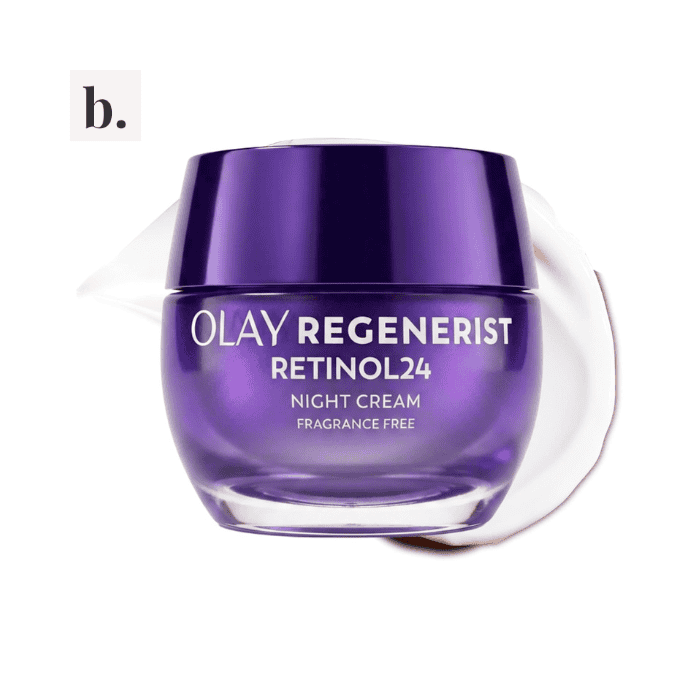
Olay
Olay Regenerist Retinol24 Night Moisturizer
If your skin tolerates retinoids, Olay Retinol24 offers a convenient fragrance-free night moisturizer with two vitamin A derivatives. Its Mid-Range value depends on routine simplicity rather than known retinol strength.
Read the BeautyBrief