

How to Evaluate Exosome Skincare Claims
At a glance
“Exosome” does not identify one standardized skincare ingredient. Before paying for the claim, check whether the evidence matches the exact source material, finished product, way it is used, and result being promised. A microneedling study using human-derived extracellular vesicles cannot prove that a plant-derived serum works on intact skin. Plant-derived exosome-like nanovesicles are an emerging research category with promising preclinical biology, but they are not biologically interchangeable with mammalian EVs and should not borrow their evidence.
Exosome skincare is marketed with some of the biggest promises in beauty: cellular communication, regeneration, collagen support, repair, recovery, and skin renewal.
The language sounds precise. The category is not.
Two products sold as exosome serums can contain very different materials, use different processing methods, have different stability requirements, and rely on evidence from completely different sources or procedures. In some cases, even the word exosome is more specific than the underlying science supports.
The fastest way to evaluate the category is to stop asking whether “exosomes work” and ask a narrower question: does the evidence match the exact product and claim in front of you?
In this Briefing
- Start with the exact claim
- Find out what “exosome” means in this product
- Use the four-part evidence-match test
- How strong is the current human evidence?
- Why plant-derived EV claims need their own evidence
- Check whether the material can remain stable in the product
- Raise the standard for microneedling and procedure claims
- Do not confuse regenerative language with FDA approval
- Red flags in exosome marketing
- When an exosome product is worth considering
Start with the exact claim
First decide what the brand is actually promising.
A statement such as “helps skin look smoother” describes an appearance result. “Improves hydration” can be measured in a finished cosmetic. “Reduces the appearance of fine lines” can also stay within cosmetic territory when the claim is about appearance.
Claims about regenerating tissue, healing wounds, treating inflammation, repairing damaged cells, or changing the structure or function of skin raise a very different standard.
FDA states that cosmetic labeling must be truthful and not misleading. A product marketed to treat or prevent disease or to affect the structure or function of the body—including skin—can meet the legal definition of a drug even when it is packaged and sold like skincare.[1]
A drug-like claim is not evidence that the product works. It is a reason to ask for stronger evidence and look more closely at what regulatory status the product actually has.
Translate vague language before you evaluate it. “Cellular renewal” sounds impressive, but what should you expect to see: more hydration, less redness, smoother texture, fewer visible wrinkles, faster wound healing, or new collagen? Those are not interchangeable outcomes.
Find out what “exosome” means in this product
This is where many skincare claims become difficult to evaluate.
The International Society for Extracellular Vesicles defines extracellular vesicles, or EVs, as lipid-bilayer particles released from cells. Its current MISEV2023 consensus guidance recommends using the broad term EV unless a more specific biological origin has been demonstrated.[2]
Specifically, the term exosome refers to an EV formed through the cell’s endosomal system. MISEV2023 discourages using that term when the subcellular origin has not actually been established.[2]
So exosome is not simply a synonym for every microscopic vesicle, secreted particle, growth-factor mixture, or delivery capsule.
A commercial product might instead contain or refer to:
- human-cell-derived extracellular vesicles;
- platelet-derived vesicle preparations;
- plant-derived extracellular vesicles or exosome-like nanovesicles;
- microbial extracellular vesicles;
- conditioned media containing a mixture of secreted material;
- artificial or synthetic vesicle systems;
- a proprietary complex whose relationship to true extracellular vesicles is not clearly explained.
Those materials should not borrow evidence from one another simply because the marketing uses similar words.
A credible brand should at least tell you what source it uses and provide enough information to understand what material it is calling an exosome or extracellular vesicle.
If the terminology itself is unclear, start with What Are Exosomes in Skincare? to distinguish exosomes from other EVs and plant-derived exosome-like particles.
Use the four-part evidence-match test
The most useful exosome study is not the one with the most dramatic result. It is the one that most closely matches the product you are considering.
1. Does the evidence use the same source material?
A human adipose-derived EV preparation does not prove a plant-derived serum. Platelet-derived material does not establish the performance of a synthetic vesicle. Research on one proprietary preparation cannot automatically be transferred to another.
Source can affect cargo, composition, purity, processing, storage, and biological behavior.
2. Does the study test the finished product?
Ingredient research is weaker than testing on the formula you can actually buy.
This distinction matters because familiar ingredients can produce visible improvements on their own. A serum containing glycerin, hyaluronic acid, niacinamide, peptides, ceramides, emollients, and film-formers may improve hydration and surface smoothness even if the featured EV preparation contributes little.
A matched vehicle or otherwise identical formula without the EV material is especially useful because it helps answer the question the marketing usually skips: what did the featured ingredient add?
3. Does the way the study used the product match how you will use it?
A product applied after microneedling or fractional laser treatment is not equivalent to a serum spread over intact skin at home.
Procedures can change delivery and independently improve texture, wrinkles, scars, or pigmentation. Evidence from procedure-assisted use should stay attached to that procedure and protocol.
One randomized split-face study illustrates the difference. Twenty-eight participants received three microneedling treatments. One side of the face received microneedling plus a human adipose stem-cell-derived exosome-containing solution, while the other received microneedling plus saline. The exosome-treated side showed greater improvements in several measures after 12 weeks.[3]
That is useful evidence for the tested combination. It is not proof that an unrelated retail exosome serum produces the same result without microneedling.
For the separate question of whether serums work when applied to intact skin at home, read Do Exosome Serums Work Without Microneedling?
4. Does the measured result match the claim?
Hydration, wrinkle depth, participant satisfaction, redness, pigmentation, collagen markers, and wound healing are different endpoints.
A hydration improvement does not establish collagen rebuilding. A laboratory change in a signaling marker does not prove that you will see fewer wrinkles. A before-and-after photograph does not show which ingredient caused the change.
Make the brand stay with the outcome it actually measured.
How strong is the current human evidence?
The category has moved beyond laboratory research, but the human evidence is still early and uneven.
A 2026 scoping review screened 2,394 records and identified 18 human studies of topical exosome or EV products for skin rejuvenation. Eight evaluated topical application alone and 10 used another delivery method. Reported outcomes included improvements in wrinkles, elasticity, hydration, pigmentation, collagen, and elastin.[4]
The review’s more important finding for your buying decision was the lack of consistency. Sources and methods varied, human evidence remained scarce, and a review of 20 commercial products found limited public information about isolation, processing, and shelf life.[4]
A separate 2026 systematic review included 19 human studies. Most were not randomized; sample sizes ranged from 3 to 95, follow-up was generally short, and most studies had moderate-to-high risk of bias. The authors found encouraging short-term signals for hydration, elasticity, wrinkles, pigmentation, texture, and overall appearance but concluded that methodological heterogeneity, limited follow-up, and inconsistent safety reporting prevent strong conclusions.[5]
The two reviews point in the same direction: exosome/EV-based skin treatments are worth studying, but the current evidence does not support treating “exosome skincare” as one proven product category.
A positive trial can support the material and protocol that were actually tested. It should not become a blank check for every serum using the same buzzword.
Why do plant-derived EV claims need their own evidence?
“Plant exosomes” are increasingly attractive to beauty brands because the language can sound both advanced and natural.
Scientifically, that combination should make you ask more questions, not fewer.
A 2025 review focused on plant-derived extracellular vesicles described a field without standardized characterization requirements and proposed more rigorous reporting for physical properties, molecular markers, cargo, sourcing, batch consistency, formulation stability, and functional testing.[6]
A September 2026 peer-reviewed review adds more mechanistic context: plant-derived exosome-like nanovesicles show promising preclinical activity in pathways related to inflammation, oxidative stress, angiogenesis, wound healing, and tissue regeneration. That is useful biology, but it is not evidence that a finished cosmetic improves wrinkles, pigmentation, barrier function, or wound healing in people.[7]
Plant-derived exosome-like nanovesicles are also not biologically interchangeable with mammalian extracellular vesicles. Different source organisms can produce different cargo, composition, isolation challenges, and biological behavior. A study on human platelet or adipose-derived EVs cannot be used to validate a rose-, ginseng-, or fruit-derived preparation simply because both are described as “exosomes.”
The 2025 review also notes that products can use terms such as “phyto-exosomes,” “botanical nanocarriers,” and “natural liposomes” without consistent biochemical verification.
“Plant-derived” therefore does not establish:
- that the preparation contains true exosomes;
- that one batch matches the next;
- that the vesicles remain intact in the finished serum;
- that the product reaches a meaningful target in human skin;
- that it is safer than a human- or microbial-derived preparation;
- that research on human EVs applies to it.
Natural origin is a sourcing description, not an efficacy or safety grade.
Check whether the material can remain stable in the product
An interesting EV preparation has little consumer value if it loses its defining properties during manufacturing, shipping, storage, or ordinary use.
Stability deserves unusual attention in this category because vesicles and their cargo can be affected by temperature, freeze-thaw cycles, light, formulation ingredients, storage conditions, and processing. The plant-EV review specifically calls for stability testing under realistic formulation and shelf-life conditions rather than assuming data from freshly prepared laboratory material will carry over to a retail cosmetic.[6]
Look for evidence that the company understands:
- finished-formula stability;
- storage temperature and conditions;
- shelf-life testing;
- batch-to-batch consistency;
- packaging compatibility;
- microbial and contamination control;
- whether the claimed biological material remains characterized after formulation.
A brand does not have to reveal a proprietary manufacturing process. It should be able to explain why the material it tested is still meaningfully represented by the product you buy months later.
Raise the standard for microneedling and procedure claims
Procedure-associated exosome products should face a higher safety and evidence bar than ordinary skincare used on intact skin.
FDA has legally authorized specific microneedling devices for specific aesthetic uses. The agency states that microneedling devices are not approved to deliver cosmetics, topical medications, vitamin solutions, drugs, or blood products into the skin and that the risks of combining microneedling with other products are not known.[8]
FDA also lists infection among the potential risks of microneedling and notes that cosmetic products can sting or itch after treatment.[8]
This does not mean every adjunct used by a qualified clinician is automatically inappropriate. It does mean that a clinic offering an exosome add-on is not the same thing as FDA having reviewed that product-device combination for safety or effectiveness.
Before paying for a procedure add-on, ask:
- What exact product and EV source are being used?
- Is there controlled human evidence for that product with that procedure?
- How is the product manufactured, stored, and handled for this use?
- What adverse events were reported in the relevant studies?
- What did the comparison group receive?
- How much benefit did the add-on provide beyond the procedure alone?
Do not use evidence from microneedling plus one EV preparation to justify applying a retail cosmetic to freshly microneedled skin on your own.
Do not confuse regenerative language with FDA approval
FDA’s current consumer alert states that exosome products intended to treat diseases or conditions in humans generally require FDA approval and that there are currently no FDA-approved exosome products.[9]
That statement is aimed at products promoted as regenerative medicine or medical treatment. It should not be rewritten as “every cosmetic using the word exosome is illegal.”
The useful distinction is intended use.
An ordinary cosmetic can make appearance claims within cosmetic law. A product promoted as treating disease, healing wounds, regenerating tissue, or affecting the structure or function of the body enters a different regulatory question.[1]
Either way, the word exosome does not mean FDA approved, and clinical-looking packaging does not mean FDA has reviewed the product’s rejuvenation claims.
What are the biggest red flags in exosome skincare marketing?
Give the claim less weight when a brand:
- does not clearly identify the EV or “exosome” source;
- uses exosome, conditioned media, growth factors, stem-cell secretions, and synthetic delivery vesicles as though they mean the same thing;
- cites human-derived EV research to support a plant-derived product;
- uses plant-vesicle preclinical studies as proof that a finished cosmetic works in people;
- uses microneedling or laser studies to promote an at-home serum for intact skin;
- credits exosomes for results from a multi-ingredient formula without a meaningful control;
- uses hydration data to imply collagen regeneration or tissue repair;
- provides no useful stability, shelf-life, or characterization information;
- relies mostly on laboratory diagrams, testimonials, or uncontrolled before-and-after photos;
- uses “clinically proven” without explaining what was actually tested;
- charges a substantial premium while disclosing very little beyond the trend ingredient.
Brand-funded research is not automatically unreliable. It simply makes transparent methods, appropriate controls, participant numbers, study duration, adverse-event reporting, and conflict disclosures more important.
When is an exosome product worth considering?
Consider it when the company clearly identifies the material, provides useful characterization and stability information, tests the finished product in the way you plan to use it, and keeps the marketing claim close to the result that was actually measured.
The rest of the formula should also earn its place. If an exosome serum is an excellent hydrating product because it contains glycerin, niacinamide, hyaluronic acid, peptides, and a comfortable base, that can still make it a good serum. You simply should not assume the exosome material deserves all the credit.
Do not pay the premium when the evidence comes from another EV source, another finished product, or a barrier-disrupting procedure you are not receiving.
And do not replace better-established skincare priorities solely because a product uses “regenerative,” “cellular messaging,” or “exosome technology” language.
For the wider distinction between regenerative marketing and demonstrated benefits from a finished cosmetic, see What Does Regenerative Skincare Actually Mean?
The BB Perspective
When you’re comparing exosome skincare, remember that scientific potential has moved faster than product standardization.
The human literature is now large enough to show credible short-term signals. It is not consistent enough to let one positive study validate every serum carrying the word exosome. Current reviews still find heterogeneous sources, small or non-randomized studies, short follow-up, inconsistent characterization, and limited commercial disclosure.
Plant-derived exosome-like nanovesicles deserve their own evidence track. Their emerging preclinical biology is interesting, but it should not inherit evidence from mammalian extracellular vesicles and should not be marketed as proof of finished-product efficacy without relevant human testing.
Use one evidence rule throughout the category: same material, same finished product, same delivery method, same claimed outcome. Every step away from that match weakens the claim.
If the brand cannot tell you what the “exosome” material is, cannot show that it remains stable in the finished product, or relies on a microneedling study to sell an unrelated daily serum, the science is not specific enough to justify a premium. Buy it only when the exact formula—not the promise of the category—has earned your confidence.
Last reviewed: October 2026
Sources
U.S. Food and Drug Administration. Cosmetics Labeling Claims. Accessed September 2026.
FDA describes how cosmetic labeling claims are regulated. This helps identify the claim type but does not verify a finished exosome serum’s efficacy. Return to citation.
Welsh JA, Goberdhan DCI, O’Driscoll L, et al. Minimal Information for Studies of Extracellular Vesicles (MISEV2023): From Basic to Advanced Approaches. Journal of Extracellular Vesicles. 2024;13(2):e12404.
This international reporting framework explains how extracellular-vesicle preparations should be described and characterized. It is not a clinical test of a consumer skincare product. Return to citation.
Park GH, Kwon HH, Seok J, et al. Efficacy of Combined Treatment With Human Adipose Tissue Stem Cell-Derived Exosome-Containing Solution and Microneedling for Facial Skin Aging. Journal of Cosmetic Dermatology. 2023;22(12):3418-3426.
The human treatment combined an exosome-containing solution with microneedling. It cannot show what the vesicle preparation would achieve in an ordinary at-home serum applied without the procedure. Return to citation.
Knauer G, Chang A, Gupta A, et al. Clinical Evidence and Commercial Landscape of Topical Exosomes for Skin Rejuvenation: A Scoping Review. Aesthetic Surgery Journal. 2026.
This 2026 scoping review summarizes heterogeneous human studies and commercial products. Variation in material source, formulation, and use makes it unsuitable for ranking retail serums or claiming the vesicles alone caused the results. Return to citation.
Flores Rodríguez JC, Toledo Avelar LE, Yi K, et al. Efficacy of Exosome-Based Therapies for Skin Rejuvenation: A Systematic Review of Human Studies. Cureus. 2026;18(2):e104182.
This systematic review examines human skin-rejuvenation studies that used differing extracellular-vesicle materials and delivery methods. Their combined findings do not establish a category-wide benefit for daily serums on intact skin. Return to citation.
Ferroni L, Zavan B. Plant-Derived Extracellular Vesicles in Cosmetics: Building a Framework for Safety, Efficacy, and Quality. Cosmetics. 2025;12(6):252.
This review discusses methods, quality controls, and evidence gaps for plant-derived vesicles. It is not direct human proof that a finished plant-vesicle cosmetic outperforms a conventional serum. Return to citation.
Ma X, Shi J, Li R, Hu W, Li K, Zhao L, Wang M. Mechanistic Insights and Therapeutic Potential of Plant-Derived Exosome-Like Nanovesicles in Skin Tissue Regeneration. International Journal of Nanomedicine. 2026;21:635952. Published September 15, 2026. doi:10.2147/IJN.S635952.
This review summarizes mechanistic and largely preclinical evidence for plant-derived exosome-like nanovesicles. It does not establish that a finished cosmetic works in people. One author is affiliated with BTBU-YHZK Bioengineering Raw Material Development Laboratory / YHZK BIOPHARM CO., LTD. BB uses it to keep plant-derived vesicle evidence separate from mammalian EV evidence and to avoid converting preclinical findings into retail efficacy claims. Return to citation.
U.S. Food and Drug Administration. Microneedling Devices. Updated October 15, 2025. Accessed September 2026.
FDA describes device uses, restrictions, and risks. Device clearance does not establish that adding an extracellular-vesicle solution to microneedling is safe or effective. Return to citation.
U.S. Food and Drug Administration. Consumer Alert on Regenerative Medicine Products Including Stem Cells and Exosomes. July 22, 2020. Accessed September 2026.
FDA warns about unapproved regenerative-medicine treatments, including exosome products marketed for medical uses. This is not an FDA efficacy review of routine topical cosmetic serums. Return to citation.
Related product BeautyBriefs
These BeautyBriefs cover products relevant to the needs discussed in this Beauty Briefing. Inclusion here reflects topic relevance, not a rating or endorsement.

Allies of Skin
Allies of Skin The Lab Drop 10/10/10 Multi GF Exo Advanced Recovery Ampoules
If you are considering Allies of Skin Lab Drop 10/10/10 Ampoules for visible aging, its growth-factor and exosome-themed complexes make an ambitious treatment story. The brand's reported improvements do not establish biological…
Read the BeautyBrief
Schaf
Schaf Moisturizer 3.0
If you prefer a fragrance-free cream, Schaf Moisturizer 3.0 offers rich emollience alongside niacinamide and bakuchiol. Its Premium value rests on how the texture and ingredient blend suit you, not established retinoid-level…
Read the BeautyBrief
Oak Essentials
Oak Essentials Antioxidant Hand Serum
If your hands look dry, Oak Essentials Hand Serum offers humectants and emollients for softness. Its Premium value depends on the scented finish, not unproven cellular regeneration.
Read the BeautyBrief
Neutrogena
Neutrogena Rapid Wrinkle Repair Retinol Regenerating Cream
If your skin tolerates retinol and fragrance, Rapid Wrinkle Repair offers a moisturizing format for gradual fine-line care. Its Mid-Range value rests on texture and convenience rather than a disclosed retinol concentration.
Read the BeautyBrief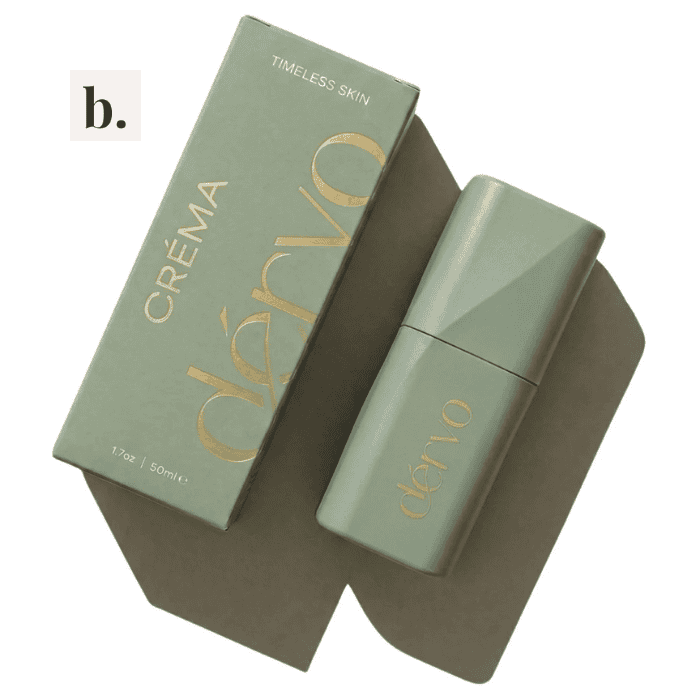
Dérvo
Dérvo Créma Face Moisturizer
If you want a rich facial moisturizer, Dérvo Créma combines humectants, plant-derived emollients and several hyaluronic-acid forms for hydration. Its peptide and botanical ingredients make a treatment-oriented formula, but published marketing claims…
Read the BeautyBrief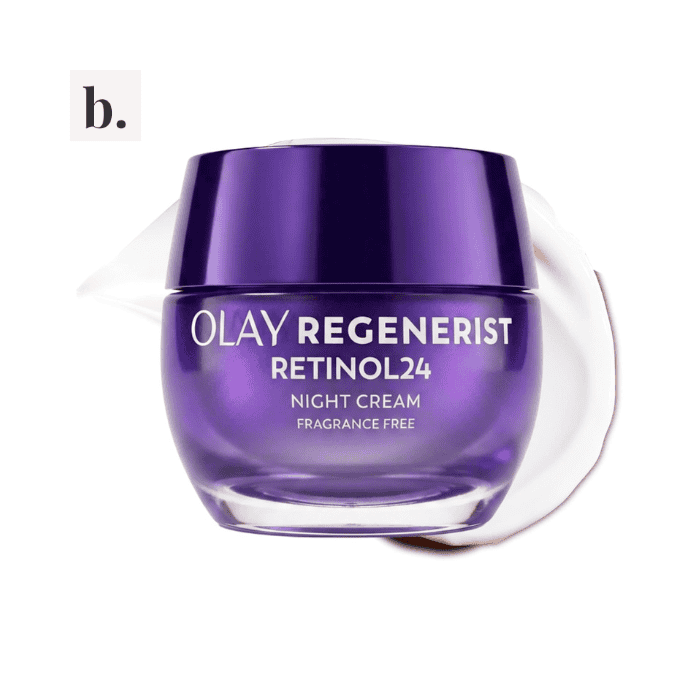
Olay
Olay Regenerist Retinol24 Night Moisturizer
If your skin tolerates retinoids, Olay Retinol24 offers a convenient fragrance-free night moisturizer with two vitamin A derivatives. Its Mid-Range value depends on routine simplicity rather than known retinol strength.
Read the BeautyBrief