
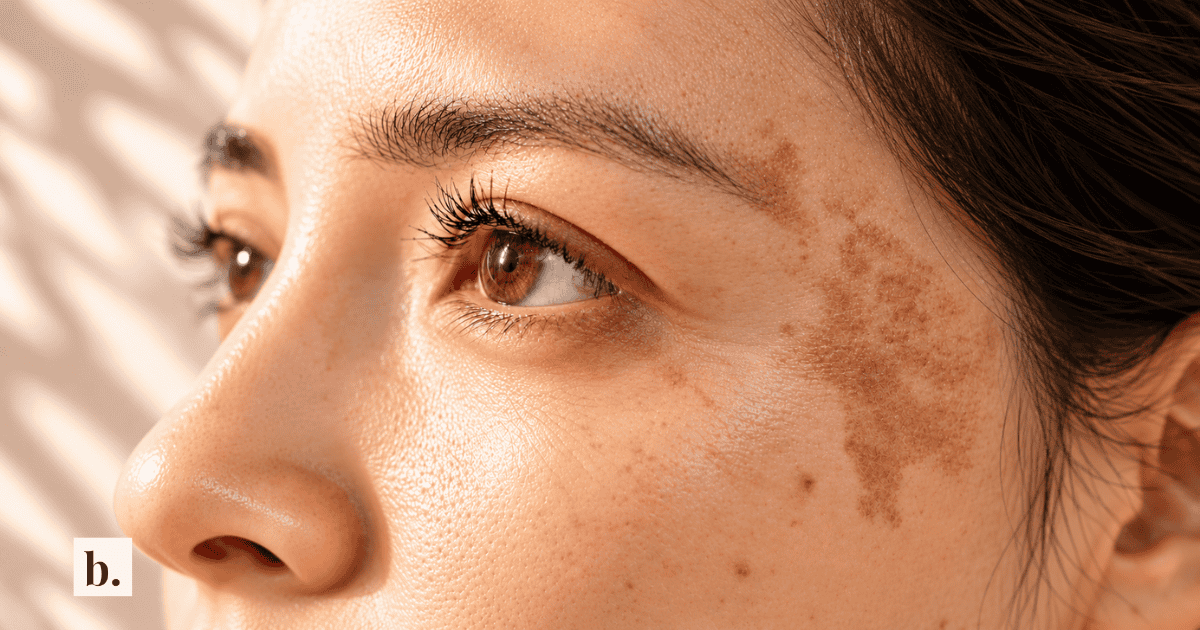
Which Dark-Spot Ingredients Actually Work? Why Different Pigmentation Technologies Aren’t Automatically Better
At a glance
Two dark-spot serums can promise the same result while working in different ways. That does not tell you which one will fade your marks more effectively. The distinction that matters is whether an ingredient or finished formula has been tested for the kind of discoloration you want to address, and whether its benefits outweigh the irritation, expense, or extra routine step.
If you are comparing a Thiamidol serum, a Melasyl formula, and a product featuring an AI-designed brightener, each has a convincing-sounding explanation for how it works. Those explanations are not the same as evidence that one product will give you better results.
Dark marks left by acne, melasma, and sun-related spots also differ. Before choosing a product, look at the type of discoloration studied, the results measured in people, the rest of the formula, and whether your routine already addresses the same problem.
On this page
- Why pigmentation mechanisms differ
- Which established brightening ingredients have human evidence?
- Is Melasyl better than Thiamidol?
- Do engineered actives such as PNar work better?
- Does niacinamide help dark spots?
- What does tranexamic acid add?
- Are advanced delivery systems better?
- How the approaches compare
- Which approach fits your skin?
Why do different dark-spot ingredients work differently?
Your skin makes melanin through a chain of events. One enzyme, called tyrosinase, helps start pigment production. Other processes influence how much pigment is made, how it moves into nearby skin cells, and how inflammation and sunlight affect visible marks. That is why products can target different steps yet make similar promises.[1]
When you compare pigment-focused formulas, some ingredients slow pigment production, others affect transfer or inflammation, and some products focus on delivering ingredients into skin. These are useful ways to understand a formula, not a ranking of which product works best. A 2026 review also emphasizes the importance of UV and visible-light protection in managing many pigmentation concerns.[1]
Which established brightening ingredients have human evidence?
If you’re considering tyrosinase inhibitors, they have an established place in pigmentation treatment because they act on an important part of melanin production. Even within this group, the evidence, regulatory status, irritation risk, and usefulness for particular dark marks differ.
Hydroquinone
If you’re considering hydroquinone, you’re looking at an ingredient with a long history in prescription treatment of melasma and other pigmentation concerns. In the United States, skin-lightening products containing hydroquinone are not approved for over-the-counter sale; FDA advises using it through a licensed healthcare professional. Prescription strength, treatment duration, follow-up, and the possibility of irritation or other adverse effects matter.[2]
Thiamidol
If you’re looking at Thiamidol, there is human research beyond its tyrosinase-inhibition mechanism. In a 2026 randomized, double-blind trial involving 200 adults with facial hyperpigmentation, a 0.2% Thiamidol cream reduced the study’s pigmentation-severity score more than the matching vehicle cream after 12 weeks: 36.1% versus 16.1% from baseline. Both groups used sunscreen.[3]
You have useful human evidence here, not a promise for every mark. The trial did not find a significant advantage for freckles or sun spots on every measure, and the tested cream is not proof that every Thiamidol formulation works equally well.[3]
Kojic acid
If you’re comparing brighteners, kojic acid also affects tyrosinase. Human melasma studies offer support, including research summarized in a systematic review of topical treatments. But results vary across formulas and study designs; a kojic-acid label alone does not establish how well a serum will fade your marks. Some formulas also cause irritation.[4]
Azelaic acid
If your discoloration occurs alongside acne, azelaic acid is especially relevant. A review of six randomized trials involving 673 people with melasma found encouraging results compared with hydroquinone on a severity score, but not a consistent advantage on every outcome.[5]
For your post-acne marks, the evidence includes a separate 12-week randomized trial of 15% azelaic acid gel in which both the azelaic-acid and comparison groups improved on some post-acne pigment measures; the azelaic-acid group also showed reductions in measured pigment and stronger results on certain redness measures. The study does not establish that every low-strength cosmetic azelaic acid formula has the same effect.[6]
The practical difference is not that one of these four ingredients universally wins. It is that they have different evidence for different pigment conditions, and their strength, formulation, and tolerability affect what makes sense for you.
Is Melasyl better than Thiamidol?
When you see Melasyl on a label, you’re seeing the trade name for 2-mercaptonicotinoyl glycine (2-MNG). Instead of directly inhibiting tyrosinase, it is designed to interact with melanin precursors further along the pigment-production process.
If you’re comparing Melasyl and Thiamidol, consider a 2026 randomized, double-blind trial that compared a routine with a 0.5% 2-MNG serum and SPF50+ sunscreen against one using a 0.2% Thiamidol serum and SPF50+ sunscreen. The study analyzed 77 adults with post-acne hyperpigmentation and Fitzpatrick phototypes III–VI after 84 days.[7]
Here’s what the results mean for you: both routines improved the main post-acne pigmentation score. The 2-MNG routine met the study’s prespecified noninferiority criterion, meaning it was not shown to perform meaningfully worse than the comparison on the primary outcome. It was not superior on that outcome. Some exploratory results did favor the 2-MNG routine, including lesion counts, skin-color measures, and satisfaction.[7]
Before you assume Melasyl itself works better, note the catch: this was not a direct test of isolated Melasyl against isolated Thiamidol. The 2-MNG serum also contained 10% niacinamide and other ingredients, the comparison serum had a different formula, and the sunscreens differed. La Roche-Posay funded the study and several authors worked for L’Oréal. The result supports the tested routines, not the claim that Melasyl itself is the better molecule.[7]
If a familiar brightening formula is working well for you, this study alone is not a reason to switch. It does show that a differently designed routine can perform comparably in a relevant group.
Do engineered actives such as PNar work better?
If you’re looking at AI-designed brighteners, Debut’s DermCeutical PNar is one emerging ingredient developed using AI and biotechnology. Despite that positioning, the company says PNar targets enzymes involved in making melanin, including tyrosinase. Its approach is not automatically separate from every established tyrosinase strategy.
When you evaluate PNar, note that Debut announced it in September 2026 and reported 12-week human testing at a 0.45% use level. Those are company-reported findings. The public announcement does not provide enough independent comparative detail to rank PNar above Thiamidol, kojic acid, azelaic acid, hydroquinone, or a tested multi-ingredient formula.[8]
If you want the launch details and the limits of Debut’s publicly reported findings, read BB’s PNar Beauty News report. An ingredient launch announcement does not establish better real-world results than an existing pigmentation treatment.
When a product promotes an AI-designed or multi-enzyme active, ask whether the finished product has human testing for visible dark spots, not just laboratory evidence for its mechanism. Development technology is not itself a consumer outcome.
Does niacinamide help dark spots?
If you want a multitasking formula, niacinamide has a different main pigmentation mechanism: it can reduce the transfer of pigment-containing structures from the cells that produce melanin to surrounding skin cells. It also has other useful functions in formulas, including barrier support.
If you’re reviewing niacinamide evidence, a human study published in 2002 tested niacinamide-containing moisturizers, including a 5% formulation against a vehicle in a paired comparison, and a separate sunscreen-based comparison using 2% niacinamide. The tested formulas reduced visible pigmentation relative to their controls. Laboratory findings supported an effect on pigment transfer rather than direct tyrosinase inhibition.[9]
This is a reasonable option when you want a multi-purpose formula for uneven tone, but it does not mean that a 10% or 20% niacinamide serum will fade spots faster. Formula design, concentration, and how your skin tolerates the product still matter.
What does tranexamic acid add?
If you’re considering tranexamic acid, it’s used in topical formulas for uneven pigmentation, especially melasma. Researchers have investigated its effects on signals involving inflammation and the interactions between skin cells, rather than treating it as another simple tyrosinase inhibitor.
When you’re comparing topical evidence, a 2026 systematic review of randomized melasma trials reported improvements with topical tranexamic-acid approaches, while also reviewing oral and other routes. That distinction is essential: results from oral tablets or procedures cannot be transferred directly to a topical serum. Concentration, formula, other treatments, and the specific pigmentation condition change how useful the topical evidence is.[10]
For an everyday routine, the sensible comparison is a tested topical formula versus other topical options that suit your skin—not a cosmetic serum versus the strongest result from a prescription or procedure study.
Are advanced delivery systems better?
You may see dark-spot products using vesicles, liposomes, or similar carriers designed to deliver ingredients into skin. Better penetration in a laboratory test is interesting, but it does not automatically establish better visible results than a conventional formula.
If you’re comparing delivery technologies, consider a 2026 Ourself study of a brightening serum with Tiered-Release Vesicle technology. Laboratory and ex-vivo testing provided evidence about melanin production and tranexamic-acid penetration. Its 12-week human portion reported improvements in pigmentation and tone, but only 23 people completed it, it was open-label, and it lacked a concurrent control group.[11]
Before you credit the serum for those changes, note that participants also used Ourself’s Daily Renewal Cream, cleanser, and SPF45 sunscreen alongside it. That means the trial cannot establish how much of the visible change came from the serum, its delivery technology, the rest of the routine, or other factors. Ourself funded the research; company employees and consultants were among the authors.[11]
You’ll find a similar evidence limit in a separate 2026 review of emerging nano-delivery approaches: promising laboratory penetration data are more common than well-controlled human trials demonstrating superior clinical outcomes.[12]
If delivery technology is the main reason a product costs more, the useful question is whether a controlled study compared it with a similar formula that did not use that delivery system.
How do the main dark-spot approaches compare?
As you compare approaches, the differences below explain their intended roles and how to interpret the evidence. They are not a league table of ingredients or a substitute for examining the exact formula.
| Approach and examples | What the evidence tells you | What to check before buying |
|---|---|---|
| Melanin-production inhibition — hydroquinone, Thiamidol, kojic acid, azelaic acid | Human pigmentation research exists, but strength, study conditions, and indications vary widely. | The type of dark spot, U.S. product status, concentration, and irritation risk. |
| Melanin-precursor interaction — Melasyl (2-MNG) | A controlled trial found a Melasyl-containing routine noninferior, not superior, to a Thiamidol-containing routine on the primary endpoint. | Evidence for the whole product and whether it adds anything to your current routine. |
| Novel engineered actives — PNar | Supplier-reported testing is promising, but independent head-to-head finished-product evidence is limited. | Published study methods, exact product testing, and credible comparisons. |
| Pigment-transfer modulation — niacinamide | Controlled human formula studies support gradual improvement in uneven tone. | Formula strength, other routine benefits, and whether a separate serum is necessary. |
| Inflammation-linked signaling — topical tranexamic acid | Human melasma studies support a possible benefit; findings depend on route and formulation. | Evidence for topical use rather than oral or procedural treatment. |
| Enhanced delivery — vesicle and nanoparticle systems | Some complete formulas show improvement, but the delivery system’s individual contribution is often unproven. | A controlled comparison with and without the claimed delivery technology. |
Which dark-spot approach makes sense for you?
If your marks follow breakouts: deal with ongoing acne as well as leftover discoloration. Otherwise new inflammation can keep creating new marks. Azelaic acid is relevant here because the same category has evidence connected to acne and pigmentation, but the exact formula still matters.
If you have melasma: make consistent sun protection part of the plan. Melasma is often persistent and can worsen with UV and visible-light exposure. BB’s Briefing on tinted sunscreen and visible-light protection explains why the presence of tint alone does not prove a particular level of protection. A dermatologist can help distinguish melasma from other conditions and explain when prescription care is appropriate.
If your skin is easily irritated: a tolerable formula used consistently makes more sense than adding several powerful-sounding brighteners. Irritation can make some post-inflammatory marks more difficult to manage.
If you already use a brightening product successfully: a new pathway or trademark is not a good reason to replace it. Look for a demonstrable advantage in results, tolerability, ease of use, or routine simplicity.
If a product’s premium price depends on a new technology: ask for controlled human results that demonstrate the claimed advantage. Evidence about the ingredient alone, or about how deeply it penetrates, does not establish a better purchase.
And if a dark mark is new, changing, irregular, or bleeding, do not assume it is ordinary cosmetic hyperpigmentation. Have it evaluated rather than trying to cover it with another brightening product.
The BB Perspective
For your dark spots, the strongest choice is not necessarily the newest ingredient. Hydroquinone, Thiamidol, azelaic acid, niacinamide, Melasyl, and topical tranexamic acid do not have identical evidence or roles. The right comparison starts with what kind of pigmentation you have and what a relevant human study actually tested.
Do not pay more solely because a product uses an AI-designed ingredient, a patented pathway, or a sophisticated delivery system. A credible advantage requires evidence that the finished formula works for the outcome you care about, with acceptable tolerability and a practical routine you can maintain.
As you build your own routine, remember that for many people, consistent sunscreen and one well-chosen pigment-focused step are more useful than stacking several overlapping serums. A new product earns its place when it addresses a real unmet need—not because its mechanism sounds different.
Last reviewed: October 2026
Sources
Duval C, Qiu J, Warrick E, et al. Decoding Hyperpigmentation from Biological Mechanisms to Actives with Clinically Proven Topical Efficacy: A Narrative Review. Dermatology and Therapy. 2026;16(7):3385–3414. doi:10.1007/s13555-026-01807-w.
This narrative review maps the roles of pigment production, transfer, inflammation, photoprotection, and the surrounding skin environment. It is useful for understanding mechanisms, not a head-to-head commercial ranking. L’Oréal funded the article, and multiple authors were affiliated with L’Oréal. Return to citation.
U.S. Food and Drug Administration. Skin Product Safety. FDA. Accessed October 2026.
FDA states that hydroquinone-containing skin-lightening products are not approved for over-the-counter U.S. sale and distinguishes those products from prescription hydroquinone. Return to citation.
Lekhavat C, Rojanamatin J, Suphannaphong M, Kolbe L. Efficacy and Tolerability of 0.2% Thiamidol Cream for Facial Hyperpigmentation: A Randomized, Double-Blind, and Vehicle-Controlled Study. Dermatology and Therapy. 2026;16:1551–1565. doi:10.1007/s13555-025-01649-y.
This 12-week study randomized 200 adults to a Thiamidol cream or its vehicle, with sunscreen use in both groups. It found a greater reduction in the pigmentation-severity score with the tested Thiamidol cream. Results did not establish an advantage for every pigmentation subtype. One author was affiliated with Beiersdorf. Return to citation.
Chang Y-F, Lee TL, Oyerinde O, et al. Efficacy and Safety of Topical Agents in the Treatment of Melasma: What’s Evidence? A Systematic Review and Meta-Analysis. Journal of Cosmetic Dermatology. 2023;22(4):1168–1176. doi:10.1111/jocd.15566.
This synthesis compared evidence and reported irritation across several topical melasma approaches, including kojic acid, hydroquinone, azelaic acid, and tranexamic acid. Differences in trials, formulas, comparators, and designs prevent treating the pooled results as a direct ranking of retail serums. Return to citation.
Albzea W, AlRashidi R, Alkandari D, et al. Azelaic Acid Versus Hydroquinone for Managing Patients With Melasma: Systematic Review and Meta-Analysis of Randomized Controlled Trials. Cureus. 2023;15(7):e41796. doi:10.7759/cureus.41796.
Six randomized studies involving 673 people with melasma showed an advantage on one pooled severity measure, but not on every clinical outcome. The authors called for larger studies with longer follow-up. Results do not establish equivalence across concentrations or cosmetic products. Return to citation.
Shucheng H, Zhou X, Du D, et al. Effects of 15% Azelaic Acid Gel in the Management of Post-Inflammatory Erythema and Post-Inflammatory Hyperpigmentation in Acne Vulgaris. Dermatology and Therapy. 2024;14:1293–1314. doi:10.1007/s13555-024-01176-2.
A 12-week randomized study enrolled 72 people; 60 completed it. Some pigmentation changes were observed within both the active and placebo groups, while certain redness outcomes favored azelaic acid. The trial was supported by a Chinese national research grant. Return to citation.
Passeron T, Le Dantec G, Salah S, et al. Treatment of Acne-Induced Facial Post-Inflammatory Hyperpigmentation With a New 2-MNG-Containing Routine Versus a Thiamidol-Containing Routine—A Monocentric Prospective Double-Blind Randomized Comparative Trial. Journal of Cosmetic Dermatology. 2026;25(6):e70913. doi:10.1111/jocd.70913.
Seventy-seven people were analyzed after 84 days. The 2-MNG routine met noninferiority, not superiority, on the primary endpoint; some exploratory outcomes favored that routine. The serums and sunscreens differed, so the trial cannot isolate the active molecules. La Roche-Posay funded the work, and several authors were affiliated with L’Oréal. Return to citation.
Debut. Debut Engineers New Biotech Ingredient for Hyperpigmentation. PR Newswire. September 15, 2026.
This company announcement verifies the PNar launch, the reported 0.45% use level, and the company’s 12-week clinical claims. It does not independently verify superiority over other ingredients or substantiate every future finished product using PNar. Return to citation.
Hakozaki T, Minwalla L, Zhuang J, et al. The Effect of Niacinamide on Reducing Cutaneous Pigmentation and Suppression of Melanosome Transfer. British Journal of Dermatology. 2002;147(1):20–31. doi:10.1046/j.1365-2133.2002.04834.x.
The study combined cell-model investigations with human clinical comparisons, including niacinamide-containing moisturizers. The findings support a pigment-transfer mechanism and visible changes for the tested formulas, not a universal advantage for higher niacinamide percentages. Several authors, including the lead author, were affiliated with Procter & Gamble research divisions. This commercial research involvement is relevant when interpreting the findings but does not invalidate the controlled clinical results. Return to citation.
Ngoc LTN, Moon J-Y, Lee Y-C. Tranexamic Acid for Melasma Treatment: An Updated Systematic Review and Meta-analysis of Randomized Controlled Trials. Korean Journal of Chemical Engineering. 2026;43:1203–1215. doi:10.1007/s11814-025-00624-9.
The review includes topical and non-topical routes and reports improvement with some topical regimens. Its mixed-route evidence must not be interpreted as proof that a specific cosmetic serum matches oral or procedural treatment results. Full methodology was not freely accessible from the publisher. Return to citation.
Bhatia AC, Ortiz A, Kannan S, et al. In Vitro, Ex Vivo and Clinical Trial of Brightening Serum Using a Novel Delivery System on Subjects With Moderate to Severe Dyschromia. Journal of Cosmetic Dermatology. 2026;25(2):e70686. doi:10.1111/jocd.70686.
The human portion had 23 completers, an open-label, uncontrolled design, and a multi-product routine including a cream, cleanser, and sunscreen. Laboratory penetration findings cannot isolate the delivery system’s contribution to visible improvement. Ourself funded the study, and employees and consultants participated as authors. Return to citation.
Ruchitha S, Dalal Y, Singh K. Dermal Hyperpigmentation: Pathogenesis, Biomarkers and Translational Safety Considerations for Emerging Therapies. Cutaneous and Ocular Toxicology. Published online August 5, 2026. doi:10.1080/15569527.2026.2711637.
This structured narrative review distinguishes promising laboratory results from limited human validation for biomarker-guided and nano-delivery pigmentation treatments. The authors reported no funding or conflicts. The public abstract supports the broad evidence limitation, not a comparison of named retail products. Return to citation.
Related product BeautyBriefs
These BeautyBriefs cover products relevant to the needs discussed in this Beauty Briefing. Inclusion here reflects topic relevance, not a rating or endorsement.

Oak Essentials
Oak Essentials Antioxidant Hand Serum
If your hands look dry, Oak Essentials Hand Serum offers humectants and emollients for softness. Its Premium value depends on the scented finish, not unproven cellular regeneration.
Read the BeautyBrief
Neutrogena
Neutrogena Rapid Wrinkle Repair Retinol Regenerating Cream
If your skin tolerates retinol and fragrance, Rapid Wrinkle Repair offers a moisturizing format for gradual fine-line care. Its Mid-Range value rests on texture and convenience rather than a disclosed retinol concentration.
Read the BeautyBrief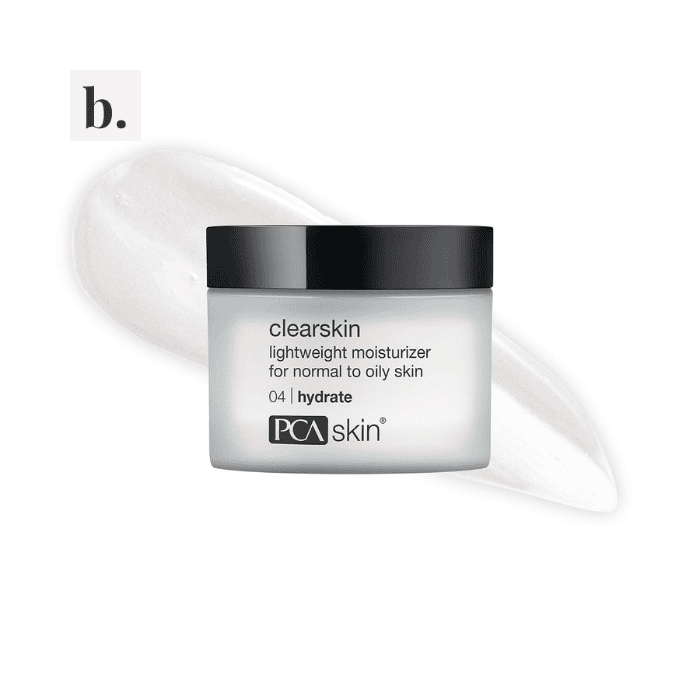
PCA SKIN
PCA SKIN Clearskin
If your skin is oily or breakout-prone and you want a light moisturizer, Clearskin offers a useful Premium formula with disclosed 4% niacinamide. Its post-breakout tone benefits are plausible rather than proven…
Read the BeautyBrief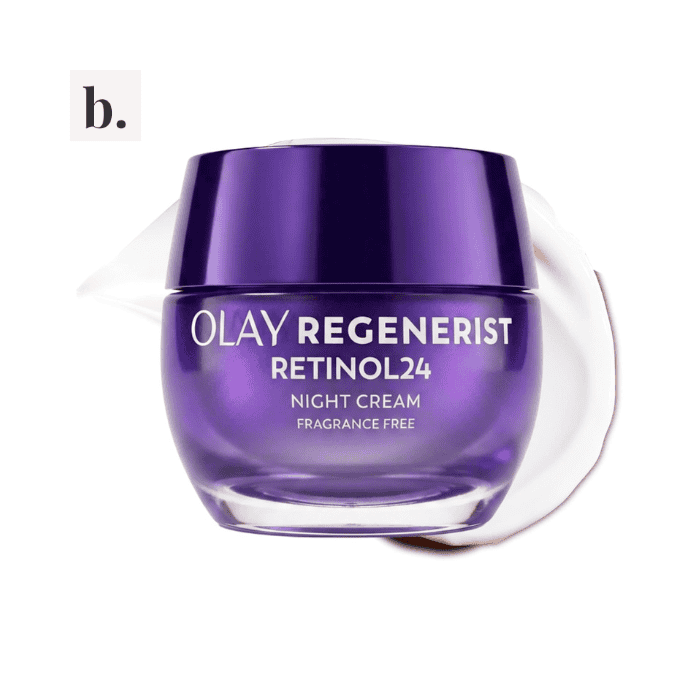
Olay
Olay Regenerist Retinol24 Night Moisturizer
If your skin tolerates retinoids, Olay Retinol24 offers a convenient fragrance-free night moisturizer with two vitamin A derivatives. Its Mid-Range value depends on routine simplicity rather than known retinol strength.
Read the BeautyBrief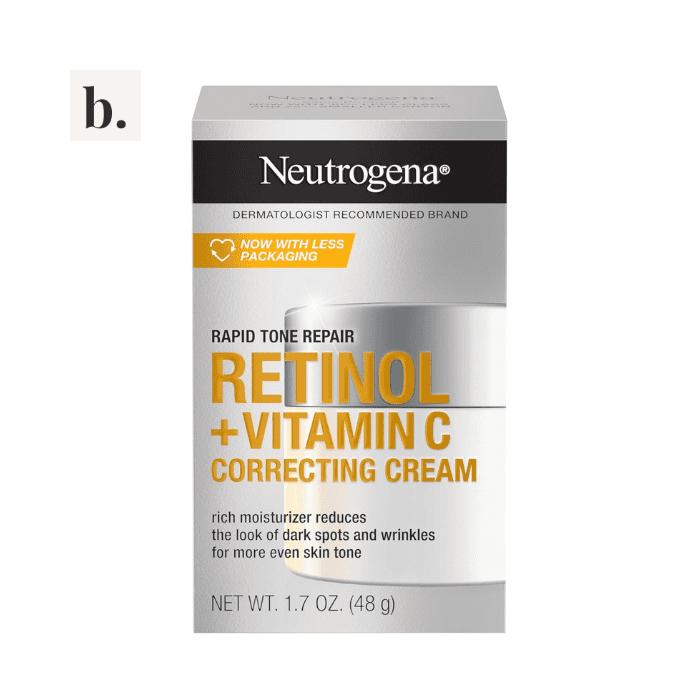
Neutrogena
Neutrogena Rapid Tone Repair Retinol + Vitamin C Correcting Cream
If you want a retinol moisturizer for uneven tone and texture, Rapid Tone Repair brings treatment ingredients into one cream. The Mid-Range value depends on your tolerance of fragrance and retinol rather…
Read the BeautyBrief
Obagi
Obagi-C® Fx C-Therapy Night Cream
If your skin tolerates rich creams and you want arbutin for uneven tone, C-Therapy Night Cream offers an ingredient-based brightening rationale. Its leave-on sodium lauryl sulfate and lack of finished-product outcomes make…
Read the BeautyBrief