

Does Collagen Skincare Actually Build Collagen? What Collagen Creams Can—and Can’t—Do
At a glance
Collagen creams can improve how skin feels and looks without rebuilding the collagen network underneath. The word “collagen” may refer to intact protein, hydrolyzed fragments, supplier blends, or separate peptide technologies, and those do not carry the same evidence.
Before paying more for a collagen claim, check what form is actually in the formula, what outcome was tested, and whether the evidence comes from the finished product or only from an ingredient study.
You now see collagen on creams, masks, serums, “collagen water” products, and peptide formulas, but the label alone does not tell you what the formula contains or what it can realistically do.
Intact collagen, hydrolyzed collagen, and defined signaling peptides need to be evaluated separately. This Briefing focuses on the difference between a useful moisturizing claim and a stronger collagen-building claim that needs product-level evidence.
In this Briefing
- Does collagen skincare build collagen?
- What topical collagen actually does
- Why intact collagen does not simply replace dermal collagen
- What hydrolyzed collagen changes
- What “collagen water” means
- Why collagen percentages can mislead
- Collagen peptides versus collagen-signaling peptides
- What evidence would actually show collagen change
- How to evaluate a collagen skincare claim
- What has stronger evidence for photoaging
Does collagen skincare actually build collagen?
Not simply because collagen appears in the formula.
Native collagen is a large protein. Reviews of collagen in cosmetics describe intact collagen as poorly able to cross the outer skin barrier, which limits its ability to reach dermal fibroblasts—the cells that make collagen in skin.[1]
That does not make topical collagen useless. Collagen has water-binding, film-forming, and surface-conditioning properties that can make skin feel smoother and look temporarily plumper.[1]
But smoother-looking skin after a moisturizer is not proof that the product created new dermal collagen.
This distinction matters because hydration itself can soften the appearance of fine lines. A cream can produce a real cosmetic improvement without changing the deeper collagen matrix.
What does topical collagen actually do?
Topical collagen is most defensible as a formulation ingredient that helps condition the skin surface.
Collagen can bind water and form a film over the skin. Those properties can support a softer feel, temporarily improve surface smoothness, and reduce the dry, crepey appearance that makes fine lines look more obvious.[1]
That is a useful role. It is just different from rebuilding structural collagen in the dermis.
For you, the practical question is not “Does this cream contain collagen?” It is “What benefit is the brand actually claiming, and does the evidence match that claim?”
If the claim is hydration, softness, or temporary plumping, topical collagen can fit comfortably within ordinary moisturizer performance. If the claim is increased collagen production, restored dermal density, or structural reversal of skin aging, the evidence needs to go beyond the presence of collagen on an ingredient list.
Why doesn’t intact collagen simply replace the collagen skin loses?
Skin collagen sits mainly in the dermis. A topical product first encounters the stratum corneum, the outer barrier designed to keep large water-soluble molecules from passing freely into deeper tissue.
Native collagen is a very large protein, commonly described at roughly 300 kDa. Reviews of topical collagen note that this size and structure make meaningful penetration through intact stratum corneum difficult.[1]
Specially engineered collagen can behave differently from ordinary native collagen. A 2022 study tested a cream containing micronized marine collagen in human skin samples and reported movement through the stratum corneum into deeper epidermal layers toward the dermis.[2]
That study is useful as delivery evidence, not proof that a cosmetic cream rebuilt dermal collagen in people. It did not show that the collagen became incorporated into the dermal collagen network or demonstrate clinical wrinkle or firmness improvement.
Even when smaller collagen fragments penetrate farther than intact collagen, they do not simply travel into the dermis and assemble themselves into the same mature collagen fibers your fibroblasts produce.
Your skin builds collagen through a multi-step biological process inside and around fibroblasts. Applying collagen protein to the surface does not bypass that process.[1]
Is hydrolyzed collagen different?
Yes. Hydrolyzed collagen is collagen that has been broken into smaller protein fragments and peptides.
That changes its solubility, formulation behavior, and potential for skin interaction. Reviews describe hydrolyzed collagen as lower-molecular-weight fragments than native collagen and note that molecular size affects how far those fragments may penetrate.[3]
But “smaller” does not automatically mean “builds dermal collagen.”
Hydrolyzed collagen can contribute to hydration and skin conditioning, and experimental research suggests some low-molecular-weight fragments may interact with skin biologically. The strength of that evidence depends on the exact fragment size, concentration, vehicle, delivery, and study design.
Human results are mixed. In a six-month randomized, double-blind factorial trial involving 56 postmenopausal women with stage I dermatoporosis, a topical 2.5% hydrolyzed-collagen serum did not significantly improve the measured clinical, biophysical, histologic, or immunohistochemical outcomes compared with topical placebo.[4]
That study used forearm skin in a specific population, so it is not a direct test of an ordinary facial collagen moisturizer. It is still useful evidence that breaking collagen into smaller fragments does not automatically produce a meaningful topical anti-aging effect.
A separate four-week pilot study of a commercial collagen-tripeptide ampoule in 22 Asian women reported improvements in wrinkles, elasticity, skin density, and other measurements.[5] The study had no control group, was short, and included researchers affiliated with the company behind the tested collagen material and product, so it is exploratory rather than category-wide proof.
That is why BB treats intact collagen, hydrolyzed collagen, and defined bioactive peptides as separate evidence questions.
What does “collagen water” mean?
“Collagen water” is a marketing or raw-material description, not a standardized proof of dermal collagen activity.
A product may advertise a large percentage of a collagen-containing liquid or supplier blend. That percentage does not, by itself, tell you how much actual collagen protein is present, what form it is in, its molecular-weight distribution, whether it penetrates skin, or whether the finished product changes collagen in human skin.
For example, a claim such as “50% collagen water” can sound as though half the jar is structural collagen. Without the raw-material specification and finished formula details, the percentage cannot establish that interpretation.
What to look for instead: What exactly is the material? Is it intact collagen, hydrolyzed collagen, peptides, amino acids, or a dilute collagen-containing solution? How much of the biologically relevant component is present? And what was demonstrated in the finished product?
Does a higher collagen percentage make a product better?
No reliable rule supports that.
Percentage is only meaningful when you know what is being counted.
A percentage can refer to a pure ingredient, a solution, a supplier complex, a fermented material, a blend, or a water-based raw material containing a much smaller amount of the headline ingredient. Two products advertising “10% collagen complex” and “50% collagen water” therefore cannot be compared from the front-label numbers alone.
Higher concentration also does not solve a delivery problem. If a molecule is too large to reach the intended target, adding more of it to the surface does not prove greater dermal effect.
The same principle applies across skincare: a percentage is a formulation fact only when the underlying material is clearly defined. It is not an efficacy score.
Are collagen peptides the same as collagen-signaling peptides?
No, and this is one of the most important distinctions in collagen marketing.
Collagen-derived peptides are fragments produced by breaking collagen into smaller chains.
Signal peptides used in skincare can be synthetic or otherwise defined short amino-acid sequences designed to influence a biological pathway associated with extracellular-matrix production. They are not simply tiny pieces of collagen that rebuild the dermis.
Selected topical peptides have human evidence. In a 12-week randomized split-face study of 93 women, a moisturizer containing palmitoyl pentapeptide-4 improved the appearance of fine lines and wrinkles compared with the same moisturizer without the peptide. All authors were affiliated with Procter & Gamble, so the study is best treated as evidence for that tested formula rather than proof that every peptide or “collagen peptide” cream works the same way.[6]
The broader evidence is much less uniform. A 2019 systematic review found substantial uncertainty in how extracellular-matrix-stimulating cosmetic peptides had been clinically tested, making category-wide conclusions difficult.[7]
A 2026 systematic review and meta-analysis reinforces that caution. It included 19 randomized trials with 1,341 participants, but only two topical studies representing 105 participants; the remaining evidence was predominantly oral. The pooled wrinkle benefit was driven mainly by oral peptides, while the topical subgroup showed a smaller, non-significant effect.[8]
Do not transfer evidence from one peptide to another. See the Peptides ingredient page for the broader evidence standard. For finished peptide creams and wrinkle claims, see Are Peptide Creams Effective for Wrinkles?
What evidence would actually show that a cream changes dermal collagen?
If a brand says a cream builds collagen, the proof needs to measure more than temporary plumping or smoother-looking skin.
For a finished product, stronger evidence would include:
- A controlled human study on the finished formula. Ingredient or supplier data do not automatically establish what the complete product does.
- A suitable comparator. Ideally, the test compares the active formula with the same or very similar vehicle without the proposed collagen-active technology.
- Measurements that match the claim. A structural collagen claim needs objective evidence such as validated imaging, biomechanical measurements, biomarkers, or histology—not only self-reported plumping.
- A realistic timeline. Immediate smoothing after application is compatible with hydration and film formation. Structural remodeling is a different biological claim.
- Clear study details. Sample size, participant characteristics, duration, endpoints, statistical methods, and conflicts of interest matter.
- Evidence tied to the same formula you can buy. A study on a supplier ingredient at one concentration cannot automatically prove the retail product you are considering if it uses a different concentration or delivery system.
The outcome also matters. “Skin looks plumper” is not interchangeable with “dermal collagen increased.” Neither is a laboratory finding that fibroblasts produced more collagen in a dish.
How should you evaluate a collagen cream?
- Identify the collagen form. Look for collagen, soluble collagen, hydrolyzed collagen, collagen amino acids, or a named peptide rather than relying on the front-label word “collagen.”
- Separate hydration from structural claims. A formula can be a good moisturizer without proving dermal remodeling.
- Interrogate percentage language. Ask whether the number refers to pure material or a blend such as “collagen water” or a proprietary complex.
- Do not transfer peptide evidence. A study on palmitoyl pentapeptide-4 does not validate every collagen peptide, marine collagen complex, or multi-peptide cream.
- Look for finished-product testing. The more ambitious the claim, the more directly the retail formula needs to be tested.
- Check what was measured. Hydration, wrinkle appearance, elasticity, density, collagen biomarkers, and histology are different endpoints.
- Do not pay a premium for collagen percentage alone. Formula quality, moisturization, tolerability, packaging, and credible human evidence matter more.
What has stronger evidence for photoaging and collagen-related skin change?
If the goal is visible photoaging rather than simply moisturization, collagen-branded skincare should be compared with ingredients that have better-established human evidence.
Retinoids are the clearest example. Prescription tretinoin has a substantially deeper human evidence base for photoaged wrinkles. A 2025 systematic review and meta-analysis of eight randomized trials involving 1,361 participants found that topical tretinoin improved both fine and coarse facial wrinkles caused by photodamage compared with vehicle treatments.[9] The BB Retinoids ingredient page explains how that evidence differs from cosmetic retinol, retinal, and other retinoids.
That does not mean you need a retinoid or that every collagen cream is a poor purchase. A well-formulated collagen moisturizer can still be comfortable, hydrating, and cosmetically elegant.
The purchase should match the evidence. Choose a moisturizer for moisturization; choose a treatment when the goal requires treatment-level evidence. Do not assume the word “collagen” turns one into the other.
What about claims that a cosmetic “increases collagen”?
In the United States, the wording of a collagen claim matters legally as well as scientifically.
FDA explains that a product intended only to make wrinkles less noticeable through moisturization is a cosmetic. A product marketed as increasing the skin’s production of collagen is making a structure-or-function type claim and may be regulated as a drug or medical device depending on the product and intended use.[10]
That does not tell you whether a particular product works. It does show why “supports the look of firm skin” and “increases collagen production” are not equivalent claims.
The BB Perspective
Collagen skincare has a real formulation role, but the word “collagen” often carries more biological meaning in marketing than the evidence supports.
Intact collagen is best understood as a large, surface-acting protein with useful water-binding and film-forming properties. Hydrolyzed collagen contains smaller fragments and deserves separate evaluation. Collagen-related signal peptides are another category again, with evidence that depends on the exact peptide and finished formula.
The strongest rule is simple: do not treat collagen content, collagen-water percentages, or peptide language as proof that a cream rebuilds dermal collagen. Look at what the ingredient actually is, what the finished product was tested to do, and whether the measured outcome matches the claim.
Last reviewed: September 2026
Sources
Jadach B, Mielcarek Z, Osmałek T. “Use of Collagen in Cosmetic Products.” Current Issues in Molecular Biology. 2024;46(3):2043-2070. doi:10.3390/cimb46030132.
This academic review is used for collagen structure, topical formulation roles, the large molecular size of native collagen, penetration limitations, collagen biosynthesis, and the distinction between applying collagen and producing dermal collagen. The review includes cosmetic and preclinical literature, so it does not prove that every collagen-containing retail product changes skin structure. Return to citation.
Lubart R, Yariv I, Fixler D, Lipovsky A. “A Novel Facial Cream Based on Skin-penetrable Fibrillar Collagen Microparticles.” Journal of Clinical and Aesthetic Dermatology. 2022;15(5):59-64. PMID: 35642230.
The study tested a cream containing specially micronized marine collagen using human skin samples and reported penetration through the stratum corneum into deeper epidermal layers toward the dermis. It did not show incorporation into the dermal collagen network or clinical wrinkle or firmness improvement in people. One author was affiliated with Hava Zingboim Ltd., and two authors disclosed consulting relationships with the company. Return to citation.
Aguirre-Cruz G, León-López A, Cruz-Gómez V, Jiménez-Alvarado R, Aguirre-Álvarez G. “Collagen Hydrolysates for Skin Protection: Oral Administration and Topical Formulation.” Antioxidants. 2020;9(2):181. doi:10.3390/antiox9020181.
This review is used for hydrolyzed collagen as lower-molecular-weight material and for topical moisturizing and formulation context. One listed author affiliation was Uni-Collagen S.A. de C.V.; the review is therefore used for formulation context rather than as proof that a finished collagen cosmetic builds dermal collagen. Return to citation.
Guadanhim LRS, Miot HA, Soares JLM, et al. “Efficacy and Safety of Topical or Oral Hydrolyzed Collagen in Women with Dermatoporosis: A Randomized, Double-Blind, Factorial Design Study.” Dermatology and Therapy. 2023;13(2):523-534. doi:10.1007/s13555-022-00859-y. PMID: 36547800.
Fifty-six postmenopausal women with stage I dermatoporosis were randomized in a factorial trial involving oral collagen or placebo and topical 2.5% hydrolyzed collagen serum or topical placebo for six months. The topical collagen intervention did not produce significant benefits in the measured clinical, biophysical, histologic, or immunohistochemical outcomes. The study involved forearm dermatoporosis rather than ordinary facial anti-aging use, which limits how directly it applies to cosmetic face creams. The authors reported no competing interests. Return to citation.
Lee YI, Lee SG, Jung I, et al. “Effect of a Topical Collagen Tripeptide on Antiaging and Inhibition of Glycation of the Skin: A Pilot Study.” International Journal of Molecular Sciences. 2022;23(3):1101. PMID: 35163025.
Twenty-two Asian women used a commercial collagen-tripeptide ampoule for four weeks in a prospective single-arm study. The study reported improvements in wrinkles, elasticity, skin density, and other measurements, but it had no comparison group and was short. Two authors were affiliated with NEWTREE Co., Ltd., the company behind the tested collagen material and product, so the findings are exploratory rather than category-wide proof for collagen creams. Return to citation.
Robinson LR, Fitzgerald NC, Doughty DG, Dawes NC, Berge CA, Bissett DL. “Topical palmitoyl pentapeptide provides improvement in photoaged human facial skin.” International Journal of Cosmetic Science. 2005;27(3):155-160. doi:10.1111/j.1467-2494.2005.00261.x. PMID: 18492182.
This 12-week double-blind, placebo-controlled split-face study enrolled 93 women ages 35 to 55 and compared a moisturizer containing 3 ppm palmitoyl pentapeptide-4 with the same moisturizer without the peptide. The peptide formula produced greater improvement in fine lines and wrinkles. The authors were affiliated with Procter & Gamble, so the result supports the tested formula rather than unrelated peptides or collagen products. Return to citation.
Michalek IM, Lelen-Kaminska K, Caetano dos Santos FL. “Peptides stimulating synthesis of extracellular matrix used in anti-ageing cosmetics: Are they clinically tested?” Australasian Journal of Dermatology. 2019;60(4):e267-e271. doi:10.1111/ajd.13036.
This systematic review examined the clinical-study designs used to assess extracellular-matrix-stimulating cosmetic peptides and found substantial uncertainty in the available clinical assessment literature. It supports caution about treating peptide marketing as category-wide clinical proof. Return to citation.
Nukaly HY, Halawani IR, Irtaza HM, et al. “Oral and topical peptides for skin aging: systematic review and meta-analysis of randomized controlled trials.” Frontiers in Medicine. 2026;13:1618306. doi:10.3389/fmed.2026.1618306. PMID: 41924746.
This review included 19 randomized trials with 1,341 participants. Only two topical studies, representing 105 participants, were included; the pooled wrinkle effect was driven mainly by oral peptides and the topical subgroup was smaller and non-significant. The authors declared no commercial or financial conflicts. Return to citation.
Huang HY, Lee LTJ. Tretinoin for Photodamaged Facial Skin: Systematic Review and Meta-Analysis of Randomized Controlled Trials. Dermatology Practical & Conceptual. 2025;15(4):e20255172. doi:10.5826/dpc.1504a5172. PMID: 41236273.
The review included eight randomized trials with 1,361 participants and found that topical tretinoin improved fine and coarse facial wrinkles caused by photodamage compared with vehicle. The trials varied in formulation, concentration, follow-up, and outcome measurement, so the evidence supports tretinoin’s established role rather than every cosmetic retinoid product. Return to citation.
U.S. Food and Drug Administration. “Wrinkle Treatments and Other Anti-aging Products.” Accessed September 2026.
FDA distinguishes cosmetic moisturization claims from claims intended to affect the structure or function of skin and specifically uses increasing the skin’s production of collagen as an example of a claim that can place a product in drug or medical-device territory. Return to citation.
Related product BeautyBriefs
These BeautyBriefs cover products relevant to the needs discussed in this Beauty Briefing. Inclusion here reflects topic relevance, not a rating or endorsement.

Allies of Skin
Allies of Skin The Lab Drop 10/10/10 Multi GF Exo Advanced Recovery Ampoules
If you are considering Allies of Skin Lab Drop 10/10/10 Ampoules for visible aging, its growth-factor and exosome-themed complexes make an ambitious treatment story. The brand's reported improvements do not establish biological…
Read the BeautyBrief
Schaf
Schaf Moisturizer 3.0
If you prefer a fragrance-free cream, Schaf Moisturizer 3.0 offers rich emollience alongside niacinamide and bakuchiol. Its Premium value rests on how the texture and ingredient blend suit you, not established retinoid-level…
Read the BeautyBrief
Oak Essentials
Oak Essentials Antioxidant Hand Serum
If your hands look dry, Oak Essentials Hand Serum offers humectants and emollients for softness. Its Premium value depends on the scented finish, not unproven cellular regeneration.
Read the BeautyBrief
Neutrogena
Neutrogena Rapid Wrinkle Repair Retinol Regenerating Cream
If your skin tolerates retinol and fragrance, Rapid Wrinkle Repair offers a moisturizing format for gradual fine-line care. Its Mid-Range value rests on texture and convenience rather than a disclosed retinol concentration.
Read the BeautyBrief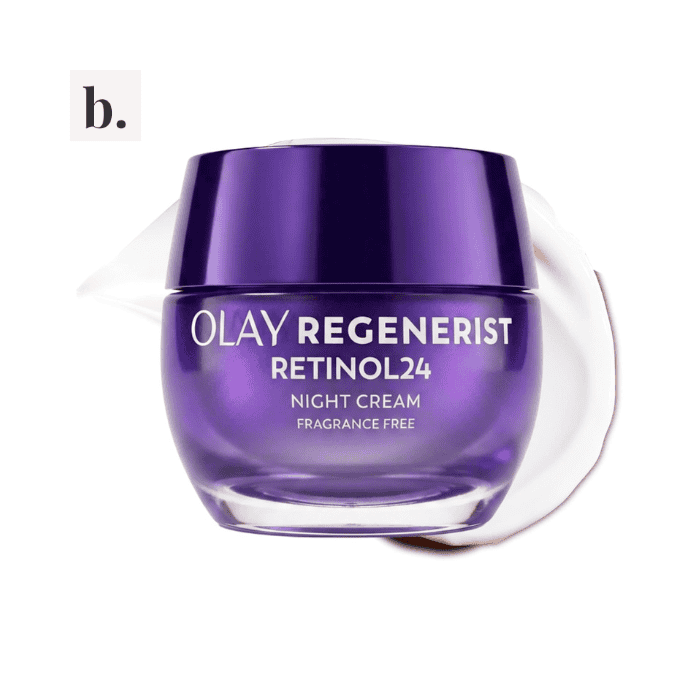
Olay
Olay Regenerist Retinol24 Night Moisturizer
If your skin tolerates retinoids, Olay Retinol24 offers a convenient fragrance-free night moisturizer with two vitamin A derivatives. Its Mid-Range value depends on routine simplicity rather than known retinol strength.
Read the BeautyBrief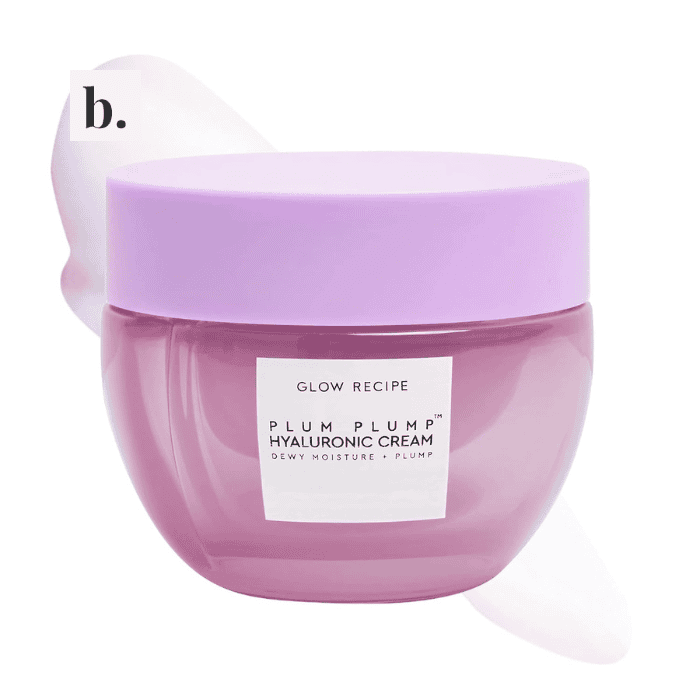
Glow Recipe
Glow Recipe Plum Plump Hyaluronic Cream
If you want lightweight hydration, Plum Plump combines hyaluronic acid forms, glycerin and squalane for a temporarily plumper-looking finish. Its refillable format adds value, but the fragrance and limited wrinkle evidence matter…
Read the BeautyBrief