

Can Skincare Help Loose or Crepey Skin After GLP-1 Weight Loss?
At a glance
Loose or crepey-looking skin after GLP-1 or other significant weight loss can reflect more than one change: dryness and rough texture at the surface, reduced facial volume underneath, or true skin laxity. Those problems do not respond to the same products. This Briefing separates what skincare can realistically improve from what firming claims cannot deliver, and shows you what evidence to look for before paying more for products marketed specifically to GLP-1 users.
Weight loss can change the way skin looks and sits on the face and body. You may notice a drier, thinner or more crepey surface, deeper-looking folds, less fullness through the cheeks or temples, or genuinely loose skin after a larger change in body size.
Those concerns are now being grouped together under phrases such as “GLP-1 skin” and “Ozempic face.” But they are not one problem, and they do not all respond to skincare.
The most useful distinction is between skin quality and structural volume loss or laxity. A moisturizer or treatment can improve some surface changes. It cannot replace lost facial fat or remove excess skin.
In this Briefing
- Why skin can look different after significant weight loss
- What moisturizers and retinoids can realistically improve
- What creams cannot fix
- What peptides, growth factors and “GLP-1 skincare” evidence actually show
- What the newest GLP-1 skincare studies tell us
- How to build a routine without overbuying
- How to judge firming and tightening claims
- When skincare is supportive rather than corrective
Why can skin look different after significant weight loss?
The American Academy of Dermatology says people taking GLP-1 medications may notice less facial fullness, sagging, wrinkles and a crepe-like texture, and notes that rapid weight loss contributes to these visible changes.[1]
A 2024 systematic review of facial changes after massive weight loss also found facial fat-volume loss and increased skin laxity, with particularly notable volume reduction through the mid-cheek and laxity in the central neck.[2]
That matters because two concerns that look similar in the mirror may need very different expectations:
- Dry, rough or mildly crepey-looking skin has a surface component that skincare can often make look smoother and better hydrated.
- Facial hollowing, substantial laxity or excess skin reflects deeper structural change that topical skincare cannot replace or remove.
What can skincare realistically improve?
Dryness and some crepey-looking texture
A well-formulated moisturizer can increase water in the outer skin layer, soften roughness and make your fine dehydration lines look less obvious. That can make crepey-looking skin appear smoother and more cushioned.
The effect is real, but it is not the same as tightening loose skin. The AAD notes that the immediate firming people sometimes see from a cream is often temporary plumping from moisturization. It also says creams and lotions cannot penetrate deeply enough to lift sagging skin.[3]
Look at the complete moisturizer rather than one hero ingredient. Humectants such as glycerin and hyaluronic acid help attract and hold water, while emollients and barrier-supporting ingredients can improve softness and comfort.
Fine lines, rough texture and photoaging
Retinoids can improve some visible signs of photoaging, including fine lines and uneven texture. Prescription tretinoin has the deepest clinical record in this category. A 2025 systematic review and meta-analysis of eight randomized trials involving 1,361 participants found that topical tretinoin improved both fine and coarse facial wrinkles caused by photodamage compared with vehicle treatments.[4]
That does not mean a retinoid can replace lost facial volume or lift substantial sagging. It means a retinoid can improve some skin-quality concerns that may make laxity look more noticeable.
Cosmetic retinol and retinal products are not interchangeable with prescription tretinoin. The exact retinoid, concentration, stability, delivery system and finished formula matter. See the Beauty Briefing’s Retinoids ingredient page for the differences.
If skin has also become dry or easily irritated, a retinoid may be harder to tolerate. The AAD specifically advises people experiencing dry skin while taking GLP-1 medication to be cautious because retinoids can add dryness, irritation and flaking.[1]
Protection from additional sun damage
Sunscreen does not tighten loose skin. Its job here is prevention: limiting additional ultraviolet damage that contributes to visible skin aging.
The AAD recommends broad-spectrum, water-resistant SPF 30 or higher as part of skin care for people taking GLP-1 medications.[1]
What can skincare not realistically fix?
Lost facial volume
A topical serum cannot replace fat lost from the cheeks, temples or other facial areas. Hydrating products can make the skin surface look temporarily plumper, but that is different from restoring deeper volume.
Substantial skin laxity
The AAD says results from skin-firming creams are subtle at best and that a cream or lotion cannot penetrate deeply enough to lift sagging skin.[3]
If true laxity is the main concern, paying progressively more for products labeled lifting, tightening or sculpting does not change that limitation.
Excess skin after major weight loss
Topical skincare can improve dryness, comfort and surface texture on excess skin. It cannot remove redundant tissue. That is a different problem from mild crepiness, even when both are described as “loose skin.”
Do peptides, growth factors or “GLP-1 skincare” ingredients work?
The evidence is much less settled than the marketing category suggests.
A 2026 review examined topical approaches after GLP-1-associated or rapid weight loss and discussed growth factors, peptides and botanical extracts as possible ways to support skin quality. It concluded that topical formulas with demonstrated efficacy may have a role as an adjunct to broader treatment.[5]
That review is useful emerging evidence, but it is not proof that every peptide, growth-factor serum or product labeled for GLP-1 users works. Several authors were affiliated with Allergan Aesthetics, and the conclusions depend on the specific ingredients and formulations represented in the underlying literature.[5]
The same rule applies to collagen, exosomes and proprietary “firming complexes”: evidence for one material or finished formula does not automatically transfer to every product using similar language.
For collagen creams, see Do Collagen Creams Rebuild Skin Collagen or Moisturize?. For newer longevity-style claims, see Are New Skin-Longevity Ingredients Better Than Retinoids?.
What do the newest GLP-1 skincare studies actually tell us?
Early studies are beginning to test topical regimens specifically in people taking medical weight-loss medications.
In September 2026, Allergan Aesthetics reported two small, single-center studies evaluating multi-product skincare regimens in people taking medical weight-loss medications, including GLP-1 receptor agonists. One study also included DiamondGlow dermabrasion.[6]
The company reported improvements in selected measures including dryness, crepiness, roughness, texture, lines and wrinkles, and skin-tone evenness. Only nine people completed the skincare-only study, while 11 completed at least one post-treatment assessment in the combination study.[6]
Those findings are an early signal that some skin-quality measures can improve during medical weight loss. They do not show that specialty GLP-1 skincare is necessary, identify which individual product or ingredient produced each improvement, or establish that topical skincare restores lost facial volume or reverses substantial laxity.
How should you build a routine without overbuying?
Start with the change you actually want to improve rather than the GLP-1 label on the product.
- If dryness is the main problem: start with a gentle cleanser and a complete moisturizer before adding specialty serums.
- If fine lines or rough texture are the main concern: a retinoid may be worth considering if your skin tolerates one, along with daily sunscreen.
- If body skin looks mildly crepey: a richer moisturizer can improve comfort and surface smoothness, but expect a cosmetic smoothing effect rather than a true lift.
- If facial hollowing or substantial laxity is the main concern: skincare is not addressing the same structural problem. A board-certified dermatologist or other appropriately qualified clinician can explain procedural options and their limitations.
There is no evidence-based reason you need a separate “GLP-1 skincare” routine simply because you take a GLP-1 medication.
What should you check before buying a firming product?
Before paying more for a product positioned around post-weight-loss skin changes, ask:
- Is the product promising better hydration and texture, or implying that it can physically lift loose skin?
- Does the finished product have human testing, or is the claim borrowed from individual ingredients?
- Was the formula actually tested in people undergoing significant weight loss?
- How many people were studied?
- Was there a comparator or control group?
- Were changes measured objectively, or mainly through participant perception?
- Is the formula meaningfully different from a standard moisturizer or retinoid product that addresses the same concern?
Be especially cautious with claims such as “restores facial volume,” “lifts sagging skin,” “rebuilds lost structure,” or dramatic “years younger” language when the supporting evidence is small, uncontrolled or subjective.
When is skincare enough—and when is it not?
Skincare is most useful when the visible change is mainly dryness, roughness, fine lines or mild crepey texture. Those concerns can improve enough for a routine to make a meaningful cosmetic difference.
If the concern is pronounced laxity, excess skin or obvious facial volume loss, skincare is more likely to be supportive than corrective. The AAD lists options including fillers, fat transfer and laser treatments for some facial changes after GLP-1-associated weight loss, depending on the concern and the individual.[1]
That does not mean a procedure is necessary. It means the purchase decision should match the problem you are trying to solve.
The BB Perspective
“GLP-1 skincare” is a marketing category, not a separate skincare requirement. A useful product still has to solve a specific problem.
For dryness and mild crepey texture, a well-formulated moisturizer can make a visible difference. For fine lines and photoaged texture, retinoids have stronger evidence than most products built around newer firming language. For lost facial volume, excess skin or substantial laxity, topical skincare does not replace the missing structure.
Buy for the concern your skin actually has. A premium firming formula earns its price through relevant finished-product evidence, tolerability and a useful formula—not because GLP-1 is printed on the box.
Last reviewed: September 2026
Sources
American Academy of Dermatology Association. How Can GLP-1 Drugs Affect My Skin, Hair, and Nails? Last updated February 17, 2026. Accessed September 2026.
AAD describes less facial fullness, sagging, wrinkles, crepe-like texture, and dry skin reported during GLP-1 treatment and notes rapid weight loss as an important contributor. It recommends gentle hydrating care, cautions that retinoids can worsen dryness and irritation, recommends broad-spectrum water-resistant SPF 30 or higher, and discusses procedural options for structural facial changes. This is general dermatologist-reviewed patient guidance and does not establish that every GLP-1 user experiences the same changes. Return to citation.
Jafar AB, Jacob J, Kao WK, Ho T. Soft Tissue Facial Changes Following Massive Weight Loss Secondary to Medical and Surgical Bariatric Interventions: A Systematic Review. Aesthetic Surgery Journal Open Forum. 2024;6:ojae069. doi:10.1093/asjof/ojae069. PMID: 39346804.
This systematic review found facial fat-volume loss and increased skin laxity after massive weight loss, with particularly notable mid-cheek volume reduction and central-neck laxity. The evidence concerns substantial weight loss from medical and surgical bariatric interventions broadly and should not be treated as proof that GLP-1 medication itself causes every reported facial change. Return to citation.
American Academy of Dermatology Association. Many Ways to Firm Sagging Skin. Accessed September 2026.
AAD explains that moisturizers can temporarily plump the skin and make fine lines less noticeable, while firming creams generally produce subtle results and cannot penetrate deeply enough to lift sagging skin. BB uses this source to distinguish surface improvement from structural lifting. Return to citation.
Huang HY, Lee LTJ. Tretinoin for Photodamaged Facial Skin: Systematic Review and Meta-Analysis of Randomized Controlled Trials. Dermatology Practical & Conceptual. 2025;15(4):e20255172. doi:10.5826/dpc.1504a5172. PMID: 41236273.
The review included eight randomized trials with 1,361 participants and found that topical tretinoin improved fine and coarse facial wrinkles caused by photodamage compared with vehicle. The studies varied in formulation, strength, duration, and outcome measurement. This evidence supports tretinoin for photoaged wrinkles; it does not show that retinoids restore lost facial volume or remove excess skin. Return to citation.
Shridharani SM, Kourosh AS, Saltzman E, et al. The Potential Role of Topical Skincare Approaches After Glucagon-like Peptide-1 Receptor Agonist Use and Rapid Weight Loss. Dermatologic Surgery. 2026;52(6S):S4-S9. doi:10.1097/DSS.0000000000005151. PMID: 42210880.
This review discusses topical approaches for skin-quality and laxity concerns after GLP-1-associated or rapid weight loss, including growth factors, peptides, and botanical extracts, and concludes that formulations with demonstrated effectiveness may have an adjunctive role. Several authors were affiliated with Allergan Aesthetics, so BB uses it as emerging context rather than category-wide proof. Return to citation.
AbbVie / Allergan Aesthetics. Allergan Aesthetics Presents New Clinical Data Evaluating Skin Quality Improvements in Individuals Taking Medical Weight Loss Medications. September 17, 2026.
The company announced results from two small, single-center studies of targeted skincare regimens in people taking medical weight-loss medications, including GLP-1 receptor agonists; one study also used DiamondGlow dermabrasion. Reported improvements included selected skin-quality measures, but the studies were small and do not establish that specialty GLP-1 skincare is necessary or that topical products restore lost facial volume or reverse substantial laxity. Return to citation.
Related product BeautyBriefs
These BeautyBriefs cover products relevant to the needs discussed in this Beauty Briefing. Inclusion here reflects topic relevance, not a rating or endorsement.

Allies of Skin
Allies of Skin The Lab Drop 10/10/10 Multi GF Exo Advanced Recovery Ampoules
If you are considering Allies of Skin Lab Drop 10/10/10 Ampoules for visible aging, its growth-factor and exosome-themed complexes make an ambitious treatment story. The brand's reported improvements do not establish biological…
Read the BeautyBrief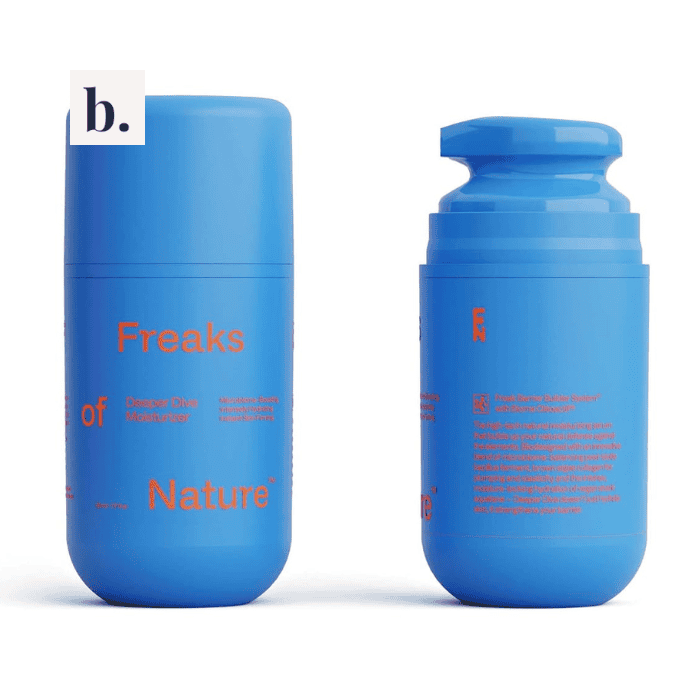
Freaks of Nature
Freaks of Nature Deeper Dive Hydrator
If you prefer an oil-based moisturizer, Deeper Dive offers a short squalane-and-plant-oil formula for surface softness. Its microbiome test does not establish clearer skin or repaired barrier function, so choose it for…
Read the BeautyBrief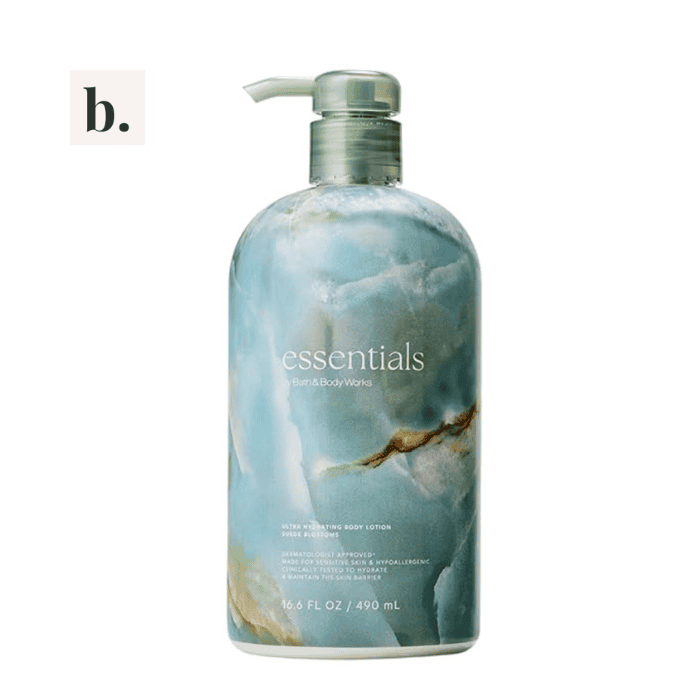
Bath & Body Works
Bath & Body Works Suede Blossoms Ultra Hydrating Body Lotion
If your body skin is normal or dry and you enjoy scented lotion, Suede Blossoms offers familiar humectants and emollients for everyday softness. Its hypoallergenic label does not guarantee fragrance tolerance, and…
Read the BeautyBrief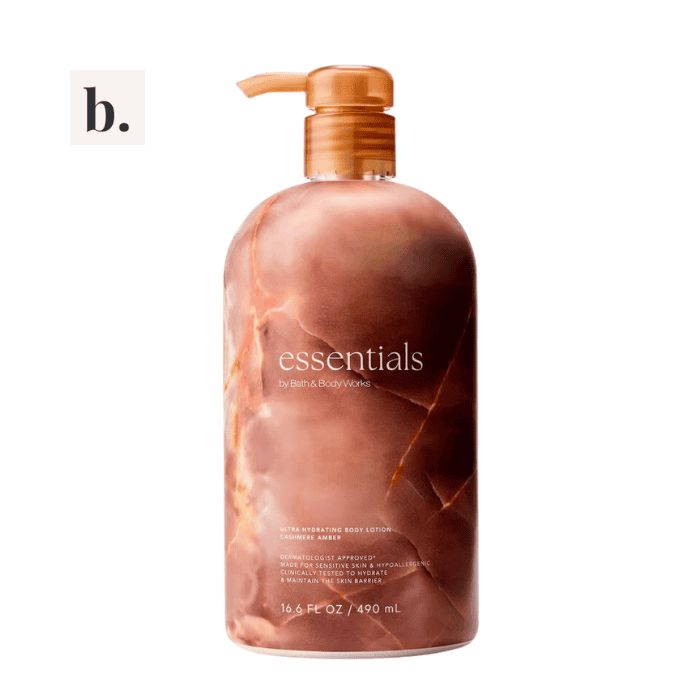
Bath & Body Works
Bath & Body Works Cashmere Amber Ultra Hydrating Body Lotion
If your body skin is normal or dry and you enjoy an amber fragrance, Cashmere Amber offers familiar humectants and emollients for everyday softness. Its hypoallergenic label does not guarantee fragrance tolerance,…
Read the BeautyBrief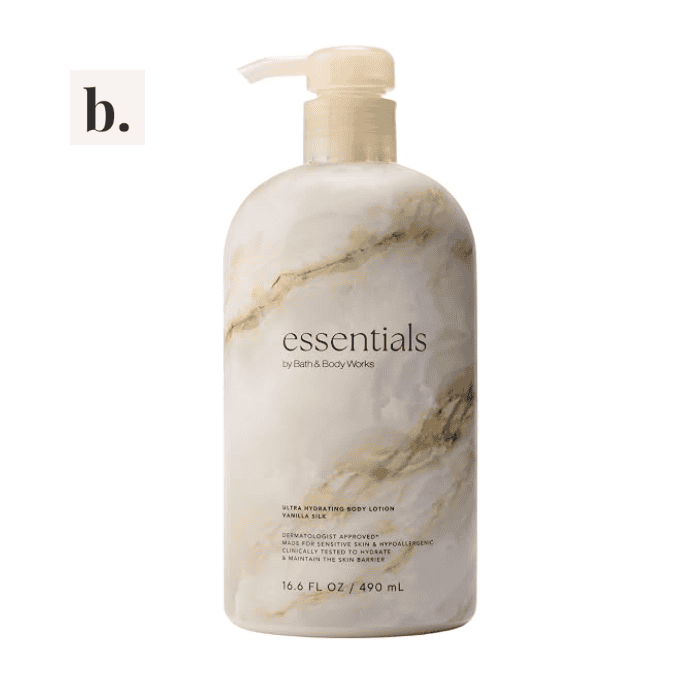
Bath & Body Works
Bath & Body Works Vanilla Silk Ultra Hydrating Body Lotion
If your body skin is normal or dry and you enjoy vanilla fragrance, Vanilla Silk combines humectants and emollients for everyday softness. Its hypoallergenic claim does not guarantee fragrance tolerance, and the…
Read the BeautyBrief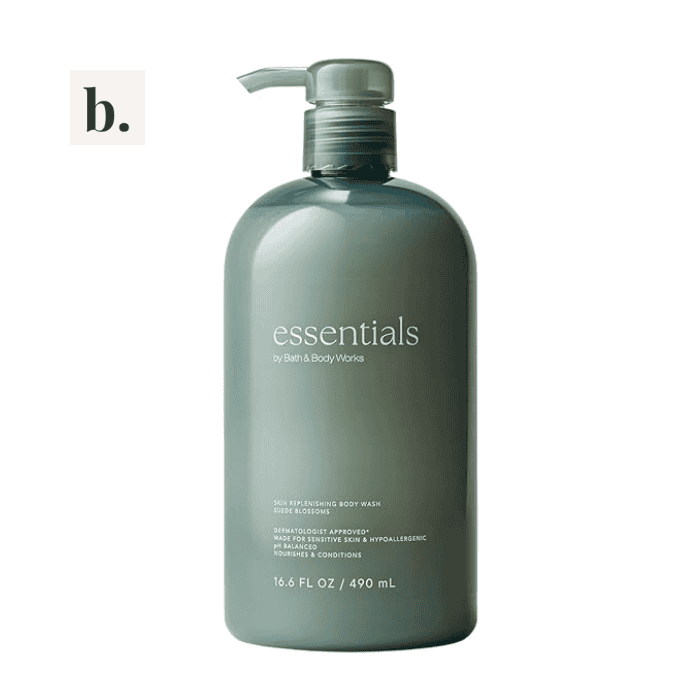
Bath & Body Works
Bath & Body Works Suede Blossoms Skin Replenishing Body Wash
If you enjoy sueded-jasmine fragrance and tolerate scented cleansers, this wash pairs a sulfate-free cleansing system with glycerin for comfort-focused daily use. Its hypoallergenic and dermatologist-approved positioning does not guarantee fragrance tolerance…
Read the BeautyBrief