

How to Compare Moisturizer Formulas Without Guessing
At a glance
Two moisturizers can promise the same benefits and work very differently for your skin. One might highlight ceramides, while another relies on a simpler blend of ingredients you barely notice on the label. The trick is knowing which parts of the formula matter for the job you need done—and which claims deserve a closer look before you buy.
A moisturizer can feature ceramides on the front label, carry a premium price, and still be the wrong product for your skin. Another can come in a plain tube, make few trend-driven claims, and give you the better balance of hydration, softness, moisture-loss protection, and everyday usability.
You do not need to memorize every ingredient to tell them apart.
Start with what you need the moisturizer to accomplish. Then use the ingredient list to understand the basic formula architecture—not to assign points to individual ingredients.
In this Briefing
- Define the moisturizer’s job first
- Understand the formula structure
- Read the ingredient list without inventing percentages
- Evaluate barrier-support and barrier-repair claims
- Check what could limit tolerance
- Compare texture by what your skin needs
- Do percentage claims make the formula better?
- How much should packaging matter?
- Compare price only after the formulas make sense
- Use the same comparison for both products
Define the moisturizer’s job first
Do not compare two moisturizers until you know whether they are competing for the same job.
If you’re comparing a lightweight gel for daytime hydration with a petrolatum-rich cream for dryness, both can be good products. They are not necessarily substitutes.
Decide whether you need the moisturizer to:
- provide light hydration under sunscreen;
- control persistent tightness or flaking;
- make a retinoid or acne-treatment routine easier to tolerate;
- reduce moisture loss from very dry areas;
- give reactive skin a simpler fragrance-free option;
- soften rough body skin;
- replace several separate hydrating steps with one product.
If your skin is oily in humid weather, a gel cream may feel ideal. If your skin becomes dry in winter, the same product may not be enough. A dense ointment may work well on cracked or very dry areas and still feel impractical as an all-over facial moisturizer.
Your first question should not be “Which formula is better?” It is “Which formula is built for the problem I am trying to solve?”
You can use this same job-first approach for more than just moisturizers. How to Evaluate a Beauty Product Before You Buy applies the same job-first test to claims, evidence, routine fit, and value across product categories.
Understand the moisturizer’s basic formula structure
When you read a moisturizer’s formula, look for three broad functions:
- Humectants help increase water in the outer skin.
- Emollients soften and smooth rough-feeling skin.
- Occlusives reduce water loss by forming a more protective film over the skin.
You’ll find that these categories overlap and one ingredient may contribute in several ways. The framework is still useful because it explains why two moisturizers with similar claims can feel and perform very differently.
You may see humectants such as glycerin, hyaluronic acid, urea, and panthenol. Emollient support can come from squalane, triglycerides, fatty alcohols, esters, silicones, and plant oils. Occlusive support can come from petrolatum, mineral oil, dimethicone, waxes, and some butters.
If you want the science behind that combination, a 2023 review of skin-barrier moisturization describes humectants, emollients, and occlusives as complementary parts of moisturizer performance and notes that moisturizers can reduce transepidermal water loss and support disrupted skin through several mechanisms.[1]
For your skin, that balance is more useful than the presence of one trendy ingredient.
A humectant-heavy gel may feel excellent when your main concern is lightweight hydration. If your skin remains tight or flaky, you may need more emollient or occlusive support rather than a second hydrating serum.
Read the ingredient list without inventing percentages
The ingredient list can show you the broad shape of a formula. It cannot function as a laboratory report.
When you read a U.S. cosmetics ingredient list, FDA generally requires the ingredients to appear in descending order of predominance. Ingredients present at 1% or less may be listed in any order after those present above 1%, and color additives follow separate rules.[2]
You can often learn something about a moisturizer’s base from the ingredients listed near the beginning.
For your comparison, consider these examples:
- water plus glycerin, glycols, and lightweight silicones can point toward a fluid or gel-cream structure;
- water plus glycerin, triglycerides, fatty alcohols, and dimethicone can suggest a more emollient cream;
- petrolatum, mineral oil, waxes, or dense butters near the top can signal stronger occlusion and a heavier finish.
You should treat those patterns as clues, not guaranteed texture predictions. Emulsifiers, polymers, powders, thickeners, and the proportions of all the ingredients can change the final feel substantially.
The ingredient list becomes especially easy to misuse near the 1% region. You usually cannot identify an exact “1% line” simply by looking at the order, and you should not assign an invented concentration to a ceramide, peptide, niacinamide, botanical extract, or other ingredient because of where it appears.
If you see a hero ingredient near the end of the list, don’t assume it’s useless. It does mean the formula should be judged by more than the hero callout.
How should you evaluate barrier-support and barrier-repair claims?
If your moisturizer effectively hydrates and reduces water loss, it can support your skin barrier.
When you see a barrier repair claim, you should expect more specific formula and evidence support.
When you compare barrier-focused moisturizers, useful components can include:
- ceramides;
- cholesterol and fatty acids;
- petrolatum or dimethicone;
- glycerin or urea;
- niacinamide;
- panthenol;
- colloidal oatmeal.
You can’t judge a barrier cream’s formulation simply by spotting ceramide in the ingredient list.
For context when you compare ceramide claims, a 2024 review emphasizes that ceramides are important components of the stratum-corneum lipid matrix, alongside cholesterol and free fatty acids, while also showing that ceramide performance in a topical product depends on formulation and processing. In laboratory models, poorly incorporated or undissolved ceramides could even work against the intended barrier-repair effect.[3]
You can use that as a caution against counting ingredients instead of evaluating the formula.
If you want to understand the role of free fatty acids, BB’s fatty-acid and skin-barrier Briefing separates barrier biology from evidence that a finished moisturizer works. It also explains why an advertised lipid ratio or added omega serum is not automatically necessary.
You may get better results from a moisturizer with modest ceramide marketing and a strong base. A premium “barrier repair” cream deserves more scrutiny when the price depends heavily on a proprietary lipid system or a claim that it reconstructs the barrier.
Look for finished-product data when the brand makes unusually specific repair claims. A good general moisturizer does not need an elaborate lipid study to be worth buying.
If you’re comparing barrier moisturizers, BB’s published BeautyBriefs show how the same goal can lead to different purchases. At the Budget tier, CeraVe Skin Renewing Night Cream combines ceramides and cholesterol in a rich moisturizer, while RoC Barrier Renew PM Moisturizer uses ceramides, squalane, and emollients with brand-reported 14-day results.
If you’re considering the Premium tier, Skinfix Triple Lipid-Peptide Cream combines ceramides and cholesterol with a brand-reported 35-person finished-product study; skinbetter science Trio Rebalancing Moisture Treatment has a cholesterol-and-ceramide system with a brand-reported 40-person clinical trial; and Obagi Rebalance Skin Barrier Recovery Cream has brand-reported product-specific hydration and post-procedure findings. These findings provide useful context, but brand-reported testing is not independent verification of comparative performance. None establishes that every Premium formula outperforms every Budget moisturizer.
If you want to distinguish an ordinary support claim from a stronger advertising promise, see How to Evaluate Cosmetic Marketing Claims Before You Buy. The claim should be assessed at the level of evidence it actually communicates.
Check what could limit tolerance
A moisturizer only works when you can keep using it.
If your skin is dry, reactive, eczema-prone, or irritated by treatment, consider whether the formula adds avoidable friction through:
- fragrance;
- aromatic essential oils;
- high amounts of drying alcohol;
- exfoliating acids;
- retinoids;
- several overlapping treatment actives;
- botanical ingredients you already know your skin dislikes.
You don’t need to treat any of those features as automatically unacceptable.
The question is whether they make sense in this moisturizer for your skin and the job you need it to do.
If your skin is particularly dry, AAD’s current guidance recommends fragrance-free products and favors creams or ointments over lotions when skin is overly dry. It also lists ingredients including glycerin, hyaluronic acid, dimethicone, mineral oil, petrolatum, lanolin, lactic acid, and shea butter as useful options in dry-skin moisturizers.[4]
That does not mean every dry-skin formula needs all of them. It reinforces the formula-first point: choose enough hydration and moisture-loss protection for the dryness you actually have.
Compare texture by what your skin needs
Texture is not just a sensory preference. It changes how much product you use, where you use it, and whether you keep using it.
Gels and gel creams
Choose a gel or gel cream when you want lightweight hydration, quick layering, or less residue. It can work well if your skin is oily or combination, but it may be insufficient if dryness persists.
Lotions
Choose a lotion when you want something that spreads easily and sits between a lightweight gel and a richer cream. It can work well if your skin is normal, combination, or mildly dry.
Creams
Choose a cream when you need more emollient and occlusive support, especially if your skin is dry, the weather is colder, you want a richer nighttime step, or treatment has made your skin drier.
Ointments and balms
Choose an ointment or balm when very dry patches need stronger occlusion. The heavier finish may make it impractical for you as an all-over facial moisturizer.
For very dry skin, you can look to AAD’s guidance favoring creams and ointments over lotions because they hold more moisture in the skin.[4]
Do not infer texture from a single ingredient. A dimethicone-containing formula can be silky and light or dense and protective. A facial oil can feel rich while providing little water-based hydration on its own.
The better texture is the one that gives you enough support without making you ration, avoid, or replace the product.
Do percentage claims make a moisturizer better?
You may value a disclosed percentage because it improves transparency. It does not automatically improve the formula.
When you see a “10% niacinamide moisturizer,” don’t assume it is better than a product using less. A large hyaluronic-acid percentage may refer to pure polymer, a supplier solution, or a multi-weight blend. A “ceramide complex” percentage may describe the whole raw-material blend rather than the ceramide content alone.
Before letting a percentage influence the purchase, ask:
- What exactly does the number represent?
- Is it the pure ingredient or a supplier blend?
- Why is that amount relevant to the product’s job?
- Has the finished product been tested?
- Does the higher number create a meaningful advantage?
You should know that some ingredients perform differently at different concentrations. Urea, for example, can serve primarily moisturizing or more keratolytic roles depending partly on concentration and formula.
That doesn’t mean you should assume every moisturizer ingredient follows a “more is better” rule.
When percentages are not disclosed, do not try to reverse-engineer them from the ingredient list. Judge the complete formula, evidence, texture, and price together.
For other warning signs around ingredient percentages and scientific-sounding skincare promises, BB’s Misleading Skincare Claims Briefing explains how to distinguish meaningful numbers from persuasive but incomplete claims.
How much should moisturizer packaging matter?
Enough to affect how you use a product and how well it’s protected—but not enough to make every jar a red flag.
For your daily use, pumps and tubes reduce direct finger contact with the bulk product and can make frequent dispensing easier. Jars make sense for very thick creams and can make it easier to reach the final portion of the product.
FDA notes that cosmetics can become contaminated through inadequate preservation, poor storage, packaging that does not adequately protect the product, or consumer use such as dipping fingers into the container. It advises washing your hands before using products that require finger contact and keeping containers clean.[5]
You should not interpret that as proof that a jar-packaged moisturizer is inherently unsafe. A properly formulated cosmetic should have preservation and packaging appropriate to its normal use.
When you compare packaging, judge each format by whether it:
- works with the viscosity of the formula;
- protects ingredients that are unusually sensitive to light or air;
- dispenses a useful amount;
- avoids excessive leakage or waste;
- lets you use the product hygienically and consistently;
- allows reasonable access to what you paid for.
You don’t automatically get a better package with an airless pump if it fails early or traps much of the product. A heavy glass jar is not automatically premium performance.
Compare price only after the formulas make sense
You can use price per ounce or milliliter only when the products are realistic substitutes.
A lower-priced gel and a more expensive rich cream are not necessarily substitutes if one leaves your dry skin tight and the other solves the problem.
Once you’ve narrowed your choices to moisturizers that perform the same job, compare:
- price per ounce or milliliter;
- how much you need per application;
- how often you will use it;
- whether you will use it on face only or larger areas;
- how much product the package wastes;
- whether one formula needs another product to compensate for a weakness.
A higher price can make sense when it buys a meaningful improvement in tolerance, texture, barrier performance, finished-product testing, package design, or another feature you cannot reasonably get for less.
You have less reason to pay a higher price when it mostly buys:
- heavy packaging;
- a proprietary complex with little useful evidence;
- a long list of prestige botanicals;
- a hero ingredient that does not materially change the product’s job;
- luxury positioning alone.
If you want to compare differently sized products or usage costs, use How to Calculate Skincare Value when a shelf-price comparison would mislead you.
Use the same comparison for both moisturizers
For each product you’re comparing, answer:
- What exact job is it meant to do?
- Does the base provide enough humectant, emollient, and occlusive support for that job?
- Do the highlighted ingredients meaningfully support the main claim?
- Is a stronger claim such as “barrier repair” supported by finished-product evidence?
- What could make the formula difficult for your skin to tolerate?
- Does the texture fit when and where you will use it?
- Are percentage claims clear enough to be useful?
- Does the packaging suit the formula and your routine?
- What will regular use actually cost?
- What does the more expensive option give you that the cheaper one does not?
That keeps you from choosing the product with the most impressive label by default.
The BB Perspective
You’ll find moisturizer comparison easier when you stop treating the ingredient list as a scoreboard.
The base is often doing most of the work: attracting water, softening the surface, reducing moisture loss, and creating a texture you can live with every day. Ceramides, niacinamide, colloidal oatmeal, panthenol, peptides, and botanical ingredients can add value, but they do not rescue a moisturizer that is fundamentally wrong for your skin.
When you’re choosing between moisturizers, compare them in this order: same job, complete moisturizing system, tolerance, texture, evidence for any premium claims, packaging, then price.
Pay more when the expensive formula gives you an advantage you can actually use. Do not pay the premium when the main difference is the ingredient story on the front of the jar.
Last reviewed: October 2026
Sources
Rajkumar J, Chandan N, Lio P, Shi V. The Skin Barrier and Moisturization: Function, Disruption, and Mechanisms of Repair. Skin Pharmacology and Physiology. 2023;36(4):174-185. PMID: 37717558.
This narrative review describes the complementary roles of humectants, emollients, and occlusives and reviews several mechanisms through which moisturizers can improve hydration, transepidermal water loss, and aspects of skin-barrier function. The paper reported no funding source; two authors disclosed relationships with multiple dermatology and skincare companies. BB uses it as a mechanistic framework rather than evidence that any particular commercial moisturizer is superior. Return to citation.
U.S. Food and Drug Administration. Summary of Cosmetics Labeling Requirements. Current FDA guidance. Accessed September 2026.
FDA requires cosmetic ingredients to be declared generally in descending order of predominance. Ingredients present at 1% or less may be listed without regard to predominance after ingredients above 1%, and color additives have separate ordering rules. BB uses this source to explain why ingredient order can reveal broad formula structure but usually cannot establish exact concentrations. Return to citation.
Schild J, Kalvodová A, Zbytovská J, Farwick M, Pyko C. The Role of Ceramides in Skin Barrier Function and the Importance of Their Correct Formulation for Skincare Applications. International Journal of Cosmetic Science. 2024;46(4):526-543. PMID: 39113291.
This review describes the role of ceramides, cholesterol, and free fatty acids in the stratum-corneum lipid matrix and emphasizes that topical ceramide performance depends on formulation and processing. The authors report laboratory models in which undissolved ceramides reduced the intended barrier-repair performance of test formulas. The work was funded by Evonik Operations GmbH, and several authors were affiliated with Evonik, a specialty-chemicals company. BB therefore uses it to support the importance of formulation rather than to establish the superiority of a specific commercial ceramide system. Return to citation.
American Academy of Dermatology Association. Dermatologists’ Top Tips for Relieving Dry Skin. Last updated January 2, 2026. Accessed September 2026.
AAD recommends fragrance-free skincare for dry, sensitive skin and advises using a cream or ointment rather than a lotion when skin is overly dry. It lists several useful moisturizer ingredients, including dimethicone, glycerin, hyaluronic acid, lactic acid, lanolin, mineral oil, petrolatum, and shea butter. BB uses this as practical dry-skin guidance, not as a requirement that every moisturizer contain those ingredients. Return to citation.
U.S. Food and Drug Administration. Microbiological Safety and Cosmetics. Current FDA guidance. Accessed September 2026.
FDA explains that cosmetic contamination can arise from raw materials, manufacturing, ineffective preservation, inadequate packaging protection, storage, or consumer use such as dipping fingers into a product. FDA advises keeping containers clean and washing hands before applying products that require finger contact. This supports considering packaging and preservation together; it does not establish that properly preserved jar-packaged moisturizers are inherently unsafe. Return to citation.
Related product BeautyBriefs
These BeautyBriefs cover products relevant to the needs discussed in this Beauty Briefing. Inclusion here reflects topic relevance, not a rating or endorsement.

Allies of Skin
Allies of Skin The Lab Drop 10/10/10 Multi GF Exo Advanced Recovery Ampoules
If you are considering Allies of Skin Lab Drop 10/10/10 Ampoules for visible aging, its growth-factor and exosome-themed complexes make an ambitious treatment story. The brand's reported improvements do not establish biological…
Read the BeautyBrief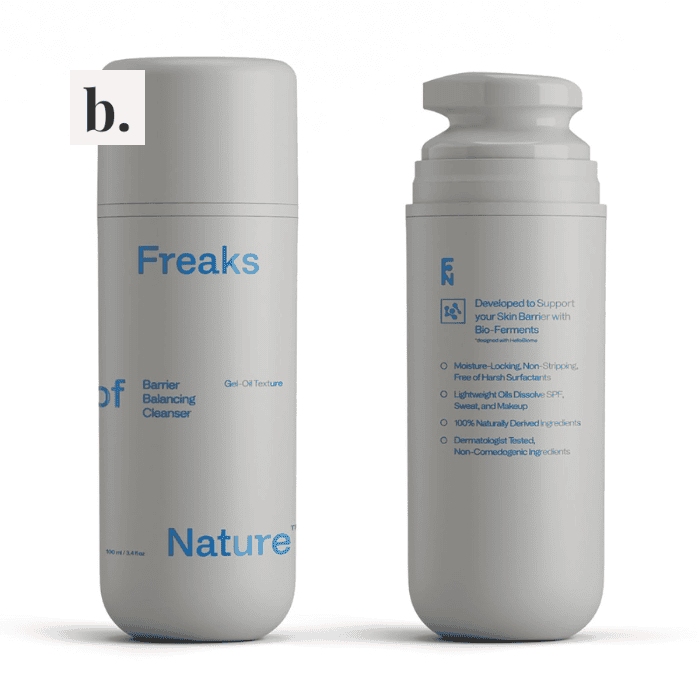
Freaks of Nature
Freaks of Nature Barrier Balancing Face Wash
If you want a gel-to-oil face wash for sunscreen and daily buildup, this Mid-Range cleanser offers a distinctive milky texture with supportive oils and humectants. Its consumer survey does not establish measured…
Read the BeautyBrief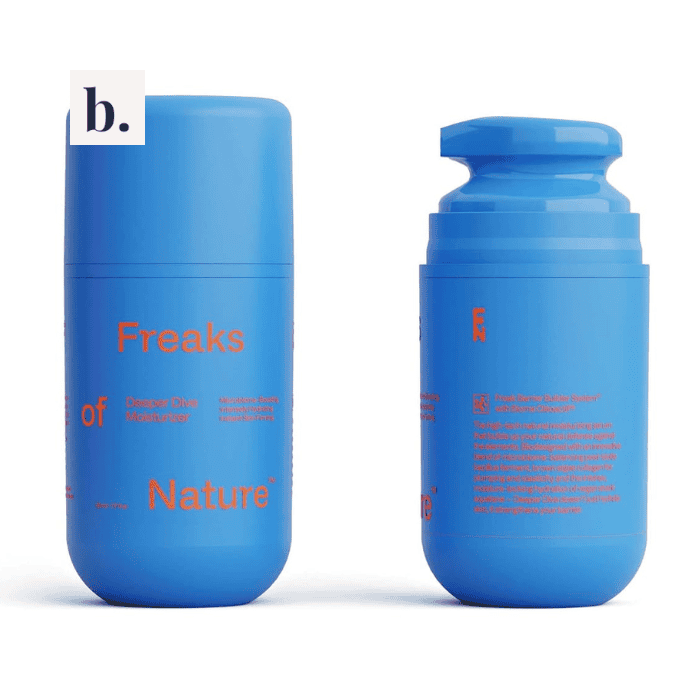
Freaks of Nature
Freaks of Nature Deeper Dive Hydrator
If you prefer an oil-based moisturizer, Deeper Dive offers a short squalane-and-plant-oil formula for surface softness. Its microbiome test does not establish clearer skin or repaired barrier function, so choose it for…
Read the BeautyBrief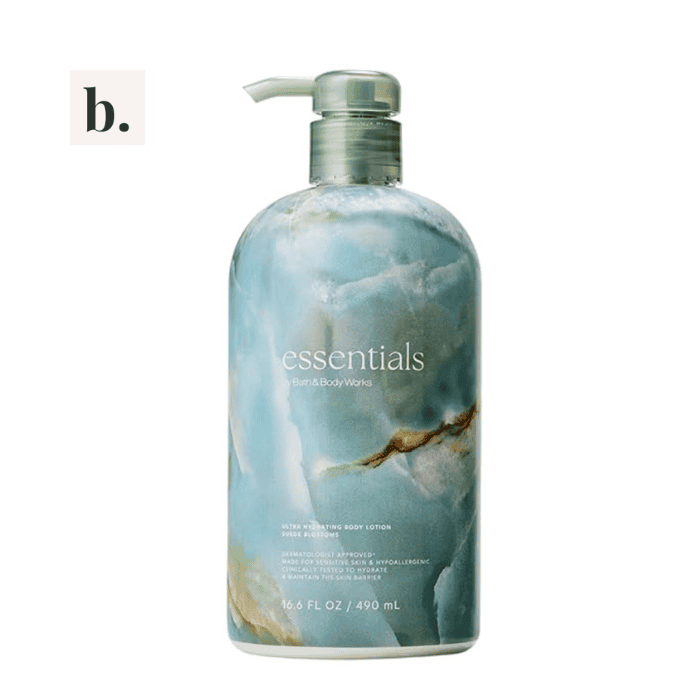
Bath & Body Works
Bath & Body Works Suede Blossoms Ultra Hydrating Body Lotion
If your body skin is normal or dry and you enjoy scented lotion, Suede Blossoms offers familiar humectants and emollients for everyday softness. Its hypoallergenic label does not guarantee fragrance tolerance, and…
Read the BeautyBrief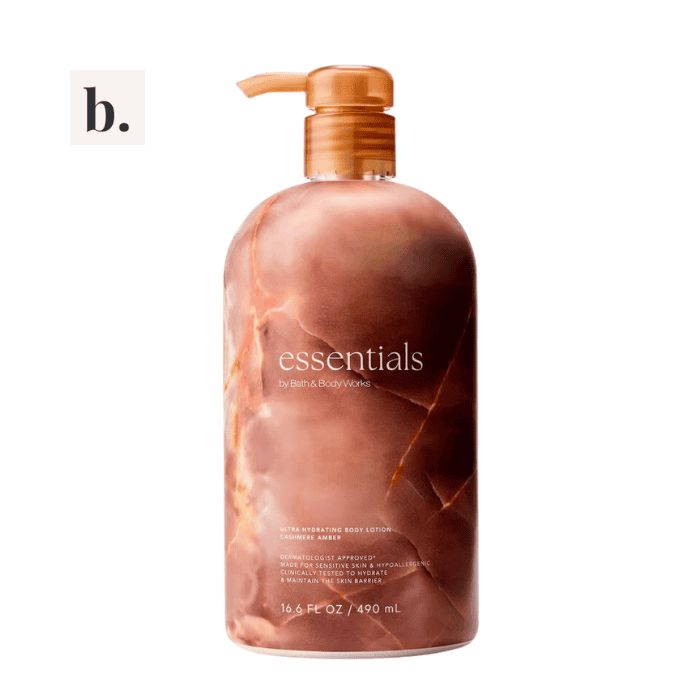
Bath & Body Works
Bath & Body Works Cashmere Amber Ultra Hydrating Body Lotion
If your body skin is normal or dry and you enjoy an amber fragrance, Cashmere Amber offers familiar humectants and emollients for everyday softness. Its hypoallergenic label does not guarantee fragrance tolerance,…
Read the BeautyBrief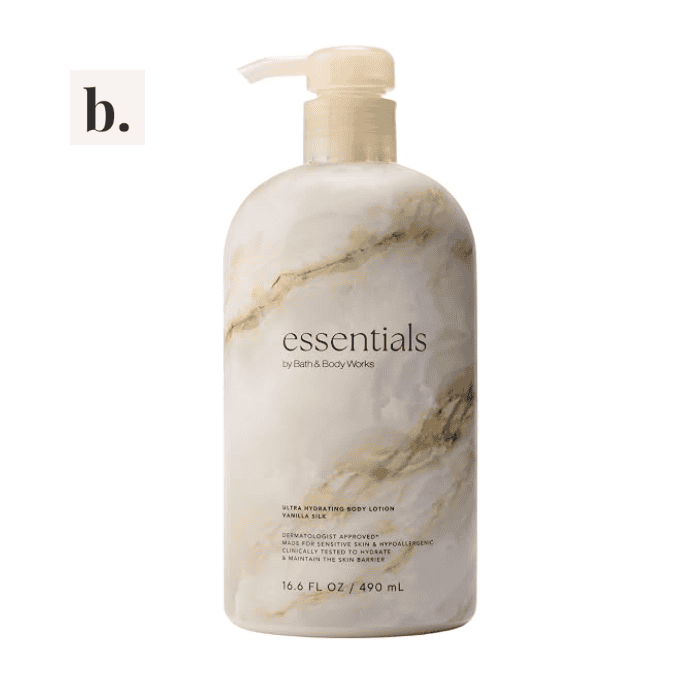
Bath & Body Works
Bath & Body Works Vanilla Silk Ultra Hydrating Body Lotion
If your body skin is normal or dry and you enjoy vanilla fragrance, Vanilla Silk combines humectants and emollients for everyday softness. Its hypoallergenic claim does not guarantee fragrance tolerance, and the…
Read the BeautyBrief