

Do Fatty Acids in Skincare Actually Help Repair the Skin Barrier?
At a glance
If you’re shopping for a moisturizer to help dry or easily irritated skin, fatty acids are relevant to your skin barrier—but “contains fatty acids” is not proof of barrier repair. The strongest evidence favors complete moisturizers combining appropriate lipids with hydration and emollience. Before paying more for an “omega-rich” cream or a separate fatty-acid serum, look at how the entire formula supports the barrier.
Do fatty acids in your skincare help support the skin barrier? Yes—but the answer is more nuanced than most product labels suggest.
Free fatty acids are one of the major lipid groups in the stratum corneum, alongside ceramides and cholesterol. Together, these lipids help form the organized matrix that limits water loss and helps keep irritants and allergens from moving through the outer skin too easily.[1]
That biology explains why you’ll see fatty acids in barrier-care marketing. It doesn’t prove that every omega cream, fatty-acid serum, or plant oil restores your skin barrier.
When you choose a moisturizer, the whole formula matters more than the ingredient story.
What do fatty acids actually do in the skin barrier?
To picture your skin’s outer layer, think of bricks and mortar. Corneocytes form the bricks; organized lipids between them make up much of the mortar that helps keep moisture in.
Your barrier’s lipid “mortar” contains ceramides, cholesterol, and free fatty acids arranged into tightly packed structures. How those lipids are composed and organized affects how effectively your skin retains water and limits outside penetration.[1]
Fatty-acid structure matters too. In people with atopic eczema, researchers have found shorter average free-fatty-acid chains and more unsaturated free fatty acids alongside less densely organized barrier lipids and poorer barrier function.[2]
So when you hear that fatty acids are “moisturizing,” remember that they also have a structural role. The type, chain length, and relationship with other barrier lipids help determine how useful they are.
Does applying fatty acids to the skin repair the barrier?
Can adding fatty acids help you? Sometimes, but the best human evidence is stronger for complete lipid-containing moisturizers than for a fatty-acid ingredient used on its own.
A 2025 controlled study in 58 adults predisposed to atopic dermatitis compared a moisturizer containing physiological lipids and glycerin with a glycerin-containing moisturizer without those added physiological lipids. After four weeks, the lipid-containing formula improved barrier integrity and resistance to irritation, while both products improved dryness.[3]
A separate 2022 randomized study in adults with dry, eczema-prone skin tested a cream containing ceramides, triglycerides, and cholesterol against a reference emollient. The lipid-focused cream produced stronger improvements in barrier integrity, hydration, dryness, and resistance to irritation.[4]
Those studies support thoughtfully formulated lipid moisturizers, not isolated fatty-acid products. Both trials also received industry funding: the 2025 study from L’Oréal Dermatological Beauty (CeraVe) and the 2022 study from L’Oréal.[3][4] That context matters when deciding how broadly to apply the findings.
Why are ceramides, cholesterol, and fatty acids discussed together?
Why should you look beyond one lipid? Because healthy barrier function doesn’t depend on fatty acids alone.
Classic barrier-recovery experiments found that mixtures of ceramides, cholesterol, and free fatty acids behaved differently from incomplete mixtures. In experimental barrier-damaged skin, complete physiologic-lipid mixtures supported recovery better than applying individual lipids or incomplete combinations.[5]
This research helps explain why you often see several skin-relevant lipid types combined in modern barrier moisturizers.
It is also where marketing can get ahead of the evidence. You may see claims that a moisturizer must use one exact ceramide-to-cholesterol-to-fatty-acid ratio to work. The older ratio studies were useful for understanding barrier biology, but they do not give you a universal recipe for judging modern cosmetic creams. Product concentration, lipid species, delivery system, emulsion structure, and the rest of the formula all affect performance.
You should not need a calculator to buy moisturizer.
For a closer look at the role of one of these lipids, BB’s Cholesterol IngredientBrief explains why its established role in the barrier does not prove a stand-alone ingredient or a fixed retail-cream ratio is superior.
Are all fatty acids equally helpful?
No—you shouldn’t assume all fatty acids behave the same way in your skincare.
When you compare fatty-acid claims, remember that chain length, saturation, and chemical structure influence how a fatty acid interacts with the lipids already in your skin.
The eczema research is especially useful here. Shorter free-fatty-acid chains were associated with shorter ceramide chains, less dense lipid organization, and impaired barrier function.[2]
This is why seeing “contains fatty acids” on a label tells you little about how the finished formula will perform.
There is another complication: some fatty acids are also used in topical-drug research because they can increase skin permeability. Oleic acid is a good example. In a 2023 experiment on ex vivo human skin, oleic acid at 0.75% fluidized stratum-corneum lipids and adversely affected measures of barrier integrity under the test conditions.[6]
That does not mean you should avoid every skincare product containing oleic acid or an oleic-acid-rich oil. Concentration, chemical form, vehicle, and the complete formula matter. It does show why “fatty acid” cannot be treated as a universally barrier-repairing ingredient category.
Is linoleic acid better for the barrier than oleic acid?
If you come across linoleic acid in a moisturizer, it has a particularly important role in skin-barrier lipids.
It is incorporated into specialized ceramides involved in normal stratum-corneum organization. Human research has also shown that topical formulations containing linoleic-acid-rich triglycerides can change the fatty-acid composition of stratum-corneum ceramides.[7]
That gives you a plausible reason to value linoleic acid as part of a well-formulated barrier product.
But don’t assume the product with the highest linoleic-acid percentage is your best option. Fatty acids may be free, attached to triglycerides, incorporated into ceramides, or delivered through other lipids. Those forms don’t behave identically, and the full formula still matters.
Your buying decision should start with the complete moisturizer, not the promise of one fatty acid.
Do plant oils repair the skin barrier?
If your skin is dry, a plant oil can feel softening and help reduce moisture loss. That doesn’t automatically make it a proven barrier-repair treatment.
When you read that a plant oil is “rich in fatty acids,” remember that its fatty acids are largely bound into triglycerides with glycerol. Applying an oil isn’t chemically the same as applying free fatty acids already present between skin cells.
And the oils you compare can have very different fatty-acid profiles.
A small randomized mechanistic study in adults illustrates the problem with treating them as interchangeable. After repeated use, olive oil reduced stratum-corneum integrity and caused mild redness, while sunflower seed oil preserved barrier integrity and improved hydration in the study participants.[8]
You shouldn’t read the small olive-oil study as proof that every cosmetic containing an olive-derived ingredient damages your barrier. Repeated application of straight olive oil differs from using a small amount in an emulsified cream.
The useful lesson for you is that “natural oil” alone doesn’t predict barrier performance.
Should you buy an omega or fatty-acid serum?
Usually not—you don’t automatically need a separate fatty-acid serum.
This is where a legitimate part of your skin’s biology can become an unnecessary extra step in your routine.
If your moisturizer already combines humectants, emollients, and a useful lipid system, adding a separate fatty-acid or “omega” serum may mostly duplicate the job you are already paying the moisturizer to do.
A separate oil or lipid serum can still be useful when you specifically want more emollience or your current moisturizer is not rich enough. That is a formula-fit decision, not evidence that everyone with a “damaged barrier” needs an additional fatty-acid step.
You do not need one product for every component naturally found in skin.
What should you look for in a barrier moisturizer?
Shop according to what you need your finished moisturizer to do.
- Hydration: Humectants such as glycerin help increase water in the outer skin.
- Emollience: Oils, esters, fatty alcohols, squalane, and other emollients can soften rough, dry skin.
- Lipid support: Ceramides, cholesterol, fatty acids, triglycerides, or other well-designed lipid systems may add useful barrier support.
- Occlusion when needed: Ingredients such as petrolatum can reduce water loss when skin is very dry.
- Tolerability: A barrier cream that repeatedly stings or irritates your skin is a poor fit regardless of how sophisticated its lipid blend sounds.
You don’t need every barrier ingredient in one jar. A simpler moisturizer that reliably keeps your skin comfortable can be a better purchase than a more expensive cream with an impressive lipid diagram.
When you’re comparing complete formulas rather than chasing one lipid, use BB’s moisturizer-formula comparison Briefing.
For two real buying examples, compare the Budget CeraVe Skin Renewing Night Cream with the Premium Skinfix Triple Lipid-Peptide Cream. Both contain ceramides and cholesterol, and Skinfix has finished-product clinical testing. That doesn’t mean you need to pay more if a simpler moisturizer already meets your needs.
Does a moisturizer need fatty acids to help the barrier?
No—your moisturizer doesn’t have to contain added fatty acids to be useful.
Your moisturizer can support dry or stressed skin in several ways: humectants increase hydration, emollients soften the surface, occlusives reduce water loss, and some formulas supply lipids that interact with the stratum corneum.
Fatty acids may be one useful part of your formula, not a requirement for every effective moisturizer.
So if you’re comparing moisturizers, the words “linoleic acid,” “omega fatty acids,” or a named lipid complex on the package are less informative than how the entire formula is constructed.
Who is most likely to benefit from a lipid-rich moisturizer?
A lipid-focused formula is worth a closer look if your skin stays dry, rough, tight, or easily irritated despite a lighter hydrating moisturizer.
They are also particularly relevant to eczema-prone skin because changes in ceramides, free fatty acids, lipid chain length, and lipid organization have been documented in atopic dermatitis.[2]
That doesn’t make your cosmetic moisturizer a treatment for eczema or another active skin disease. If you have persistent itching, cracking, oozing, painful inflammation, or recurring dermatitis, seek appropriate care rather than continually experimenting with “barrier repair” products.
How can you tell whether the product is actually helping?
Your skin should give you a more useful answer than the marketing copy.
A moisturizer that suits you should make dryness, tightness, roughness, and flaking easier to control with regular use. If your barrier has been stressed by over-exfoliation or an irritating routine, you may also notice that your skin feels more comfortable as you simplify and moisturize consistently.
If a barrier product repeatedly burns, leaves you red, feels impossible to use consistently, or causes new problems that outweigh the benefit, the presence of ceramides or fatty acids does not make it a good purchase for you.
For your barrier, a less exciting formula can easily be a smarter buy than one with a dramatic ingredient story.
The BB Perspective
Fatty acids are genuinely important to your skin-barrier biology, but you don’t need to treat them as a standalone must-have ingredient.
For you, the most convincing evidence points to complete moisturizers and physiologic-lipid systems that support more than one barrier function. The fatty-acid type, chain length, chemical form, and overall formulation influence the outcome.
Look for a moisturizer that keeps your skin hydrated and comfortable first. Treat fatty acids as one useful formulation feature—not a reason to buy another serum or pay more for an “omega repair complex.”
Last reviewed: October 2026
Sources
Berdyshev E. Skin Lipid Barrier: Structure, Function and Metabolism. Allergy, Asthma & Immunology Research. 2024;16(5):445–461. doi:10.4168/aair.2024.16.5.445.
This review describes the role and organization of stratum-corneum lipids in barrier function, including ceramides, cholesterol, and fatty acids. It supports the biological importance of skin lipids but does not establish that every topical product containing one of these lipids repairs the barrier. Return to citation.
van Smeden J, Janssens M, Kaye ECJ, et al. The importance of free fatty acid chain length for the skin barrier function in atopic eczema patients. Experimental Dermatology. 2014;23(1):45-52.
The study found shorter free-fatty-acid chains and increased unsaturated free fatty acids in atopic eczema, with shorter chain length correlating with less dense lipid organization and poorer barrier function. This establishes an association within eczema skin rather than proving that applying a specific fatty acid will correct the abnormality. Return to citation.
Andrew PV, Williams SF, Brown K, et al. Topical supplementation with physiological lipids rebalances the stratum corneum ceramide profile and strengthens skin barrier function in adults predisposed to atopic dermatitis. British Journal of Dermatology. 2025;193(4):729–740. doi:10.1093/bjd/ljaf200.
In a four-week, double-blind, within-person study of 58 eczema-prone adults, a moisturizer containing physiological lipids and glycerin improved barrier integrity and resistance to irritation compared with a glycerin-containing moisturizer without those added lipids. L’Oréal Dermatological Beauty (CeraVe) funded the investigator-led study and reviewed and approved the manuscript for submission, without designing or analyzing the trial. The findings support the tested formula, not isolated fatty acids or every lipid cream. Return to citation.
Danby SG, Andrew PV, Kay LJ, et al. Enhancement of stratum corneum lipid structure improves skin barrier function and protects against irritation in adults with dry, eczema-prone skin. British Journal of Dermatology. 2022;186(5):875–886. doi:10.1111/bjd.20955.
This four-week, observer-blinded, within-person randomized study of 34 adults compared a specific ceramide-, triglyceride-, and cholesterol-containing cream with a reference emollient. It found better barrier integrity, lipid organization, hydration, dryness, and irritation resistance for the test cream. L’Oréal funded the investigator-led study and reviewed and approved the manuscript for submission, without involvement in study design or analysis. Results do not isolate a single lipid or establish superiority for every comparable moisturizer. Return to citation.
Man MQ, Feingold KR, Thornfeldt CR, Elias PM. Optimization of physiological lipid mixtures for barrier repair. Journal of Investigative Dermatology. 1996;106(5):1096-1101.
Experimental work found that mixtures containing ceramides, cholesterol, and fatty acids supported barrier recovery differently from incomplete lipid mixtures and that lipid ratios influenced recovery. Much of the work was performed in murine skin with preliminary human validation, so BB does not treat one historical ratio as a universal cosmetic-formulation rule. Return to citation.
Kováčik A, Kopečná M, Hrdinová I, et al. Time-Dependent Differences in the Effects of Oleic Acid and Oleyl Alcohol on the Human Skin Barrier. Molecular Pharmaceutics. 2023;20(12):6237–6245. doi:10.1021/acs.molpharmaceut.3c00648.
Under ex vivo experimental conditions using human skin and a 0.75% enhancer concentration, oleic acid increased permeation of a model topical drug and adversely affected measures of barrier integrity, including transepidermal water loss. One author was affiliated with Haleon. The study used oleic acid as a penetration enhancer and should not be generalized to every finished cosmetic containing oleic acid or olive-derived ingredients. Return to citation.
Conti A, Rogers J, Verdejo P, Harding CR, Rawlings AV. Seasonal influences on stratum corneum ceramide 1 fatty acids and the influence of topical essential fatty acids. International Journal of Cosmetic Science. 1996;18(1):1-12.
This human study found seasonal changes in ceramide-associated fatty acids and reported that four weeks of formulations containing linoleic-acid-rich triglycerides increased stratum-corneum ceramide 1 linoleate. It supports a role for linoleic-acid-containing topical lipids but does not establish a need for a separate linoleic-acid serum. The authors were affiliated with Unilever Research. Return to citation.
Danby SG, AlEnezi T, Sultan A, et al. Effect of olive and sunflower seed oil on the adult skin barrier: implications for neonatal skin care. Pediatric Dermatology. 2013;30(1):42-50.
In small randomized forearm studies involving 19 adults, repeated direct olive-oil application reduced stratum-corneum integrity and caused mild erythema, while sunflower seed oil preserved integrity and improved hydration. The exposure was direct oil application, so these results should not be extrapolated to every emulsified cosmetic containing olive-derived ingredients. Return to citation.
Related product BeautyBriefs
These BeautyBriefs cover products relevant to the needs discussed in this Beauty Briefing. Inclusion here reflects topic relevance, not a rating or endorsement.

Allies of Skin
Allies of Skin The Lab Drop 10/10/10 Multi GF Exo Advanced Recovery Ampoules
If you are considering Allies of Skin Lab Drop 10/10/10 Ampoules for visible aging, its growth-factor and exosome-themed complexes make an ambitious treatment story. The brand's reported improvements do not establish biological…
Read the BeautyBrief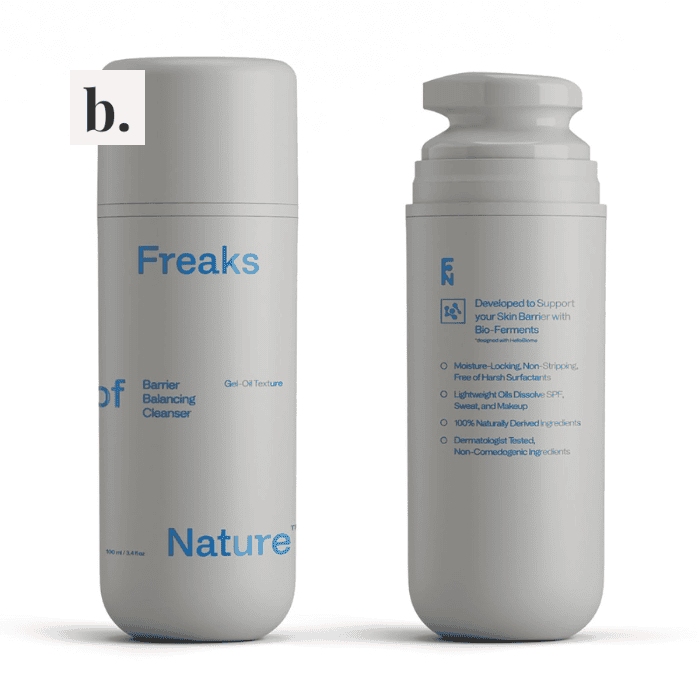
Freaks of Nature
Freaks of Nature Barrier Balancing Face Wash
If you want a gel-to-oil face wash for sunscreen and daily buildup, this Mid-Range cleanser offers a distinctive milky texture with supportive oils and humectants. Its consumer survey does not establish measured…
Read the BeautyBrief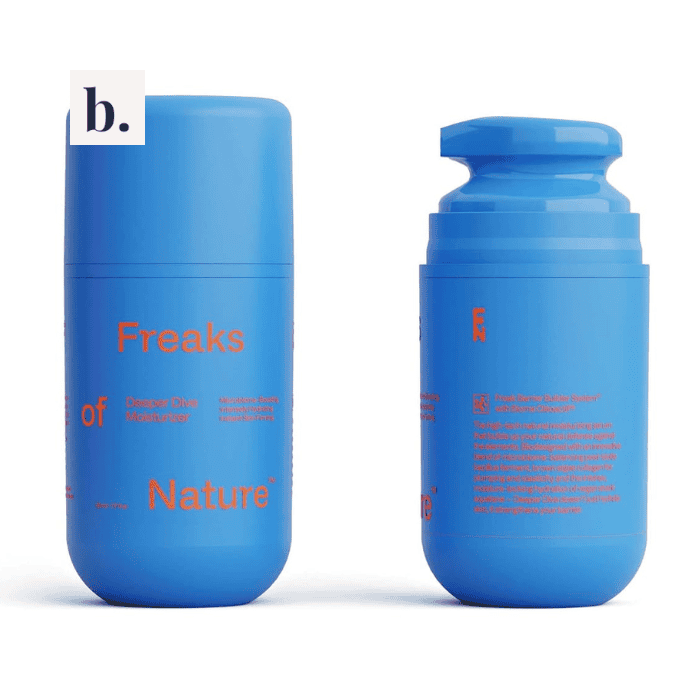
Freaks of Nature
Freaks of Nature Deeper Dive Hydrator
If you prefer an oil-based moisturizer, Deeper Dive offers a short squalane-and-plant-oil formula for surface softness. Its microbiome test does not establish clearer skin or repaired barrier function, so choose it for…
Read the BeautyBrief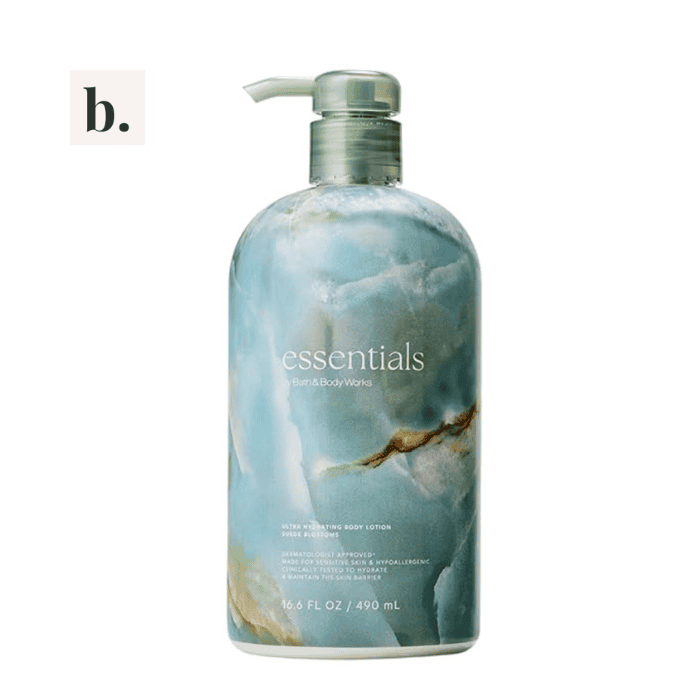
Bath & Body Works
Bath & Body Works Suede Blossoms Ultra Hydrating Body Lotion
If your body skin is normal or dry and you enjoy scented lotion, Suede Blossoms offers familiar humectants and emollients for everyday softness. Its hypoallergenic label does not guarantee fragrance tolerance, and…
Read the BeautyBrief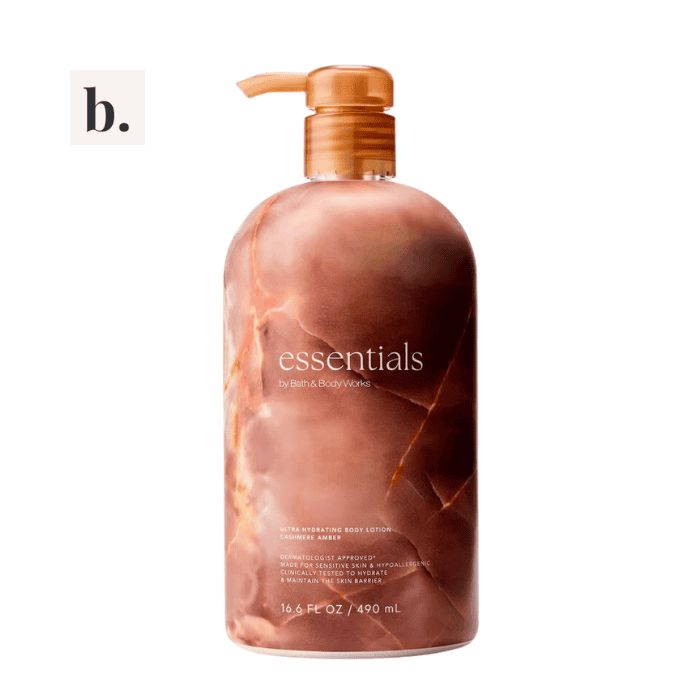
Bath & Body Works
Bath & Body Works Cashmere Amber Ultra Hydrating Body Lotion
If your body skin is normal or dry and you enjoy an amber fragrance, Cashmere Amber offers familiar humectants and emollients for everyday softness. Its hypoallergenic label does not guarantee fragrance tolerance,…
Read the BeautyBrief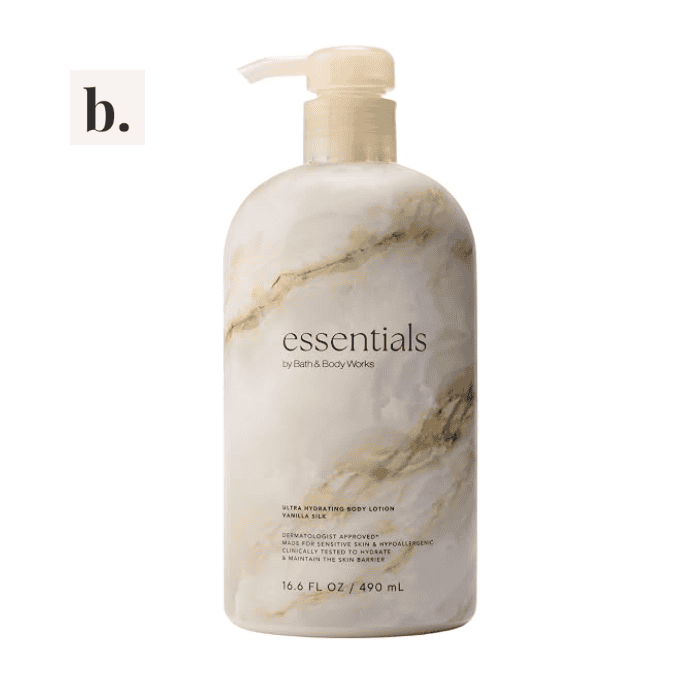
Bath & Body Works
Bath & Body Works Vanilla Silk Ultra Hydrating Body Lotion
If your body skin is normal or dry and you enjoy vanilla fragrance, Vanilla Silk combines humectants and emollients for everyday softness. Its hypoallergenic claim does not guarantee fragrance tolerance, and the…
Read the BeautyBrief