
Cholesterol in Skincare
Cholesterol is a well-established skin-barrier lipid and emollient used mainly in moisturizers. Its value comes from the complete physiological-lipid formula rather than the presence of cholesterol alone.
- Aliases
- Cholest-5-en-3β-ol, Cholesteryl Alcohol, Cholesterin
- Ingredient category
- Barrier-Supporting Ingredient, Emollient
- Most relevant for
- Dryness, Skin Barrier Support
- Evidence strength
- Well Supported for Supporting skin-barrier recovery with physiological-lipid moisturizers containing cholesterol.
- Formula matters
- Cholesterol's contribution depends on lipid balance, concentration, processing, delivery, and the complete formula. Ceramides, fatty acids, humectants, emollients, and occlusives matter more than the cholesterol label or a claimed ratio.
- Separate product needed?
- Usually No. You rarely need a cholesterol-specific product. Consider a lipid-rich moisturizer if your current formula does not adequately relieve dryness.
BB takeaway
Cholesterol is a credible barrier-support lipid, but it works best as part of a complete moisturizer rather than as a hero ingredient. Choose the formula that controls dryness rather than paying more for cholesterol or a marketed lipid ratio alone.
Ingredient evidence does not prove the performance of every finished product containing it.
What is cholesterol?
Cholesterol is one of the major lipids naturally present in the stratum corneum, the outer layer of skin. Along with ceramides and free fatty acids, it helps form the organized lipid structure that keeps water in and helps limit the entry of outside irritants.[1]
In cosmetics, Cholesterol can also function as a skin-conditioning emollient and help with emulsification.[2] Its role in a moisturizer is separate from the blood-cholesterol measurements discussed in cardiovascular health.
Cholesterol can come from different manufacturing sources. If vegan sourcing matters to you, check with the brand rather than assuming the INCI name tells you whether the ingredient is animal-derived.
What does cholesterol do for skin?
Cholesterol is most useful as part of a barrier-support moisturizer.
It contributes one of the lipid types naturally found between surface skin cells and can also help a cream feel softer and more emollient. Its strongest use case is dry, tight, flaky, or stressed skin.
The ingredient makes the most sense beside ceramides, fatty acids, humectants, emollients, and occlusives. That does not mean every moisturizer needs all of those ingredients or that a product becomes superior simply because it lists cholesterol.
Cholesterol does not treat infection, cure eczema, erase redness, or compensate for an irritating routine.
What the evidence says about cholesterol skincare
Cholesterol’s role in the skin barrier is well established. Human treatment evidence is strongest when cholesterol is used as part of a complete physiological-lipid system.
Skin-barrier research consistently identifies ceramides, cholesterol, and free fatty acids as the major lipid classes that form the organized matrix between corneocytes.[1]
Classic human research also showed that lipid balance matters. In a small study of chronologically aged skin, a cholesterol-dominant mixture of physiological lipids accelerated barrier recovery after controlled disruption more than an equimolar mixture.[3] The human portion included only six older adults, so it supports formulation principles rather than a retail-shopping ratio.
More recently, a 2025 double-blind study in 58 adults with dry skin and a history of eczema compared two moisturizers used twice daily for 28 days. A multivesicular cream containing glycerin plus ceramides, cholesterol, and other physiological lipids improved barrier integrity and resistance to irritation more than a glycerin-based comparison cream without the same lipid system.[4]
That is strong evidence for the tested moisturizer system, not proof that cholesterol caused the improvement by itself.
For your routine, cholesterol is a credible barrier-support lipid, but the complete moisturizer determines how well it relieves dryness.
How cholesterol form and formulation affect results
Cholesterol is highly formula-dependent.
A useful barrier moisturizer typically combines several jobs. Glycerin and other humectants attract water, emollients soften skin, physiological lipids support the barrier structure, and occlusives such as petrolatum can reduce moisture loss.
Brands sometimes advertise a specific ceramide-to-cholesterol-to-fatty-acid ratio. Experimental research shows that lipid balance can affect barrier recovery, but a front-label ratio is not proof that a retail moisturizer is better.
Processing matters too. Research on physiological-lipid formulas shows that lipid organization, dispersion, and manufacturing conditions can affect how well the finished system performs.[5]
That is why “contains cholesterol” is useful information but not enough to rank moisturizers.
Who may benefit from cholesterol skincare?
Cholesterol-containing moisturizers make the most sense for dry, tight, flaky, rough-feeling, or barrier-stressed skin.
They can also be useful when frequent cleansing, cold weather, exfoliating acids, acne treatments, or retinoids leave your skin drier than usual.
People with eczema-prone skin may benefit from some physiological-lipid moisturizers, but cholesterol itself is not an eczema treatment. The strongest recent human evidence belongs to a complete lipid-rich moisturizer, not isolated cholesterol.[4]
If your current moisturizer already keeps your skin comfortable, you do not need to seek out cholesterol specifically.
Cholesterol side effects and irritation risk
Cholesterol has a reassuring cosmetic safety record.
The Expert Panel for Cosmetic Ingredient Safety reaffirmed in its 2025 re-review that Cholesterol is safe as used in cosmetics under the practices and concentrations described in the assessment.[6]
That does not make every cholesterol moisturizer irritation-free. Fragrance, preservatives, exfoliating ingredients, retinoids, or a very rich base may be the actual reason a product stings, itches, or contributes to breakouts.
Do not use the presence of cholesterol as proof that a product is non-comedogenic, hypoallergenic, or suitable for eczema-prone skin unless the finished product supports those claims.
Stop using a product that causes persistent burning, itching, swelling, hives, or a worsening rash.
How to use cholesterol in your skincare routine
Cholesterol usually appears inside a moisturizer, so use the product as your normal moisturizing step.
Apply it after cleansing and after any lighter water-based serums. In the morning, follow with sunscreen.
If strong actives are making your skin burn or peel, a barrier-support moisturizer may improve comfort, but it should not be used as permission to keep overusing the irritating treatment.
When skin is stressed, simplifying the routine and reducing unnecessary exfoliation can matter as much as choosing a richer moisturizer.
How long does cholesterol take to work?
A well-formulated moisturizer can make dry skin feel softer and less tight after one application, but that immediate comfort belongs to the complete formula.
Barrier changes take longer. In the 2025 physiological-lipid study, participants used the moisturizers twice daily for 28 days before the final barrier assessments.[4]
That does not create a four-week promise for every cholesterol cream. Results depend on the formula, the cause of dryness, consistent use, and whether something in the routine is continuing to irritate the skin.
What can you use with cholesterol?
Cholesterol fits easily into most skincare routines because it is usually part of a moisturizer rather than a separate treatment step.
Its most logical partners include ceramides and fatty acids, along with glycerin, hyaluronic acid, panthenol, squalane, dimethicone, and petrolatum.
It can also support routines containing vitamin C, benzoyl peroxide, exfoliating acids, retinoids, or prescription treatments when the moisturizer makes the overall routine more comfortable.
If active products continue to cause burning, cracking, or persistent peeling, adjust the irritating step rather than expecting cholesterol to compensate for it.
How to choose a cholesterol product
Choose cholesterol as part of a moisturizer decision, not as a stand-alone ingredient chase.
When barrier support is the goal, look at the complete moisturizing system. Ceramides, fatty acids, humectants, emollients, and occlusives can all matter as much as whether cholesterol is prominently advertised.
For the fatty-acid part of that lipid system, read BB’s Briefing on fatty acids and skin-barrier repair. It distinguishes human evidence for complete moisturizers from claims for isolated fatty acids or an idealized ingredient ratio.
Then choose the texture that fits your skin. A lotion may suit mild dryness or combination skin, while a cream or balm can be more practical for persistent dryness.
For reactive or eczema-prone skin, a fragrance-free finished formula with good tolerability is more useful than a long “skin-identical lipid” story without product-level testing.
Be cautious with claims such as “repairs the barrier instantly,” “rebuilds skin,” or “perfect lipid ratio” when the brand does not provide finished-product evidence.
Cholesterol alone does not justify Premium pricing. Pay more only when the complete product gives you a meaningful advantage in texture, tolerability, packaging, formulation quality, or credible finished-product testing.
For a practical comparison of how cholesterol, ceramides, other lipids, texture, and finished-product claims affect the overall purchase, see BB’s How to Compare Moisturizer Formulas Without Guessing.
Do you need a separate cholesterol moisturizer?
Usually, no.
A cholesterol-containing moisturizer can make sense when your current product is not giving enough barrier support or when a lipid-rich formula better matches your dryness.
You do not need a dedicated cholesterol serum. Cholesterol makes more sense as one component of a complete moisturizer than as another separate routine layer.
The BB Perspective
Cholesterol is a legitimate barrier lipid, but it is not a hero ingredient that needs to be chased on its own.
Its strongest evidence comes from physiological-lipid systems where cholesterol works with ceramides, fatty acids, glycerin, and the rest of the moisturizer. A good formula can use cholesterol well; a weak formula does not become impressive simply because the ingredient is present.
Choose the moisturizer that controls your dryness and feels good enough to use consistently. Treat cholesterol as a meaningful supporting feature when the rest of the formula already earns its place.
Last reviewed: September 2026
Sources
Bouwstra JA, Nădăban A, Bras W, McCabe C, Bunge A, Gooris GS. The skin barrier: An extraordinary interface with an exceptional lipid organization. Progress in Lipid Research. 2023;92:101252. doi:10.1016/j.plipres.2023.101252. PMID:37666282. PMCID:PMC10841493.
This review identifies ceramides, cholesterol, and free fatty acids as the major lipid classes in the stratum corneum and explains how their organization supports barrier function. It provides biological context rather than proof of any individual retail moisturizer. The review received NIH/NIAMS support (grant R01 AR072679); its authors declared no competing financial interests. Return to citation.
COSMILE lists Cholesterol as a skin-conditioning, emollient, emulsifying, light-stabilizing, and viscosity-controlling cosmetic ingredient. These are cosmetic-function classifications and do not prove that a finished moisturizer repairs the skin barrier. COSMILE Europe is operated by Cosmetics Europe. Return to citation.
Zettersten EM, Ghadially R, Feingold KR, Crumrine D, Elias PM. Optimal ratios of topical stratum corneum lipids improve barrier recovery in chronologically aged skin. Journal of the American Academy of Dermatology. 1997;37(3 Pt 1):403-408. doi:10.1016/S0190-9622(97)70140-3. PMID:9308554.
This experimental study tested mixtures of cholesterol, ceramides, and free fatty acids after controlled barrier disruption. A cholesterol-dominant mixture accelerated recovery in chronologically aged human skin, but the human sample was only six participants. The study supports physiological-lipid formulation principles rather than a universal ratio shoppers can verify from an ingredient list. The study was supported by NIH grant AR 19098, the U.S. Department of Veterans Affairs Medical Research Service, and a Dermatology Foundation Clinical Career Development Award. Return to citation.
Andrew PV, Williams SF, Brown K, et al. Topical supplementation with physiological lipids rebalances the stratum corneum ceramide profile and strengthens skin barrier function in adults predisposed to atopic dermatitis. British Journal of Dermatology. 2025;193(4):729-740. doi:10.1093/bjd/ljaf200.
This double-blind intraparticipant study included 58 adults with dry, eczema-prone skin who used two moisturizers twice daily for 28 days. The multivesicular cream containing glycerin, ceramides, cholesterol, phytosphingosine, and other lipids improved barrier integrity and resistance to irritation more than a glycerin-based comparison cream. Both improved dryness. The study supports the tested physiological-lipid formula and does not isolate cholesterol’s contribution. The investigator-led study was funded by L’Oréal Dermatological Beauty UK/CeraVe; the funder reviewed the manuscript and approved submission but was not involved in study design, data collection, or analysis. Simon Danby and Michael Cork disclosed multiple industry relationships, including with L’Oréal. Return to citation.
Schild J, Kalvodová A, Zbytovská J, Farwick M, Pyko C. The role of ceramides in skin barrier function and the importance of their correct formulation for skincare applications. International Journal of Cosmetic Science. 2024;46(4):526-543. doi:10.1111/ics.12972.
This review focuses on ceramides but also explains their organized interaction with cholesterol and free fatty acids and why processing and lipid dispersion affect barrier-formula performance. Three authors were affiliated with Evonik Operations GmbH, which funded the work, and Jarmila Zbytovská disclosed receiving Evonik funds for the porcine-skin study. It supports formula-first interpretation rather than a claim that merely listing physiological lipids guarantees barrier repair. Return to citation.
Raj P, Bergfeld WF, Belsito DV, et al. Re-Review Summary of Cholesterol as Used in Cosmetics. International Journal of Toxicology. 2025;44(Suppl 3):129S-132S. doi:10.1177/10915818251359226.
The Expert Panel for Cosmetic Ingredient Safety reviewed updated use and safety information and reaffirmed that Cholesterol is safe as a cosmetic ingredient under the practices of use and concentrations described. The review also notes newer manufacturing information, including a plant-based method. This source addresses cosmetic safety rather than barrier efficacy. CIR is financially supported by the Personal Care Products Council. Return to citation.
Products featuring Cholesterol
These evaluated products list Cholesterol among the Key Ingredients that meaningfully shape the formula. Inclusion here reflects ingredient relevance, not an endorsement or rating.
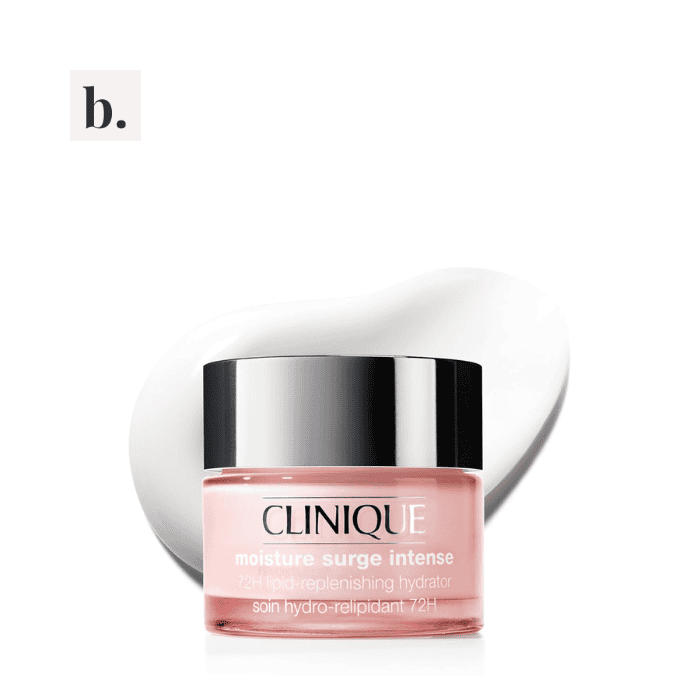
Clinique
Moisture Surge™ Intense 72H Lipid-Replenishing Hydrator
If your skin feels tight with a standard gel, this Mid-Range cream-gel provides a richer humectant-and-lipid system. Its 72-hour claim has limited publicly disclosed measurement details, so choose it for skin comfort…
Read the BeautyBrief
skinbetter science
Hydration Boosting Cream
If your skin needs light hydration with barrier-associated lipids, this Premium cream offers a broad ceramide-and-humectant formula. Its price is easiest to justify for texture and routine compatibility rather than any demonstrated…
Read the BeautyBrief
skinbetter science
Trio Rebalancing Moisture Treatment
If your skin is dry or uncomfortable, Trio offers a broad lipid-and-humectant system with useful finished-product testing. At the Premium tier, its value rests on texture and cosmetic comfort rather than an…
Read the BeautyBrief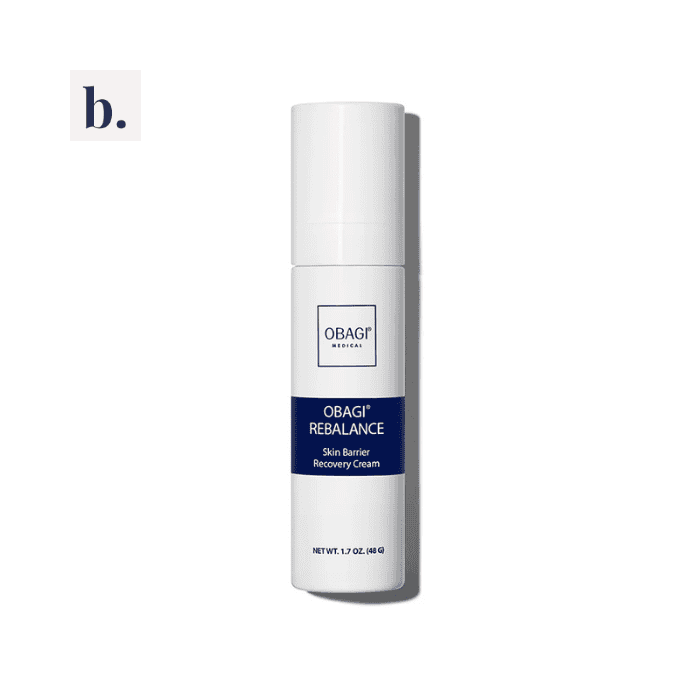
Obagi
Rebalance Skin Barrier Recovery Cream
If your skin needs substantial moisture and comfort, Obagi Rebalance offers a thoughtful barrier-lipid system supported by brand-reported testing. Its eczema-focused acceptance adds shopping context, but neither the seal nor the ingredient…
Read the BeautyBrief
Beverly Hills MD
Ultra Renew Hand Rejuvenating Serum
If your hands feel dry or crepey, Ultra Renew provides layered moisturizing support with ceramides and silicones. Its Premium value is easiest to justify for texture and comfort rather than unproven hand-specific…
Read the BeautyBrief
CeraVe
Skin Renewing Gel Oil
If your normal-to-dry skin needs more emollience than a water gel, this Mid-Range gel-oil offers a lipid-rich moisturizer with useful ceramides. Its eight-hour study result applies to most participants, not everyone, and…
Read the BeautyBrief