
Madecassoside in Skincare
Madecassoside is a Centella-derived skin-conditioning ingredient used in soothing and barrier-focused formulas. Human evidence is promising but does not clearly isolate madecassoside from the complete products tested.
- Ingredient category
- Conditioning Agent, Skin-Soothing Ingredient
- Most relevant for
- Sensitive Skin, Skin Barrier Support
- Evidence strength
- Indirect Evidence for Improving skin comfort and redness in tested madecassoside-containing combination formulas
- Formula matters
- Most human studies use madecassoside with other actives or specialized delivery systems, so judge the complete soothing or moisturizing formula rather than the ingredient name or percentage alone.
- Separate product needed?
- Usually No. A separate madecassoside product is usually unnecessary when another moisturizer or serum already keeps skin comfortable and supports the barrier well.
BB takeaway
Madecassoside is a useful supporting ingredient, but it is not a must-have or a reason to pay more by itself. Choose it when the complete formula fills a real comfort or moisture need.
Ingredient evidence does not prove the performance of every finished product containing it.
What is madecassoside?
Madecassoside is a triterpene glycoside found in Centella asiatica. It is one of the plant’s major marker compounds, along with asiaticoside and their related acids.[1]
Madecassoside is not the same thing as a whole Centella extract. A product can contain Centella Asiatica Extract, Centella Asiatica Leaf Extract, madecassoside, or several cica-related ingredients at once. Research on purified madecassoside should not automatically be applied to every Centella product, and research on a whole plant extract should not automatically be treated as madecassoside evidence.
You will often see madecassoside highlighted in calming serums, barrier-focused moisturizers, masks, and cica creams. Its practical role is usually supportive: helping a well-designed formula feel more suitable for dry, reactive, or temporarily uncomfortable skin rather than acting as a stand-alone treatment.
What does madecassoside do for skin?
Madecassoside is best understood as a skin-conditioning and soothing-support ingredient. Laboratory and animal research gives it plausible anti-inflammatory, antioxidant, and wound-related activity, but those mechanisms are much broader than what an ordinary cosmetic can promise.[1]
The shopper-relevant human evidence is narrower. Specific formulas containing madecassoside have improved roughness, hydration-related measures, transepidermal water loss, and visible redness, but those formulas also contained other active ingredients or specialized delivery systems.[2][3]
That means madecassoside can strengthen the case for a gentle moisturizer or soothing serum, but its presence does not prove that a product treats acne, rosacea, eczema, scars, wounds, or a medically damaged skin barrier.
What the evidence says about madecassoside skincare
The evidence supports madecassoside as a plausible supporting ingredient, but it does not establish its independent cosmetic effect as strongly as the marketing around cica products often suggests.
A 2008 randomized double-blind study followed 20 women with photoaged skin using a topical formula containing 5% vitamin C and 0.1% madecassoside for six months. The researchers reported improvements in wrinkles, roughness, firmness, suppleness, hydration, and elasticity.[2] Because vitamin C was part of the same formula, the study does not isolate how much madecassoside contributed.
A 2023 study tested a nanoemulsion designed to deliver paeonol and madecassoside together. In a four-week facial study of 34 people with sensitive skin and post-acne redness, the test essence reduced transepidermal water loss and redness-related measurements compared with a blank essence.[3] That supports the tested combination and delivery system, not every ordinary madecassoside serum.
A 2023 review summarizes anti-inflammatory, antioxidant, wound, and skin research on madecassoside and related Centella compounds.[1] Much of that literature is preclinical or medical rather than direct testing of everyday leave-on cosmetics.
For your routine, madecassoside is a plausible supporting ingredient in soothing or barrier-focused formulas, but finished-product design matters more than the ingredient name or a dramatic “repair” claim.
How madecassoside form and formulation affect results
Madecassoside and general Centella extracts are not interchangeable. A formula that lists Madecassoside gives you a more specific ingredient identity than a broad “cica” marketing claim, but it still does not tell you the concentration, purity, delivery, or finished-product performance.
Delivery can matter. The 2023 nanoemulsion study used a specialized system to improve delivery of paeonol and madecassoside through the outer skin barrier.[3] That does not mean every product needs nanotechnology. It does show why comparing two formulas by percentage alone can be misleading.
Do not assume that a higher madecassoside percentage automatically means a better product. The human literature does not provide a useful consumer dose-response curve showing that more madecassoside produces more visible benefit. A large “cica” percentage may also refer to Centella water or extract rather than purified madecassoside.
The rest of the formula often matters more. In a moisturizer, ingredients such as glycerin, panthenol, ceramides, emollients, and occlusives can provide much of the immediate softness, comfort, and moisture protection shoppers notice.
Who may benefit from madecassoside skincare?
Madecassoside is most relevant if you want a gentle moisturizer or serum for dry, sensitive-feeling, or temporarily stressed skin.
It can be a useful supporting feature when stronger actives leave skin feeling tight or uncomfortable, but it should not be used as permission to keep over-exfoliating or pushing through persistent irritation. Reducing the irritating product may help more than adding another calming layer.
You may not need to seek out madecassoside when your current moisturizer already keeps your skin comfortable. Allantoin, panthenol, beta-glucan, colloidal oatmeal, glycerin, and well-designed barrier moisturizers can fill similar supporting roles.
If acne, eczema, rosacea, infection, a persistent rash, or significant post-procedure irritation is the real concern, madecassoside should not replace an appropriate treatment plan.
Madecassoside side effects and irritation risk
Madecassoside appears to be well tolerated in the limited human cosmetic research, including the four-week nanoemulsion study, which reported no Grade 1 or higher adverse skin reactions to the tested product.[3] That finding belongs to that finished formula, not to every product containing madecassoside.
The Expert Panel for Cosmetic Ingredient Safety has assessed several Centella asiatica-derived cosmetic ingredients and concluded that the ingredients it reviewed are safe in current uses and concentrations when formulated to be non-sensitizing.[4] Isolated madecassoside was not one of the nine ingredients covered by that conclusion, so the assessment is useful Centella-family context rather than a direct safety conclusion for madecassoside.
Contact dermatitis has been reported with Centella asiatica preparations in the medical literature.[5] A case report cannot show how often ordinary shoppers react, and it does not prove that isolated madecassoside was the cause.
As with any skincare product, fragrance, preservatives, essential oils, exfoliating acids, retinoids, or other botanicals in the same formula may be responsible for burning, itching, swelling, or a rash. Stop using a product that causes persistent or worsening irritation.
How to use madecassoside in your skincare routine
Use madecassoside according to the product format. A serum usually goes before moisturizer; a cream or balm serves as the moisturizing step. Simple madecassoside formulas can generally fit into morning or evening routines when they are comfortable on your skin.
There is no evidence-based need to separate madecassoside from common skincare actives. It can appear in routines that also use vitamin C, niacinamide, retinoids, exfoliating acids, or acne treatments.
The more important issue is total irritation. If your routine already leaves skin burning, peeling, or persistently red, simplify the routine instead of relying on madecassoside to offset the problem.
You also rarely need several cica or madecassoside products at once. One well-formulated product is enough when it fills a real comfort or moisture gap.
How long does madecassoside take to work?
A moisturizer or serum containing madecassoside can make skin feel softer or more comfortable quickly, but those immediate effects usually come from the complete moisturizing base rather than madecassoside alone.
The specialized sensitive-skin study measured changes after four weeks, while the older photoaging study used the vitamin C and madecassoside formula for six months.[3][2] Those study durations should not be turned into a universal promise for every madecassoside product.
There is no dependable cosmetic timeline for madecassoside to heal a damaged barrier, clear acne, fade scars, treat rosacea, or correct eczema. If a medical skin problem is worsening or not improving, another cosmetic layer is not the answer.
What can you use with madecassoside?
Madecassoside fits easily with moisturizing ingredients such as glycerin, panthenol, ceramides, hyaluronic acid, squalane, beta-glucan, and petrolatum. These pairings often make more sense than chasing a high madecassoside percentage because the complete moisture system determines much of the product’s real-world comfort.
It can also be used in a routine with niacinamide, vitamin C, retinoids, exfoliating acids, or acne treatments when your skin tolerates the overall routine. A soothing ingredient cannot neutralize excessive irritation from too many strong products.
Madecassoside and Centella asiatica may appear together, but more cica-related ingredients do not automatically make a formula better. Look at what each product is actually doing for your routine.
How to choose a madecassoside product
Start with the job you need the product to do. If dryness and comfort are the main concerns, a moisturizer with madecassoside plus a strong humectant-and-emollient base is usually more useful than a watery serum purchased only for the hero ingredient.
Look for the INCI name Madecassoside when you specifically want this compound rather than a general Centella product. If a brand advertises a percentage, check what the number represents. A percentage for a Centella water, extract, complex, or nanoemulsion is not the same as the percentage of purified madecassoside.
For sensitive skin, judge fragrance, essential oils, exfoliating ingredients, alcohol content, texture, and finished-product testing along with the madecassoside claim. A “cica,” “repair,” or “recovery” label does not guarantee that a formula will be gentle.
Madecassoside does not justify Premium pricing by itself. Pay more only when the complete product gives you a meaningful advantage in texture, packaging, tolerability, usability, or credible finished-product evidence.
Do you need a separate madecassoside serum?
Usually, no.
Madecassoside works well as a supporting ingredient inside a moisturizer, serum, balm, or other product you already need. A separate serum makes sense only when it fills a clear comfort or hydration gap and the formula suits your skin better than simpler options.
If your moisturizer already contains useful humectants, emollients, barrier lipids, or other soothing ingredients and keeps your skin comfortable, another madecassoside layer is unlikely to add much.
For persistent redness, acne, eczema, rosacea, a rash, or post-procedure problems, choose the approach that addresses the actual issue rather than buying a dedicated madecassoside serum because it is marketed as “repairing.”
The BB Perspective
Madecassoside is a credible supporting ingredient for soothing and barrier-focused formulas, but the evidence for its independent effect in ordinary cosmetics is still limited.
The strongest human studies use madecassoside with other actives or specialized delivery systems. That makes the complete formula more important than the headline ingredient.
Do not pay more or add another routine step solely to get madecassoside. Choose it when the complete product fills a real comfort or moisture need and earns its place.
Last reviewed: September 2026
Sources
Bandopadhyay S, Mandal S, Ghorai M, et al. Therapeutic properties and pharmacological activities of asiaticoside and madecassoside: A review. Journal of Cellular and Molecular Medicine. 2023;27(5):593-608. doi:10.1111/jcmm.17635. PMID:36756687.
This review identifies madecassoside and asiaticoside as major triterpene glycosides from Centella asiatica and summarizes research on anti-inflammatory, antioxidant, wound-related, and skin effects. Much of the underlying evidence is laboratory, animal, or medical rather than direct testing of ordinary cosmetic products, so it supports biological plausibility more strongly than consumer-performance claims. Return to citation.
Haftek M, Mac-Mary S, Le Bitoux MA, et al. Clinical, biometric and structural evaluation of the long-term effects of a topical treatment with ascorbic acid and madecassoside in photoaged human skin. Experimental Dermatology. 2008;17(11):946-952. doi:10.1111/j.1600-0625.2008.00732.x. PMID:18503551.
This randomized double-blind study involved 20 women with photoaged skin using a topical formula containing 5% vitamin C and 0.1% madecassoside for six months. The researchers reported improvement across several clinical and biophysical measures. Because both actives were used together and two authors were affiliated with La Roche-Posay Pharmaceutical Laboratories, the study does not isolate madecassoside’s independent effect and has an industry connection that matters when interpreting the result. Return to citation.
Lu W, Luo D, Chen D, et al. Systematic Study of Paeonol/Madecassoside Co-Delivery Nanoemulsion Transdermal Delivery System for Enhancing Barrier Repair and Anti-Inflammatory Efficacy. Molecules. 2023;28(13):5275. doi:10.3390/molecules28135275. PMID:37446936.
The researchers developed a co-delivery nanoemulsion containing paeonol and madecassoside and tested it in cell models, 3D skin models, and a four-week split-face clinical study involving 34 people with sensitive skin and post-acne redness. The test essence contained 5% of the nanoemulsion system, not 5% pure madecassoside, and improved TEWL and redness-related measurements versus a blank essence. The specialized delivery system and combination of actives prevent generalization to ordinary madecassoside formulas. Two authors, Wangwang Lu and Qian Liu, worked for Guangzhou Jiyan Cosmetics Technology Co., Ltd. Research funding came from Chinese national grants and a Nanjing overseas-students program; the other authors declared no commercial conflicts. Return to citation.
Johnson W Jr, Bergfeld WF, Belsito DV, et al. Safety Assessment of Centella asiatica-Derived Ingredients as Used in Cosmetics. International Journal of Toxicology. 2023;42(Supplement 1):5S-22S. doi:10.1177/10915818231158272. PMID:36812692.
The Expert Panel for Cosmetic Ingredient Safety concluded that nine specified Centella asiatica-derived cosmetic ingredients are safe in the reviewed uses and concentrations when formulated to be non-sensitizing. Madecassoside itself was not one of the nine named ingredients, so this assessment provides useful Centella-family safety context but should not be presented as a direct safety conclusion for isolated madecassoside. Cosmetic Ingredient Review receives financial support from the Personal Care Products Council. Return to citation.
Gomes J, Pereira T, Vilarinho C, Duarte ML, Brito C. Contact dermatitis due to Centella asiatica. Contact Dermatitis. 2010;62(1):54-55. doi:10.1111/j.1600-0536.2009.01651.x. PMID:20136880.
This is a case report of contact dermatitis associated with a Centella asiatica preparation. A case report can show that allergy is possible but cannot estimate how common it is among cosmetic users, and it does not establish that isolated madecassoside was the responsible substance. Return to citation.
Products featuring Madecassoside
These evaluated products list Madecassoside among the Key Ingredients that meaningfully shape the formula. Inclusion here reflects ingredient relevance, not an endorsement or rating.
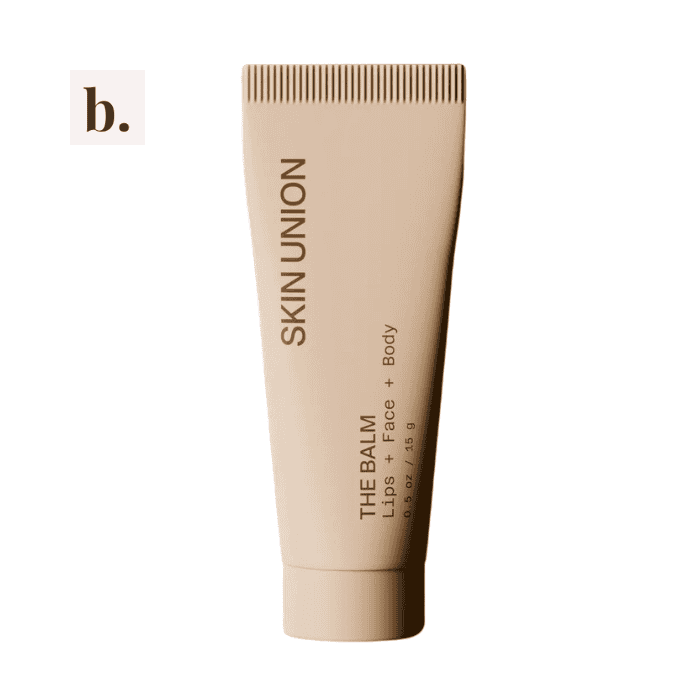
Skin Union
The Balm
If your lips or dry patches need extra protection, The Balm supplies a rich sunflower-and-shea base with lanolin. It is not vegan, and its clinical healing claims remain unestablished while testing is…
Read the BeautyBrief
Dr.Althea
Pure Grinding Cleansing Balm
If you want first cleansing without dipping into a jar, Dr. Althea provides an emulsifying balm with a twist dispenser. Its botanical ingredients are secondary to makeup removal. At the Budget tier,…
Read the BeautyBrief