
Lactic Acid in Skincare
If roughness or dullness bothers you, lactic acid is a proven exfoliant. Choose a formula with a pH and strength your skin tolerates; a higher percentage isn't automatically better.
- Aliases
- 2-Hydroxypropanoic Acid, 2-Hydroxypropionic Acid
- Ingredient category
- Exfoliant
- Most relevant for
- Dullness, Fine Lines and Wrinkles, Hyperpigmentation, Rough and Bumpy Skin
- Evidence strength
- Well Supported for Improving rough skin texture with topical lactic acid formulas
- Formula matters
- Concentration, pH, format, contact time, vehicle, moisturizing support, frequency, and other exfoliating ingredients determine results and irritation; a higher percentage is not automatically better.
- Separate product needed?
- Sometimes. A separate lactic acid product can be useful when rough texture or dullness remains a clear gap and the routine is not already providing enough exfoliation.
BB takeaway
Lactic acid is a credible exfoliant, but percentage is not a quality score. Choose a formula with a tolerable pH, format, and frequency rather than chasing the strongest peel.
Ingredient evidence does not prove the performance of every finished product containing it.
What is lactic acid?
Lactic acid is an alpha hydroxy acid, or AHA, used in exfoliating skincare. It is also known as 2-hydroxypropanoic acid and 2-hydroxypropionic acid.[1]
“AHA” and “alpha hydroxy acid” describe the ingredient class rather than serving as true aliases for lactic acid.
You can find lactic acid in cleansers, toners, serums, masks, peel pads, body lotions, and professional peels. Related lactate ingredients such as ammonium lactate are not identical to a typical acidic lactic-acid serum and can behave differently in a finished formula.
What does lactic acid do for skin?
Lactic acid exfoliates the skin surface by helping loosen the bonds between excess surface cells. Its most dependable cosmetic benefit is smoother-feeling rough or flaky skin.
Repeated use can also make dull skin look brighter and improve some superficial uneven pigmentation and fine surface lines associated with photoaging.
Lactic acid does not permanently shrink pores, erase deep acne scars, correct facial volume loss, treat hormonal acne, or remove every dark mark. Visible peeling or burning is not required for it to work.
What the evidence says about lactic acid skincare
Lactic acid is well supported for improving rough skin texture with topical formulas. Human trials also support more modest improvements in selected signs of photoaging.
A 22-week randomized, double-blind, vehicle-controlled trial enrolled 74 women ages 40 to 70 with moderately photodamaged skin and compared 8% L-lactic acid cream, 8% glycolic acid cream, and vehicle. On the face, 71% of participants using lactic acid achieved at least a one-grade improvement in overall photodamage versus 40% with vehicle. On the forearms, lactic acid also improved overall photodamage, mottled hyperpigmentation, sallowness, and roughness compared with vehicle.[2]
Those results belong to a specific 8% L-lactic acid cream used twice daily for months. They do not prove that every 8% serum, toner, or peel performs the same way.
An older study comparing 5% and 12% lactic acid used twice daily for three months found clinical improvement in smoothness and the appearance of lines with both strengths, while the 12% preparation produced additional measured changes in deeper skin layers.[3] This does not establish 12% as the ideal strength for you.
For acne, lactic acid has much less direct support than established treatments. The 2024 American Academy of Dermatology acne guideline found insufficient evidence to recommend chemical peels as an acne treatment.[4]
That finding concerns chemical-peel procedures rather than direct evidence about everyday lactic-acid serums or lotions.
For you, lactic acid is a credible exfoliant for roughness and dullness, with some evidence for superficial pigmentation and fine surface lines. It should not be treated as a scar remover, acne cure, or substitute for procedures.
How lactic acid form and formulation affect results
Percentage alone does not tell you how strong a lactic acid product will feel or perform.
A randomized human study found that both concentration and pH affected how quickly lactic acid increased epidermal turnover. At the same concentration, a more acidic formula produced more exfoliating activity; at the same pH, increasing concentration also increased activity.[5]
That is why two products labeled “10% lactic acid” can behave differently. Buffering, solvents, delivery system, moisturizing ingredients, contact time, and frequency all matter.
Format matters too. A cleanser gives brief contact before rinsing, while a leave-on serum or toner stays on the skin longer. A body lotion may combine lactic acid or lactate salts with humectants and emollients so the finished product feels more moisturizing than a thin facial acid serum.
Health Canada’s current 2025 Cosmetic Ingredient Hotlist permits consumer skin products containing 3% to 18% total mono-AHA equivalents when the finished pH is at least 3.5. Professional-use products have separate conditions for 18% to 30% and/or pH 3.0 to 3.5.[6]
Those are regulatory safety conditions, not recommendations to seek 18% for home use. A lower-strength formula you can use consistently may be the better product.
Who may benefit from lactic acid skincare?
Lactic acid can make sense when rough or flaky texture, dullness, fine surface lines, or superficial uneven pigmentation are meaningful concerns.
It can also be useful in body care for rough, bumpy, or scaly areas, especially when the complete product combines exfoliation with moisturizing ingredients.
Some people who find glycolic acid too aggressive may prefer a well-formulated lactic acid product, but “lactic acid is always gentler” is not a reliable rule. Strength, pH, frequency, and the complete formula decide tolerability.
If your skin is already raw, over-exfoliated, actively irritated, or recovering from a procedure, adding lactic acid is usually a poor next step.
Lactic acid side effects and irritation risk
Lactic acid can cause stinging, burning, redness, dryness, tightness, itching, flaking, or peeling.
Too much irritation can also worsen post-inflammatory discoloration, so stronger exfoliation can work against a brightening goal when it repeatedly leaves skin inflamed.
FDA advises that cosmetic AHA products may increase sun sensitivity during use and for up to one week after stopping. The agency recommends sunscreen, protective clothing, and limiting sun exposure during that period.[7]
High-strength at-home peels deserve separate caution. FDA has warned consumers not to use certain high-concentration chemical peels without appropriate professional supervision because products containing acids including lactic acid can cause serious chemical burns, swelling, infection, pigment changes, and scarring.[8]
Severe pain, blistering, marked swelling, raw skin, or whitening or frosting after an at-home peel is not evidence that the product is “working harder.” It can signal injury.
How to use lactic acid in your skincare routine
Follow the directions for the exact product because a cleanser, serum, body lotion, peel pad, and professional peel are not used the same way.
For an everyday leave-on product, start at the lowest suggested frequency and increase only if the skin remains comfortable. Applying more product, using it more often, or leaving a timed treatment on longer does not guarantee better results.
Use moisturizer when needed and avoid stacking several exfoliating acids at once while you are learning how your skin tolerates the product.
Use broad-spectrum sunscreen every day. FDA’s AHA guidance makes sun protection particularly important during use and for one week after stopping.[7]
How long does lactic acid take to work?
Skin may feel smoother or look brighter after several uses, but more meaningful changes take longer.
The randomized 8% L-lactic acid photoaging trial evaluated results over 22 weeks, while the 5% and 12% study assessed changes after three months.[2][3]
Those study timelines do not create a universal promise for every retail formula. Percentage, pH, format, frequency, sunscreen use, concern depth, and tolerability all affect how quickly you see a result.
What can you use with lactic acid?
Lactic acid fits well with moisturizing ingredients such as glycerin, hyaluronic acid, ceramides, squalane, panthenol, and dimethicone.
It can also be used in a broader routine containing retinoids, salicylic acid, benzoyl peroxide, or vitamin C when the routine remains tolerable.
The main concern is cumulative irritation. If you already use a strong retinoid or another exfoliating acid, alternating applications is often more practical than layering everything together.
If blackheads and clogged pores are the main concern, salicylic acid may be the more direct exfoliant. If persistent dryness is the issue, a moisturizer containing urea or an ammonium lactate body lotion may solve the problem more directly than adding a facial acid serum.
How to choose a lactic acid product
Start with the problem you want the product to solve.
For facial dullness or rough texture, a moderate leave-on product may be enough. For body roughness, a lotion that combines exfoliation with moisturizers may offer more value. A strong peel should not be treated as simply a “faster serum.”
Look at the disclosed concentration, pH when available, directions, contact time, supporting moisturizers, other exfoliating ingredients, and how often the product is meant to be used.
Be cautious with “professional strength,” “instant resurfacing,” “medical grade,” “poreless,” and “at-home peel” claims when the product encourages stronger or longer exposure than you can safely tolerate.
Do not interpret Canada’s current 18% consumer ceiling as an ideal target. It is a regulatory limit tied to pH and labeling conditions, not a recommendation that an 18% product performs better than a lower-strength formula.[6]
Lactic acid alone does not justify Premium or Luxury pricing. Pay more only when the complete product gives you a meaningful advantage in tolerability, moisturizing support, packaging, clear formulation information, or credible finished-product testing.
Do you need a separate lactic acid product?
Sometimes.
A separate lactic acid product can make sense when rough texture, dullness, superficial discoloration, or body roughness remains a real gap and you are not already getting enough exfoliation elsewhere.
You can leave out the extra step when you already use another AHA, a well-tolerated retinoid, or another exfoliating treatment that is doing the job. More acids often create more irritation rather than better skin.
The BB Perspective
Lactic acid is a credible exfoliant with human evidence for smoother texture and modest improvement in selected signs of photoaging.
The key shopping mistake is treating percentage as the whole formula. pH, format, contact time, moisturizing support, frequency, and skin tolerance can change both benefit and irritation.
For you, a moderate product used consistently is usually a better choice than a high-strength peel. Choose lactic acid when it fills a real texture or tone gap, and let the finished formula—not the biggest percentage—earn its place.
Last reviewed: September 2026
Sources
National Library of Medicine PubChem. Lactic Acid.
PubChem identifies lactic acid as C3H6O3 and lists recognized names including 2-hydroxypropanoic acid and 2-hydroxypropionic acid. “AHA” and “alpha hydroxy acid” describe a chemical class rather than serving as aliases for lactic acid. This source supports ingredient identity rather than skincare efficacy. Return to citation.
Stiller MJ, Bartolone J, Stern R, et al. Topical 8% glycolic acid and 8% L-lactic acid creams for the treatment of photodamaged skin: A double-blind vehicle-controlled clinical trial. Archives of Dermatology. 1996;132(6):631-636. PMID: 8651713.
This 22-week randomized double-blind vehicle-controlled study enrolled 74 women ages 40 to 70 with moderately photodamaged skin. The 8% L-lactic acid cream improved overall facial photodamage compared with vehicle and improved overall photodamage, mottled hyperpigmentation, sallowness, and roughness on the forearms. The findings support the tested cream rather than every 8% retail lactic acid product. Coauthor John Bartolone was affiliated with Unilever Research Corp. The available publication record does not establish whether the company funded the trial. Return to citation.
Smith WP. Epidermal and dermal effects of topical lactic acid. Journal of the American Academy of Dermatology. 1996;35(3 Pt 1):388-391. doi:10.1016/S0190-9622(96)90602-7. PMID: 8784274.
Participants used specific 5% or 12% lactic acid preparations twice daily for three months. Both strengths produced clinical and surface-level changes, while the 12% preparation also produced measured dermal changes. The study is older and does not establish that 12% is the ideal consumer concentration or that all modern 12% products behave the same way. Return to citation.
Reynolds RV, Yeung H, Cheng CE, et al. Guidelines of care for the management of acne vulgaris. Journal of the American Academy of Dermatology. 2024;90(5):1006.e1-1006.e30. doi:10.1016/j.jaad.2023.12.017. PMID: 38300170.
This evidence-based acne guideline found insufficient evidence to make a recommendation for chemical peels as acne treatment. That places lactic acid’s acne role in context without implying that exfoliation cannot improve surface texture. The guideline was funded through internal American Academy of Dermatology funds. Several authors disclosed relationships with pharmaceutical or skincare companies. Its insufficient-evidence conclusion concerns chemical-peel procedures, not direct clinical evidence about ordinary lactic-acid serums or lotions. Return to citation.
Thueson DO, Chan EK, Oechsli LM, Hahn GS. The roles of pH and concentration in lactic acid-induced stimulation of epidermal turnover. Dermatologic Surgery. 1998;24(6):641-645. PMID: 9648571.
This randomized double-blind study in 26 women found that both lactic acid concentration and pH affected epidermal turnover. The authors were affiliated with Cosmederm Technologies. The study supports the importance of formulation variables but does not identify one ideal pH or concentration for all shoppers. The work was supported by Cosmederm Technologies, Inc. Return to citation.
Health Canada. Cosmetic Ingredient Hotlist: Alpha-Hydroxy Acids. 2025. Accessed September 2026.
Health Canada’s current Hotlist permits consumer skin products containing 3% to 18% total mono-AHA equivalents at pH 3.5 or higher, with specified labeling and use conditions. Professional-use products have separate conditions for 18% to 30% and/or pH 3.0 to 3.5. These are regulatory safety conditions, not recommendations to use the maximum concentration. Return to citation.
U.S. Food and Drug Administration. Alpha Hydroxy Acids. Accessed September 2026.
FDA explains that AHA cosmetics can increase sun sensitivity during use and for up to one week after discontinuation and recommends sun protection during that period. The guidance addresses the AHA category rather than proving the performance of any individual lactic acid product. Return to citation.
U.S. Food and Drug Administration. FDA warns against purchasing or using chemical peel skin products without professional supervision. July 30, 2024. Accessed September 2026.
FDA warned against certain high-concentration chemical peels sold for at-home use, including products containing lactic acid, because unsupervised use can cause chemical burns, pain, swelling, infection, pigment changes, and scars. The warning concerns high-strength peel products rather than ordinary lower-strength AHA cosmetics. Return to citation.
Products featuring Lactic Acid
These evaluated products list Lactic Acid among the Key Ingredients that meaningfully shape the formula. Inclusion here reflects ingredient relevance, not an endorsement or rating.
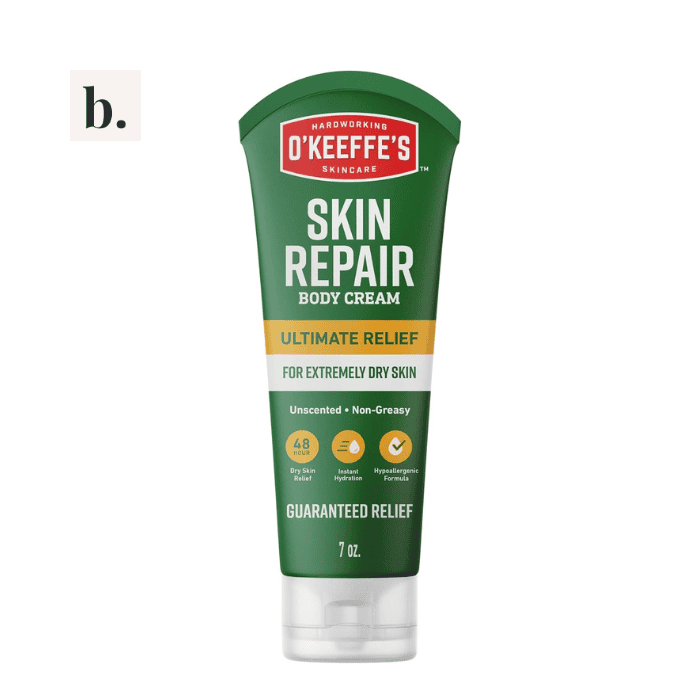
O'Keeffe's
O’Keeffe’s Skin Repair Rough & Bumpy Relief Body Cream
If rough, bumpy skin on your arms or legs is your concern, O'Keeffe's Rough & Bumpy Relief combines lactic-acid exfoliation with moisturizers. Its grapefruit peel oil and acid matter if you are…
Read the BeautyBrief
Obagi
C® Fx C-Therapy Night Cream
If your skin tolerates rich creams and you want arbutin for uneven tone, C-Therapy Night Cream offers an ingredient-based brightening rationale. Its leave-on sodium lauryl sulfate and lack of finished-product outcomes make…
Read the BeautyBrief
PCA SKIN
Facial Wash Oily/Problem
If your skin is oily, combination or breakout-prone, this cleanser combines daily oil removal with some rinse-off exfoliation. Its short contact time and undisclosed acid percentages limit acne-treatment expectations, so choose it…
Read the BeautyBrief
cocokind
AHA Jelly Cleanser
If you want low-foam cleansing with mild exfoliation, this Mid-Range cleanser suits skin that tolerates acids. Its water-binding blend helps balance the wash, but a simpler cleanser may offer better value when…
Read the BeautyBrief
OSEA
Ocean Cleanser
If you enjoy a citrus-floral cleanser with clay-assisted washing and gentle exfoliation, OSEA delivers a differentiated Premium experience. If you avoid essential oils, need fragrance-free cleansing or want stronger pore-treatment evidence, a…
Read the BeautyBrief
Eucerin
Radiant Tone Cleansing Gel
If you want gentle surface exfoliation built into cleansing, this provides a disclosed 2% AHA complex at a Mid-Range price tier. If your skin reacts to alcohol-rich or acid-based products, a simple…
Read the BeautyBrief