
Betaine in Skincare
Betaine is a well-established humectant and skin-conditioning ingredient that adds lightweight moisture support. It is useful but replaceable, and it should not be confused with similarly named betaine surfactants or derivatives.
- Aliases
- Trimethylglycine, TMG
- Ingredient category
- Conditioning Agent, Humectant
- Most relevant for
- Dryness
- Evidence strength
- Well Supported for Humectant and skin-conditioning support in cosmetic formulas
- Formula matters
- Its contribution depends on concentration, product format, contact time, and the surrounding humectants, emollients, occlusives, or surfactants.
- Separate product needed?
- Usually No. Betaine usually works as one part of a cleanser or moisturizer and rarely fills a unique gap as a separate step.
BB takeaway
Betaine is a useful lightweight humectant and conditioning ingredient, not a hero treatment. Judge the full product and do not confuse it with similarly named ingredients.
Ingredient evidence does not prove the performance of every finished product containing it.
What is betaine?
Betaine is a water-soluble compound also known as trimethylglycine. It occurs naturally in plants and can also be manufactured for cosmetic use. In skincare it is used mainly as a humectant and skin-conditioning ingredient.[1]
Betaine is not Cocamidopropyl Betaine, Coco-Betaine, or Betaine Salicylate. Those are different ingredients with different functions.
What does betaine do for skin?
Betaine helps formulas retain moisture and supports a conditioned skin feel. In cleansers it can sit alongside surfactants and other humectants to make the formula feel less bare. In moisturizers and serums it contributes to the broader water-binding system.
It is a supporting ingredient rather than proof that a product repairs the skin barrier or delivers a specific number of hours of hydration.
What the evidence says about betaine skincare
Betaine’s humectant and conditioning roles are well established. COSMILE lists it as a humectant and skin-conditioning ingredient, while the Cosmetic Ingredient Review Expert Panel concluded that Betaine and the reviewed alkyl betaines are safe under the described cosmetic practices of use and concentration when formulated to be non-irritating.[1][2]
That supports Betaine as a useful formula ingredient. It does not establish that Betaine outperforms glycerin, sodium PCA, or other humectants in a finished product.
How betaine form and formulation affect results
Concentration, product format, leave-on versus rinse-off contact time, and the surrounding humectants, emollients, occlusives, or surfactants determine what Betaine contributes.
A cleanser containing Betaine can still feel too strong when the cleansing base is aggressive. A moisturizer containing Betaine can still be too light for very dry skin when the formula lacks enough emollient or occlusive support.
Who may benefit from betaine skincare?
Betaine is relevant if you want lightweight moisture support or a cleanser with conditioning ingredients alongside its surfactants. It can fit many skin types because the complete product determines texture and tolerability.
There is no need to seek it out when another product already keeps skin comfortable.
Betaine side effects and irritation risk
The CIR assessment supports Betaine’s use under current cosmetic conditions when products are formulated to be non-irritating.[2] As with any finished cosmetic, individual tolerability still depends on the full formula.
If a product repeatedly feels uncomfortable, the sensible comparison is between complete formulas rather than assuming Betaine is the cause from the ingredient list alone.
How to use betaine in your skincare routine
Use the finished product according to its format. There is no special layering rule for Betaine. A serum containing it can sit under moisturizer, while a moisturizer containing it can be the main hydration step when the texture suits your skin.
How long does betaine take to work?
Its main moisture and conditioning effects are immediate formula effects. Longer-term improvement in dryness depends on the complete routine, environment, cleansing habits, and the rest of the moisturizer.
What can you use with betaine?
Betaine is commonly used alongside glycerin, sodium hyaluronate, sodium PCA, niacinamide, ceramides, cetearyl alcohol, retinoids, vitamin C, and exfoliating ingredients. It does not require a special pairing.
How to choose a betaine product
Choose the product for the job it needs to do. In a cleanser, look at the complete surfactant system and after-feel. In a moisturizer, look at the balance of humectants, emollients, occlusives, and barrier lipids.
Betaine does not independently justify Premium pricing. The finished formula has to provide the meaningful advantage.
Do you need a separate betaine product?
Usually no. Betaine works well as a supporting part of cleansers, serums, and moisturizers and rarely fills a unique routine gap by itself.
The BB Perspective
Betaine is useful because it adds lightweight moisture and conditioning without needing a complicated treatment story.
The ingredient name is easy to confuse with several unrelated betaine surfactants and derivatives. Plain Betaine is its own ingredient.
For your routine, Betaine is a useful supporting detail, not a reason to choose a product or pay more by itself.
Last reviewed: September 2026
Sources
Ingredient reference used for identity and established humectant and skin-conditioning functions. Return to citation.
Burnett CL, et al. Safety Assessment of Alkyl Betaines as Used in Cosmetics. International Journal of Toxicology. 2018. doi:10.1177/1091581818773354.
The CIR Expert Panel reviewed Betaine and related alkyl betaines and concluded they are safe under reviewed cosmetic practices when formulated to be non-irritating. This is a safety assessment, not a comparative hydration study. Cosmetic Ingredient Review is funded by the Personal Care Products Council, a cosmetics-industry trade association. Return to citation.
Products featuring Betaine
These evaluated products list Betaine among the Key Ingredients that meaningfully shape the formula. Inclusion here reflects ingredient relevance, not an endorsement or rating.
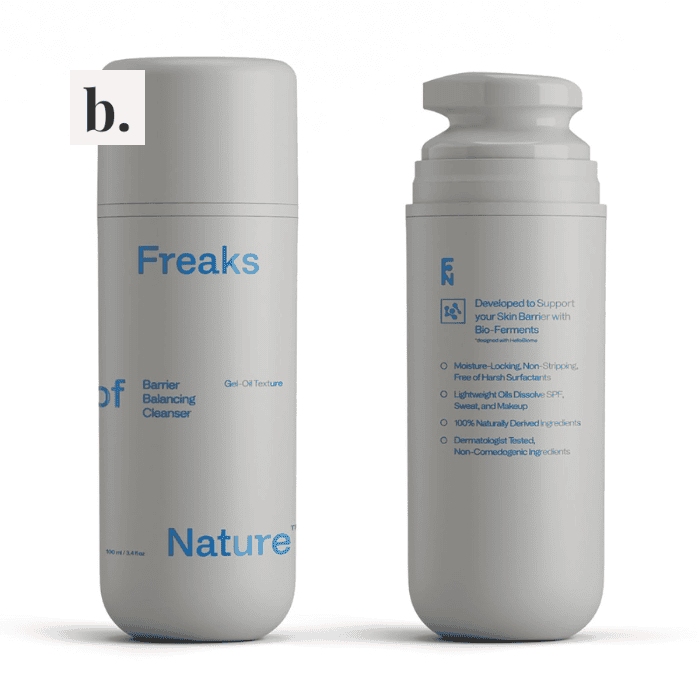
Freaks of Nature
Barrier Balancing Face Wash
If you want a gel-to-oil face wash for sunscreen and daily buildup, this Mid-Range cleanser offers a distinctive milky texture with supportive oils and humectants. Its consumer survey does not establish measured…
Read the BeautyBrief
Beverly Hills MD
Ultra-Firm Lifting Eye Mask
If you want smoother-looking skin around your eyes for a short time, the wraparound hydrogel patches offer hydration and more coverage. Their lifting promise is cosmetic, and the gelatin-containing formula is not…
Read the BeautyBrief
Alchemy 21/12
Barrier Cleanser
If your skin often feels tight after washing, Barrier Cleanser offers a soft-foaming, fragrance-free system with multiple comfort ingredients. Its microbiome positioning is not backed by finished-product outcomes, so its value rests…
Read the BeautyBrief
Beverly Hills MD
Ageless Volume Hyaluronic Face Mask
If you want a quick moisture boost, Ageless Volume offers multiple humectants in a sheet mask. Its temporary plumping does not restore facial volume, and added fragrance may limit sensitive-skin fit.
Read the BeautyBrief
The INKEY List
Milk Cleanser
If you want gentle-feeling cream-to-milk cleansing with measured hydration support, this offers useful Budget value. If you prefer strong foam or a dedicated waterproof-makeup remover, another format may suit you.
Read the BeautyBrief
The INKEY List
Omega Water Cream
If your skin is oily or combination and likes lighter moisture, Omega Water Cream offers strong Budget value. If you need more occlusive comfort, compare a richer cream.
Read the BeautyBrief