
Sodium Hyaluronate in Skincare
Sodium hyaluronate is a well-established humectant and skin-conditioning form of hyaluronic acid for surface hydration and temporary plumping. Molecular weight and the complete formula matter more than the ingredient name alone.
- Aliases
- Hyaluronic Acid Sodium Salt, Hyaluronan Sodium, Hyaluronate Sodium
- Ingredient category
- Conditioning Agent, Humectant
- Most relevant for
- Dryness
- Evidence strength
- Well Supported for Increasing surface hydration in leave-on skincare formulas
- Formula matters
- Molecular weight, concentration, vehicle, and supporting humectants, emollients, and occlusives determine performance; the Sodium Hyaluronate name or a large percentage claim does not guarantee better hydration.
- Separate product needed?
- Usually No. Most routines do not need a separate sodium hyaluronate serum; one makes sense only when you need extra lightweight hydration beyond your current moisturizer.
BB takeaway
Sodium Hyaluronate is a dependable but highly replaceable humectant. Choose the complete formula for lasting hydration rather than paying more for molecular-weight or filler-style marketing.
Ingredient evidence does not prove the performance of every finished product containing it.
What is sodium hyaluronate?
Sodium hyaluronate is the sodium salt of hyaluronic acid. Recognized names include Hyaluronic Acid Sodium Salt, Hyaluronan Sodium, and Hyaluronate Sodium.[1]
In cosmetics, it is used mainly as a humectant and skin-conditioning ingredient. The word “sodium” does not make it salty, harsh, or drying.
It is also a mistake to assume that Sodium Hyaluronate automatically means “low-molecular-weight hyaluronic acid.” Sodium hyaluronate can be manufactured across a wide range of molecular sizes, and the INCI name alone does not tell you which one a formula uses.[2]
What does sodium hyaluronate do for skin?
Sodium hyaluronate is a well-established humectant. Its main job is helping the outer skin hold water.
In a good leave-on formula, that can make dehydrated skin feel less tight and look temporarily smoother or plumper.
Those are hydration benefits. Sodium hyaluronate does not rebuild collagen, restore facial volume, permanently fill wrinkles, exfoliate, treat acne, or fade pigmentation.
Topical sodium hyaluronate also does not behave like injectable hyaluronic-acid filler. Injectables are placed beneath the skin barrier and are a different product category with different evidence.
What the evidence says about sodium hyaluronate skincare
The basic hydration function is well supported, while stronger anti-aging claims depend on the exact formula.
The Expert Panel for Cosmetic Ingredient Safety identifies Sodium Hyaluronate and related hyaluronates as cosmetic skin-conditioning materials and concluded that the reviewed ingredients are safe as used.[2]
Human topical studies of the broader hyaluronic-acid family also support hydration. In a randomized 60-day study of 76 women, 0.1% hyaluronic-acid creams of different molecular weights improved hydration and elasticity versus vehicle; selected lower-molecular-weight formulas also improved some wrinkle measurements.[3]
That does not establish a rule that smaller molecular weight is always better, and the findings belong to the tested creams rather than to every Sodium Hyaluronate product.
A 2021 six-week study of 40 women using a multi-ingredient hyaluronic-acid serum reported improvements in hydration, smoothness, plumping, and fine-line appearance.[4] The study had no placebo group and tested a finished serum, so its results should not be credited to Sodium Hyaluronate alone.
Route of use matters too. A randomized placebo-controlled trial in 150 adults found improvements in several skin measures after oral sodium hyaluronate supplementation.[5] That is nutraceutical evidence, not proof that a topical serum produces the same effects.
For your routine, Sodium Hyaluronate is a dependable hydration ingredient. Claims about lifting, deep rejuvenation, collagen rebuilding, or lasting wrinkle correction need evidence from the exact finished topical product.
How sodium hyaluronate form and formulation affect results
Molecular weight changes how hyaluronic-acid materials behave, but it is not a simple quality score.
In laboratory work using human skin samples, lower-molecular-weight HA in the 20-300 kDa range moved through the stratum corneum more readily than 1000-1400 kDa HA.[6] That does not prove that smaller HA reaches the dermis, rebuilds collagen, or produces better-looking skin in every formula.
Related INCI names such as Hyaluronic Acid, Hydrolyzed Hyaluronic Acid, Hydrolyzed Sodium Hyaluronate, Sodium Acetylated Hyaluronate, and Sodium Hyaluronate Crosspolymer are distinct materials. Listing several forms does not automatically make a product more hydrating.
Percentage claims also need context. A “2% hyaluronic complex” may refer to a supplier solution or blend rather than 2% pure Sodium Hyaluronate. Unless the brand defines the number, it is not very useful for comparing products.
The rest of the formula often matters more. Glycerin, ceramides, squalane, dimethicone, and petrolatum can make hydration feel more comfortable and last longer than a watery humectant serum alone.
Who may benefit from sodium hyaluronate skincare?
Sodium hyaluronate is most useful when skin feels dehydrated, tight, or temporarily crepey from dryness.
It works well in lightweight formulas for oily or acne-prone skin when the complete product suits that skin type. For dry skin, a lotion or cream with emollient and occlusive support is usually more useful than a Sodium Hyaluronate serum by itself.
It can also make routines containing exfoliating acids, benzoyl peroxide, or retinoids feel more comfortable. It cannot compensate for an overly irritating routine.
If your current moisturizer already keeps your skin comfortable, you do not need to seek out Sodium Hyaluronate specifically.
Sodium hyaluronate side effects and irritation risk
The Expert Panel for Cosmetic Ingredient Safety concluded in its 2023 final assessment that Sodium Hyaluronate and the other reviewed hyaluronates are safe in cosmetics under the practices of use and concentrations described.[2]
Sodium hyaluronate itself is generally well tolerated, but a finished product can still sting, itch, redden, pill, feel sticky, or cause a rash because of fragrance, preservatives, alcohol, acids, retinoids, or other ingredients.
Stop using a product that causes persistent burning, swelling, hives, blistering, or worsening redness.
How to use sodium hyaluronate in your skincare routine
Use the finished product according to its directions. A lightweight serum usually goes after cleansing and before moisturizer. A cream containing Sodium Hyaluronate can simply serve as your moisturizer.
You can apply a hydrating serum to dry or slightly damp skin. Damp skin is optional, not required; use the method that layers comfortably without pilling or irritation.
If a humectant serum leaves skin feeling tight, follow it with a moisturizer containing emollient or occlusive ingredients. For very dry areas, a small amount of petrolatum over moisturizer may be more useful than adding another hyaluronate serum.
During the day, finish with broad-spectrum sunscreen. Sodium Hyaluronate is not a UV filter.
How long does sodium hyaluronate take to work?
A well-formulated product can make skin feel smoother and less tight soon after application because surface hydration changes quickly.
That plumping effect is temporary. It does not represent permanent wrinkle correction or restored facial volume.
If a product does not improve comfort, pills under sunscreen, or feels sticky after a fair trial, there is no reason to keep it simply because Sodium Hyaluronate is popular.
What can you use with sodium hyaluronate?
Sodium hyaluronate is compatible with most common skincare ingredients, including glycerin, ceramides, niacinamide, vitamin C, retinoids, exfoliating acids, benzoyl peroxide, and sunscreen.
There is no evidence-based need to separate it from common treatment actives. The practical limit is irritation from the complete routine.
How to choose a sodium hyaluronate product
Choose the format that solves the hydration problem you actually have.
A serum can make sense for lightweight hydration. Dry skin usually gets better value from a moisturizer that combines humectants with emollients and occlusives.
Do not assume “five molecular weights,” “multi-depth hydration,” “nano hyaluronic acid,” or a larger percentage automatically makes one product better. Give more weight to texture, lasting comfort, tolerability, layering, and finished-product testing.
Be skeptical of “needle-free filler,” “liquid filler,” and “filler effect” claims. Topical Sodium Hyaluronate can temporarily plump dehydrated surface lines; it cannot reproduce the structural volume created by injected filler.
Sodium Hyaluronate alone does not justify Premium pricing. A higher price should be earned by the complete formula, packaging, user experience, or credible product testing.
Do you need a separate sodium hyaluronate serum?
Usually, no.
A separate serum can make sense when you want lightweight hydration and your current moisturizer is not enough. It is less useful when your moisturizer, sunscreen, toner, or treatment already contains Sodium Hyaluronate or another effective humectant.
For dry skin, spending the same money on a more complete moisturizer is often the better purchase.
The BB Perspective
Sodium Hyaluronate is a dependable humectant, but it is also common and highly replaceable.
The biggest shopper misconception is that the sodium salt is automatically smaller, deeper-penetrating, or better than hyaluronic acid. It is not. Molecular weight, concentration, vehicle, supporting ingredients, and finished-product performance matter more than the INCI name alone.
Choose the product for lasting hydration, texture, tolerability, and value. Sodium Hyaluronate is a useful supporting ingredient—not a reason by itself to buy a separate serum or pay more.
Last reviewed: September 2026
Sources
National Library of Medicine PubChem. Sodium Hyaluronate.
PubChem identifies Sodium Hyaluronate as the sodium salt form of hyaluronic acid and lists recognized names including Hyaluronan Sodium, Hyaluronate Sodium, and Hyaluronic Acid Sodium Salt. This source supports identity rather than topical efficacy. Return to citation.
The 2023 final assessment reviewed Hyaluronic Acid, Sodium Hyaluronate, Hydrolyzed Sodium Hyaluronate, Sodium Acetylated Hyaluronate, and related hyaluronates and concluded that the reviewed ingredients are safe in cosmetics under the present practices of use and concentration described. The report also documents the broad molecular-weight range possible for hyaluronates. CIR is financially supported by the Personal Care Products Council. This source supports safety, established cosmetic use, and formulation context rather than stand-alone anti-aging efficacy. Return to citation.
Pavicic T, Gauglitz GG, Lersch P, et al. Efficacy of cream-based novel formulations of hyaluronic acid of different molecular weights in anti-wrinkle treatment. Journal of Drugs in Dermatology. 2011;10(9):990-1000. PMID:22052267.
This randomized study included 76 women using 0.1% hyaluronic-acid creams of different molecular weights around one eye with vehicle around the other for 60 days. All tested HA creams improved hydration and elasticity; selected lower-molecular-weight formulas improved some wrinkle measurements. The findings apply to the tested formulations and do not establish a universally superior molecular weight. The research received ingredient-industry support and included industry-affiliated authors. Return to citation.
Draelos ZD, Diaz I, Namkoong J, Wu J, Boyd T. Efficacy Evaluation of a Topical Hyaluronic Acid Serum in Facial Photoaging. Dermatology and Therapy. 2021;11(4):1385-1394. doi:10.1007/s13555-021-00566-0. PMID:34176098. PMCID:PMC8322246.
This six-week study followed 40 women using one multi-ingredient HA serum twice daily with sunscreen and reported improvements in hydration and appearance measures. It had no placebo or matching-serum control, and several authors were affiliated with Colgate-Palmolive, the parent company of the tested PCA Skin product. The study supports the finished serum more than Sodium Hyaluronate as an isolated ingredient. Return to citation.
Dolečková I, Kušnierik P, Berka V, et al. Oral sodium hyaluronate improves skin hydration, barrier function and signs of aging: a randomized, double-blind, placebo-controlled trial in 150 healthy adults. Scientific Reports. 2026;16(1):2941. Published online December 20, 2025. doi:10.1038/s41598-025-32758-5. PMID:41422283. PMCID:PMC12827323.
This randomized placebo-controlled trial gave 150 healthy adults oral sodium hyaluronate at 60 or 120 mg/day for 12 weeks and reported improvements in several skin measures, particularly at 120 mg/day. The route was oral supplementation, not topical cosmetic use, so the findings should not be used as evidence that a Sodium Hyaluronate serum creates the same effects. Contipro, a hyaluronan manufacturer, funded the trial. Six authors were Contipro employees; the seventh reported no conflict. The article states that the company did not participate in study design, data analysis, manuscript preparation, or submission decisions. Return to citation.
Essendoubi M, Gobinet C, Reynaud R, Angiboust JF, Manfait M, Piot O. Human skin penetration of hyaluronic acid of different molecular weights as probed by Raman spectroscopy. Skin Research and Technology. 2016;22(1):55-62. doi:10.1111/srt.12228. PMID:25877232.
This laboratory study used human skin samples and found that lower-molecular-weight HA in the 20-300 kDa range moved through the stratum corneum more readily than 1000-1400 kDa HA. It did not test visible consumer outcomes or prove that lower molecular weight is always more effective. One author was affiliated with Soliance, supplier of the tested HA materials. Return to citation.
Products featuring Sodium Hyaluronate
These evaluated products list Sodium Hyaluronate among the Key Ingredients that meaningfully shape the formula. Inclusion here reflects ingredient relevance, not an endorsement or rating.

Allies of Skin
The Lab Drop 10/10/10 Multi GF Exo Advanced Recovery Ampoules
If you are considering Allies of Skin Lab Drop 10/10/10 Ampoules for visible aging, its growth-factor and exosome-themed complexes make an ambitious treatment story. The brand's reported improvements do not establish biological…
Read the BeautyBrief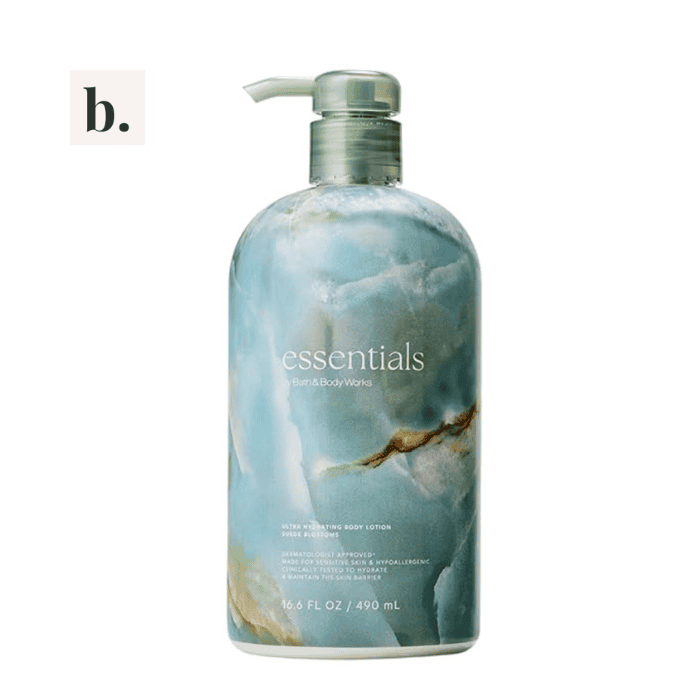
Bath & Body Works
Suede Blossoms Ultra Hydrating Body Lotion
If your body skin is normal or dry and you enjoy scented lotion, Suede Blossoms offers familiar humectants and emollients for everyday softness. Its hypoallergenic label does not guarantee fragrance tolerance, and…
Read the BeautyBrief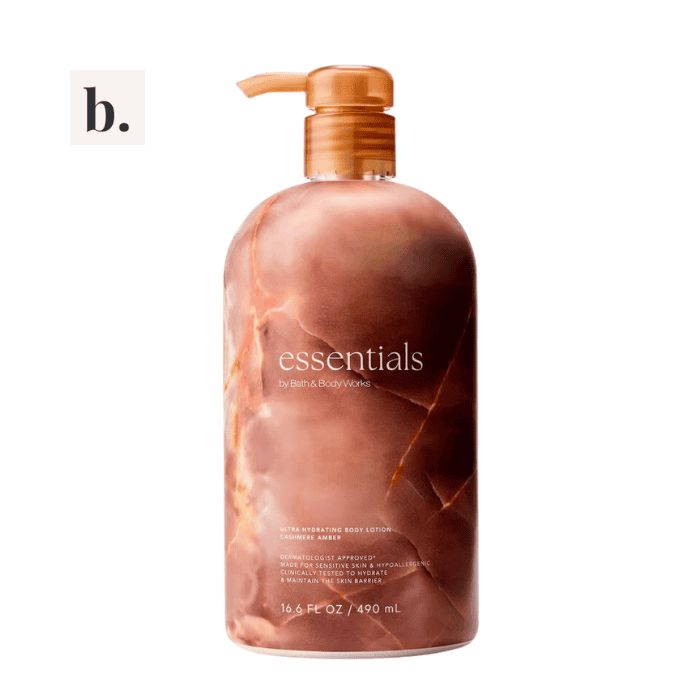
Bath & Body Works
Cashmere Amber Ultra Hydrating Body Lotion
If your body skin is normal or dry and you enjoy an amber fragrance, Cashmere Amber offers familiar humectants and emollients for everyday softness. Its hypoallergenic label does not guarantee fragrance tolerance,…
Read the BeautyBrief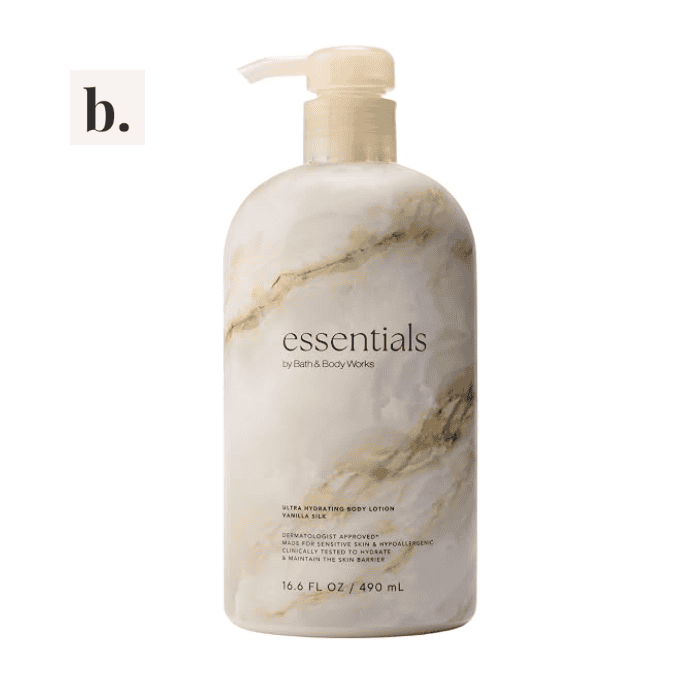
Bath & Body Works
Vanilla Silk Ultra Hydrating Body Lotion
If your body skin is normal or dry and you enjoy vanilla fragrance, Vanilla Silk combines humectants and emollients for everyday softness. Its hypoallergenic claim does not guarantee fragrance tolerance, and the…
Read the BeautyBrief
Schaf
Moisturizer 3.0
If you prefer a fragrance-free cream, Schaf Moisturizer 3.0 offers rich emollience alongside niacinamide and bakuchiol. Its Premium value rests on how the texture and ingredient blend suit you, not established retinoid-level…
Read the BeautyBrief
Neutrogena
Rapid Wrinkle Repair Retinol Regenerating Cream
If your skin tolerates retinol and fragrance, Rapid Wrinkle Repair offers a moisturizing format for gradual fine-line care. Its Mid-Range value rests on texture and convenience rather than a disclosed retinol concentration.
Read the BeautyBrief