
Sodium PCA in Skincare
Sodium PCA is a well-established humectant and component of skin's natural moisturizing system. It supports hydration inside a balanced formula but is highly replaceable and usually does not need a separate serum.
- Aliases
- Sodium Pyrrolidone Carboxylate, Sodium DL-Pyroglutamate
- Ingredient category
- Humectant
- Most relevant for
- Dryness
- Evidence strength
- Well Supported for Increasing hydration in the outer skin layer in leave-on moisturizing formulas
- Formula matters
- The complete moisturizing system matters more than Sodium PCA alone. Humectants, emollients, occlusives, texture, and product format determine how useful and lasting the hydration feels.
- Separate product needed?
- Usually No. Usually unnecessary if your moisturizer or hydration serum already keeps skin comfortable.
BB takeaway
Sodium PCA is a dependable hydration ingredient, not a premium active. Choose the complete moisturizing formula that fits your skin rather than paying more or adding a step just to get Sodium PCA.
Ingredient evidence does not prove the performance of every finished product containing it.
What is sodium PCA?
Sodium PCA is the sodium salt of pyrrolidone carboxylic acid, or PCA. PCA is one component of skin’s natural moisturizing factor, the water-binding mixture found in the outermost layer of skin.[1]
In cosmetics, Sodium PCA is used mainly as a humectant and skin-conditioning ingredient. Its practical job is simple: help the outer skin layer hold water so a moisturizer or serum can better support hydration.[2]
It is useful, but it is not unique. Other humectants can perform a similar supporting role, so seeing Sodium PCA on an ingredient list is not by itself a reason to choose one product over another.
What does sodium PCA do for skin?
Sodium PCA supports hydration by helping the stratum corneum hold water. That can make dry or tight-feeling skin feel more comfortable when the complete formula is well designed.
It does not replace the rest of a moisturizer. Humectants help with water binding, while emollients and occlusives help soften skin and reduce moisture loss. A formula that combines these functions usually matters more than any one humectant.
Sodium PCA is not an acne treatment, exfoliant, pigment treatment, or wrinkle treatment. Its strongest shopper-relevant role is hydration support.
What the evidence says about sodium PCA skincare
Sodium PCA’s hydration role is well established. Research on natural moisturizing factor and PCA supports its role in water balance in the outer skin layer.[1]
Older clinical and laboratory work on PCA and Sodium PCA formulations found improvements in dry-skin condition when the ingredients were used in suitable vehicles. The same work also showed why formula context matters: the vehicle affected the result, so the ingredient alone did not determine performance.[3]
Research in atopic dermatitis also shows that lower PCA levels in affected skin correlate with poorer barrier measurements and greater disease severity.[4] That supports PCA’s biological role in normal hydration, but it does not mean topical Sodium PCA treats eczema.
For your routine, Sodium PCA is well supported as a hydration ingredient, but the complete moisturizer determines how useful that hydration becomes.
How sodium PCA form and formulation affect results
Sodium PCA is water soluble and usually works as part of the water-binding side of a formula. It is often paired with other humectants and natural-moisturizing-factor components rather than used alone.
More is not automatically better. The evidence does not establish a consumer percentage that every shopper should seek, and older clinical work found that formulation vehicle influenced performance.[3]
For dry skin, a balanced moisturizer usually matters more than a high Sodium PCA position on the ingredient list. Humectants can attract and hold water, but emollients and occlusives help keep skin comfortable and reduce water loss.
Who may benefit from sodium PCA skincare?
Sodium PCA is most relevant when dryness, dehydration, or tightness is the main concern. It can fit lightweight serums, gel-creams, lotions, and richer moisturizers depending on the rest of the formula.
Oily or combination skin can also benefit from hydration, especially when a lighter texture is preferred. Very dry skin usually needs more than humectancy alone and may do better with a formula that also contains emollient or occlusive support.
You do not need to seek out Sodium PCA if your current moisturizer already keeps your skin comfortable. Other humectants can cover much of the same practical need.
Sodium PCA side effects and irritation risk
Sodium PCA has a favorable cosmetic safety record. The Cosmetic Ingredient Review Expert Panel concluded that PCA and its salts, including Sodium PCA, are safe in cosmetics under the practices of use and concentrations it reviewed, with the condition that they should not be used in products in which N-nitroso compounds can be formed.[2]
CIR’s December 2025 quick-reference update continues to list that same safety conclusion for Sodium PCA.[5]
That does not guarantee every Sodium PCA product will suit your skin. Fragrance, preservatives, exfoliating ingredients, retinoids, surfactants, or an already irritated skin barrier may be the real reason a finished product stings or causes redness.
How to use sodium PCA in your skincare routine
Sodium PCA does not need its own routine step. Use the finished product according to its format: a serum before moisturizer, or a lotion or cream as the moisturizing step.
For drier skin, a formula that also contains emollients or occlusives can provide more complete moisture support than a humectant-only serum.
Sodium PCA can be used in routines that also contain retinoids, vitamin C, niacinamide, exfoliating acids, or acne treatments. Routine tolerance depends more on those active products and the complete formulas than on Sodium PCA itself.
How long does sodium PCA take to work?
Hydration support can begin with the first uses because Sodium PCA functions as a humectant in the outer skin layer. How noticeable that feels depends on the rest of the product.
More durable improvement in dry or rough-feeling skin depends on repeated use and whether the moisturizer provides enough overall support. Study timelines for specific PCA formulations should not be turned into a universal promise for every Sodium PCA product.
Do not expect Sodium PCA to produce a separate visible treatment effect on wrinkles, pigmentation, or acne. Its main contribution is hydration.
What can you use with sodium PCA?
Sodium PCA fits easily with other humectants such as glycerin, hyaluronic acid, urea, and beta-glucan.
For dry skin, formulas that also contain ceramides, emollients, silicones, or petrolatum can provide broader moisture support than Sodium PCA alone.
If acne, hyperpigmentation, or wrinkles are the main concern, choose evidence-based treatments for those goals and let Sodium PCA play a supporting hydration role.
How to choose a sodium PCA product
Choose the product for the job you actually need. If dryness is the problem, a moisturizer containing Sodium PCA is usually more useful than buying a separate serum solely for this ingredient.
Do not judge quality by ingredient-list position or a headline percentage. The INCI list cannot tell you how well the complete formula will hold water, reduce tightness, or feel after several hours.
Look for a balanced formula. Dry skin often benefits from humectants plus emollient and occlusive support. Oily or combination skin may prefer a lighter lotion or gel-cream.
Sodium PCA alone does not justify Premium pricing. Pay more only when the complete formula offers a meaningful advantage in comfort, texture, tolerability, packaging, or credible finished-product performance.
Do you need a separate sodium PCA serum?
Usually, no.
Sodium PCA already works well as part of moisturizers and multi-humectant serums. A dedicated serum can make sense when you specifically want another lightweight hydration layer, but most routines do not need one.
If your current moisturizer already keeps your skin comfortable, another Sodium PCA product is likely to duplicate the same function.
The BB Perspective
Sodium PCA is a dependable hydration ingredient with a clear role in the skin’s natural moisturizing system.
It is not a hero active and it is highly replaceable. The complete moisturizing formula, texture, and routine fit matter more than seeing Sodium PCA high on an ingredient list.
Notice it as a useful supporting ingredient, not a reason to pay more or add another routine step.
Last reviewed: September 2026
Sources
Bouwstra JA, Groenink HWW, Kempenaar JA, Romeijn SG, Ponec M. Water distribution and natural moisturizer factor content in human skin equivalents are regulated by environmental relative humidity. Journal of Investigative Dermatology. 2008;128(2):378-388. PMID:17671517.
This study examined PCA as a prominent component of natural moisturizing factor in reconstructed human skin. It supports PCA’s physiological relevance to stratum-corneum hydration but is not a finished-product efficacy trial. Return to citation.
Fiume MM, Bergfeld WF, Belsito DV, et al. Safety Assessment of PCA (2-Pyrrolidone-5-Carboxylic Acid) and Its Salts as Used in Cosmetics. International Journal of Toxicology. 2019;38(1 Suppl):5S-18S. PMID:31522652.
The Cosmetic Ingredient Review Expert Panel identifies PCA salts including Sodium PCA as skin-conditioning humectants and concludes they are safe in the reviewed cosmetic uses, excluding products in which N-nitroso compounds can be formed. CIR is funded by the Personal Care Products Council, a cosmetics-industry trade association. Return to citation.
Clar EJ, Fourtanier A. Pyrrolidone carboxylic acid and the skin. International Journal of Cosmetic Science. 1981;3(3):101-113. PMID:19469932.
This review summarizes laboratory and clinical work on PCA and Sodium PCA preparations. It reports improvement in dry-skin condition from suitable PCA/Sodium PCA systems and emphasizes that the formulation vehicle affects results. The work came from Unilever Research, so it is best treated as older industry-connected evidence rather than a modern independent trial. Return to citation.
Jung M, Choi J, Lee SA, et al. Pyrrolidone carboxylic acid levels or caspase-14 expression in the corneocytes of lesional skin correlates with clinical severity, skin barrier function and lesional inflammation in atopic dermatitis. Journal of Dermatological Science. 2014;76(3):231-239. PMID:25315296.
In 73 participants, lower PCA in lesional atopic skin was associated with worse clinical severity and barrier measurements. This supports PCA’s role in normal stratum-corneum hydration biology but does not establish topical Sodium PCA as a treatment for atopic dermatitis. Return to citation.
Cosmetic Ingredient Review. Quick Reference Table, December 2025 update.
The current CIR quick-reference table continues to list PCA and its salts, including Sodium PCA, as safe in cosmetics under the practices of use and concentrations described in the assessment and repeats the restriction concerning products in which N-nitroso compounds can be formed. Return to citation.
Products featuring Sodium PCA
These evaluated products list Sodium PCA among the Key Ingredients that meaningfully shape the formula. Inclusion here reflects ingredient relevance, not an endorsement or rating.
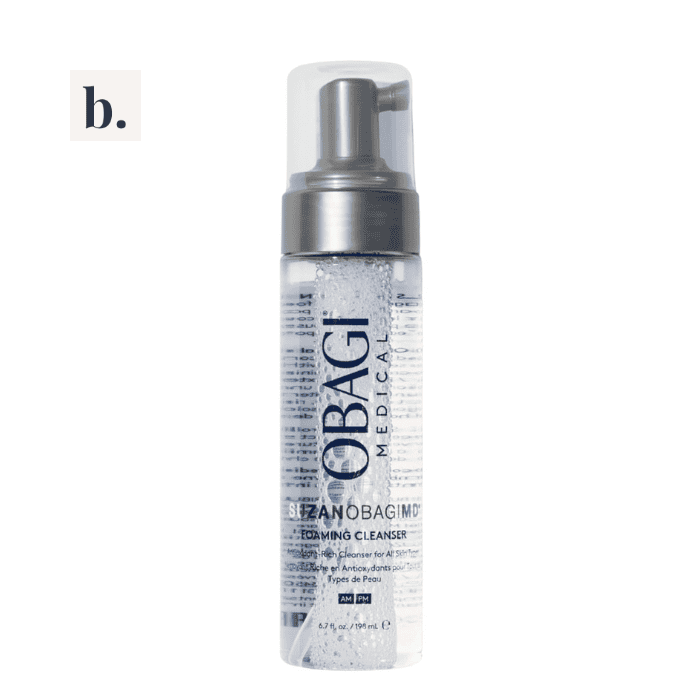
Obagi
SUZANOBAGIMD® Foaming Cleanser
If you prefer substantial sulfate-free foam, this cleanser offers a capable cleansing blend with added humectants. Grapefruit oil and isothiazolinone preservatives remain relevant if your skin is reactive, so the Premium price…
Read the BeautyBrief
Beverly Hills MD
Brighten + Tighten Restorative Facial Oil
If your skin feels dry or dull, Brighten + Tighten delivers a smooth gel-to-oil finish with humectants, lipids and a vitamin C derivative. Its Premium value comes from the hybrid texture and…
Read the BeautyBrief
Beverly Hills MD
Crepe Correcting Body Complex
If your body skin looks crepey from dryness, this rich cream offers useful moisturizing and surface-smoothing support. Its perceived firming results do not prove structural lifting, and fragrance may limit its fit…
Read the BeautyBrief
Beverly Hills MD
Deep Regenerating Stem Cell Moisturizer
If you want a rich face cream, this moisturizer blends glycerin, shea butter and other emollients for comfortable hydration. Its plant cell-culture extracts do not regrow human skin, so the Premium value…
Read the BeautyBrief
Beverly Hills MD
Ageless Volume Hyaluronic Face Mask
If you want a quick moisture boost, Ageless Volume offers multiple humectants in a sheet mask. Its temporary plumping does not restore facial volume, and added fragrance may limit sensitive-skin fit.
Read the BeautyBrief
Neutrogena
Hydro Boost Hyaluronic Acid Water Cream Fragrance Free Facial Moisturizer
If your skin is dry and prefers a hydrating cream with a fresh finish, Hydro Boost offers useful Mid-Range value. If you need a simpler or lighter product, compare other fragrance-free moisturizers.
Read the BeautyBrief