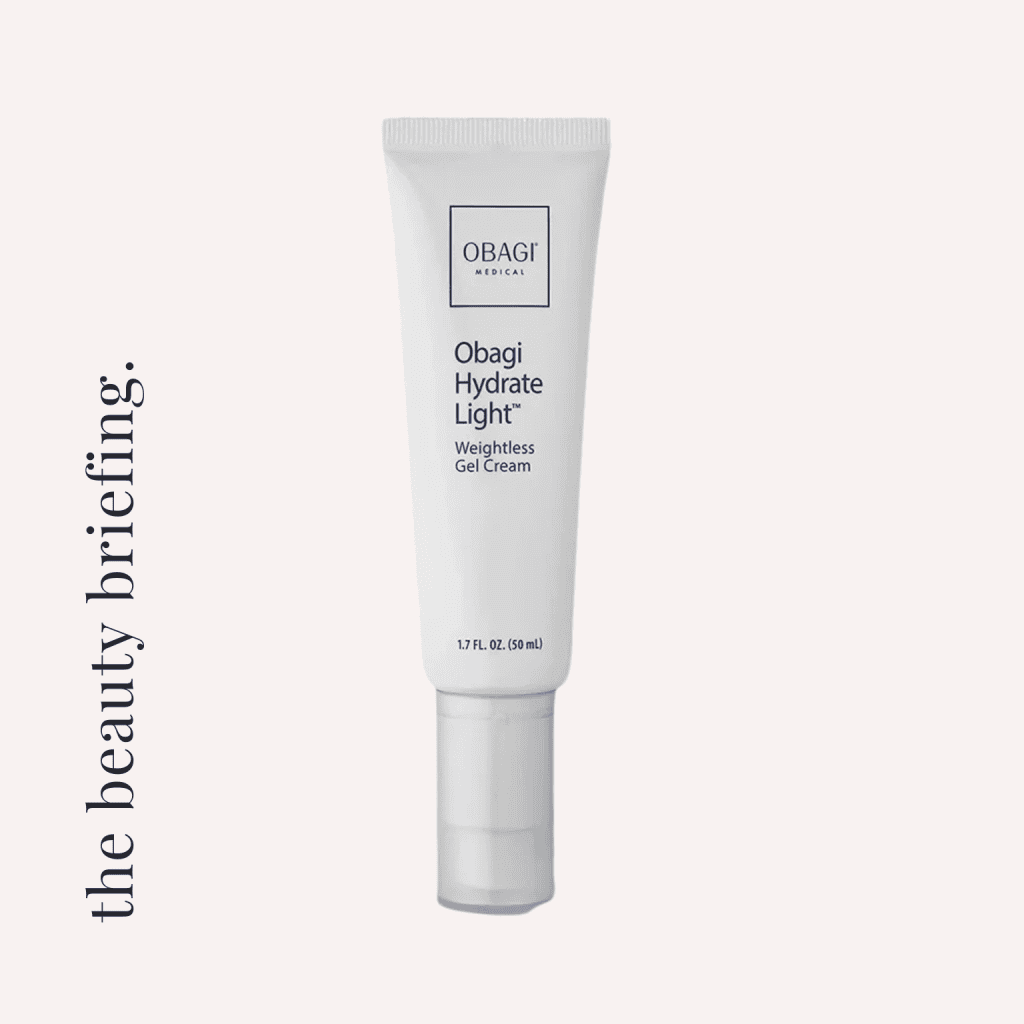
Obagi HYDRATE LIGHT® Weightless Gel Cream Review
BeautyBrief™
Brand
Obagi
Product
HYDRATE LIGHT® Weightless Gel Cream
Claims check
You get a credible lightweight moisturizing system with product-specific hydration data, but the brand's limited public study methods do not establish superior barrier repair.
Shopper fit
- Dry
- Normal
- Combination
- Oily
Formula flags
- Silicones
Shopper preferences
- Non-Comedogenic
- Dermatologist-Tested
- Hypoallergenic
Key ingredients
| Glycerin | Helps bind water in the lightweight hydrating base. |
|---|---|
| Niacinamide | Contributes skin conditioning and barrier support alongside the humectants. |
| Panthenol | Adds moisture-binding and skin-conditioning support in the gel cream. |
| Polyglutamic Acid | Provides additional water-binding support in the broader moisturizing system. |
| Ceramide NP | Contributes to a three-ceramide and cholesterol-based barrier-lipid blend. |
Price tier
$$$ Premium
Value check
At the Premium tier, you get a light texture, layered humectants and 24-hour hydration testing, while a simpler cream may offer better value for basic moisture.
Where to buy
We may earn a commission through these links at no additional cost to you. This does not affect our BeautyBrief.
Bottom line
If you want a light moisturizer that layers easily under makeup, this Premium gel cream offers credible hydration support and brand-reported finished-product testing. Its 24-hour result is useful but not proof of superiority, so the best value comes from its texture and convenience rather than an expectation of specialized treatment.
If you want moisturizing comfort without the finish of a heavy cream, Obagi HYDRATE LIGHT® Weightless Gel Cream offers a light, silicone-based formula with glycerin, niacinamide, panthenol, polyglutamic acid and ceramides. The Premium-tier appeal is a breathable feel and easy makeup layering rather than an unusual skin-treatment active.[1]
Unlike a gel marketed only through ingredient claims, HYDRATE LIGHT has brand-reported product testing for hydration duration and consumer impressions. The methodology is not fully public, so those results provide useful context rather than a guaranteed outcome for your skin.
What it claims
Obagi calls the gel cream oil-free, non-comedogenic, hypoallergenic and dermatologist-tested. It claims 24-hour replenishing hydration after a single application, a refreshed moisture barrier, quick absorption and comfortable layering under makeup. The brand also presents it as suitable for normal-to-oily, normal-to-dry and combination skin.[1]
The 24-hour measurement and two-week user impressions are different kinds of evidence. They are relevant to moisture and texture, not proof that this gel cream treats wrinkles or permanently repairs a damaged barrier.
Claims vs. formula
Glycerin, saccharide isomerate, propanediol and polyglutamic acid contribute to the water-binding side of the formula. Dimethicone, isododecane, isononyl isononanoate and jojoba esters contribute slip and moisture-sealing comfort, helping explain the light, smooth finish.[1]
Niacinamide and panthenol add skin conditioning, while Ceramide NP, AP and EOP appear with cholesterol and phytosphingosine in the barrier-associated lipid system. A scientific review describes why the delivery and dispersion of ceramides within a finished formula matter, beyond their inclusion on an ingredient list. That research provides context for barrier-support claims, not an independent test of this Obagi moisturizer.[2]
Obagi reports that a bioinstrumentation test measured hydration lasting 24 hours after one application. Separately, in a 2023 two-week in-use study, 95% of participants said their skin looked healthy and felt nourished, 94% agreed the texture felt lightweight and 88% said the product layered well under makeup.[1]
Those results align with the product’s central purpose, but Obagi does not publish the full study reports, comparison arms, sample sizes and statistical analyses on its product page. The hydration result comes from an instrument-based test; the percentages reflect participants’ perceptions. Neither establishes superiority over another gel cream.
Ingredients that matter
This is not a formula where one headline ingredient does all the work. Glycerin and polyglutamic acid provide moisture-binding support, while dimethicone creates a smoother finish and helps slow water loss. Saccharide isomerate and propanediol broaden the humectant blend.
The ceramide-cholesterol-phytosphingosine combination adds a barrier-lipid component, with niacinamide and panthenol supplying further conditioning support. These ingredients explain why a gel cream can feel moisturizing despite its relatively light texture, but they do not reveal how much lasting barrier improvement this exact product produces.

Glycerin
If your skin feels dry or tight, glycerin helps your skin hold moisture. You don't need a high percentage or a separate serum when your moisturizer already works well.
Read the IngredientBrief
Niacinamide
If your skin feels dry or uncomfortable, niacinamide can support hydration and reduce water loss in a well-formulated product. It also has evidence for uneven tone and visible oiliness, but…
Read the IngredientBrief
Panthenol
Panthenol is a well-supported humectant and conditioning ingredient that improves hydration and helps reduce water loss. The complete moisturizer matters more than a high percentage or broad barrier-repair marketing.
Read the IngredientBrief
Polyglutamic Acid
Polyglutamic acid is a water-binding polymer with early evidence for short-term hydration in specific topical formulas. Independent human research is limited, and the complete moisturizing formula matters more than PGA…
Read the IngredientBriefSafety and regulatory context
Obagi lists non-comedogenic, dermatologist-tested and hypoallergenic as attributes of this exact product.[1] They are useful brand statements, but they are not absolute guarantees of no clogged pores or irritation.
The FDA explains that “hypoallergenic” has no standardized federal definition for cosmetics.[3] If you are especially reactive, focus on the full ingredient list and your own response rather than treating the label as a promise that irritation is impossible.
What to expect in the short term
You can expect an airy gel cream that spreads and absorbs quickly, with a silicone-smooth rather than rich buttery finish. Obagi directs you to apply it morning and evening or as needed, then use sunscreen in the morning.[1]
If you layer makeup or sunscreen, the lightweight format may be particularly convenient. If your skin feels tight even after application, a richer moisturizer may be a better texture match.
What to expect over time
With consistent use, look for skin that stays more comfortable and hydrated without a heavy finish. The brand’s 24-hour bioinstrumentation result offers product-specific support for sustained moisture, while the two-week consumer impressions describe appearance and texture preferences.[1]
If your skin becomes very dry in cold weather or while using strong treatment products, you may still need a cream with more emollient or occlusive support. The gel’s moisturizing system is useful, but it is not a dedicated treatment for persistent redness, acne or deeper wrinkles.
Who it fits
If your skin is normal, combination or oily and you dislike rich creams, HYDRATE LIGHT has a clear everyday role. Obagi also positions it for normal-to-dry skin and broader skin-type use.[1] Very dry skin may prefer a thicker layer of moisture-sealing emollients.
The official product attributes include non-comedogenic, hypoallergenic and dermatologist-tested. These claims are relevant when you compare products, but your individual skin response still determines whether the formula is a good fit.
Compare before you buy
Obagi’s Hydrate Facial Moisturizer is a more conventional cream with shea butter, mango butter and emollients, giving you an in-brand alternative when you prefer a richer feel. HYDRATE LIGHT emphasizes weightlessness and makeup-friendly absorption instead.[4]
At the Premium tier, HYDRATE LIGHT makes sense if you value its light feel, complex moisturizing system and reported finished-product hydration testing. If you only want basic moisture, a less expensive moisturizer may be enough; if you want rich cushioning, the regular cream may justify its texture better.
Final Assessment
If you want a Premium moisturizer that feels light under sunscreen or makeup, Obagi HYDRATE LIGHT® Weightless Gel Cream combines a sensible humectant, silicone and barrier-lipid system with product-specific hydration testing. Its 24-hour result and two-week user responses are useful but do not establish superior performance or guarantee that your skin will respond the same way. You get the best value when a weightless finish and convenient layering matter more than simply purchasing basic hydration.
Compare Prices
Choose a retailer to view current pricing and availability.
We may earn a commission through these links at no additional cost to you.
Last reviewed: October 2026
Sources
- Obagi Medical. HYDRATE LIGHT® Weightless Gel Cream. Official U.S. product details, formula, instructions, brand-reported testing and preferences. Accessed October 15, 2026.
- Schild J, et al.. The role of ceramides in skin barrier function and the importance of their correct formulation for skincare applications. International Journal of Cosmetic Science. 2024;46(4):526–543. Review of barrier-lipid formulation, not a test of this gel cream.
- U.S. Food and Drug Administration. Cosmetics Safety Q&A: Hypoallergenic. Regulatory context for cosmetic hypoallergenic labeling.
- Obagi Medical. Hydrate Facial Moisturizer. Official U.S. product page, texture and ingredient comparison. Accessed October 15, 2026.