Obagi-C® Fx C-Cleansing Gel Review
BeautyBrief™
Brand
Obagi
Product
C-Cleansing Gel
Claims check
You get a credible foaming cleanser, but its low-listed vitamin C and short rinse-off contact do not establish an independent brightening-treatment benefit.
Shopper fit
- Dry
- Normal
- Combination
- Oily
Formula flags
- Fragrance
- Sulfates
- Added color
Shopper preferences
- Dermatologist-Tested
Key ingredients
| Sodium Laureth Sulfate | Provides primary surfactant cleansing of oil, makeup and daily buildup in this foaming face wash. |
|---|---|
| Sodium Lauroyl Oat Amino Acids | Works alongside the primary surfactant to support the cleanser's overall cleansing system. |
| Cocamidopropyl Betaine | Supports foaming and cleansing alongside the other surfactants. |
| Glycerin | Provides water-binding support within this rinse-off cleansing formula. |
| Ascorbic Acid | Supplies the advertised vitamin C ingredient, but short contact and undisclosed delivery limit the treatment inference. |
Price tier
$$$ Premium
Value check
At the Premium tier, you get a conventional foaming wash, while lower-priced options can remove everyday oil without implying vitamin C treatment.
Where to buy
We may earn a commission through these links at no additional cost to you. This does not affect our BeautyBrief.
Bottom line
If you want a traditional foaming cleanser, Obagi-C Fx C-Cleansing Gel provides useful everyday washing for oil and residue. Its vitamin C does not establish the results of a leave-on treatment, while fragrance and colorants may narrow sensitive-skin fit.
If you want a foaming wash for surface oil, makeup and daily buildup, Obagi-C® Fx C-Cleansing Gel combines cleansing surfactants with aloe, glycerin, and a small amount of vitamin C. Its strongest role is cleansing, not delivering the long-contact antioxidant or brightening benefits you might look for in a vitamin C treatment.[1]
Obagi positions this wash for normal-to-dry, normal-to-oily, and combination skin, but the sulfate-based cleanser, fragrance, and added dyes are worth considering if your skin is easily irritated. Whether it fits you depends more on how the complete wash performs in your routine than on the vitamin C highlighted in its name.
What it claims
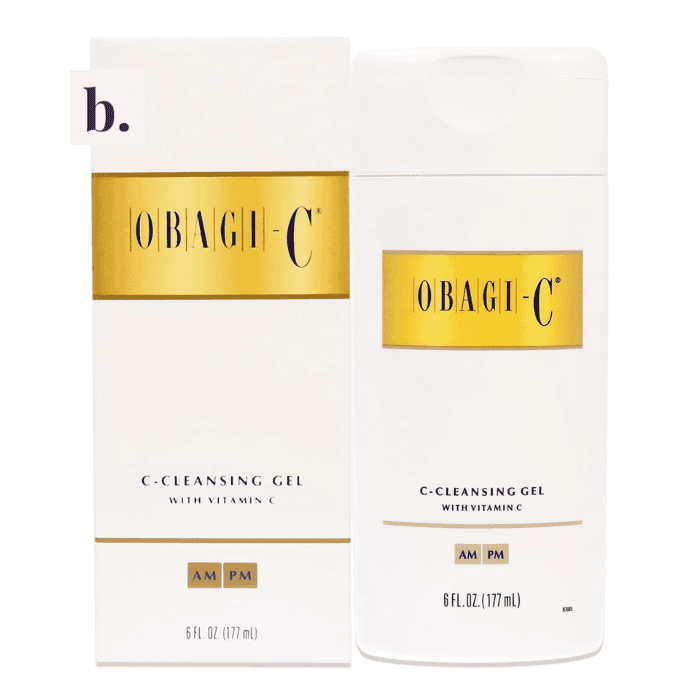
Obagi says C-Cleansing Gel contains L-ascorbic acid (vitamin C) and aloe to clarify the skin while removing makeup, excess oil, and everyday impurities, leaving your face feeling refreshed. Obagi labels the exact product dermatologist-tested and directs you to massage it over damp face and neck before rinsing thoroughly.[1]
Claims vs. formula
The cleansing claim has a reasonable basis in the formula. Sodium laureth sulfate appears immediately after water and works with sodium lauroyl oat amino acids and cocamidopropyl betaine to remove oil and surface buildup. Glycerin and aloe offer supporting water-binding and skin-conditioning roles, although this is still a rinse-off product.[1]
Ascorbic acid appears toward the end of the ingredient list. Its exact concentration, stability, and delivery performance in this finished cleanser are not disclosed on the product page. Research on topical vitamin C shows that concentration, formulation, stability, and skin penetration affect results, so the presence of ascorbic acid does not establish a meaningful brightening or antioxidant-treatment effect from a product you rinse away.[2]
The formula also includes fragrance, Red 33 and Yellow 5. These are relevant preferences if your skin reacts to scented or colored products, but their presence does not mean the cleanser is unsuitable for everyone. Likewise, a sulfate surfactant is not automatically a poor fit; the complete formula and your tolerance matter.
Ingredients that matter
The core of this wash is its cleansing system rather than one highlighted active. Sodium laureth sulfate supplies substantial surfactant action, while sodium lauroyl oat amino acids and cocamidopropyl betaine work alongside it to support cleansing and foam. If your priority is removing excess oil and everyday residue, this combination matters more than the product’s vitamin C positioning.
Glycerin and aloe help explain the formula’s conditioning intent, but neither proves that your skin will feel moisturized after every wash. Ascorbic acid adds a recognizable ingredient story without establishing the performance of a leave-on vitamin C treatment. You are choosing a cleanser with vitamin C in it, not a demonstrated substitute for a vitamin C serum.

Sodium Laureth Sulfate
Sodium Laureth Sulfate is an effective cleansing and foaming surfactant used mainly in rinse-off products. Tolerability depends more on concentration and the complete cleansing system than on the SLES name…
Read the IngredientBrief
Cocamidopropyl Betaine
Cocamidopropyl Betaine is an established cleansing surfactant and foam booster. Irritation and contact allergy depend on the formula and may involve manufacturing impurities such as amidoamine or DMAPA.
Read the IngredientBrief
Glycerin
If your skin feels dry or tight, glycerin helps your skin hold moisture. You don't need a high percentage or a separate serum when your moisturizer already works well.
Read the IngredientBrief
Vitamin C
If dullness or uneven tone is your concern, some topical vitamin C formulas can help. Look for stability and tolerability, not just a high percentage.
Read the IngredientBriefWhat to expect in the short term
You can apply the gel to damp face and neck, massage it gently and rinse completely with lukewarm water, following the brand’s directions.[1] Expect conventional foaming cleansing intended to lift oil, makeup, and daily impurities. Your comfort depends on the full formula and rest of your routine; the brand does not provide a clinical comparison showing this rinse-off gel outperforms simpler cleansers.
What to expect over time
Judge repeated use by whether your skin stays comfortably clean without persistent tightness or irritation. This wash is a cleansing step, and Obagi has not presented finished-product evidence on the cited page showing that continued use produces a vitamin C-related improvement in dark spots, fine lines, or antioxidant protection. If those are your goals, compare products with evidence for a leave-on formulation instead.
Who it fits
If your skin is normal, combination, or oily and you like a foaming cleanser, this formula fits that preference. Obagi also lists normal-to-dry skin among its intended uses; dry skin is not automatically excluded, but if your face often feels stripped by foaming washes, a gentler-feeling cleanser may be a better match.[1]
If you avoid fragrance, added color, or sulfate-based face washes, check those formula characteristics before buying. Obagi’s dermatologist-tested label is a documented product attribute, not a guarantee that your sensitive skin will tolerate the cleanser.
Compare before you buy
At the Premium tier, the main value question is whether you specifically enjoy this foaming formula and want it in an Obagi routine. You can find lower-cost cleansers that remove oil and daily impurities without making vitamin C treatment claims. Paying more for C-Cleansing Gel is easier to justify if its cleansing experience suits you; the ascorbic acid listing does not establish a separate brightening advantage.
Final Assessment
If you want a conventional foaming wash, Obagi-C Fx C-Cleansing Gel provides a surfactant system for everyday oil and residue removal. Its low-listed ascorbic acid does not establish the same benefits as a tested leave-on vitamin C formula, while fragrance and added color deserve attention if your skin is reactive. At the Premium tier, its value rests on your preference for this cleanser and routine, not a proven vitamin C treatment benefit.
Compare Prices
Choose a retailer to view current pricing and availability.
We may earn a commission through these links at no additional cost to you.
Last reviewed: October 2026
Sources
Obagi Medical. C-Cleansing Gel. Official U.S. product page, accessed October 15, 2026. Provides the current ingredient list, directions, product positioning, and brand claims.
Stamford NPJ. Stability, transdermal penetration, and cutaneous effects of ascorbic acid and its derivatives. Journal of Cosmetic Dermatology. 2012;11(4):310–317. Reviews how formula design affects topical vitamin C delivery; it did not test Obagi C-Cleansing Gel.