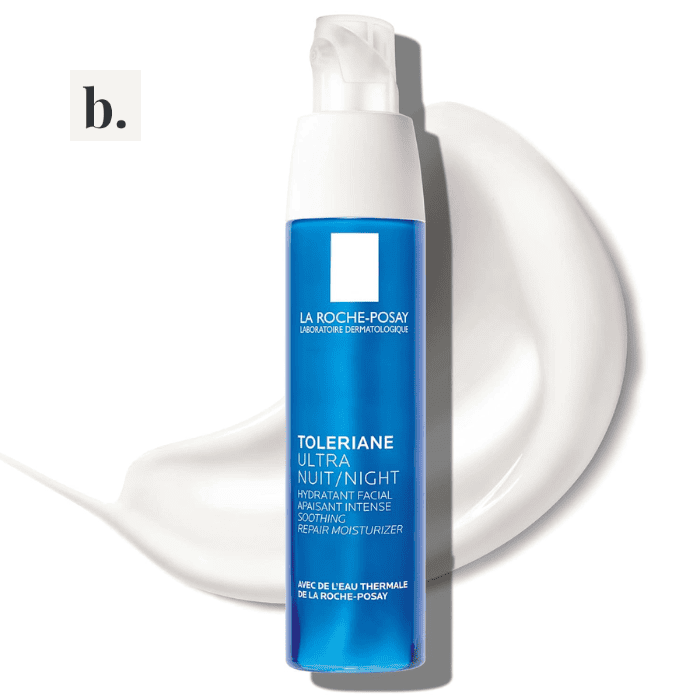
La Roche-Posay Toleriane Dermallergo Moisturizing Cream Review
BeautyBrief™
Brand
La Roche-Posay
Product
Toleriane Dermallergo Moisturizing Cream
Claims check
You get a substantial fragrance-free emollient-and-humectant cream with one-day consumer comfort results and airtight packaging, but no proven treatment of skin allergies.
Shopper fit
- Dry
- Normal
- Combination
- Sensitive
Formula flags
- Silicones
Shopper preferences
- Non-Comedogenic
- Dermatologist-Tested
Key ingredients
| Squalane | Adds lightweight emollient softness near the top of the formula. |
|---|---|
| Butyrospermum Parkii Butter / Shea Butter | A high-listed emollient that adds richness and softness to the cream. |
| Dimethicone | Smooths the skin surface and supports moisture retention as part of the complete formula. |
| Glycerin | Provides humectant support within the broader moisturizing system. |
| Acetyl Dipeptide-1 Cetyl Ester | The brand's Neurosensine peptide supports the comfort-focused positioning; its contribution is not independently measured in this cream. |
Price tier
$$ Mid-Range
Value check
At the Mid-Range tier, you pay for moisturizing ingredients, sensitive-skin product testing and airtight packaging rather than an active treatment.
Where to buy
We may earn a commission through these links at no additional cost to you. This does not affect our BeautyBrief.
Bottom line
If you want comforting fragrance-free moisture with airtight dispensing, Dermallergo provides meaningful Mid-Range value. If you need only basic hydration, a simpler cream may fit your budget better.
If your skin feels dry, uncomfortable or reactive, La Roche-Posay Toleriane Dermallergo Moisturizing Cream provides a focused fragrance-free moisturizer built around squalane, shea butter, dimethicone and glycerin. The airtight package is a meaningful part of its design for allergy-prone, ultra-sensitive skin.
The best-established benefit is moisturization and comfort, not treatment of a diagnosed allergic or inflammatory skin condition.

What it claims
La Roche-Posay describes the cream as soothing and hydrating for allergy-prone, ultra-sensitive skin, with a preservative-free, fragrance-free formula and air-limiting packaging. The exact product page confirms dermatologist-tested, non-comedogenic and allergy-tested attributes.[1]
After one day, 98% of participants said their skin felt softer, 98% said it appeared less dry and 93% reported feeling soothed. These are brand-published consumer-perception outcomes, not objective treatment or a guarantee of equal results for you.
Claims vs. formula
Isocetyl stearate, squalane, shea butter and dimethicone appear ahead of glycerin, combining substantial emollience with humectant support. Dimethiconol reinforces the smoothing, silicone-containing system; corn starch contributes to the texture.
The peptide acetyl dipeptide-1 cetyl ester—marketed as Neurosensine—supports the brand’s soothing story, while sphingomonas ferment extract and salvia miltiorrhiza root extract contribute conditioning context. The brand has not isolated the effect of either from the full cream.
Independent barrier-lipid and moisturizer literature supports combining emollients with water-binding ingredients, but those studies do not demonstrate that this exact cream treats allergic contact dermatitis.[2]
Ingredients that matter
Squalane and shea butter soften and cushion dry-feeling skin; dimethicone helps reduce surface moisture loss and provides glide. Glycerin supports water retention, while the full system matters more than a single “soothing” ingredient.
The full INCI contains no added perfume or common conventional cosmetic preservative. That makes the airtight package important to the formula’s preservation strategy, although no cosmetic product is guaranteed to be irritation-free.

Squalane
If your skin feels dry or rough, squalane can make it feel softer and smoother. You don't need a separate oil when your moisturizer already keeps your skin comfortable.
Read the IngredientBrief
Shea Butter
Shea butter is a well-established emollient and occlusive used to soften dry-feeling skin and add richness to moisturizers. Its value depends on the complete formula, not the ingredient name alone.
Read the IngredientBrief
Dimethicone
Dimethicone is a well-supported silicone emollient and skin-protecting ingredient that improves slip, smoothness, and surface comfort. Its real moisture benefit depends on the complete moisturizer or skin-protectant formula.
Read the IngredientBrief
Glycerin
If your skin feels dry or tight, glycerin helps your skin hold moisture. You don't need a high percentage or a separate serum when your moisturizer already works well.
Read the IngredientBriefSafety and regulatory context
“Allergy tested” is a brand claim and does not automatically qualify as a controlled Hypoallergenic claim. The FDA does not define a uniform hypoallergenic standard, and even an allergy-tested moisturizer may be unsuitable for someone sensitive to one of its specific ingredients.[3]
What to expect in the short term
You get a soft cream rather than a water gel. A more comfortable, moisturized feel is the main short-term result; the one-day survey percentages do not indicate how your individual skin will react.
What to expect over time
Regular use provides continued moisture and emollient comfort when the formula suits your skin. No public trial demonstrates permanent barrier reconstruction or treatment of eczema or allergies.
Who it fits
This is most relevant if your skin is normal, dry, combination or sensitive and you prioritize fragrance-free ingredients and a sealed dispenser. If you prefer an ultra-light texture, a gel or light lotion may suit you better.
Compare before you buy
The Mid-Range value rests on the packaging and sensitive-skin product positioning in addition to the moisturizing base. A simpler fragrance-free cream is a reasonable alternative if airtight packaging is not a priority.
Final Assessment
La Roche-Posay Toleriane Dermallergo Moisturizing Cream provides useful Mid-Range value if you want a comforting fragrance-free cream in an airtight package. Its consumer-test results support short-term softness and perceived soothing, but it is not an allergy treatment or a guarantee against reactions; texture and ingredient tolerance remain decisive.
Where to buy
Choose a retailer to view current pricing and availability.
We may earn a commission through these links at no additional cost to you.
Last reviewed: October 2026
Sources
- La Roche-Posay, official Toleriane Dermallergo Moisturizing Cream formula and claims. Read source. Accessed October 15, 2026.
- Schild et al., ceramide formulation and skin barrier research (2024). Read source. Accessed October 15, 2026.
- FDA, Cosmetics Safety Q&A: Hypoallergenic. Read source. Accessed October 15, 2026.