
Dimethicone in Skincare
Dimethicone is a well-supported silicone emollient and skin-protecting ingredient that improves slip, smoothness, and surface comfort. Its real moisture benefit depends on the complete moisturizer or skin-protectant formula.
- Aliases
- Polydimethylsiloxane, PDMS
- Ingredient category
- Emollient, Film Former
- Most relevant for
- Dryness, Skin Barrier Support
- Evidence strength
- Well Supported for Protecting dry, chafed, or cracked skin in qualifying OTC dimethicone skin-protectant formulas
- Formula matters
- Dimethicone concentration, viscosity, film formation, vehicle, and supporting humectants, emollients, and occlusives shape results. Ordinary cosmetic products do not automatically provide the protection of qualifying OTC skin protectants.
- Separate product needed?
- Usually No. Most routines do not need a separate dimethicone product because it works best inside moisturizers, sunscreens, primers, and barrier formulas.
BB takeaway
Dimethicone is useful for smoothness, comfort, and surface protection, but silicone-free is not a quality signal. Choose the complete formula that solves the concern rather than seeking dimethicone as a stand-alone treatment.
Ingredient evidence does not prove the performance of every finished product containing it.
What is dimethicone?
Dimethicone is a synthetic silicone polymer used widely in skincare, sunscreen, makeup, haircare, and some over-the-counter skin protectants. It is also known as polydimethylsiloxane or PDMS.[1]
In cosmetics, dimethicone is used mainly to soften and smooth skin, improve slip, and help protect the skin surface. It can make a formula easier to spread and less sticky without automatically making it heavy or greasy.
Dimethicone is one member of a larger silicone family. Dimethicone crosspolymers, dimethiconol, amodimethicone, and other silicone-derived ingredients are related but not interchangeable.
What does dimethicone do for skin?
Dimethicone mainly improves surface feel and protection. It reduces drag, softens rough-feeling skin, and leaves a smooth film that can make moisturizers, sunscreens, primers, and barrier creams more comfortable to use.
In the United States, dimethicone at 1% to 30% is recognized as an active ingredient in qualifying over-the-counter skin-protectant products.[2]
That does not mean every moisturizer containing dimethicone is a drug or that dimethicone alone repairs a damaged skin barrier. In ordinary skincare, the rest of the formula determines how much moisture support the product provides.
Dimethicone does not treat acne, fade dark spots, stimulate collagen, or replace sunscreen.
What the evidence says about dimethicone skincare
Dimethicone is well supported for helping protect dry, chafed, or cracked skin and reduce moisture loss when used in qualifying topical skin-protectant formulas.
FDA’s OTC Monograph M016 permits dimethicone at 1% to 30% as an active ingredient in qualifying skin-protectant drugs.[2] This establishes a recognized OTC use under defined conditions, not that every cosmetic with dimethicone reduces moisture loss.
The Cosmetic Ingredient Review Expert Panel also concluded that dimethicone and related methicone polymers are safe in current cosmetic uses and concentrations when formulated to be non-irritating.[3]
Human moisturizer studies reinforce the formula-first point. In one four-week study, a moisturizer containing dimethicone and glycerin reduced transepidermal water loss by 13% and produced other measurable skin changes.[4] Because the product contained both dimethicone and glycerin, the result belongs to the complete moisturizer rather than dimethicone alone.
Another in-vivo comparison found silicone-containing emulsions rated higher for silkiness, freshness, and softness without showing a measurable occlusive effect by transepidermal water-loss testing.[5]
For your routine, dimethicone is a useful smoothing and skin-protection ingredient. The finished formula determines whether it also provides enough moisture support for your skin.
How dimethicone form and formulation affect results
Dimethicone performance depends heavily on the finished formula.
Different molecular weights, viscosities, concentrations, and silicone combinations can change how a product feels. One formula may feel weightless and silky, while another feels richer or more film-forming.
A lightweight gel-cream can contain dimethicone and still be too light for very dry skin. A richer moisturizer that combines dimethicone with glycerin, ceramides, petrolatum, squalane, or other emollients can provide more complete moisture support.
Product format matters too. In sunscreen, dimethicone can improve spread. In primer, it can temporarily smooth the look and feel of texture. In a barrier cream, it can help protect the surface. In a rinse-off cleanser, most of that surface effect leaves with the product.
Ingredient-list position is not a quality score. Unless dimethicone is declared as an active ingredient in a qualifying OTC skin protectant, the label usually does not tell you the concentration.
Who may benefit from dimethicone skincare?
Dimethicone can be useful when you want a smoother moisturizer, reduced friction, or a formula that feels less sticky or greasy.
It can fit dry, normal, combination, sensitive-feeling, and acne-prone routines depending on the complete formula.
Acne-prone skin does not need to avoid a product just because it contains dimethicone. Breakout risk depends on the finished product and the individual response rather than the silicone name alone.
If skin is very dry, cracked, or irritated, dimethicone may be only one useful part of the solution. A richer formula with humectants, lipids, or stronger occlusive ingredients may be a better fit than a lightweight silicone-heavy gel.
Dimethicone side effects and irritation risk
Dimethicone has a strong cosmetic safety record and is generally well tolerated in leave-on skincare.
The Cosmetic Ingredient Review Expert Panel concluded that the dimethicone and methicone polymers it assessed are safe as used when formulated to be non-irritating.[3]
The panel identified insufficient information for products that may be incidentally inhaled during airbrush application. That is a different exposure from applying an ordinary cream, lotion, sunscreen, or primer to intact skin.
In everyday skincare, another part of the formula may matter more to tolerability. Fragrance, exfoliating acids, retinoids, essential oils, preservatives, and high levels of alcohol can all affect reactive skin.
How to use dimethicone in your skincare routine
Use the finished product according to its main purpose.
A dimethicone-containing moisturizer normally goes after thinner treatment products, while sunscreen remains the final skincare step in the morning.
You do not need a separate dimethicone layer. If a product pills under sunscreen or makeup, changing the amount, allowing more time between layers, or switching formulas is more useful than assuming dimethicone itself is incompatible with your routine.
If active treatments leave skin dry or tight, a comfortable dimethicone-containing moisturizer can be a useful supporting step. It should not be used to justify continuing a routine that is persistently burning, peeling, or inflamed.
How long does dimethicone take to work?
Its surface benefits are immediate. A well-formulated product can feel smoother and reduce drag as soon as you apply it.
Improvement in dryness or comfort depends on the complete moisturizer and regular use rather than a special dimethicone timeline.
The four-week moisturizer study showed measurable improvement in water-loss and skin parameters, but that timeline belongs to the tested dimethicone-and-glycerin formula rather than dimethicone by itself.[4]
What can you use with dimethicone?
Dimethicone fits easily with most common skincare ingredients because its role is mainly conditioning and formula support.
It pairs naturally with humectants such as glycerin and hyaluronic acid, barrier-supporting ingredients such as ceramides, and richer occlusives such as petrolatum.
It can also appear in formulas containing niacinamide, retinoids, exfoliating acids, sunscreen filters, and makeup pigments.
The practical limit is not a chemical incompatibility with dimethicone. It is whether the complete routine is comfortable, layers well, and avoids unnecessary duplication.
How to choose a dimethicone product
Choose the product for the job you need done, not simply because dimethicone appears on the label.
For dryness, look at the full moisturizing system rather than relying on dimethicone alone. For sunscreen, prioritize protection and wearability. For primer, decide whether the smoothing effect meaningfully improves makeup application.
Do not assume “silicone-free” means gentler, cleaner, safer, less pore-clogging, or better for sensitive skin.
Likewise, do not pay more simply because a brand describes a silicone delivery system or silky texture as advanced technology.
Dimethicone alone does not justify Premium pricing. Pay more only when the finished product offers a meaningful advantage in texture, formula design, protection, tolerability, packaging, or evidence.
Do you need a separate dimethicone product?
Usually, no.
Dimethicone is already common in moisturizers, sunscreens, primers, and barrier products, where it works best as part of a formula built for another clear purpose.
A dedicated skin-protectant product containing dimethicone can make sense when you specifically need protection from chafing, cracking, or irritation and the product is designed for that use.
For ordinary facial skincare, there is little reason to seek out a separate dimethicone serum.
The BB Perspective
Dimethicone is a useful formulation ingredient because it makes skincare smoother, easier to spread, and more comfortable while contributing to skin protection in the right formulas.
The common mistake is treating it as either a barrier-repair miracle or a silicone that should automatically be avoided. Neither view reflects how much the finished formula matters.
You do not need to seek out dimethicone or pay extra for it. Choose the moisturizer, sunscreen, primer, or barrier product that meets your needs; dimethicone is a useful supporting ingredient when it improves the complete formula.
Last reviewed: September 2026
Sources
COSMILE identifies dimethicone as polydimethylsiloxane and lists cosmetic functions including skin conditioning, emollience, and skin protection. This supports ingredient identity and established cosmetic function rather than treatment efficacy. Return to citation.
The current monograph lists dimethicone at 1% to 30% as an active ingredient for qualifying OTC skin-protectant products. This regulatory role applies only when the finished product meets the monograph requirements and should not be transferred automatically to every cosmetic containing dimethicone. Return to citation.
Cosmetic Ingredient Review Expert Panel. Amended Safety Assessment of Dimethicone, Methicone, and Substituted-Methicone Polymers as Used in Cosmetics. Final amended report. 2022.
The Expert Panel concluded that the assessed dimethicone and methicone polymers are safe in current cosmetic uses and concentrations when formulated to be non-irritating, while finding insufficient information for products that may be incidentally inhaled during airbrush use. Cosmetic Ingredient Review is funded by the Personal Care Products Council, a cosmetics-industry trade association. CIR describes its expert panel and review process as independent of industry. Return to citation.
Short RW, Chan JL, Choi JM, Egbert BM, Rehmus WE, Kimball AB. Effects of moisturization on epidermal homeostasis and differentiation. Clinical and Experimental Dermatology. 2007;32(1):88-90. doi:10.1111/j.1365-2230.2006.02297.x. PMID:17137484.
Fifteen women used a moisturizer containing dimethicone and glycerin twice daily on photoaged forearms for four weeks. The finished moisturizer reduced transepidermal water loss by 13% and produced other measured skin changes. Because dimethicone was not tested alone, the findings support the complete moisturizer rather than a stand-alone dimethicone effect. The publication reports that Alexa Kimball had consulted for P&G and Rebecca Short owned a small amount of P&G stock. Return to citation.
Mancuso A, Tarsitano M, Udongo BP, et al. A comparison between silicone-free and silicone-based emulsions: Technological features and in vivo evaluation. International Journal of Cosmetic Science. 2022;44(5):514-529. doi:10.1111/ics.12800. PMID:35815903. PMCID:PMC9545630.
This small study compared silicone-containing and silicone-free emulsions in 12 healthy young women. The silicone emulsion contained dimethicone and a dimethicone crosspolymer blend. Participants rated it silkier and softer, while eight-hour water-loss testing did not show occlusion. It does not establish long-term moisture protection from dimethicone alone. The authors declared no conflicts of interest; the University of Catanzaro funded open-access publication. Return to citation.
Products featuring Dimethicone
These evaluated products list Dimethicone among the Key Ingredients that meaningfully shape the formula. Inclusion here reflects ingredient relevance, not an endorsement or rating.

Neutrogena
Rapid Wrinkle Repair Retinol Regenerating Cream
If your skin tolerates retinol and fragrance, Rapid Wrinkle Repair offers a moisturizing format for gradual fine-line care. Its Mid-Range value rests on texture and convenience rather than a disclosed retinol concentration.
Read the BeautyBrief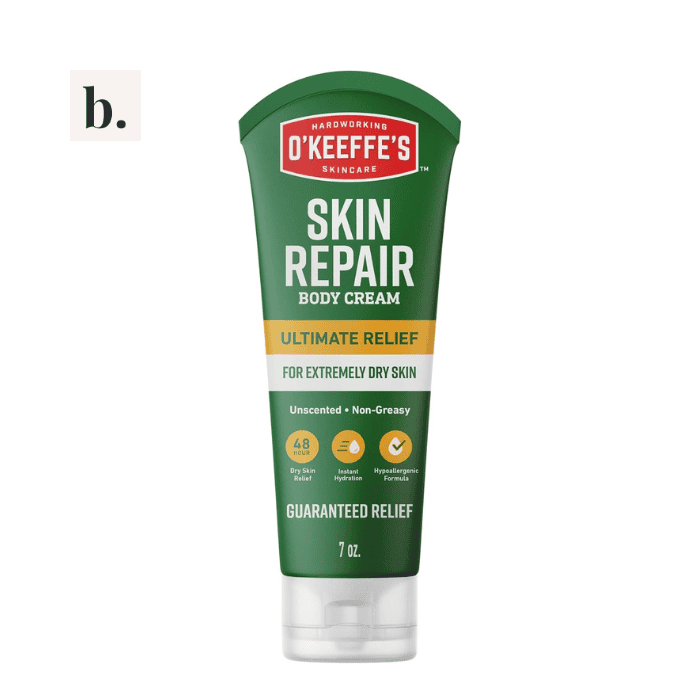
O'Keeffe's
O’Keeffe’s Skin Repair Rough & Bumpy Relief Body Cream
If rough, bumpy skin on your arms or legs is your concern, O'Keeffe's Rough & Bumpy Relief combines lactic-acid exfoliation with moisturizers. Its grapefruit peel oil and acid matter if you are…
Read the BeautyBrief
e.l.f. Cosmetics
e.l.f. Spicy Bundt Nice Silky Body Cream – POP Tromsø Collection
If you like a spice-and-orange scented body cream, this formula combines glycerin, emollients, silicones and petrolatum. Its Budget value rests on scent and texture, while perfume and aromatic oils limit its fit…
Read the BeautyBrief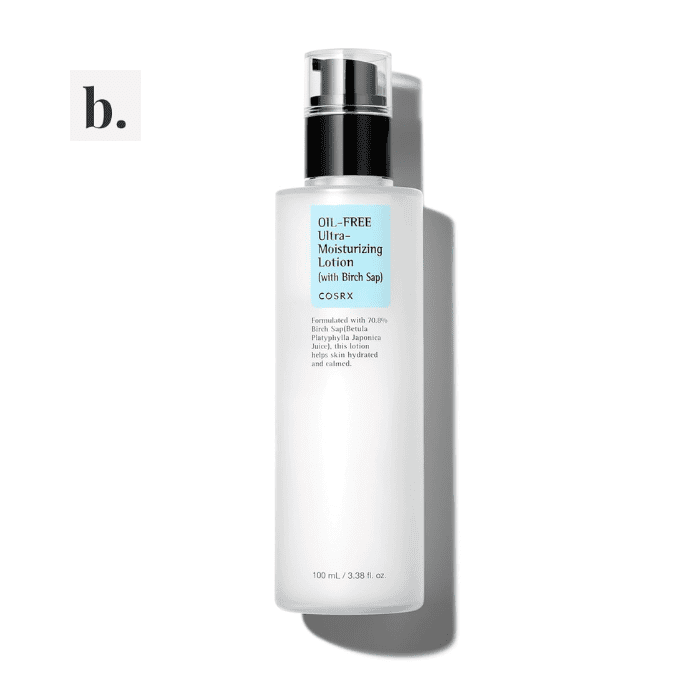
COSRX
Oil-Free Ultra-Moisturizing Lotion with Birch Sap
If you have oily or combination skin and want lightweight hydration, COSRX Birch Sap Lotion combines humectants with dimethicone and other emollients. The 70% birch sap claim does not prove superior hydration,…
Read the BeautyBrief
amika
The Kure Intense Strength Repair Mask
If your hair feels rough or damaged, The Kure offers a rich weekly conditioning mask with brand-reported improvements in strength and breakage. Its Premium value is strongest for damaged, higher-porosity hair that…
Read the BeautyBrief
Beverly Hills MD
Crepe Correcting Body Complex
If your body skin looks crepey from dryness, this rich cream offers useful moisturizing and surface-smoothing support. Its perceived firming results do not prove structural lifting, and fragrance may limit its fit…
Read the BeautyBrief