La Roche-Posay Effaclar Medicated Acne Face Wash Review
BeautyBrief™
Brand
La Roche-Posay
Product
Effaclar Medicated Acne Face Wash
Claims check
If you want medicated cleansing for oily acne-prone skin, 2% salicylic acid supports acne treatment, but menthol and surfactant strength matter for your tolerance.
Shopper fit
- Combination
- Oily
- Acne-Prone
Formula flags
- Exfoliating acids
- Sulfates
- Menthol
Shopper preferences
- Non-Comedogenic
- Dermatologist-Tested
Key ingredients
| Salicylic Acid 2% | Supplies labeled 2% salicylic-acid OTC acne treatment for clogged pores and blemishes. |
|---|---|
| Sodium Laureth Sulfate | Creates much of the cleanser's foam and surface-oil removal. |
| Glycerin | Helps reduce a tight after-feel around the medicated cleansing base. |
| Capryloyl Salicylic Acid | Adds another exfoliating ingredient alongside the 2% salicylic acid. |
| Menthol | Supplies a cooling sensory effect but is a relevant tolerance concern for reactive skin. |
Price tier
$$ Mid-Range
Value check
At the Mid-Range tier, you get 2% salicylic-acid acne treatment with rich foam, but menthol limits its appeal for reactive skin.
Where to buy
We may earn a commission through these links at no additional cost to you. This does not affect our BeautyBrief.
Bottom line
If your skin is oily and you tolerate menthol, Effaclar provides a labeled 2% salicylic-acid acne wash with substantial foam. The menthol cooling sensation and concurrent acne treatments can increase discomfort for sensitive skin. At the Mid-Range tier, choose it for the full cleansing experience rather than assuming it outperforms a menthol-free 2% alternative.
If your skin is oily, combination, or acne-prone and you want a medicated cleanser, La Roche-Posay Effaclar Medicated Acne Face Wash gives you 2% salicylic acid at the Mid-Range tier. The acne-treatment role is clear; the bigger question is whether the strong foaming base and menthol suit your skin.
What it claims
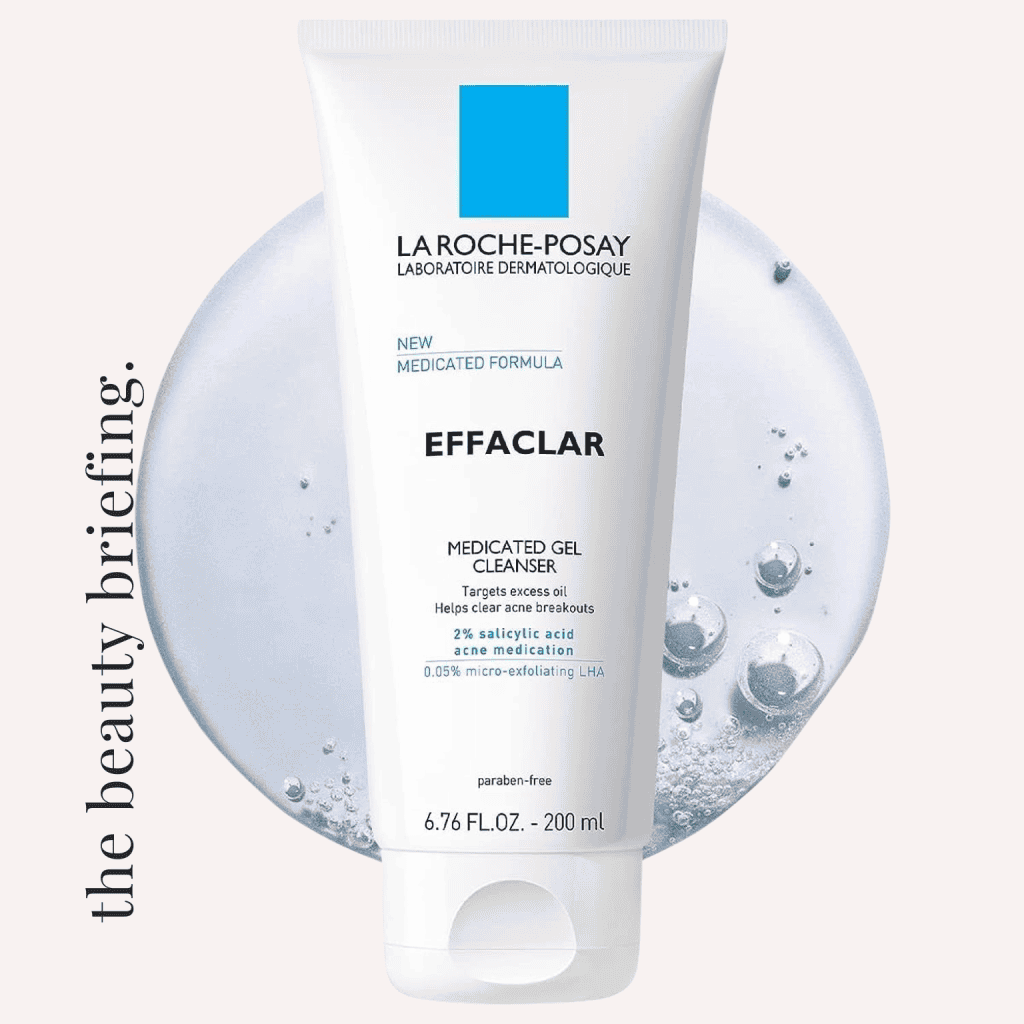
La Roche-Posay says Effaclar Medicated Acne Face Wash removes excess oil and impurities, helps clear acne breakouts, smooths skin texture, and reduces excess surface oil by up to 47%. The current U.S. page recommends it for red pimples, whiteheads, blackheads, clogged pores, oily or shiny skin, uneven texture, and sensitive skin. It is also listed as fragrance-free, oil-free, non-comedogenic, allergy-tested, dermatologist-tested, and suitable for sensitive skin.[1]
The Drug Facts directions tell you to use it twice daily: wet your face, work the product into a lather, massage while avoiding the eyes, and rinse well.[2]
Claims vs. formula
Your acne-treatment active is salicylic acid at 2%. That gives you a clearly dosed OTC acne medication for clogged pores, blackheads, whiteheads, and mild acne—not just a cleanser marketed to acne-prone skin.
Sodium laureth sulfate, decyl glucoside, and coco-betaine create a rich lather and strong surface-oil removal. Glycerin and other conditioning ingredients help soften the after-feel, but the formula is still built to cleanse oily skin thoroughly.
Capryloyl salicylic acid adds another exfoliating ingredient, while zinc gluconate supports the oily-skin positioning. Their concentrations are not disclosed, so the 2% salicylic acid is the part of the treatment you can judge most clearly.
Menthol creates the cooling finish. That is the main fit conflict here: La Roche-Posay explicitly positions the cleanser for sensitive skin, while the American Academy of Dermatology lists menthol among ingredients that rosacea-prone, easily irritated facial skin should avoid.[3] That does not mean every sensitive shopper will react, but it makes the sensitive-skin claim less straightforward.
The 47% surface-oil claim tells you the cleanser can reduce oil immediately; the public page does not establish how long that reduction lasts. Treat it as short-term oil removal, not proof of long-term sebum control.[1]
Ingredients that matter
Salicylic acid at 2% is the labeled acne-treatment active, while sodium laureth sulfate, decyl glucoside and coco-betaine contribute the cleansing foam. Glycerin offsets some after-wash tightness but does not eliminate the potential irritation of a medicated cleanser.
Capryloyl salicylic acid adds another exfoliating component, while menthol provides a cooling sensation. That sensory benefit is a potential tolerance drawback for reactive or rosacea-prone skin, even though the brand calls the product fragrance-free. The brand’s percentage oil-reduction result concerns surface oil, not a permanent change in sebum production.

Salicylic Acid
If blackheads or mild breakouts are your concern, salicylic acid can help unclog pores. Choose one cleanser or leave-on treatment your skin tolerates; 2% isn't automatically better.
Read the IngredientBrief
Sodium Laureth Sulfate
Sodium Laureth Sulfate is an effective cleansing and foaming surfactant used mainly in rinse-off products. Tolerability depends more on concentration and the complete cleansing system than on the SLES name…
Read the IngredientBrief
Glycerin
If your skin feels dry or tight, glycerin helps your skin hold moisture. You don't need a high percentage or a separate serum when your moisturizer already works well.
Read the IngredientBriefSafety and regulatory context
The current Drug Facts label lists salicylic acid 2% for acne treatment and warns that dryness and irritation are more likely when you use another topical acne medication at the same time. If irritation develops, use only one topical acne medication at a time.[2]
La Roche-Posay explicitly explains that menthol is used for its cooling sensory effect rather than as perfume. Nevertheless, avoiding menthol is relevant if your skin is rosacea-prone or easily irritated; the fragrance-free designation does not mean the formula is free of every cooling aromatic compound.[1][3]
What to expect in the short term
You get a rich lather, strong oil removal, and a noticeable cooling finish. If your skin is oily and resilient, that combination may feel satisfying. If your skin is dry, peeling, reactive, freshly shaved, or treatment-stressed, it can be more cleansing than you need.
What to expect over time
Regular use of 2% salicylic acid can help keep clogged pores, blackheads, whiteheads, and mild acne under better control when your skin tolerates the wash. It is not a complete solution for deep, painful, scarring, or widespread inflammatory acne.
At the Mid-Range tier, you are paying for a clearly dosed acne medication plus strong oil-removal support. The weaker part of the value story is the sensitive-skin positioning because menthol adds an avoidable irritancy concern for reactive shoppers.
Who it fits
This makes the most sense if your skin is oily, combination, acne-prone, and already comfortable with foaming medicated cleansers. If your skin is sensitive but menthol has never bothered you, the formula may still work; if your skin is reactive, rosacea-prone, peeling, or treatment-stressed, a gentler option is easier to justify.
Compare before you buy

Choose CeraVe Acne Control Cleanser when you want the same 2% salicylic acid concentration without menthol.
Read the BeautyBrief
Choose La Roche-Posay Toleriane Purifying Foaming Face Wash when another product already handles acne treatment and you want your cleanser to stay non-medicated.
Read the BeautyBriefFinal Assessment
If your skin is oily or acne-prone and you want salicylic acid in a foaming wash, Effaclar offers a labeled 2% treatment with strong surface-oil cleansing. Menthol adds a cooling sensation that can be a poor tradeoff if your skin is reactive, and treatment overlap can cause dryness. At the Mid-Range tier, its value depends on tolerating the sensory formula rather than simply needing salicylic acid.
Where to buy
Choose a retailer to view current pricing and availability.
We may earn a commission through these links at no additional cost to you.
Last reviewed: October 2026
Sources
La Roche-Posay. Effaclar Medicated Acne Face Wash. Official U.S. product page, accessed October 14, 2026; formula, directions and product claims.
DailyMed. La Roche-Posay Effaclar Medicated Cleanser Drug Facts. U.S. OTC acne Drug Facts, active concentration and safety warnings.
American Academy of Dermatology. 7 rosacea skin care tips dermatologists recommend. Dermatologist guidance for rosacea-prone skin and known triggers.