
Tocopheryl Acetate in Skincare
Tocopheryl acetate is a stable vitamin E derivative used for antioxidant and skin-conditioning functions in cosmetics. It is a supporting ingredient; stand-alone scar, wrinkle, and dark-spot benefits are not established.
- Aliases
- Vitamin E Acetate, Tocopherol Acetate, Alpha-Tocopheryl Acetate, Alpha-Tocopherol Acetate
- Ingredient category
- Antioxidant, Conditioning Agent
- Most relevant for
- Dryness
- Evidence strength
- Well Supported for Providing skin-conditioning support in cosmetic formulas
- Formula matters
- Vehicle, concentration, delivery, and conversion to free tocopherol affect performance; the ingredient name or percentage alone does not tell you how much antioxidant activity the skin receives.
- Separate product needed?
- Usually No. Most routines do not need a dedicated tocopheryl acetate product; it works best inside a moisturizer, sunscreen, oil, or antioxidant formula you already use.
BB takeaway
Tocopheryl acetate is a well-established supporting cosmetic ingredient, not a stand-alone scar, wrinkle, or dark-spot treatment. Choose the complete formula rather than paying more for broad vitamin E claims alone.
Ingredient evidence does not prove the performance of every finished product containing it.
What is tocopheryl acetate?
Tocopheryl acetate is the acetate ester of alpha-tocopherol, a form of vitamin E. Recognized names include Vitamin E Acetate, Alpha-Tocopheryl Acetate, and Alpha-Tocopherol Acetate.[1]
The acetate form is more resistant to oxidation in a cosmetic formula than free tocopherol, which helps explain why it appears so often in moisturizers, oils, sunscreens, lip products, and eye products.
Tocopheryl acetate and tocopherol are related but not identical. Free tocopherol has direct antioxidant activity, while tocopheryl acetate may need to convert back to tocopherol in skin before providing the same biological antioxidant activity.
The ingredient name does not tell you whether the source is plant-derived or synthetic, how much is present, or how much converts after application.
What does tocopheryl acetate do for skin?
Tocopheryl acetate has an established cosmetic role as an antioxidant and skin-conditioning ingredient.[2]
For shoppers, that makes it a useful supporting ingredient inside a good moisturizer, sunscreen, facial oil, or antioxidant formula. It can contribute to the formula’s conditioning system and help support antioxidant protection within the product and, depending on delivery and conversion, in skin.
What it does not have is strong stand-alone evidence for treating wrinkles, dark spots, acne, scars, or sun damage. Those claims should be judged on the complete product and the evidence behind that exact formula.
Tocopheryl acetate is also not a sunscreen filter. Its presence in a sunscreen does not increase the labeled SPF unless the finished product has been tested and labeled accordingly.
What the evidence says about tocopheryl acetate skincare
The basic cosmetic function is well established. Stronger treatment claims are not.
The Cosmetic Ingredient Review identifies tocopherols including tocopheryl acetate as ingredients used for antioxidant and skin-conditioning functions and concluded that the reviewed ingredients are safe as used in cosmetics.[2]
The important limitation is that tocopheryl acetate is not automatically equivalent to free tocopherol after application. In a small human study involving adults with actinic keratoses, topical alpha-tocopherol acetate reached the skin, but researchers did not detect conversion there to free alpha-tocopherol.[3] That does not mean conversion never occurs; it shows that it depends on the conditions of use and formulation.
CIR’s review also describes skin-penetration work showing that vehicle and occlusion affect where tocopheryl acetate is deposited and how much converts to tocopherol.[2]
Finished-product research can look more impressive but often cannot isolate tocopheryl acetate. In a 10-week randomized trial involving 246 Indian women, a lotion containing 0.5% tocopheryl acetate plus 4% niacinamide, panthenol, glycerin, sunscreen, and other ingredients improved several tone and texture measures versus control.[4] That supports the full formula, not tocopheryl acetate by itself.
Scar claims are weaker. A systematic review of six prospective studies found insufficient evidence to support widespread use of topical vitamin E alone for scar appearance, and some studies reported itching, rash, or contact dermatitis.[5] The studies used different vitamin E preparations, so this is not a tocopheryl-acetate-only conclusion, but it is enough to reject “vitamin E erases scars” as an established claim.
For your routine, tocopheryl acetate is a dependable supporting cosmetic ingredient, not a stand-alone corrective treatment.
How tocopheryl acetate form and formulation affect results
Formulation matters because stability in the bottle is not the same as antioxidant activity in skin.
Vehicle, concentration, delivery system, occlusion, and the rest of the formula can affect how much tocopheryl acetate reaches skin and how much converts to free tocopherol.[2]
That means two products with Tocopheryl Acetate on the ingredient list should not be assumed to deliver the same result.
Higher percentages are not automatically better. More tocopheryl acetate can change texture and oiliness without guaranteeing a proportionally greater visible benefit.
Vitamin E forms are also not interchangeable. Tocopherol, tocopheryl acetate, tocopheryl linoleate, tocopheryl succinate, and other derivatives have different properties, so evidence should stay attached to the form that was actually studied.
Formulas that combine tocopheryl acetate with vitamin C, ferulic acid, or other antioxidants can make sense, but a familiar ingredient list does not recreate a clinically tested antioxidant system unless the finished formula itself has relevant data.
Who may benefit from tocopheryl acetate skincare?
Tocopheryl acetate makes the most sense as a supporting ingredient in a product you already need, such as a moisturizer, sunscreen, facial oil, or antioxidant serum.
It can be especially useful in richer formulas where skin conditioning and an oil-soluble antioxidant system fit the product’s main job.
Oily or acne-prone skin does not need to avoid tocopheryl acetate automatically. Whether a product feels heavy or contributes to clogged pores depends on the complete formula and your own response.
If wrinkles, dark spots, acne, or scars are your main concern, tocopheryl acetate should not drive the purchase. Those goals have better-supported treatment ingredients.
Tocopheryl acetate side effects and irritation risk
Tocopheryl acetate is considered safe as used in cosmetics by the Cosmetic Ingredient Review Expert Panel.[2]
That does not mean every formula is irritation-free. Allergic contact dermatitis to vitamin E derivatives, including tocopheryl acetate, has been reported, although the literature is largely made up of case reports and patch-test findings rather than evidence that reactions are common.[6]
The complete product may be a more likely source of irritation because fragrance, essential oils, preservatives, retinoids, exfoliating acids, and other active ingredients can also cause stinging, redness, itching, or rash.
Stop using a product that causes persistent burning, swelling, severe itching, blistering, or a worsening rash.
Do not apply a standard cosmetic vitamin E product to an open wound, fresh surgical site, or newly treated procedure area unless the clinician managing that site approves the exact formula.
How to use tocopheryl acetate in your skincare routine
Use the finished product according to its normal role. Tocopheryl acetate does not require its own treatment step.
A moisturizer containing it simply serves as your moisturizer. A facial oil or oil-based serum usually goes after lighter water-based products, depending on the brand’s directions.
Tocopheryl acetate can be used in morning or evening routines. During the day, broad-spectrum sunscreen remains essential because tocopheryl acetate is not a UV filter.
Do not puncture an oral vitamin E capsule and use it as facial skincare. Supplements are not formulated for cosmetic preservation, texture, stability, or eye-area use.
How long does tocopheryl acetate take to work?
There is no dependable timeline for tocopheryl acetate alone to improve wrinkles, pigmentation, scars, or sun damage.
A moisturizer may make skin feel softer right away because of its full emollient and occlusive system, but that immediate effect should not be credited solely to tocopheryl acetate.
In the 10-week multi-ingredient facial-lotion trial, differences from control appeared as early as six weeks.[4] That timeline belongs to the complete formula containing niacinamide, panthenol, glycerin, sunscreen, and tocopheryl acetate—not to tocopheryl acetate alone.
If a brand promises a specific scar, wrinkle, or pigmentation result from vitamin E acetate, look for testing on that exact finished product.
What can you use with tocopheryl acetate?
Tocopheryl acetate fits easily into most skincare routines.
It can appear alongside glycerin, hyaluronic acid, ceramides, niacinamide, vitamin C, ferulic acid, peptides, retinoids, and exfoliating acids.
There is no evidence-based need to separate tocopheryl acetate from retinoids, acids, or benzoyl peroxide because of a known neutralizing reaction. The practical limit is the tolerability of the complete routine.
Vitamin C and vitamin E are often marketed as an antioxidant pair. Give the most weight to products with stability data or finished-product testing rather than assuming every formula containing a vitamin C ingredient plus tocopheryl acetate recreates a clinically studied antioxidant system.
How to choose a tocopheryl acetate product
Choose the product for its main job first.
For a moisturizer, prioritize lasting comfort, texture, and the overall moisturizing system. For a sunscreen, prioritize broad-spectrum protection, SPF, water resistance when needed, wearability, and consistent use.
Then treat Tocopheryl Acetate as a supporting detail. Ask whether the complete formula has useful ingredients, sensible packaging, and evidence that matches its claims.
Do not assume “natural vitamin E,” “pure vitamin E,” or a high vitamin E percentage is automatically better. Those phrases may refer to different tocopherol forms, stereoisomers, derivatives, or blends.
Be skeptical of claims that tocopheryl acetate alone erases scars, fades dark spots, repairs sun damage, rebuilds collagen, or prevents skin aging.
Tocopheryl acetate alone does not justify Premium pricing. A higher price should be earned by the complete formula, packaging, usability, tolerability, or finished-product testing.
Do you need a separate tocopheryl acetate product?
Usually, no.
Tocopheryl acetate makes the most sense as a supporting ingredient inside a moisturizer, sunscreen, oil, or antioxidant formula you already need.
A dedicated vitamin E acetate serum or oil rarely fills a unique skincare gap. If your main goal is hydration, choose the better moisturizer. If your goal is wrinkles, pigmentation, acne, or scars, put your budget toward an ingredient or treatment with stronger direct evidence.
The BB Perspective
Tocopheryl acetate is useful, stable, and common. That is different from being a stand-alone treatment active.
Its basic cosmetic role as an antioxidant and skin-conditioning ingredient is well established, but conversion to free tocopherol and antioxidant behavior in skin depend on the formulation. Strong scar, wrinkle, dark-spot, and sun-damage claims go beyond what tocopheryl acetate alone has proved.
For your routine, Tocopheryl Acetate is a supporting detail rather than a reason to buy. Judge the finished product by the result you actually need, and do not pay extra for broad “vitamin E” claims that outrun the evidence.
Last reviewed: September 2026
Sources
National Library of Medicine PubChem. Alpha-Tocopherol Acetate.
PubChem lists alpha-tocopherol acetate, tocopherol acetate, tocopheryl acetate, and vitamin E acetate among recognized names for the compound. It also distinguishes stereoisomer-specific names such as d-alpha- and RRR-alpha-tocopheryl acetate, which are not treated here as universal aliases for every cosmetic Tocopheryl Acetate raw material. Return to citation.
Fiume MM, Bergfeld WF, Belsito DV, et al. Safety Assessment of Tocopherols and Tocotrienols as Used in Cosmetics. International Journal of Toxicology. 2018;37(2 Suppl):61S-94S. doi:10.1177/1091581818794455.
The Cosmetic Ingredient Review Expert Panel assessed 14 tocopherol and tocotrienol ingredients and concluded they were safe as used in cosmetics. The review identifies antioxidant and skin-conditioning functions and summarizes dermal-penetration research showing that tocopheryl acetate delivery and conversion to tocopherol vary with vehicle and application conditions. CIR is financially supported by the Personal Care Products Council. This source supports established cosmetic function, safety, and formulation context rather than stand-alone treatment claims. Return to citation.
Alberts DS, Goldman R, Xu MJ, et al. Disposition and metabolism of topically administered alpha-tocopherol acetate: a common ingredient of commercially available sunscreens and cosmetics. Nutrition and Cancer. 1996;26(2):193-201.
This randomized study involved 19 adults with actinic keratoses, but the published analysis focused on 11 assigned to topical alpha-tocopherol acetate. Researchers detected acetate in treated skin but no conversion there to free alpha-tocopherol. The study did not measure ordinary cosmetic appearance outcomes and should not be read as proof that conversion never occurs. It instead shows why formulation and delivery matter. Return to citation.
Jerajani HR, Mizoguchi H, Li J, Whittenbarger DJ, Marmor MJ. The effects of a daily facial lotion containing vitamins B3 and E and provitamin B5 on the facial skin of Indian women: a randomized, double-blind trial. Indian Journal of Dermatology, Venereology and Leprology. 2010;76(1):20-26.
This 10-week trial randomized 246 Indian women to a test lotion or control; 207 completed the trial. The test lotion contained 4% niacinamide, 0.5% panthenol, 0.5% tocopheryl acetate, sunscreen, glycerin, and other ingredients and improved several tone and texture measures versus control. Because the product combined several active and moisturizing ingredients, the study cannot isolate tocopheryl acetate’s contribution. Four authors were affiliated with Procter & Gamble. Return to citation.
Tanaydin V, Conings J, Malyar M, van der Hulst R, van der Lei B. The Role of Topical Vitamin E in Scar Management: A Systematic Review. Aesthetic Surgery Journal. 2016;36(8):959-965.
This systematic review included six prospective studies of topical vitamin E for scars. Three found no significant improvement with vitamin E monotherapy, and two reported contact dermatitis, itching, or rash. Different vitamin E preparations were used, so this is relevant to broad vitamin E scar marketing rather than a tocopheryl-acetate-only efficacy conclusion. Return to citation.
Foti C, Calogiuri G, Nettis E, et al. Allergic contact dermatitis from vitamins: A systematic review. Health Science Reports. 2022;5(6):e766. doi:10.1002/hsr2.766.
This systematic review summarizes published allergic contact dermatitis reports involving topical vitamins and derivatives, including tocopheryl acetate. It confirms that sensitization is possible, but much of the evidence consists of case reports and nonstandardized patch testing, so it does not establish that reactions are common in ordinary cosmetic users. Return to citation.
Products featuring Tocopheryl Acetate
These evaluated products list Tocopheryl Acetate among the Key Ingredients that meaningfully shape the formula. Inclusion here reflects ingredient relevance, not an endorsement or rating.
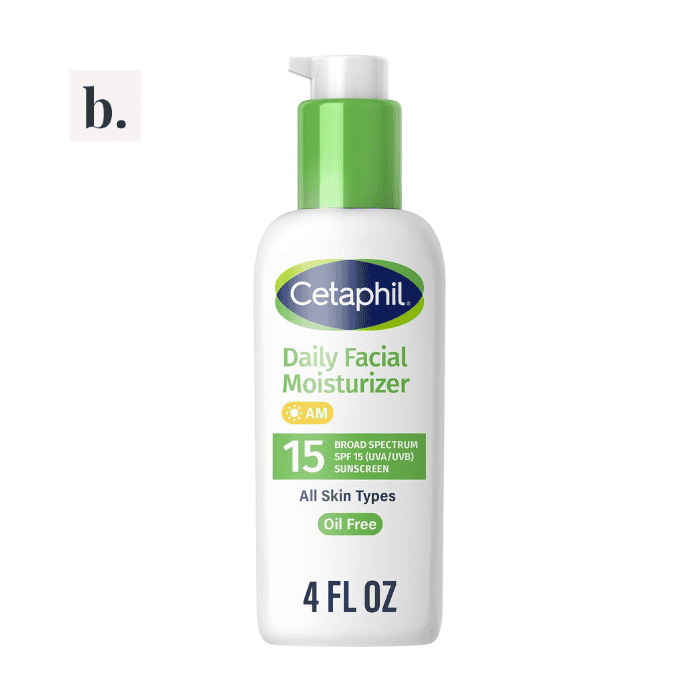
Cetaphil
Daily Facial Moisturizer SPF 15
If you want an easy morning moisturizer with some broad-spectrum UV protection, Cetaphil SPF 15 combines hydration with avobenzone and octocrylene. If sun exposure is a priority, choose a broad-spectrum SPF 30…
Read the BeautyBrief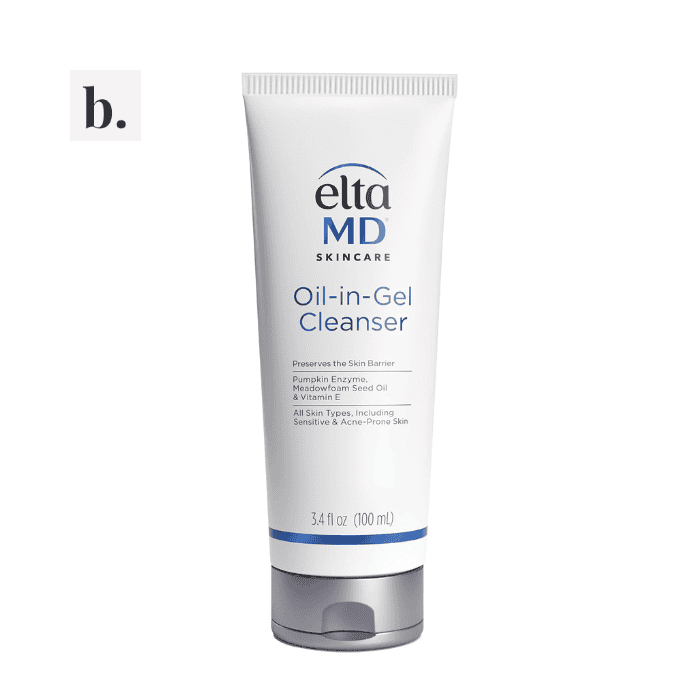
EltaMD
Oil-in-Gel Cleanser
If you wear resistant sunscreen or long-wear makeup, EltaMD Oil-in-Gel offers a practical first-cleansing format. Its Mid-Range value rests on the easy milky rinse and skin feel rather than a unique antioxidant…
Read the BeautyBrief
Obagi
C® Fx C-Therapy Night Cream
If your skin tolerates rich creams and you want arbutin for uneven tone, C-Therapy Night Cream offers an ingredient-based brightening rationale. Its leave-on sodium lauryl sulfate and lack of finished-product outcomes make…
Read the BeautyBrief
Olay
Complete + Rich Moisturizing Cream Sensitive
If your skin needs richer fragrance-free moisture, this Mid-Range cream offers a generous amount of practical everyday hydration. Its conditioning ingredients support comfort, but its stronger tone promises have less direct evidence…
Read the BeautyBrief
Cetaphil
Healthy Renew Night Cream
If your skin needs richer overnight hydration without retinol, this fragrance-free cream offers a practical Mid-Range option. Its moisturizing blend is the stronger selling point; the peptide wrinkle claims are less transparent.
Read the BeautyBrief
Olay
Regenerating Cream Cleanser with Vitamin E
If you want an inexpensive creamy face wash with surface exfoliation, this combines scrub particles and salicylic acid in one step. If your skin is sensitive or you already exfoliate, a simpler…
Read the BeautyBrief