EltaMD Oil-in-Gel Cleanser Review
BeautyBrief™
Brand
EltaMD
Product
Oil-in-Gel Cleanser
Claims check
You get a credible oil-rich makeup and sunscreen cleanser, while its barrier-preservation claim is not supported by detailed public comparative testing.
Shopper fit
- Dry
- Normal
- Combination
- Oily
- Sensitive
- Acne-Prone
Formula flags
- None identified
Shopper preferences
- Non-Comedogenic
- Dermatologist-Tested
Key ingredients
| Caprylic/Capric Triglyceride | Forms the main emollient cleansing base and helps dissolve sunscreen, makeup, sebum, and other oil-soluble residue. |
|---|---|
| Sucrose Palmitate | Helps the oil-rich phase emulsify with water so loosened residue can rinse away more cleanly. |
| Sucrose Laurate | Complements the emulsifying system and supports the gel-to-milk rinse transition. |
| Limnanthes Alba (Meadowfoam) Seed Oil | Adds slip and emollience during cleansing and helps create the conditioned after-feel. |
| Tocopheryl Acetate | Provides a vitamin E derivative without establishing leave-on antioxidant benefits in this rinse-off cleanser. |
Price tier
$$ Mid-Range
Value check
At the Mid-Range tier, you get a convenient transforming first cleanse, while simpler cleansing oils can perform similar removal tasks.
Where to buy
We may earn a commission through these links at no additional cost to you. This does not affect our BeautyBrief.
Bottom line
If you wear resistant sunscreen or long-wear makeup, EltaMD Oil-in-Gel offers a practical first-cleansing format. Its Mid-Range value rests on the easy milky rinse and skin feel rather than a unique antioxidant benefit.
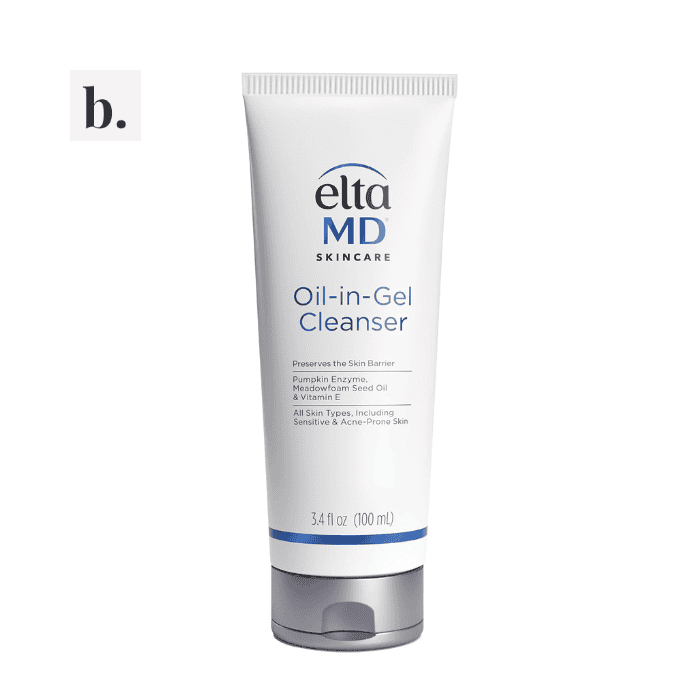
If you regularly wear water-resistant sunscreen or long-wear makeup, EltaMD Oil-in-Gel Cleanser turns from a soft gel into oil and then a milky rinse. Its cleansing strength comes from an emollient-rich base and sucrose emulsifiers, rather than strong foaming surfactants. EltaMD positions it for all skin types, including acne-prone and sensitive skin.
What it claims
EltaMD says the cleanser lifts environmental pollutants, water-resistant sunscreen, long-wear makeup, sweat, and excess sebum while preserving the skin barrier and cleansing without clogging pores.[1] The current exact-product page positions it for all skin types, including sensitive and acne-prone skin.[1]
Claims vs. formula
The makeup- and sunscreen-removal story is well aligned with the formula. Caprylic/capric triglyceride, coconut alkanes, coco-caprylate/caprate, and meadowfoam seed oil provide an emollient-rich phase that can loosen oil-soluble residue, while sucrose palmitate and sucrose laurate help that oily phase disperse when water is added.[1]
Cleansers work by helping detach and emulsify substances that water alone does not remove efficiently, and surfactant/emulsifier design is central to how effectively a cleanser removes residue while limiting unnecessary barrier disruption.[2] In this formula, the transformable gel-to-oil-to-milk system is more important than any individual botanical extract.
The barrier-preservation language is plausible from the cleansing format and lack of a strong foaming detergent system, but the current official page does not provide published transepidermal-water-loss or barrier-function data for the finished product.
Ingredients that matter
Caprylic/capric triglyceride and meadowfoam seed oil loosen oily sunscreen and makeup residue while sucrose palmitate and sucrose laurate let the formula turn milky when water is added. Glycerin provides additional conditioning, and Tocopheryl Acetate is present as a vitamin E derivative. That antioxidant presence does not make a rinse-off cleanser a leave-on anti-aging treatment.

Caprylic/Capric Triglyceride
Caprylic/Capric Triglyceride is a common emollient and occlusive that adds softness, slip, and moisture support to skincare formulas. Its value depends on the complete product, not the ingredient name alone.
Read the IngredientBrief
Meadowfoam Seed Oil
Meadowfoam seed oil is a stable plant-derived emollient and occlusive that softens dry-feeling skin and adds richness to moisturizing formulas. Its basic moisturizing role is established, but stronger treatment claims…
Read the IngredientBrief
Vitamin E
Vitamin E is a family of antioxidant and conditioning ingredients used in moisturizers, oils, balms, and broader antioxidant systems. The exact form and finished formula matter more than the vitamin…
Read the IngredientBriefWhat to expect in the short term
Applied to dry skin, the gel becomes more oil-like as it is massaged over the face, helping loosen resistant sunscreen and makeup. Adding water turns it into a milky emulsion for rinsing, leaving a more conditioned finish than a high-foam cleanser.[1]
What to expect over time
This is a cleansing-format choice rather than a cumulative treatment. Its value shows up in easier removal of tenacious daily products and less reliance on aggressive rubbing, not in progressive skin remodeling or long-term antioxidant treatment from the rinse-off botanicals.
Who it fits
If you want to remove sunscreen or makeup without a traditional foaming wash, this is a practical first-cleanse format. The official page identifies it as noncomedogenic and dermatologically tested, but those labels do not guarantee it will suit every acne-prone or reactive complexion.
Compare before you buy
At the Mid-Range tier, the strongest value is convenience: one transformable cleanser can loosen resistant sunscreen and makeup, then emulsify for a cleaner rinse than a plain facial oil. Shoppers who wear little makeup or non-resistant sunscreen may not need a dedicated first-cleanse product.
Final Assessment
If you wear water-resistant sunscreen or stubborn makeup, EltaMD Oil-in-Gel Cleanser offers a useful gel-to-oil-to-milk format. The formula makes sense for dissolving oil-soluble buildup, while claims of barrier preservation lack detailed finished-product comparison data. Its Mid-Range value comes primarily from convenience and rinseability.
Compare Prices
Choose a retailer to view current pricing and availability.
We may earn a commission through these links at no additional cost to you.
Last reviewed: October 2026
Sources
EltaMD. Oil-in-Gel Cleanser. Current official U.S. product page. Accessed October 15, 2026.
Seweryn A. Skin Cleansing without or with Compromise: Soaps and Syndets. Molecules. 2022;27(6):2010.
This review explains how surfactants and cleanser formulation enable removal of water-insoluble residue and influence barrier interaction. It does not test this EltaMD finished product.
RegimenPro. EltaMD Oil-in-Gel Cleanser. Current authorized-retailer listing. Accessed October 15, 2026.