Cetaphil Redness Relieving Daily Facial Tinted Moisturizer SPF 40 Review
BeautyBrief™
Brand
Cetaphil
Product
Redness Relieving Daily Facial Tinted Moisturizer SPF 40
Claims check
The finished-product broad-spectrum SPF 40 label establishes sun protection, while the tint supports immediate cosmetic redness correction and the moisturizing base supports hydration and barrier-conscious use without treating the underlying cause of persistent redness.
Shopper fit
- Dry
- Normal
- Combination
- Sensitive
Formula flags
- Silicones
- Added color
Shopper preferences
- Non-Comedogenic
- Dermatologist-Tested
- Hypoallergenic
Key ingredients
| Titanium Dioxide | At 10.1%, one of the two labeled mineral sunscreen actives in the finished broad-spectrum SPF 40 formula. |
|---|---|
| Zinc Oxide | At 7.8%, adds complementary mineral UV filtration within the tested sunscreen system. |
| Iron Oxides | Create the neutralizing tint that immediately reduces the visual contrast of redness and offsets visible mineral cast. |
| Glycerin | Provides humectant support for hydration and helps reduce dry, tight feel. |
| Allantoin | Adds skin-comfort support within a formula designed for redness-prone and sensitive skin. |
Price tier
$ Budget
Value check
At the Budget tier, the strongest value is combining broad-spectrum mineral SPF 40, hydration, and cosmetic redness correction in one step, provided the single tint matches your skin.
Where to buy
We may earn a commission through these links at no additional cost to you. This does not affect our BeautyBrief.
Bottom line
If you want mineral SPF 40 with cosmetic redness coverage, Cetaphil's tinted moisturizer combines zinc oxide, titanium dioxide and color pigments. The tint can make redness less visible without treating its cause, so check how the shade looks on your skin and reapply sun protection as directed.
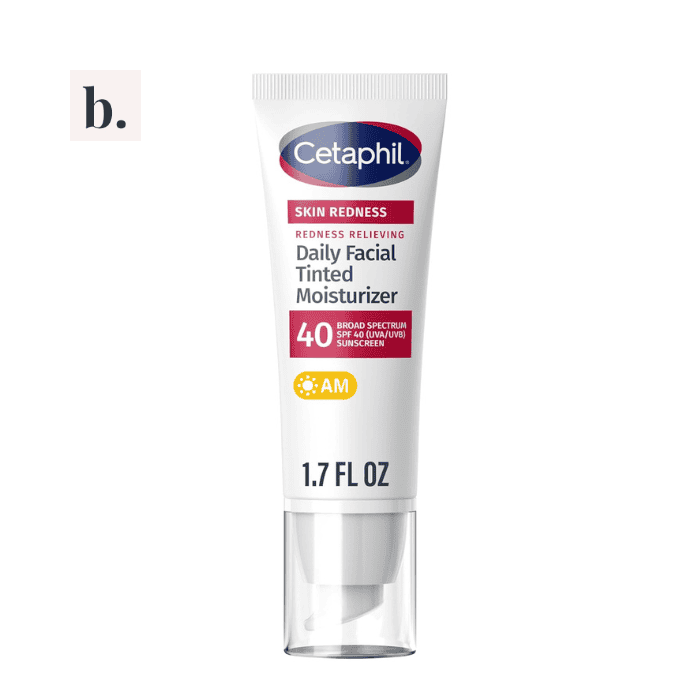
If you want mineral sun protection with cosmetic coverage for facial redness, Cetaphil Redness Relieving Daily Facial Tinted Moisturizer SPF 40 combines three jobs in one morning step: daily broad-spectrum SPF 40, lightweight moisturization, and a neutral tint that reduces the visual contrast of redness. The current U.S. label lists titanium dioxide 10.1% and zinc oxide 7.8% as the sunscreen actives, with iron oxides and chromium oxide greens providing the tint.[1]
The strongest use case is redness-prone, sensitive skin that wants mineral-filter sun protection without adding a separate complexion product. The main limitation is the single neutral tint: if the shade or undertone does not blend well on your skin, the all-in-one format loses much of its practical value.
What it claims
Cetaphil positions this as a daily tinted moisturizer for redness-prone, sensitive skin that hydrates, visibly neutralizes redness, evens skin tone, strengthens the skin barrier, and provides broad-spectrum SPF 40. The exact product is also described as dermatologist-tested, hypoallergenic, fragrance-free, and non-comedogenic.[1]
Claims vs. formula
The sun-protection claim rests on the finished product’s labeled broad-spectrum SPF 40 performance, not on the filter percentages alone. The current active panel lists titanium dioxide 10.1% and zinc oxide 7.8%. Both are established mineral UV filters, but the tested finished formula determines the actual SPF and broad-spectrum designation.[1]
Iron oxides and chromium oxide greens explain the immediate cosmetic redness correction. They alter how redness looks on the skin; they do not treat rosacea, dermatitis, or another medical cause of persistent redness. Cetaphil also includes allantoin, dipotassium glycyrrhizate, caffeine, and vitamin E for soothing and antioxidant support, but the current public page does not provide product-specific clinical data showing treatment of chronic redness.[1]
Glycerin, silicone emollients, hydrogenated lecithin, and other emollient ingredients support hydration and a smoother protective film. That gives the moisturizing and barrier-support positioning a credible formula basis, although Cetaphil does not publish a product-specific barrier-repair measurement on the current page.
Ingredients that matter
Titanium dioxide 10.1% and zinc oxide 7.8% are the labeled sunscreen actives in the finished broad-spectrum SPF 40 product. Iron oxides and chromium oxide greens contribute the neutralizing tint. Together, the sunscreen and pigment systems perform different jobs: UV protection and cosmetic coverage, respectively.[1]
Glycerin, silicone emollients and hydrogenated lecithin support an easier-spreading moisturizing base; allantoin and dipotassium glycyrrhizate add skin-conditioning ingredients. These components don’t establish treatment of rosacea or other causes of persistent redness. The tint works immediately to change how redness looks, but it does not remove its underlying cause.

Titanium Dioxide
Titanium dioxide is a well-supported mineral sunscreen filter and white pigment. Protection, white cast, and wear depend on particle form, dispersion, the filter system, and the tested finished formula—not percentage…
Read the IngredientBrief
Zinc Oxide
Zinc oxide is a well-supported mineral UV filter and a separate skin-protectant active. In sunscreen, tested protection, film formation, tint, texture, and wear matter more than the zinc oxide percentage…
Read the IngredientBrief
Glycerin
If your skin feels dry or tight, glycerin helps your skin hold moisture. You don't need a high percentage or a separate serum when your moisturizer already works well.
Read the IngredientBrief
Allantoin
Allantoin is a well-supported skin-conditioning and skin-protectant ingredient when used in the right formula. Its OTC skin-protectant role does not prove that every cosmetic containing allantoin heals or repairs skin.
Read the IngredientBriefSafety and regulatory context
This is a sunscreen drug product, so application amount and reapplication matter more than simply having SPF in the product name. FDA sunscreen labeling guidance directs users to apply sunscreen generously before sun exposure and reapply at least every two hours; if swimming or sweating, use a sunscreen labeled water resistant and follow its specific reapplication directions.[2]
Cetaphil’s current page says the product can be used as sunscreen and specifically advises reapplication every two hours during extended outdoor exposure. The page does not identify this formula as water resistant, so it is not the best single sunscreen choice for swimming or heavy sweating.[1]
What to expect in the short term
Expect immediate cosmetic softening of visible redness from the tint, plus the feel and finish of a mineral-filter moisturizer. The single neutral tint is the biggest practical variable: when it blends well, it can simplify a morning routine; when it does not, a separate sunscreen and complexion product give you more control over shade and coverage.
What to expect over time
With consistent use at an adequate amount, the product provides ongoing broad-spectrum SPF 40 protection and daily moisturization. The hydrating base can support dryness and comfort, while the tint remains a cosmetic correction rather than a treatment for the underlying cause of persistent facial redness.
Who it fits
If your skin is normal, dry, combination or sensitive, this product offers daily mineral-filter sun protection and visible redness correction in one step. Cetaphil explicitly positions the product for redness-prone, sensitive skin, and the current formula is fragrance-free, dermatologist-tested, hypoallergenic, and non-comedogenic.[1]
Oily skin is not automatically excluded, but the moisturizer-plus-tint format is less specifically aligned with shoppers who prefer a very light, oil-control sunscreen finish. The single tint limits your shade choices across skin tones and undertones.
Compare before you buy
At the Budget tier, the strongest value is convenience: moisturizer, broad-spectrum mineral SPF 40, and visible redness correction are combined in one product. A clear sunscreen plus a separate complexion product is the better route when you need more shade control, adjustable coverage, or a different finish. The combined format is valuable only when the tint actually works for your skin.
Final Assessment
If you want mineral SPF 40 and cosmetic coverage for facial redness in one step, Cetaphil’s tinted moisturizer combines sunscreen filters, skin-conditioning ingredients and corrective pigments. Its Budget-tier value depends on the single neutral tint matching your skin; it does not treat persistent redness, and you still need to apply and reapply enough for labeled sun protection.
Compare Prices
Choose a retailer to view current pricing and availability.
We may earn a commission through these links at no additional cost to you.
Last reviewed: October 2026
Sources
Cetaphil. Redness Relieving Daily Facial Tinted Moisturizer SPF 40. Current official U.S. product page. Accessed October 8, 2026.
U.S. Food and Drug Administration. Labeling and Effectiveness Testing: Sunscreen Drug Products for Over-The-Counter Human Use — Small Entity Compliance Guide. Current FDA guidance. Accessed October 8, 2026.