
Noodle & Boo Drool Baby Review
BeautyBrief™
Brand
Noodle & Boo
Product
Drool Baby
Claims check
If your baby's skin is irritated by drool, this 2% zinc oxide ointment provides a protective barrier, while lanolin is an important allergy consideration.
Shopper fit
- Dry
- Sensitive
Formula flags
- Contains acetylated lanolin, a wool-derived ingredient; not vegan and unsuitable for people with a known lanolin allergy.
Shopper preferences
- Cruelty-Free
- Dermatologist-Tested
- Hypoallergenic
Key ingredients
| Zinc Oxide | At 2%, acts as the active skin protectant that forms a moisture-resistant barrier on drool-prone skin. |
|---|---|
| Petrolatum | Adds strong occlusive support and helps reduce moisture loss. |
| Acetylated Lanolin | Adds emollient and barrier support but is wool-derived and matters for known lanolin sensitivity. |
| Panthenol | Adds humectant and skin-conditioning support. |
| Allantoin | Adds supporting skin-conditioning and comfort value. |
Price tier
$ Budget
Value check
At the Budget tier, the value is strong when you want a baby-specific 2% zinc oxide skin protectant for repeated drool exposure; plain petrolatum costs less but does not provide the same zinc oxide active or use-specific format.
Bottom line
If your baby's cheeks or chin need a moisture-resistant barrier from repeated drool, Noodle & Boo Drool Baby uses 2% zinc oxide with occlusive ingredients. Its fragrance-free formula suits protective care, but avoid it if your child has a known lanolin allergy, and follow the label's advice for persistent irritation.
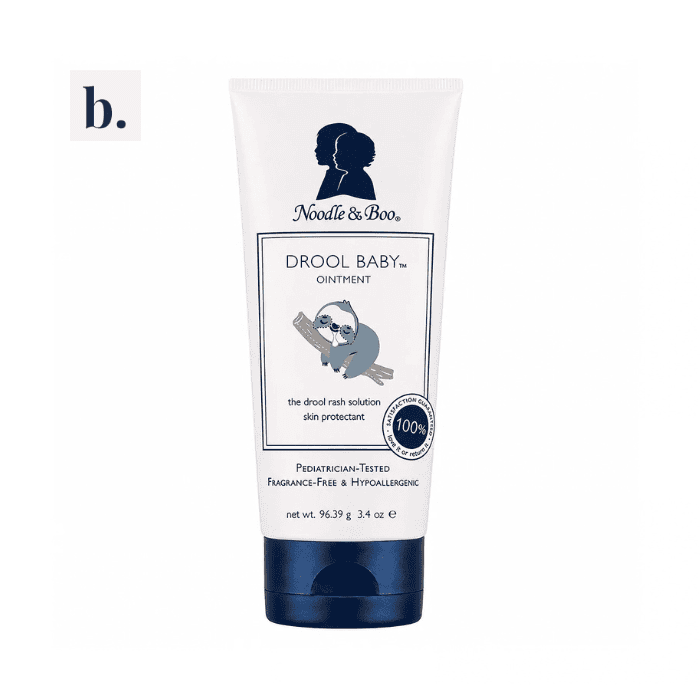
If you’re managing drool irritation on your baby’s cheeks, chin or neck folds, Noodle & Boo Drool Baby uses 2% zinc oxide as an active skin protectant in a rich, fragrance-free ointment base. The formula is well aligned with repeated wetness and friction; the main fit limitation is acetylated lanolin, which is wool-derived and matters if you avoid animal-derived ingredients or know you react to lanolin.
What it claims
Noodle & Boo positions Drool Baby as a purpose-built ointment for drool-prone areas that helps treat and prevent drool irritation while soothing dry, uncomfortable skin. The current exact-product page identifies it as fragrance-free, hypoallergenic, dermatologist-tested, pediatrician-tested, and suitable for daily use during teething.[1]
Claims vs. formula
The protection claim is strongly aligned with the formula. Zinc oxide is present at 2% as the active skin protectant, while petrolatum, mineral oil, acetylated lanolin, hydrogenated castor oil, and ozokerite create the dense barrier base that helps shield skin from repeated wetness and rubbing.[1]
The comfort and moisture-support story is also coherent. Glycerin, panthenol, allantoin, bisabolol, aloe, and vitamin E add humectant, conditioning, and skin-comfort support around the protective base. These supporting ingredients do not replace the primary skin-protectant role of zinc oxide.
Ingredients that matter
The protective role comes from 2% zinc oxide paired with a waxy, oil-rich base. Petrolatum, mineral oil, hydrogenated castor oil and ozokerite help the ointment stay in place and reduce moisture exposure. Acetylated lanolin also supports the rich texture, but its wool-derived origin and allergy potential matter if your baby has a known lanolin sensitivity.[1]
Panthenol, allantoin and glycerin contribute skin-conditioning and moisture support. Their inclusion complements the barrier system; it does not independently prove that this product treats causes of irritation other than those addressed by the skin-protectant active.

Zinc Oxide
Zinc oxide is a well-supported mineral UV filter and a separate skin-protectant active. In sunscreen, tested protection, film formation, tint, texture, and wear matter more than the zinc oxide percentage…
Read the IngredientBrief
Petrolatum
Petrolatum is a well-supported occlusive and emollient that reduces water loss and helps protect dry, chapped, or exposed skin. Its main tradeoff is a heavy finish, not weak performance.
Read the IngredientBrief
Panthenol
Panthenol is a well-supported humectant and conditioning ingredient that improves hydration and helps reduce water loss. The complete moisturizer matters more than a high percentage or broad barrier-repair marketing.
Read the IngredientBrief
Allantoin
Allantoin is a well-supported skin-conditioning and skin-protectant ingredient when used in the right formula. Its OTC skin-protectant role does not prove that every cosmetic containing allantoin heals or repairs skin.
Read the IngredientBriefSafety and regulatory context
Drool Baby is sold in the U.S. with zinc oxide 2% identified as the active skin protectant. FDA’s OTC Monograph M016 permits zinc oxide at 1% to 25% in qualifying skin-protectant drug products, so the 2% concentration fits the federal skin-protectant framework.[2] That regulatory framework supports the ingredient’s skin-protectant role; it does not independently validate every brand-specific drool-rash marketing statement.
Noodle & Boo directs you to apply the ointment generously to clean, dry cheeks, chin, mouth area, and neck folds and reapply as needed. The current page says to avoid the eyes, use the product only as directed, and consult a physician if the condition worsens or does not improve within seven days. Its FAQ also says to avoid direct contact with the lips or inside the mouth.[1]
What to expect in the short term
You can expect a visible protective layer rather than a quick-absorbing lotion. Apply it only as directed to clean, dry skin around the drool-prone area, keeping it out of the eyes and mouth; seek medical advice if irritation worsens or persists.
What to expect over time
The benefit depends on continued protection during drool-heavy periods rather than a cumulative treatment effect. Reapplication matters because wiping, feeding, sleep, and normal contact gradually remove the protective layer.
Who it fits
If your baby’s skin gets wet and irritated from drooling, this fragrance-free protective ointment is a practical fit when used as directed. The brand identifies it as cruelty-free, dermatologist-tested and hypoallergenic; these are manufacturer claims, not promises that every baby will tolerate it. Avoid it if your child has a known lanolin allergy, and seek medical advice for unexplained, persistent or worsening irritation.[1]
Compare before you buy
At the Budget tier, Drool Baby offers strong value when you specifically want a baby-focused zinc oxide barrier for repeated saliva exposure. Plain petrolatum can provide effective occlusion for less, while this formula adds a 2% zinc oxide active, several comfort-supporting ingredients, and directions tailored to drool-prone areas.
Final Assessment
If you need a moisture-resistant barrier for drool-prone cheeks and chin, Noodle & Boo Drool Baby combines a 2% zinc oxide skin protectant with a rich occlusive base. Its Budget-tier positioning makes it a reasonable choice when you want zinc oxide rather than plain petrolatum alone, provided your baby does not have a known lanolin allergy and you follow the label’s directions.
Last reviewed: October 2026
Sources
Noodle & Boo. Drool Baby. Current official U.S. product page. Accessed October 8, 2026.
U.S. Food and Drug Administration. OTC Monograph M016: Skin Protectant Drug Products for Over-the-Counter Human Use.
The monograph lists zinc oxide at 1% to 25% as an allowed active concentration for qualifying OTC skin-protectant products. It supports the regulatory skin-protectant role of 2% zinc oxide but does not test or endorse Drool Baby as a finished product.