

How to Choose Vitamin C Serum Without Wasting Money
At a glance
Two vitamin C serums can advertise the same percentage yet perform very differently. One might irritate your skin, another might deteriorate before you finish it, and a more expensive bottle might have little finished-product evidence behind it. The real comparison starts with the formula, not the number on the label. Here’s how to decide which serum deserves a place in your routine.
Vitamin C is one of the few skincare ingredients with enough research behind it to deserve serious consideration for antioxidant support, uneven tone, and visible photoaging.
That does not make every vitamin C serum a good purchase.
A bottle can say 20% vitamin C, use a dark clinical-looking package, and carry a premium price without telling you whether the vitamin C form is well chosen, whether the finished formula stays stable, whether your skin will tolerate it, or whether the product has ever been tested in people.
The useful buying question is not “Which serum has the most vitamin C?” It is “Which finished product gives me the best balance of evidence, stability, tolerance, and value for the result I want?”
In this Briefing
- Decide whether you need a vitamin C serum
- Choose the vitamin C form first
- Do not chase the highest concentration
- What current human evidence actually shows
- Treat stability and packaging as part of the value
- Read the complete formula
- Make sure it fits your routine
- Use vitamin C with sunscreen, not instead of it
- Check whether the claims match the evidence
- Decide whether the price is justified
- Which type of vitamin C serum should you buy?
Decide whether you need a vitamin C serum
Vitamin C can be a useful treatment step, but it is not a mandatory part of every routine.
Consider it when you want:
- additional topical antioxidant support;
- gradual improvement in uneven-looking tone or dark marks;
- another evidence-based step for visible photoaging;
- a morning treatment that fits comfortably under sunscreen.
Hold off for now when your routine already feels overloaded or irritated.
If you are struggling to use your retinoid, moisturizer, or sunscreen consistently, another active may create more cost and irritation without improving the routine. A vitamin C serum should fill a clear gap rather than become another bottle you feel obligated to finish.
Published systematic reviews find encouraging evidence for topical vitamin C in pigmentation and photoaging, but they also emphasize how small and inconsistent the clinical literature remains. Products, concentrations, vitamin C forms, study designs, and combination treatments vary enough that the evidence does not support treating every vitamin C serum as equivalent.[1]
Choose the vitamin C form before you compare percentages
The words vitamin C on the front label are not specific enough.
L-ascorbic acid
L-ascorbic acid, also listed simply as ascorbic acid, is the form with the most direct history in topical skin research.
It is the easiest place to start when you want the most established form and your skin tolerates acidic formulas well.
The tradeoff is formulation difficulty. L-ascorbic acid is chemically unstable and has limited ability to cross the outer skin barrier unless the finished formula is designed appropriately. Research reviews consistently identify pH, vehicle, concentration, oxygen, light, temperature, and the rest of the formula as important to stability and delivery.[2]
That means the presence of L-ascorbic acid is not enough. A poorly formulated 20% serum is not automatically a better product than a well-designed 10% or 12% serum.
Vitamin C derivatives
Common derivatives include sodium ascorbyl phosphate, magnesium ascorbyl phosphate, ascorbyl glucoside, 3-O-ethyl ascorbic acid, and tetrahexyldecyl ascorbate.
These forms are often used because formulators want greater stability, a different pH, a different vehicle, or better tolerance.
A derivative is not automatically inferior. It is also not automatically equivalent to L-ascorbic acid.
A 2021 review of topical vitamin C derivatives found that the evidence varies substantially by derivative and that many commonly marketed forms have much less direct human evidence than their popularity suggests.[3]
That makes finished-product evidence especially valuable with derivative serums.
If your skin repeatedly rejects acidic L-ascorbic acid, a well-formulated derivative serum you can use consistently may be the smarter purchase than forcing yourself through a “gold standard” formula you avoid.
Do not chase the highest vitamin C concentration
Higher is not automatically better.
The often-repeated idea that topical L-ascorbic acid should be used at concentrations up to 20% comes largely from a 2001 laboratory absorption study using pig skin. In that model, L-ascorbic acid needed a pH below 3.5 for measurable skin delivery, and tissue levels increased with concentration up to 20%. Concentrations above 20% did not increase measured delivery further.[4]
That study is useful formulation science. It is not a clinical trial showing that a 20% face serum gives people better visible results than a 10%, 12%, or 15% serum.
The 2023 systematic review of topical vitamin C for melasma and photoaging explicitly concluded that more research is needed to determine the ideal vitamin C concentration.[1]
So do not turn 20% into a shopping target.
For a closer look at the 12% finished-product evidence and what the 20% absorption study actually proves, read Is 12% Vitamin C Enough for Skin?
For L-ascorbic acid, concentration matters only as part of the finished formula. A lower percentage may be the better buy when it is stable, well tested, and comfortable enough for regular use.
Percentages are even less useful when comparing different forms. Ten percent tetrahexyldecyl ascorbate is not equivalent to 10% L-ascorbic acid, and you cannot rank those products simply by the number on the box.
What does current human evidence show?
The vitamin C category has useful human research, but the evidence is more modest than the marketing suggests.
A 2023 systematic review evaluating randomized controlled trials for melasma and photoaging included seven publications and only 139 total participants. The review found evidence of improvement in pigmentation and skin topography but noted substantial variation among formulas, concentrations, study methods, and combination treatments. The authors concluded that longer use may be necessary and that more research is needed.[1]
A separate 2023 systematic review focused on wrinkles also found encouraging results but emphasized that every included study used vitamin C together with other ingredients or treatment mechanisms, making it difficult to assign the result to vitamin C alone.[5]
A useful 2026 finished-product study
Newer evidence helps show why percentage alone is a poor buying shortcut.
A 2026 study tested a commercial serum containing 12% pure L-ascorbic acid in 49 women spanning Fitzpatrick skin phototypes I through VI. Forty-two completed 84 days of twice-daily use. Researchers reported improvements from baseline in measures including epidermal thickness, collagen organization, firmness, elasticity, radiance, dark spots, wrinkles, and skin-tone evenness.[6]
This is useful because it demonstrates that a 12% L-ascorbic acid finished serum can produce measurable changes in people. It is also a good example of why study design matters.
The trial was open-label, non-randomized, and uncontrolled. The authors explicitly acknowledged that those limitations make it difficult to separate treatment effects from natural variation, behavioral effects, or observer bias. Several authors were employees of or consultants to L’Oréal or La Roche-Posay, the company behind the tested serum.[6]
So the study strengthens the evidence for that finished 12% serum. It does not prove that 12% is the ideal concentration, that L-ascorbic acid alone caused every measured change, or that every 12% serum will perform the same way.
Treat stability and packaging as part of the value
Vitamin C can be excellent on paper and poor value in a bottle that does not keep the formula usable long enough for you to finish it.
This matters most with water-based L-ascorbic acid formulas because ascorbic acid is vulnerable to oxidation and degradation. Reviews identify oxygen, light, temperature, pH, water activity, and formulation design as important stability factors.[7]
Packaging should therefore make sense for the formula, but do not reduce stability to one packaging rule.
An opaque or light-protective container is reassuring for a light-sensitive serum. Air-restrictive pumps or sealed systems can reduce repeated air exposure. Some brands use droppers successfully because the formula itself has been designed and tested for that package.
The package shape is a clue. Finished-product stability testing is stronger evidence.
Look for practical information from the brand:
- expected unopened shelf life;
- period after opening;
- storage instructions;
- normal starting color;
- whether gradual color change is expected;
- what change means the product should no longer be used.
Smaller can also be better. A 15 mL bottle you finish while the serum is still within its intended use period may offer more value than a 30 mL bottle that sits open for months.
Do not use color as a universal oxidation chart
Fresh L-ascorbic acid serums do not all begin at the same color.
Some are nearly clear or pale yellow. Others are darker because of ferulic acid, botanical materials, solvents, or other ingredients in the formula.
A dramatic change from the product’s normal starting color—especially when it appears with a new odor, texture change, or other sign of deterioration—is more useful than comparing every serum with a generic internet color scale.
Follow the manufacturer’s guidance for that formula. Refrigeration, for example, should not be assumed to improve every serum unless the brand recommends it.
Read the complete formula
The featured vitamin C form is only one part of the product.
Vitamin E and ferulic acid can strengthen the formula case
One of the best-known antioxidant combinations contains 15% L-ascorbic acid, 1% alpha-tocopherol, and 0.5% ferulic acid.
A human study found that this specific antioxidant solution reduced several measured signs of UV-induced skin damage compared with its vehicle under controlled solar-simulated irradiation.[8]
That supports the formulation strategy. It does not mean every serum containing vitamin C, vitamin E, and ferulic acid performs like the studied solution.
Concentrations, pH, manufacturing, vehicle, freshness, and packaging still matter.
For an example of how these questions affect a premium product, see BB’s SkinCeuticals C E Ferulic 2.0 vs. Original comparison, including what the reformulation evidence does and does not establish.
Hydrating ingredients can improve usability
Ingredients such as glycerin, hyaluronic acid, panthenol, ceramides, and squalane can make a treatment serum more comfortable.
They do not “cancel out” an irritating acid system. Their value is practical: a formula that leaves your skin comfortable is easier to use consistently.
Extra actives can increase the irritation burden
Do not assume every additional active makes the serum better.
A vitamin C product may also contain salicylic acid, another exfoliant, a high amount of alcohol, fragrance, or fragrant botanical ingredients. Those may be intentional formulation choices, but they change who the product suits.
A serum advertised as a simple antioxidant step can become a more complicated active treatment once you read the full ingredient list.
Make sure vitamin C fits the routine you already use
A vitamin C serum is easier to evaluate when you introduce it without changing several other treatments at the same time.
If your routine already includes glycolic acid, lactic acid, salicylic acid, benzoyl peroxide, or a retinoid, adding an acidic L-ascorbic acid serum can increase the total irritation burden.
That does not make those combinations universally incompatible.
Using vitamin C in the morning and a retinoid or exfoliant at night is a practical way to separate potentially irritating steps. Alternate-day use can also work when your skin needs more recovery time.
Persistent burning, swelling, marked scaling, or worsening redness is not evidence that a stronger vitamin C serum is working better.
If you use a prescription treatment, keep the prescription schedule as the priority and fit cosmetic vitamin C around it rather than changing the medication to accommodate a serum.
For a prescription tretinoin routine, BB explains morning-versus-evening use and irritation considerations in Can You Use Vitamin C Serum and Tretinoin at the Same Time?
Use vitamin C with sunscreen, not instead of it
Vitamin C is often used in the morning because antioxidant activity can complement a sun-protection routine. It is not a substitute for sunscreen.
AAD recommends broad-spectrum, water-resistant SPF 30 or higher for outdoor protection and reapplication about every two hours while outdoors, as well as after swimming or sweating.[9]
You can also use vitamin C at night if that schedule is more comfortable or easier to maintain. The serum does not stop working simply because it was not applied in the morning.
For persistent pigmentation such as melasma, dependable sun protection and an appropriate treatment plan matter more than chasing a stronger vitamin C percentage.
Check whether the claims match the evidence
Reasonable vitamin C claims include gradual improvement in visible uneven tone, antioxidant support, and some signs of photoaging.
Be more skeptical when a serum promises to:
- erase deep wrinkles;
- permanently remove melasma;
- rebuild collagen dramatically in a few days;
- reverse years of sun damage on its own;
- outperform prescription treatment without comparative evidence.
Finished-product testing deserves more weight than a brand citing general vitamin C research.
Look for:
- the exact finished product being tested;
- sample size and participant characteristics;
- duration of use;
- comparison group or vehicle when appropriate;
- objective measurements as well as participant impressions;
- dropout and tolerability information;
- funding and company involvement.
A percentage on the front of the box is not clinical evidence. Neither is a before-and-after photograph without enough information to understand how it was produced.
Decide whether the price is justified
Vitamin C is a category where paying more can buy something useful: better packaging, more careful stability work, stronger finished-product testing, or a texture that layers much better under sunscreen.
Prestige alone does not provide those advantages.
Before paying a premium, ask:
- Does the brand clearly identify the vitamin C form and concentration?
- Does it explain how the formula is kept stable?
- Is the bottle size realistic for the recommended use period?
- Has the finished product been tested?
- Does the texture work in the routine where I will actually use it?
- Is the return policy reasonable if the serum arrives compromised or proves intolerable?
A premium serum with vague stability information and ingredient-level claims can be worse value than a lower-priced serum with a sensible formula and useful finished-product data.
Do not pay more for the biggest percentage. Pay more only when the finished product gives you a meaningful advantage.
Which vitamin C serum should you buy?
Choose an L-ascorbic acid serum when you want the most established vitamin C form, tolerate acidic formulas, and are comfortable paying attention to stability and freshness.
Choose a lower L-ascorbic acid concentration when tolerance matters more than reaching a marketing-friendly 15% or 20%. Current evidence does not establish one ideal concentration for every shopper.
Choose a derivative serum when a less acidic or potentially more stable formula fits your skin and routine better. Give extra weight to finished-product testing because evidence differs substantially among derivatives.
Do not buy the serum when the brand does not clearly identify the vitamin C form, relies on percentage alone, gives you no useful stability information, or makes claims much stronger than its evidence.
Do not buy a second vitamin C serum while the first one is sitting open. Two bottles do not create twice the benefit, and opening both can increase waste in a category where stability already matters.
The BB Perspective
Vitamin C is worth considering. The concentration arms race is not.
The strongest buying case comes from a clearly identified vitamin C form, a finished formula designed around that form, enough evidence for the claims being made, packaging and storage guidance that take stability seriously, and a texture your skin tolerates well enough to use consistently.
L-ascorbic acid has the strongest direct research history, but “strongest evidence” does not mean “highest percentage.” An old absorption study is not proof that every shopper needs 20%, and newer human evidence shows that a well-designed 12% finished serum can produce measurable results without establishing 12% as the new universal target.
Buy the serum, not the number. If a lower concentration or a derivative gives you a better formula, better tolerance, and better value, that is the smarter vitamin C purchase.
Last reviewed: October 2026
Sources
Correia G, Magina S. Efficacy of Topical Vitamin C in Melasma and Photoaging: A Systematic Review. Journal of Cosmetic Dermatology. 2023;22(7):1938-1945. PMID: 37128827.
This systematic review included seven prospective randomized publications with 139 participants and found encouraging evidence for pigmentation and photoaging outcomes. The authors emphasized variation among formulas and protocols, the need for longer use in many cases, and the lack of enough evidence to define an ideal topical vitamin C concentration. BB uses this review to keep the category’s benefits and concentration claims proportionate. Return to citation.
Telang PS. Stability, Transdermal Penetration, and Cutaneous Effects of Ascorbic Acid and Its Derivatives. Journal of Cosmetic Dermatology. 2013;12(1):37-46. PMID: 23174055.
This review describes the formulation challenges associated with topical L-ascorbic acid, including instability and limited cutaneous delivery, and summarizes data on commonly used derivatives. BB uses it to support a formulation-first approach rather than assuming that ingredient name or concentration alone predicts performance. Return to citation.
Enescu CD, Bedford LM, Potts G, Fahs F. A Review of Topical Vitamin C Derivatives and Their Efficacy. Journal of Cosmetic Dermatology. 2022;21(6):2349-2359. PMID: 34559950.
This review evaluates common vitamin C derivatives developed to improve stability, penetration, and usability. The amount and quality of evidence varies substantially by derivative, and many forms have less direct human evidence than L-ascorbic acid. BB uses the review to avoid treating all vitamin C forms as interchangeable while recognizing that a derivative can still be the better finished product for a particular user. Return to citation.
Pinnell SR, Yang H, Omar M, et al. Topical L-Ascorbic Acid: Percutaneous Absorption Studies. Dermatologic Surgery. 2001;27(2):137-142. PMID: 11207686.
This laboratory study used pig skin to evaluate delivery of L-ascorbic acid. Measured skin delivery required a formulation below pH 3.5 and increased with concentration up to 20%, with no additional measured increase above 20% in that model. It was not a human clinical-outcome trial and does not establish that a 20% consumer serum produces better visible results than lower concentrations. BB uses it to correct the common misuse of the “20%” figure as a universal shopping target. Return to citation.
Sanabria B, Berger LE, Mohd H, et al. Clinical Efficacy of Topical Vitamin C on the Appearance of Wrinkles: A Systematic Literature Review. Journal of Drugs in Dermatology. 2023;22(9):898-904. PMID: 37683066.
This systematic review included seven clinical studies and found promising evidence for improvement in wrinkle appearance. Every included study used vitamin C with other ingredients or treatment mechanisms, which makes it difficult to isolate vitamin C’s specific contribution. The authors called for additional high-quality prospective comparative trials. Return to citation.
Addor FASA, Odeimi J, Rezze GG, et al. Clinical Efficacy of a 12% Pure Vitamin C Serum Across All Skin Phototypes: An Integrated In Vitro-In Vivo Evaluation. Dermatology and Therapy. 2026;16(9):4551-4564. doi:10.1007/s13555-026-01862-3. PMID: 42501251.
This open-label, single-center study enrolled 49 women across Fitzpatrick phototypes I-VI; 42 completed 84 days of twice-daily use of a commercial 12% L-ascorbic acid serum. Investigators reported improvements from baseline in measures including epidermal thickness, collagen organization, firmness, elasticity, radiance, wrinkles, dark spots, and tone. The study was non-randomized and uncontrolled, and the authors acknowledge that it cannot separate treatment effects from natural variation, behavioral effects, or observer bias. Several authors were employees of or consultants to L’Oréal or La Roche-Posay. BB treats this as useful finished-product evidence, not proof of an ideal concentration or of L-ascorbic acid acting alone. Return to citation.
Yin X, Chen K, Cheng H, et al. Chemical Stability of Ascorbic Acid Integrated into Commercial Products: A Review on Bioactivity and Delivery Technology. Antioxidants. 2022;11(1):153. doi:10.3390/antiox11010153.
This review summarizes the chemical instability of ascorbic acid and the effects of factors including oxygen, light, temperature, pH, water, and formulation technology. Although it covers commercial applications beyond facial skincare, it supports the broader point that stability depends on the full formulation and storage system rather than bottle color alone. Return to citation.
Murray JC, Burch JA, Streilein RD, Iannacchione MA, Hall RP, Pinnell SR. A Topical Antioxidant Solution Containing Vitamins C and E Stabilized by Ferulic Acid Provides Protection for Human Skin Against Damage Caused by Ultraviolet Irradiation. Journal of the American Academy of Dermatology. 2008;59(3):418-425. PMID: 18603326.
This human study compared a specific solution containing 15% L-ascorbic acid, 1% alpha-tocopherol, and 0.5% ferulic acid with its vehicle under controlled solar-simulated UV exposure. The antioxidant-treated areas showed lower erythema and several measured markers of UV damage. The study supports that particular formulation strategy, not every serum containing the same ingredient names. Return to citation.
American Academy of Dermatology Association. Sunscreen FAQs. Current dermatologist-reviewed guidance. Accessed September 2026.
AAD recommends broad-spectrum, water-resistant SPF 30 or higher and reapplication approximately every two hours while outdoors, as well as after swimming or sweating. BB uses this source to keep vitamin C in its appropriate role as an optional antioxidant treatment rather than a substitute for UV protection. Return to citation.
Related product BeautyBriefs
These BeautyBriefs cover products relevant to the needs discussed in this Beauty Briefing. Inclusion here reflects topic relevance, not a rating or endorsement.

Allies of Skin
Allies of Skin The Lab Drop 10/10/10 Multi GF Exo Advanced Recovery Ampoules
If you are considering Allies of Skin Lab Drop 10/10/10 Ampoules for visible aging, its growth-factor and exosome-themed complexes make an ambitious treatment story. The brand's reported improvements do not establish biological…
Read the BeautyBrief
Oak Essentials
Oak Essentials Antioxidant Hand Serum
If your hands look dry, Oak Essentials Hand Serum offers humectants and emollients for softness. Its Premium value depends on the scented finish, not unproven cellular regeneration.
Read the BeautyBrief
Neutrogena
Neutrogena Rapid Wrinkle Repair Retinol Regenerating Cream
If your skin tolerates retinol and fragrance, Rapid Wrinkle Repair offers a moisturizing format for gradual fine-line care. Its Mid-Range value rests on texture and convenience rather than a disclosed retinol concentration.
Read the BeautyBrief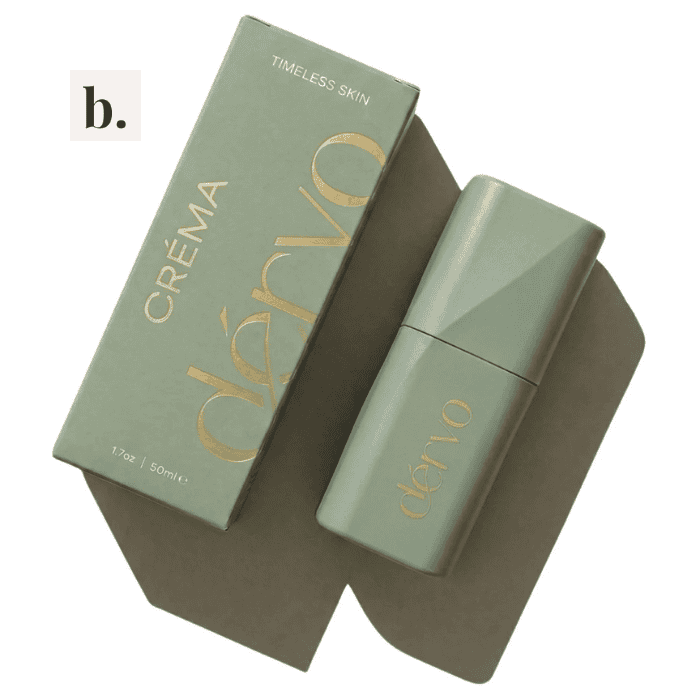
Dérvo
Dérvo Créma Face Moisturizer
If you want a rich facial moisturizer, Dérvo Créma combines humectants, plant-derived emollients and several hyaluronic-acid forms for hydration. Its peptide and botanical ingredients make a treatment-oriented formula, but published marketing claims…
Read the BeautyBrief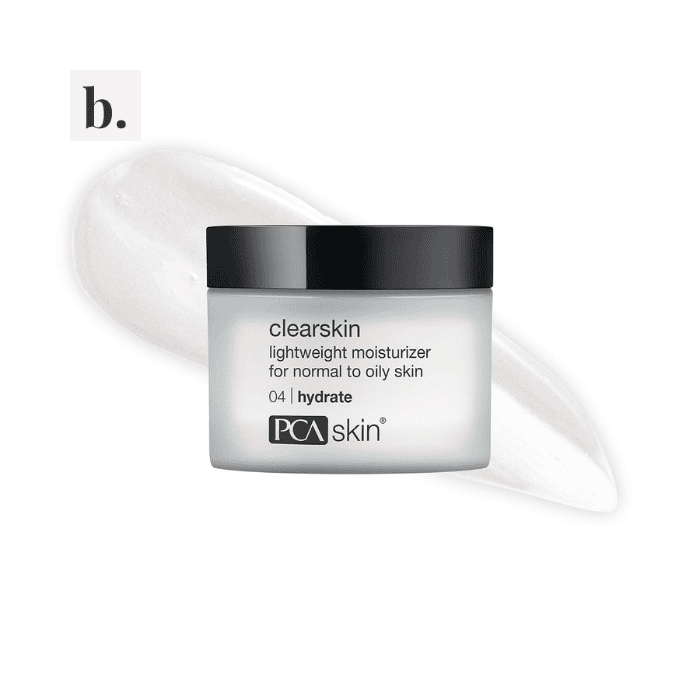
PCA SKIN
PCA SKIN Clearskin
If your skin is oily or breakout-prone and you want a light moisturizer, Clearskin offers a useful Premium formula with disclosed 4% niacinamide. Its post-breakout tone benefits are plausible rather than proven…
Read the BeautyBrief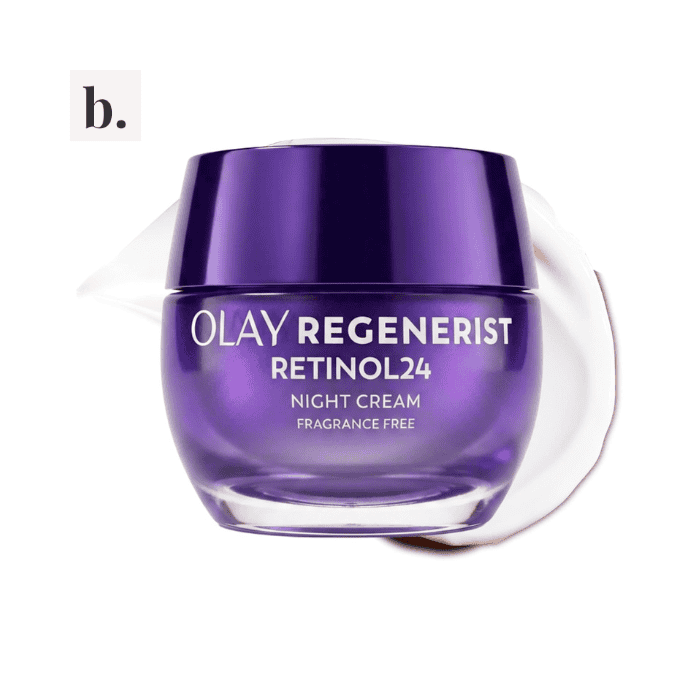
Olay
Olay Regenerist Retinol24 Night Moisturizer
If your skin tolerates retinoids, Olay Retinol24 offers a convenient fragrance-free night moisturizer with two vitamin A derivatives. Its Mid-Range value depends on routine simplicity rather than known retinol strength.
Read the BeautyBrief