

What Does Noncomedogenic Really Mean?
At a glance
“Noncomedogenic” is a useful clue for acne-prone skin, not a guarantee. It generally signals that a moisturizer is intended to be less likely to contribute to clogged pores, but there is no single standardized facial test that every product carrying the claim must pass. Use the label to narrow your options, then judge the complete formula, texture, moisture level, and how your skin actually responds.
If you are acne-prone, noncomedogenic sounds like exactly the reassurance you want from a moisturizer: this will not clog my pores.
The label is useful. It is just not that absolute.
A noncomedogenic moisturizer is intended to be less likely to contribute to comedones—the clogged follicles involved in blackheads and whiteheads. That makes the claim a sensible shopping filter for a leave-on product you may use every day.
It does not promise that you will never get a pimple while using the product, that every acne-prone person will tolerate it, or that the moisturizer itself treats acne.
In this Briefing
- What “noncomedogenic” actually means
- Why it cannot guarantee no breakouts
- How standardized is the claim?
- Why pore-clogging ingredient lists can mislead you
- Is noncomedogenic the same as oil-free?
- Does noncomedogenic mean acne treatment?
- What matters more when choosing a moisturizer
- How to judge a new moisturizer on your skin
- When the claim is most useful
What does noncomedogenic actually mean?
In practical skincare language, it means the product is intended to have a lower likelihood of contributing to clogged pores.
The word comes from comedo. A closed comedo is a whitehead; an open comedo is a blackhead.
That is narrower than saying a product “cannot cause acne.” Acne also includes inflammatory pimples, deeper lesions, and breakouts influenced by hormones, medications, friction, skin irritation, and many other factors.
So a useful translation is:
Noncomedogenic means the brand presents the product as less likely to clog pores. The label alone does not tell you whether the finished product was tested, which method was used, or how your skin will respond.
AAD uses the claim similarly in practical acne guidance. It recommends looking for moisturizers labeled “oil-free,” “non-comedogenic,” or “won’t clog pores” and describes those labels as indicating that the moisturizer is unlikely to cause acne.[1]
Why can’t a noncomedogenic moisturizer guarantee no breakouts?
Because your response depends on more than one label claim.
Texture, climate, how much you apply, your acne treatment, other leave-on products, irritation, and your individual tendency to form comedones can all affect whether a moisturizer works well for you.
A formula that feels light and comfortable on your skin in one season may feel too rich in another. A moisturizer that works beautifully for you during a dry winter may feel excessive in hot, humid weather.
And not every blemish that appears while you are using a moisturizer was necessarily caused by that moisturizer.
The label can help you narrow your choices, but without details of any finished-product testing, it offers limited assurance about how your skin will respond.
The reverse matters too. A moisturizer without a noncomedogenic claim is not automatically pore-clogging. The company may simply not market or test it under that claim.
How standardized is the noncomedogenic claim?
Less than the label can make it seem.
FDA does not preapprove ordinary cosmetic labeling claims before a product goes to market. Cosmetic claims still must be truthful and not misleading, but FDA’s general cosmetic-claims framework does not require every noncomedogenic moisturizer to pass one universal premarket test.[2]
Dermatology literature has also criticized the lack of a single standardized, validated assay for assessing comedogenicity of facial products. A 2018 JAMA Dermatology Viewpoint specifically called attention to the limitations of noncomedogenic labeling and the need for an objective standardized facial-product test.[3]
That means two moisturizers can both say noncomedogenic without necessarily having been evaluated through identical methods.
This does not make the claim meaningless. It means you should give more weight to a brand that explains how the finished product was assessed than to a bare badge with no context.
Why can pore-clogging ingredient lists mislead you?
Online comedogenicity charts often assign individual oils, esters, waxes, fatty ingredients, or emollients a numerical “pore-clogging” score.
Those lists are tempting because they make product evaluation look simple: find one ingredient with a high score and reject the moisturizer.
Finished formulas do not work that neatly.
A small 2006 human study tested finished cosmetic products containing ingredients that had previously been considered comedogenic. Six participants had products applied repeatedly to areas of the upper back for four weeks. The authors found that finished products containing ingredients labeled as comedogenic were not necessarily comedogenic as complete formulas.[4]
The study is small and does not let us predict every moisturizer on every face. Its useful lesson is narrower: a raw-ingredient rating should not automatically be transferred to the finished product.
Concentration, vehicle, surrounding ingredients, product format, and how the formula behaves as a whole all matter.
So finding one ester, oil, wax, silicone, or emollient on an internet blacklist is not proof that a moisturizer will clog your pores.
Compare the complete moisturizer formula instead.
Is noncomedogenic the same as oil-free?
No. They are different label claims.
AAD often recommends both as useful shopping terms for acne-prone skin, along with “won’t clog pores.”[1]
But one term should not be used as a substitute for the other.
An oil-containing moisturizer is not automatically comedogenic. Oils differ substantially, and the amount and overall formulation matter.
An oil-free moisturizer is also not guaranteed to suit acne-prone skin. It can still feel heavy, sting, contain other ingredients you dislike, or simply fail to provide the right balance of hydration and comfort.
If you are comparing otherwise similar products and acne is a concern, oil-free or noncomedogenic labeling can help narrow the field. Neither label should override how the complete product performs.
Does noncomedogenic mean the moisturizer treats acne?
No.
A noncomedogenic moisturizer can be an important supporting part of an acne routine. It can help reduce dryness and irritation from treatments such as benzoyl peroxide, salicylic acid, adapalene, tazarotene, or tretinoin. AAD specifically recommends moisturizer for people who become dry while using acne treatments.[1]
That is different from treating acne itself.
AAD’s current acne guideline recommends evidence-based topical treatment options including benzoyl peroxide, topical retinoids, salicylic acid, and azelaic acid, with treatment selected according to the acne and the individual patient.[5]
A moisturizer can make that treatment easier to tolerate. The word noncomedogenic does not turn the moisturizer into an acne medication.
It also does not mean fragrance-free, hypoallergenic, non-irritating, or suitable for every sensitive skin condition. Those are separate questions.
What matters more when choosing a moisturizer?
Once a moisturizer looks reasonable for acne-prone skin, the decision becomes very practical.
Does it provide enough moisture?
Acne-prone skin can still be dry, especially when you use prescription retinoids, benzoyl peroxide, salicylic acid, or isotretinoin.
A moisturizer that is so light that your skin stays tight and flaky is not automatically a better acne choice just because it says noncomedogenic.
Ingredients such as glycerin, ceramides, hyaluronic acid, squalane, and niacinamide can support hydration or barrier comfort depending on the complete formula.
Does the texture fit your skin?
If your acne-prone skin feels comfortable with a gel or fluid, a lighter texture may be enough. If treatment has made your skin dry, you may do better with a cream.
Do not assume “lighter” always means “less likely to clog.” Choose the lightest texture that still keeps your skin comfortable enough to stay consistent with the routine.
Does it work with your treatment and sunscreen?
A moisturizer that pills, makes sunscreen difficult to spread, or leaves you uncomfortable enough to skip treatment has weak practical value.
Routine compatibility matters more than a front-label badge.
Does it irritate your skin?
Noncomedogenic does not mean non-irritating.
If fragrance, exfoliating acids, botanical ingredients, or another feature repeatedly causes burning or redness for you, the product can be a poor fit even when it does not clog pores.
Does the price buy anything useful?
A premium noncomedogenic moisturizer should give you something beyond the claim: a better texture, better tolerance, useful finished-product testing, stronger barrier support, or another advantage you can actually notice.
You should not have to pay luxury pricing merely for permission to use a moisturizer on acne-prone skin.
How should you judge a new moisturizer on your skin?
Introduce one new leave-on product at a time when practical.
That gives you a cleaner read on what changes.
A small patch test can help reveal immediate stinging, redness, itching, or another localized reaction. It cannot tell you whether several weeks of full-face use will contribute to comedones.
Likewise, one blemish the morning after trying a moisturizer does not prove that the formula clogged a pore overnight.
Look for a repeatable pattern:
- Is congestion increasing in areas where you apply the product?
- Did the change begin after introducing it?
- Does the pattern improve when the product is removed while the rest of the routine stays stable?
- Is the issue actually clogged pores, or is the product causing irritation, redness, or another reaction?
You do not need to identify one guilty ingredient before deciding a moisturizer is a poor fit. The finished formula is what you use.
When is the noncomedogenic claim most useful?
Give it the most weight on leave-on products used frequently on acne-prone areas.
A moisturizer is a good example because it stays on for hours and may be applied every day. Sunscreen is another leave-on category where AAD recommends looking for noncomedogenic or “won’t clog pores” labeling when acne is a concern.[6]
The claim usually deserves less weight on a rinse-off cleanser. For a cleanser, effective removal, irritation, residue, and how your skin feels afterward are often more useful buying criteria than a noncomedogenic badge.
Think of the term as a screening tool, not a verdict.
The BB Perspective
“Noncomedogenic” is worth noticing. It is not worth obsessing over.
For acne-prone skin, the label can help narrow a crowded moisturizer aisle, and dermatologists routinely recommend looking for it. But the claim is not backed by one universal facial test, it does not guarantee zero breakouts, and it should not be converted into a blacklist of supposedly forbidden ingredients.
Use noncomedogenic as an initial filter, then make the purchase based on the complete moisturizer: enough hydration, comfortable texture, compatibility with your acne treatment and sunscreen, tolerability, and price.
If a moisturizer keeps your skin comfortable and your acne stable, an online ingredient score is not a good reason to stop using it. If a noncomedogenic moisturizer repeatedly does not work for you, the badge is not a reason to keep it.
Last reviewed: October 2026
Sources
American Academy of Dermatology Association. Moisturizer: Why You May Need It If You Have Acne; 9 Things to Try When Acne Won’t Clear. Current dermatologist-reviewed guidance. Accessed September 2026.
AAD recommends moisturizers for people whose acne treatments make their skin dry or irritated and advises looking for products labeled oil-free, non-comedogenic, or “won’t clog pores.” AAD describes these labels as indicating that a moisturizer is unlikely to cause acne and separately notes that some labeled products can still cause breakouts in a small number of people. BB uses this as practical shopping guidance rather than a guarantee that every labeled product will suit every acne-prone person. Return to citation.
U.S. Food and Drug Administration. Cosmetics Labeling Claims. Accessed September 2026.
FDA explains that ordinary cosmetic labeling claims are not preapproved before products go to market, although cosmetic claims must be truthful and not misleading. FDA’s general cosmetic-claims framework does not prescribe a universal premarket noncomedogenic test. BB uses this source to explain why a cosmetic claim should not be interpreted as an FDA certification of individual breakout risk. Return to citation.
Maarouf M, Saberian C, Shi VY. Myths, Truths, and Clinical Relevance of Comedogenicity Product Labeling. JAMA Dermatology. 2018;154(10):1131-1132. PMID: 29998304.
This clinical Viewpoint evaluates noncomedogenic labeling and argues that facial products lack one objective standardized assay for comedogenicity. It is expert commentary rather than a comparative moisturizer trial, but it is useful context for why the same label claim does not necessarily represent identical testing across brands. Return to citation.
Draelos ZD, DiNardo JC. A Re-evaluation of the Comedogenicity Concept. Journal of the American Academy of Dermatology. 2006;54(3):507-512. PMID: 16488305.
This small human study enrolled six participants and repeatedly tested finished cosmetic products on areas of the upper back for four weeks. The authors found that finished products containing raw ingredients previously considered comedogenic were not necessarily comedogenic as complete formulas. Its small size and test site limit broad prediction, but it supports evaluating finished products rather than treating individual ingredient ratings as universal rules. Return to citation.
American Academy of Dermatology Association. Acne Clinical Guideline. Current AAD guideline page; guideline published 2024. Accessed September 2026.
AAD’s evidence-based acne guideline recommends several topical therapies, including benzoyl peroxide and topical retinoids, with conditional recommendations for salicylic acid and azelaic acid. It also supports combining treatments with different mechanisms when appropriate. BB uses the guideline to distinguish products that treat acne from moisturizers that support an acne routine without acting as acne medication themselves. Return to citation.
American Academy of Dermatology Association. How Do I Know If I’m Using the Right Sunscreen?. Current dermatologist-reviewed guidance. Accessed September 2026.
AAD advises choosing sunscreen labeled “non-comedogenic” or “won’t clog pores” when your skin is acne-prone. BB uses this as additional support for giving the claim more practical weight on frequently used leave-on products than on rinse-off products. Return to citation.
Related product BeautyBriefs
These BeautyBriefs cover products relevant to the needs discussed in this Beauty Briefing. Inclusion here reflects topic relevance, not a rating or endorsement.
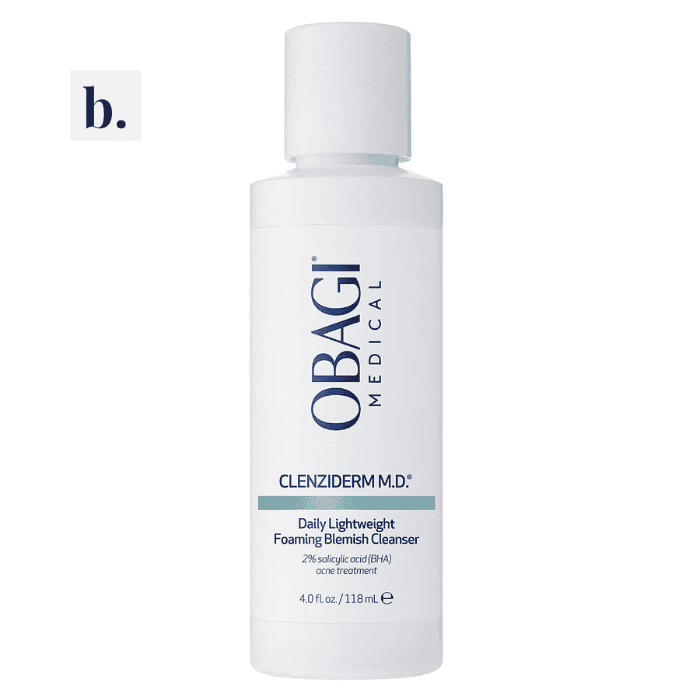
Obagi
Obagi CLENZIderm M.D.® Daily Lightweight Foaming Blemish Cleanser
If your oily or acne-prone skin tolerates high-foam cleansing, this wash offers a legitimate 2% salicylic-acid acne-treatment step. Menthol, fragrance, sulfates and a dryness warning limit its fit for reactive skin, and…
Read the BeautyBrief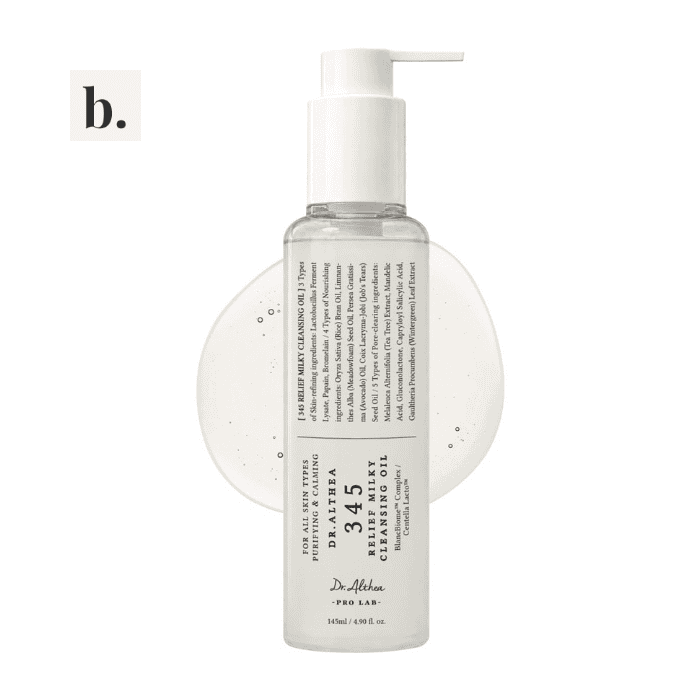
Dr.Althea
Dr.Althea 345 Relief Milky Cleansing Oil
This is best aligned with normal, combination, oily, or acne-prone skin that wants an emulsifying first cleanse for makeup, sunscreen, sebum, and pore buildup. The cleansing system is the main strength, while…
Read the BeautyBrief
Alchemy 21/12
Alchemy 21/12 Enzyme + PHA Resurfacing Polish
If rough, dull skin benefits from periodic exfoliation, this polish combines PHAs, bromelain and jojoba esters in one short-contact step. Its Premium value rests on that combined format, and sensitive or heavily…
Read the BeautyBrief
Beverly Hills MD
Beverly Hills MD Resurface + Restore Youth Revealing System
If your skin tolerates acids and retinol, this system provides an intensive route to smoother-looking texture and tone. The Premium value is strongest when you want both steps and accept the cumulative…
Read the BeautyBrief
PCA SKIN
PCA SKIN Facial Wash Oily/Problem
If your skin is oily, combination or breakout-prone, this cleanser combines daily oil removal with some rinse-off exfoliation. Its short contact time and undisclosed acid percentages limit acne-treatment expectations, so choose it…
Read the BeautyBrief
cocokind
cocokind AHA Jelly Cleanser
If you want low-foam cleansing with mild exfoliation, this Mid-Range cleanser suits skin that tolerates acids. Its water-binding blend helps balance the wash, but a simpler cleanser may offer better value when…
Read the BeautyBrief