
Dr.Althea 345 Relief Milky Cleansing Oil Review
BeautyBrief™
Brand
Dr.Althea
Product
345 Relief Milky Cleansing Oil
Claims check
Dr.Althea 345 Relief Milky Cleansing Oil uses emulsifying oils for makeup and sunscreen removal; rinse-off acids and enzymes are supporting ingredients without disclosed exfoliating strengths.
Shopper fit
- Normal
- Combination
- Oily
- Acne-Prone
Formula flags
- Exfoliating acids
Shopper preferences
- None Found
Key ingredients
| Ethylhexyl Stearate | Provides much of the oil-soluble cleansing and slip needed to dissolve sunscreen, makeup, and sebum. |
|---|---|
| Rice Bran Oil | Adds emollient support and helps keep the cleansing step from feeling overly stripped. |
| Meadowfoam Seed Oil | Adds lightweight emollience and supports a softer post-rinse feel. |
| Gluconolactone | Adds a PHA exfoliating pathway, but the undisclosed concentration and rinse-off use keep it in a supporting role. |
| Mandelic Acid | Adds another exfoliating pathway without enough dose or pH information to treat the cleanser as a leave-on acid treatment. |
Price tier
$ Budget
Value check
At the Budget tier, the value is strongest if you want an emulsifying first cleanse with added pore- and texture-focused ingredients rather than a basic oil-only makeup remover.
Where to buy
We may earn a commission through these links at no additional cost to you. This does not affect our BeautyBrief.
Bottom line
If you love an oil cleanser that turns milky with water, Dr.Althea 345 Relief offers an easy first cleanse for makeup and sunscreen. Its Budget appeal is the silky transformation and simple rinse, with acids and enzymes adding formulation interest.
The satisfying moment with an oil cleanser is watching makeup and sunscreen loosen, then adding water and seeing the oil turn milky enough to rinse away. Dr.Althea 345 Relief Milky Cleansing Oil is built for that first-cleanse ritual, with an emulsifying oil base and a more complicated supporting cast of botanical oils, acids and enzymes.
The oil-to-milk transformation is the main event, while the acids and enzymes add an interesting skincare-inspired detail to the cleansing formula.
What it claims
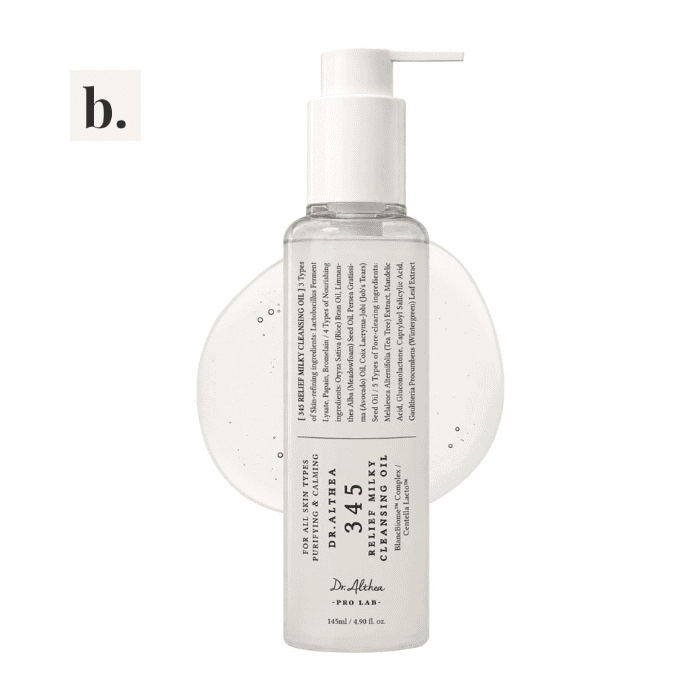
Current exact-product materials position 345 Relief Milky Cleansing Oil as a lightweight oil-to-milk cleanser for makeup, sunscreen, excess sebum, and pore buildup. The formula also highlights rice bran, meadowfoam, Job’s tears, and avocado oils together with papain, bromelain, gluconolactone, capryloyl salicylic acid, mandelic acid, tea tree, and lactobacillus ferment lysate.[1]
Claims vs. formula
The makeup- and sunscreen-removal story is well aligned with the formula. Ethylhexyl stearate and cetyl ethylhexanoate form the main oil-soluble cleansing phase, while polyglyceryl-10 diisostearate, polyglyceryl-6 dicaprate, and polyglyceryl-10 laurate help the oil emulsify with water and rinse away. Rice bran, meadowfoam, Job’s tears, and avocado oils add emollient support around that cleansing system.[2]
Clinical cleansing research supports the basic format: in a 20-person study, cleansing oil removed water-resistant sunscreen more effectively than water or a foaming cleanser and produced fewer reports of post-wash dryness than the cleanser group.[3] That study did not test this Dr.Althea product, so it supports the cleansing-oil approach rather than proving this finished formula’s performance.
The formula also contains gluconolactone, mandelic acid, capryloyl salicylic acid, papain, and bromelain. Capryloyl salicylic acid is a separate ingredient from salicylic acid. Because the concentrations, finished-product pH, and free-acid levels are not disclosed and contact time is brief, BB treats this blend as supporting pore- and texture-focused cleansing rather than as a stand-alone acne, blackhead, or resurfacing treatment.
Ingredients that matter
Ethylhexyl stearate and cetyl ethylhexanoate give the formula much of its makeup- and sunscreen-loosening slip, while polyglyceryl emulsifiers help that oily layer rinse away when you add water. Rice bran and meadowfoam oils add an emollient feel to the cleansing step.
Gluconolactone, mandelic acid and enzymes add a pore-and-texture-focused twist. Since their concentrations and the finished cleanser’s pH aren’t disclosed, their role is best treated as supporting context rather than proven exfoliation.

Meadowfoam Seed Oil
Meadowfoam seed oil can make a moisturizer feel rich and leave dry skin softer. Its stable emollient role is useful, but it isn't proven as a stand-alone anti-aging treatment.
Read the IngredientBrief
Gluconolactone
Gluconolactone is a PHA with some evidence for surface smoothing and hydration in selected formulas. Product strength, pH and format determine whether it feels comfortably exfoliating.
Read the IngredientBrief
Mandelic Acid
Mandelic acid is an exfoliating AHA with some human evidence for mild acne and clogged pores. If you're choosing one, the pH, formula and how often you use it matter…
Read the IngredientBrief
Salicylic Acid
If clogged pores or mild breakouts are your concern, salicylic acid is a useful exfoliating acne ingredient. You don't need to chase 2% or stack several acid products—choose a cleanser…
Read the IngredientBriefWhat to expect in the short term
Expect a low-friction oil phase that loosens sunscreen, makeup, and oily residue, then turns milky when water is added and rinses more cleanly than a non-emulsifying facial oil. The plant-oil base supports slip and softness, while the acid-and-enzyme blend is not expected to behave like a strong peel during ordinary cleansing contact.
What to expect over time
The most dependable repeat-use benefit is effective first-step cleansing with less oily residue than a plain facial oil. The acids and enzymes can support surface smoothing and pore-focused cleansing, but the formula does not justify a predictable acne, blackhead, or pigmentation timeline without disclosed concentrations, pH, or finished-product clinical data.
Who it fits
If your evening routine includes sunscreen or makeup, this oil-to-milk texture could be a useful first cleanse. Normal, combination or oily skin may enjoy the emulsifying rinse, while reactive skin—or a routine already packed with acids and retinoids—may prefer a simpler cleansing oil.
The formula includes tea-tree and wintergreen components as well as acids and enzymes, so your own sensitivity to those ingredients is worth considering. You don’t need extra exfoliating ingredients just to remove the day’s sunscreen.
Compare before you buy
At the Budget tier, the value is the cleansing-oil format with an added skincare twist. If you only need to dissolve makeup and sunscreen, a straightforward emulsifying oil may do that job just as well. Choose this more elaborate blend because you like the formula’s overall fit, not because a rinse-off acid-and-enzyme list promises clear pores.
Final Assessment
Dr.Althea 345 Relief Milky Cleansing Oil is most appealing for that easy first-cleanse ritual: an oil that loosens stubborn residue, then turns milky when you add water. The cleansing base has a sensible purpose, and the Budget tier makes the format approachable. The silky oil-to-milk rinse is the little pleasure that makes this Budget first-cleanse ritual appealing.
Where to buy
Choose a retailer to view current pricing and availability.
We may earn a commission through these links at no additional cost to you.
Last reviewed: October 2026
Sources
-
Dr.Althea. 345 Relief Milky Cleansing Oil product materials. Current exact-product materials supplied for editorial verification October 8, 2026, with current authorized-retailer product materials reviewed the same date.
Used to verify the exact product identity, 145 mL size, oil-to-milk format, directions, and current cleansing and pore-focused positioning.
-
Dr.Althea. 345 Relief Milky Cleansing Oil ingredient panel. Current exact-product ingredient image supplied for editorial verification October 8, 2026.
Used as BB’s formula source of record for the complete ordered INCI.
-
Chen W, He M, Xie L, Li L. The optimal cleansing method for the removal of sunscreen: Water, cleanser or cleansing oil? Journal of Cosmetic Dermatology. 2020;19(1):180-184. PMID: 31157512.
In a 20-person study, cleansing oil removed water-resistant sunscreen more effectively than water or a foaming cleanser and produced fewer reports of post-cleansing dryness than the cleanser group. The study did not test Dr.Althea 345 Relief Milky Cleansing Oil.
