
Gluconolactone in Skincare
Gluconolactone is a PHA with some human evidence for mild exfoliation and smoother-looking texture in specific formulas. Concentration, pH, format, other acids, and the finished formula determine how gentle or effective it is.
- Aliases
- D-Glucono-1,5-lactone, D-Glucono-delta-lactone, Gluconic Acid Lactone, GDL
- Ingredient category
- Chelating Agent, Exfoliant
- Most relevant for
- Dullness, Rough and Bumpy Skin
- Evidence strength
- Some Support for Improving rough or dull-looking surface texture with topical gluconolactone or PHA formulations
- Formula matters
- Concentration, pH, hydrolysis, vehicle, leave-on versus rinse-off format, contact time, other exfoliants, and the finished formula matter. A PHA label or high percentage does not guarantee mildness or better results.
- Separate product needed?
- Sometimes. A separate gluconolactone product can make sense when mild exfoliation fills a real gap and stronger acids are difficult to tolerate.
BB takeaway
Gluconolactone is a credible milder exfoliant, but PHA is not a guarantee of barrier repair or irritation-free use. Choose it when the complete formula solves a real texture or dullness problem without duplicating other exfoliation.
Ingredient evidence does not prove the performance of every finished product containing it.
What is gluconolactone?
Gluconolactone is a lactone derived from gluconic acid and commonly grouped with polyhydroxy acids, or PHAs, in skincare. Its INCI name is Gluconolactone.[1]
It is used for mild exfoliation, skin conditioning, and a separate chelating role inside formulas. Gluconolactone is not interchangeable with gluconic acid, lactobionic acid, or every other PHA.
What does gluconolactone do for skin?
Its main role in your routine is mild surface exfoliation. In a suitable leave-on formula, it can help smooth rough or dull-looking texture.
Some gluconolactone-containing formulas have also performed well in skin-barrier challenge studies and have caused less stinging or burning than glycolic-acid regimens.[2][3]
That does not make gluconolactone a universal barrier-repair or sensitive-skin ingredient. Formula strength and tolerability still matter.
What the evidence says about gluconolactone skincare
Gluconolactone has some support for mild exfoliation and smoother-looking texture, but much of the human evidence belongs to specific finished formulas or full PHA regimens.
In a small study of 11 healthy adults, 8% gluconolactone cream did not worsen baseline water loss or redness over four weeks and showed favorable responses after a detergent irritation challenge.[2] The experimental arm model was too small to establish facial barrier repair.
A 12-week controlled study compared a gluconolactone-containing PHA regimen with a glycolic-acid AHA regimen for photoaged facial skin. Both improved several visible measures; the PHA regimen caused less stinging and burning, while the glycolic regimen performed better on some endpoints.[3] The study tested complete regimens and all listed authors were affiliated with NeoStrata.
An older double-blind acne trial compared 14% gluconolactone solution with vehicle and 5% benzoyl peroxide. Both active treatments reduced inflammatory and non-inflammatory lesions, with fewer side effects reported for gluconolactone.[4] The 1992 study supports a signal, not category-wide proof that modern PHA products treat acne.
How gluconolactone form and formulation affect results
Concentration, pH, vehicle, contact time, product format, and the presence of other acids all affect how a gluconolactone product behaves.
A cleanser is rinsed off quickly, while a toner, serum, pad, or cream stays on skin longer. Two products listing the same ingredient can therefore differ substantially in exfoliation and irritation.
Gluconolactone can hydrolyze to gluconic acid in water-containing systems, which makes the finished acid system more important than the front-label percentage alone.[5]
Higher PHA percentage is not automatically better, and “PHA” does not guarantee that a product is gentler than every AHA formula.
Who may benefit from gluconolactone skincare?
Gluconolactone can make sense when rough texture or dull surface buildup is a concern and stronger acid products are difficult to tolerate.
It can also be useful in a balanced moisturizer or serum when you want modest exfoliation without adding a more aggressive acid step.
If another exfoliant already controls texture without irritation, you probably do not need another PHA.
Gluconolactone side effects and irritation risk
Gluconolactone is often described as gentle, but it can still cause stinging, dryness, redness, or peeling when a formula is strong or used too often.
In 2026, the Expert Panel for Cosmetic Ingredient Safety concluded that gluconolactone is safe in cosmetics under the practices of use and concentration described in its assessment.[5]
That ingredient-level conclusion does not guarantee that every finished acid product will suit every person.
How to use gluconolactone in your skincare routine
Follow the directions on the finished product.
If you are new to hydroxy acids or already use retinoids, salicylic acid, glycolic acid, or another exfoliant, start with fewer applications so you can judge tolerance.
You do not need visible peeling for a PHA product to be useful. Moisturizer and daily sunscreen help support an exfoliating routine.
How long does gluconolactone take to work?
There is no universal timeline because formulas, concentrations, formats, and goals differ.
Human studies measured changes over roughly four to 12 weeks.[2][3]
Early softness may come partly from the formula base rather than exfoliation itself.
What can you use with gluconolactone?
Gluconolactone can fit alongside ceramides, niacinamide, glycerin, and other moisturizing ingredients.
Combining it with salicylic acid, glycolic acid, retinoids, benzoyl peroxide, or another exfoliant can raise the total irritation burden.
When irritation appears, simplifying the routine is usually more useful than adding soothing products while continuing to over-exfoliate.
How to choose a gluconolactone product
Start with the problem you want the product to solve.
For rough texture or mild dullness, a leave-on PHA serum, toner, or moisturizer can make sense. Check for other exfoliating acids or retinoids that may make the formula stronger than expected.
Give more weight to finished-product testing and tolerability than to a “PHA,” “gentle acid,” or high-percentage claim.
Gluconolactone alone does not justify Premium pricing.
Do you need a separate gluconolactone product?
Sometimes.
A dedicated product can make sense when mild exfoliation fills a real gap and stronger acids are difficult to tolerate.
Skip it when another cleanser, acid, retinoid, or treatment already controls surface roughness or dullness without irritation.
The BB Perspective
Gluconolactone is a credible mild exfoliant with useful human evidence behind specific formulas and PHA regimens.
Its practical advantage is potentially better tolerability for your skin, not proof that every PHA repairs the barrier, treats acne, or outperforms other acids.
Choose it when gentle exfoliation solves a real problem and the complete formula fits your routine better than the alternatives.
Last reviewed: September 2026
Sources
COSMILE Europe. Gluconolactone.
COSMILE identifies Gluconolactone as D-Glucono-1,5-lactone and lists skin-conditioning and chelating functions. It supports identity and cosmetic function rather than clinical efficacy. Return to citation.
Berardesca E, Distante F, Vignoli GP, Oresajo C, Green B. Alpha hydroxyacids modulate stratum corneum barrier function. British Journal of Dermatology. 1997;137(6):934-938. doi:10.1046/j.1365-2133.1997.19882069.x.
This study tested 11 adults using 8% acid creams on arm skin over four weeks. Gluconolactone showed favorable responses after an irritation challenge, but the test does not establish facial barrier repair. Two coauthors were affiliated with NeoStrata. Return to citation.
Edison BL, Green BA, Wildnauer RH, Sigler ML. A polyhydroxy acid skin care regimen provides antiaging effects comparable to an alpha-hydroxyacid regimen. Cutis. 2004;73(2 Suppl):14-17.
This 12-week study compared complete PHA and glycolic-acid regimens. Both improved several photoaging measures; PHA caused less stinging and burning. All listed authors were affiliated with NeoStrata. Return to citation.
Hunt MJ, Barnetson RS. A comparative study of gluconolactone versus benzoyl peroxide in the treatment of acne. Australasian Journal of Dermatology. 1992;33(3):131-134. doi:10.1111/j.1440-0960.1992.tb00100.x.
This older double-blind trial compared 14% gluconolactone, vehicle, and 5% benzoyl peroxide in 150 people. The specific high-strength formula and age of the study limit generalization to modern skincare. Return to citation.
Ferguson P, Bergfeld WF, Belsito DV, et al. Safety Assessment of Glycolactones as Used in Cosmetics. International Journal of Toxicology. 2026;45(2 Suppl):124S-134S. doi:10.1177/10915818261455261.
This safety assessment covers gluconolactone chemistry, cosmetic use, and safety and concluded it is safe under the practices and concentrations reviewed. It is not an efficacy trial. Cosmetic Ingredient Review is funded by the Personal Care Products Council, a cosmetics-industry trade association. Return to citation.
Products featuring Gluconolactone
These evaluated products list Gluconolactone among the Key Ingredients that meaningfully shape the formula. Inclusion here reflects ingredient relevance, not an endorsement or rating.
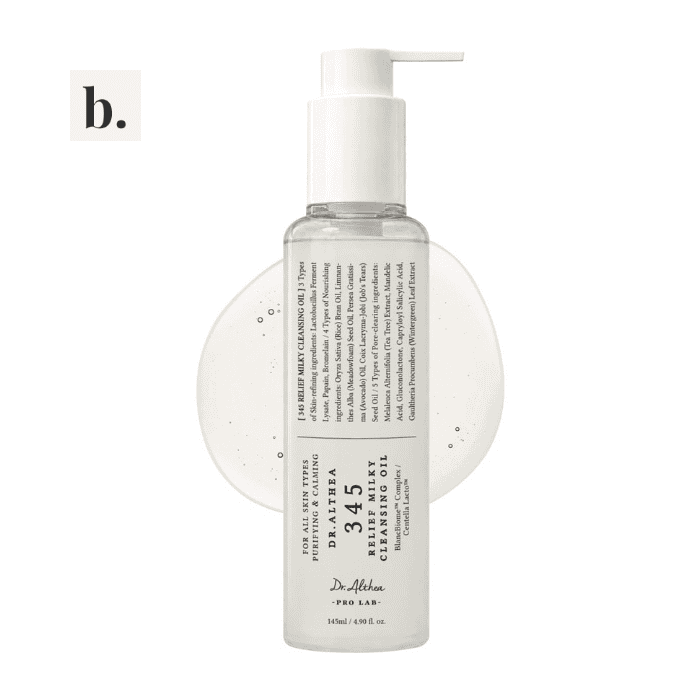
Dr.Althea
345 Relief Milky Cleansing Oil
This is best aligned with normal, combination, oily, or acne-prone skin that wants an emulsifying first cleanse for makeup, sunscreen, sebum, and pore buildup. The cleansing system is the main strength, while…
Read the BeautyBrief
Obagi
SUZANOBAGIMD® Intensive Daily Repair
If you want a combined moisturizer and exfoliant, Intensive Daily Repair offers two PHAs and a substantial conditioning base. Its Premium price makes sense when that combination simplifies your routine, while very…
Read the BeautyBrief
Alchemy 21/12
Enzyme + PHA Resurfacing Polish
If rough, dull skin benefits from periodic exfoliation, this polish combines PHAs, bromelain and jojoba esters in one short-contact step. Its Premium value rests on that combined format, and sensitive or heavily…
Read the BeautyBrief
PCA SKIN
Facial Wash Oily/Problem
If your skin is oily, combination or breakout-prone, this cleanser combines daily oil removal with some rinse-off exfoliation. Its short contact time and undisclosed acid percentages limit acne-treatment expectations, so choose it…
Read the BeautyBrief
Differin
Daily Oil-Free Hydrating Cleanser
If your combination, oily or acne-prone skin needs a hydrating wash with some acid-based smoothing, this Budget cleanser offers a useful option. Its rinse-off format does not make it an acne treatment,…
Read the BeautyBrief
Medicube
Zero Pore Capsule Cleansing Foam
If your oily or combination skin needs exfoliation during cleansing, you get salicylic acid, AHA/PHA ingredients and silica in one wash. Fragrance and cumulative exfoliation limit its fit for reactive skin. At…
Read the BeautyBrief