

NAD+ vs. NMN Skincare: Do They Help Aging Skin?
At a glance
NAD+ and NMN have moved quickly from longevity research into premium skincare, but the two ingredients come with different formulation and delivery challenges. New studies are making the category more interesting, especially around getting NAD+ into skin. Before paying for either one, it helps to separate what has been shown in cells, skin models, and procedures from what an ordinary facial serum has actually proven.
NAD+ and NMN are easy ingredients to market. Both are tied to cellular energy and aging biology, so a serum can sound more advanced than a standard moisturizer before you have even looked at what it does on skin.
The useful question is not whether NAD+ or NMN matters inside cells. They do. The buying question is whether putting either one into a skincare product produces a visible benefit that justifies choosing it over better-established options.
Right now, the science is more convincing as a reason to keep watching the category than as a reason to assume an expensive NAD+ or NMN serum will outperform proven skincare.
In this Briefing
- What is the difference between NAD+ and NMN?
- What does the topical NMN evidence show?
- What does the topical NAD+ evidence show?
- Do NAD+ or NMN products reduce wrinkles?
- Is NMN better than niacinamide?
- How to judge a NAD+ or NMN product
- Are NAD+ or NMN worth paying more for?
- Where should you spend first for visible skin aging?
What is the difference between NAD+ and NMN?
NAD+ is a coenzyme cells use in energy metabolism, redox reactions, DNA-repair signaling, and other essential processes. NMN, or nicotinamide mononucleotide, is one of the precursors cells can use to make NAD+.
That can make NMN sound like the obvious topical choice: use the precursor and let skin convert it into NAD+. In practice, skincare performance depends on more than where an ingredient sits in a metabolic pathway.
Both ingredients create delivery and stability questions. A 2026 NAD+ study developed a specialized ion-coupled transfersome system specifically because free NAD+ has poor stability and limited tissue accessibility. The system improved NAD+ delivery in porcine and human skin explants and changed several senescence-related signals in laboratory and ex vivo models.[1]
NMN research has its own delivery work. A 2025 study tested NMN contained in a yeast-fermented filtrate using a synthetic skin-permeation membrane and separately exposed cultured human fibroblasts to NMN.[2]
So “NAD+ versus NMN” is not really a contest between two ingredient names. For your buying decision, it is a comparison between finished formulas, delivery systems, and the evidence attached to them.
What does the topical NMN evidence show?
NMN has enough laboratory and formulation research to be interesting, but not enough direct human facial-skincare evidence to call it a proven wrinkle ingredient.
In the 2025 permeability study, NMN from a yeast-fermented filtrate crossed a synthetic Strat-M membrane, and directly treated human fibroblasts produced more type I collagen in a separate laboratory experiment.[2]
Those are useful early findings. They do not show that an NMN serum penetrates living human facial skin, reaches the relevant cells at an effective concentration, or reduces wrinkles when people apply it at home.
Another 2025 study exposed human skin fibroblasts to NMN in vitro and reported increases in cellular NAD+, changes in mitochondrial function, lower senescence-associated signals, and changes in extracellular-matrix-related activity.[3]
Again, that helps explain why NMN is being explored for skin aging. It is mechanistic evidence, not a clinical test of a cosmetic serum.
If an NMN product carries a premium because of the NMN story, look for human testing on that exact formula rather than assuming cell research transfers directly to your face.
Does topical NAD+ have better evidence?
NAD+ has made a meaningful step forward on the delivery side, but that still should not be confused with proof that an ordinary NAD+ serum visibly reverses skin aging.
The 2026 ion-coupled transfersome study showed that its engineered NAD+ system delivered more NAD+ into porcine and human skin explants than free NAD+ and altered several senescence- and stress-related signals in laboratory models.[1]
That is stronger evidence for a specific topical delivery technology than simply adding free NAD+ to a conventional cosmetic formula. It was not a randomized facial trial measuring wrinkles, firmness, or other everyday cosmetic outcomes.
There is also 2026 human research involving NAD+, but the design matters. In a prospective case series, 36 women with melasma received five microneedling sessions followed by application of a sterile NAD+ booster. Melasma severity improved over 21 weeks.[4]
That study cannot tell you what an ordinary NAD+ serum does on intact skin. It had no untreated or vehicle-control group, used microneedling to facilitate delivery, and studied melasma rather than wrinkles, firmness, or general skin aging.
So NAD+ currently has more interesting delivery and procedural evidence than it did before. It still does not have the kind of controlled finished-product facial evidence needed to declare it a proven anti-aging skincare ingredient.
Do NAD+ or NMN skincare products reduce wrinkles?
There is not strong direct evidence yet that ordinary over-the-counter NAD+ or NMN products reduce wrinkles because of NAD+ or NMN itself.
A serum containing either ingredient can still make skin look better. It may contain glycerin, emollients, silicones, peptides, ceramides, or other ingredients that improve hydration and surface smoothness.
The important question is what caused the result.
If a formula makes dehydration lines look softer after a few weeks, that can be a useful cosmetic benefit. It does not prove that the product meaningfully increased intracellular NAD+ in living facial skin, reversed cellular aging, or rebuilt dermal collagen.
Claims such as “supports cellular energy” also answer a different question from “reduces wrinkles.” If a brand wants you to pay for a visible anti-aging result, the most useful evidence is human testing on the finished product that measures that result.
Is NMN better than niacinamide?
Not based on current topical evidence.
NMN is newer, but niacinamide has something more useful for a cosmetic buying decision: direct human facial data.
In a 12-week double-blind split-face study, 50 women applied topical 5% niacinamide to one side of the face and vehicle to the other. The niacinamide side showed improvements in several visible aging measures, including fine lines and wrinkles, hyperpigmented spots, red blotchiness, sallowness, and elasticity.[5]
That study does not prove every niacinamide serum works equally well, and all three authors were affiliated with Procter & Gamble. It does give niacinamide a more mature human cosmetic evidence base than NMN currently has.
Do not pay more for NMN simply because it sits closer to NAD+ in a metabolic pathway. A more novel pathway is not the same as stronger skincare evidence.
How should you judge a NAD+ or NMN product before buying?
You do not need to decode every longevity pathway. Focus on whether the evidence connects to the product you are actually considering.
- Look for testing on the exact formula. Ingredient and supplier research can explain why a technology is interesting, but it does not prove the serum in your cart works.
- Check what was measured. If the product promises fewer wrinkles, firmer skin, or brighter tone, the human testing should measure those outcomes.
- Separate models from people. Cells, synthetic membranes, porcine skin, and human skin explants can answer important research questions. They do not replace a controlled facial trial.
- Pay attention to the delivery method. A microneedling-assisted booster and an at-home serum applied to intact skin are not equivalent.
- Check the rest of the formula. Familiar humectants, emollients, antioxidants, or peptides may explain much of the benefit you notice.
- Notice commercial involvement. Industry research can be useful, especially in formulation science, but company affiliations matter when a study is used to justify a premium commercial claim.
The goal is not to dismiss new technology. Make sure the level of evidence matches the price and the promise.
Are NAD+ or NMN worth paying more for?
Not for the ingredient name alone.
A premium becomes easier to justify when the company can show that it solved a real formulation problem and that the finished product gives you a meaningful benefit. Tested delivery technology, better stability, controlled human results, improved tolerability, or performance you cannot easily get from a simpler formula can all matter.
What does not justify a premium by itself is a diagram of the NAD+ pathway, a proprietary longevity complex, or laboratory evidence showing that cells respond to the ingredient.
If the product is mainly a pleasant moisturizer with NAD+ or NMN added to the story, compare it with other moisturizers in the same price range. Ask what the extra money buys after you remove the longevity language.
Where should you spend first for visible skin aging?
If your main goal is preventing or improving visible photoaging, NAD+ and NMN remain optional experiments rather than foundation steps.
Daily sunscreen has direct randomized human evidence for slowing visible skin aging. In a randomized trial involving 903 adults younger than 55, daily sunscreen use was associated with lower odds of worsening skin-aging scores over 4.5 years than discretionary use (odds ratio 0.76; 95% confidence interval 0.59–0.98). This does not mean individual wrinkles became 24% smaller.[6] BB’s Briefing on choosing sunscreen explains what to prioritize.
Prescription tretinoin also has a substantially deeper human evidence base for photodamaged wrinkles than NAD+ or NMN skincare.[7] Cosmetic retinoids are not identical to prescription tretinoin, so the exact product still matters.
If you want antioxidant support, a well-formulated vitamin C serum is another more established option. If dryness or irritation is the bigger problem, a moisturizer you use consistently may be a better purchase than another expensive longevity serum.
The BB Perspective
NAD+ and NMN are both worth watching, but there is no clear topical skincare winner yet.
NAD+ delivery research has advanced, and microneedling-assisted NAD+ now has limited human procedural data. NMN also has growing permeability and cell research. Neither body of evidence shows that an ordinary over-the-counter facial serum reliably produces a meaningful anti-aging advantage over better-established skincare.
If you want to experiment with either ingredient, buy the complete formula—not the pathway story. The product should still make sense for your skin, your goals, and its price even if NAD+ or NMN ultimately adds only a modest benefit.
Last reviewed: October 2026
Sources
Kang S, Wei S, Koo BI, et al. Ion-coupled transfersome complexes for enhanced transdermal NAD+ repletion and mitigation of cellular senescence signatures. Materials Today Bio. 2026;38:103218. doi:10.1016/j.mtbio.2026.103218. PMID: 42170234.
The researchers developed an ion-coupled NAD+ transfersome system designed to improve NAD+ stability and skin delivery. The work included cell models, porcine skin, human skin explants, and C. elegans; the transfersome delivered more NAD+ into skin tissue than free NAD+ and altered several senescence- and stress-related signals. It was not a clinical trial of an at-home facial serum. Multiple authors were employees of LG Household & Health Care R&D Center, and the paper declares those employment relationships as potential competing interests. Return to citation.
Betsuno R, Yamane T, Tsuji H, et al. Permeation of Nicotinamide Mononucleotide (NMN) in an Artificial Membrane as a Cosmetic Skin Permeability Test Model. Journal of Cosmetic Dermatology. 2025;24(5):e70222. doi:10.1111/jocd.70222. PMID: 40317586.
The study tested NMN contained in a yeast-fermented filtrate using a synthetic Strat-M permeation membrane and separately measured type I collagen production after directly treating cultured human fibroblasts with NMN. The study did not apply an NMN cosmetic to living human facial skin. Several authors had affiliations with BYU-Analytica Inc. Return to citation.
Kang S, Park J, Cho E, et al. Distinctive Gene Expression Profiles and Biological Responses of Skin Fibroblasts to Nicotinamide Mononucleotide: Implications for Longevity Effects on Skin. Biomedicines. 2025;13(10):2395. doi:10.3390/biomedicines13102395. PMID: 41153679.
This in vitro study treated human skin fibroblasts with NMN and reported changes in intracellular NAD+, mitochondrial function, senescence-related markers, proliferation, and extracellular-matrix-related activity under laboratory stress and aging models. It did not test a topical NMN product on people. All listed authors were affiliated with LG Household & Health Care R&D Center; the article states that the company had no role in study design, analysis, interpretation, writing, or the decision to publish. Return to citation.
Yi KH, Wan J, Hwang S. Efficacy and Safety of a Topical Nicotinamide Adenine Dinucleotide Skinbooster for the Treatment of Melasma. Aesthetic Plastic Surgery. 2026;50(11):4431-4436. doi:10.1007/s00266-026-05726-1. PMID: 41870519.
This prospective single-center case series followed 36 Korean women with melasma who received five microneedling sessions followed by topical application of a sterile NAD+ booster over 21 weeks. Melasma severity scores improved, but the study had no untreated or vehicle-control group, combined microneedling with NAD+, and evaluated melasma rather than wrinkles or firmness. One coauthor, Jovian Wan, was affiliated with Medical Research Inc.; the authors reported no conflicts of interest. Return to citation.
Bissett DL, Oblong JE, Berge CA. Niacinamide: A B vitamin that improves aging facial skin appearance. Dermatologic Surgery. 2005;31(7 Pt 2):860-865. doi:10.1111/j.1524-4725.2005.31732. PMID: 16029679.
Fifty women with signs of facial photoaging applied topical 5% niacinamide to one side of the face and vehicle to the other twice daily for 12 weeks in a double-blind, randomized split-face study. The niacinamide side showed improvements in fine lines and wrinkles, hyperpigmented spots, red blotchiness, sallowness, and elasticity. All authors were affiliated with The Procter & Gamble Company, so the study is useful direct human evidence with a clear commercial affiliation. Return to citation.
Hughes MCB, Williams GM, Baker P, Green AC. Sunscreen and Prevention of Skin Aging: A Randomized Trial. Annals of Internal Medicine. 2013;158(11):781-790. doi:10.7326/0003-4819-158-11-201306040-00002. PMID: 23732711.
This randomized community trial included 903 adults younger than 55. Over 4.5 years, the daily broad-spectrum sunscreen group had lower odds of worsening microtopography-based skin-aging scores than the discretionary-use group (odds ratio 0.76; 95% confidence interval 0.59–0.98). This relative odds estimate does not mean individual wrinkles became 24% smaller. Some outcome data were missing and the study had modest power for moderate effects. Primary funding came from Australia’s National Health and Medical Research Council. Return to citation.
Huang HY, Lee LTJ. Tretinoin for Photodamaged Facial Skin: Systematic Review and Meta-Analysis of Randomized Controlled Trials. Dermatology Practical & Conceptual. 2025;15(4):e20255172. doi:10.5826/dpc.1504a5172. PMID: 41236273.
The review included eight randomized trials with 1,361 participants and found that topical tretinoin improved fine and coarse facial wrinkles caused by photodamage compared with vehicle. The trials varied in formulation, strength, duration, and outcome measures, so the findings support tretinoin’s broader evidence base rather than every cosmetic retinoid product. Return to citation.
Related product BeautyBriefs
These BeautyBriefs cover products relevant to the needs discussed in this Beauty Briefing. Inclusion here reflects topic relevance, not a rating or endorsement.

Allies of Skin
Allies of Skin The Lab Drop 10/10/10 Multi GF Exo Advanced Recovery Ampoules
If you are considering Allies of Skin Lab Drop 10/10/10 Ampoules for visible aging, its growth-factor and exosome-themed complexes make an ambitious treatment story. The brand's reported improvements do not establish biological…
Read the BeautyBrief
Schaf
Schaf Moisturizer 3.0
If you prefer a fragrance-free cream, Schaf Moisturizer 3.0 offers rich emollience alongside niacinamide and bakuchiol. Its Premium value rests on how the texture and ingredient blend suit you, not established retinoid-level…
Read the BeautyBrief
Oak Essentials
Oak Essentials Antioxidant Hand Serum
If your hands look dry, Oak Essentials Hand Serum offers humectants and emollients for softness. Its Premium value depends on the scented finish, not unproven cellular regeneration.
Read the BeautyBrief
Neutrogena
Neutrogena Rapid Wrinkle Repair Retinol Regenerating Cream
If your skin tolerates retinol and fragrance, Rapid Wrinkle Repair offers a moisturizing format for gradual fine-line care. Its Mid-Range value rests on texture and convenience rather than a disclosed retinol concentration.
Read the BeautyBrief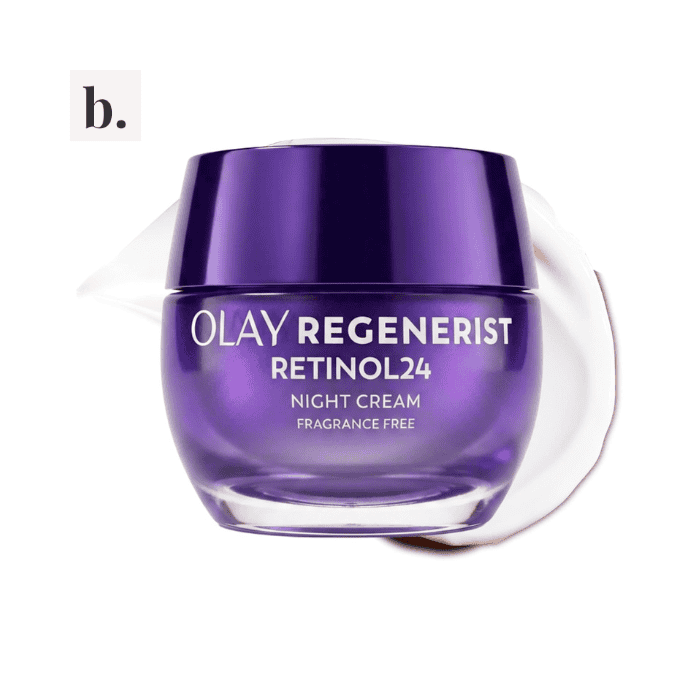
Olay
Olay Regenerist Retinol24 Night Moisturizer
If your skin tolerates retinoids, Olay Retinol24 offers a convenient fragrance-free night moisturizer with two vitamin A derivatives. Its Mid-Range value depends on routine simplicity rather than known retinol strength.
Read the BeautyBrief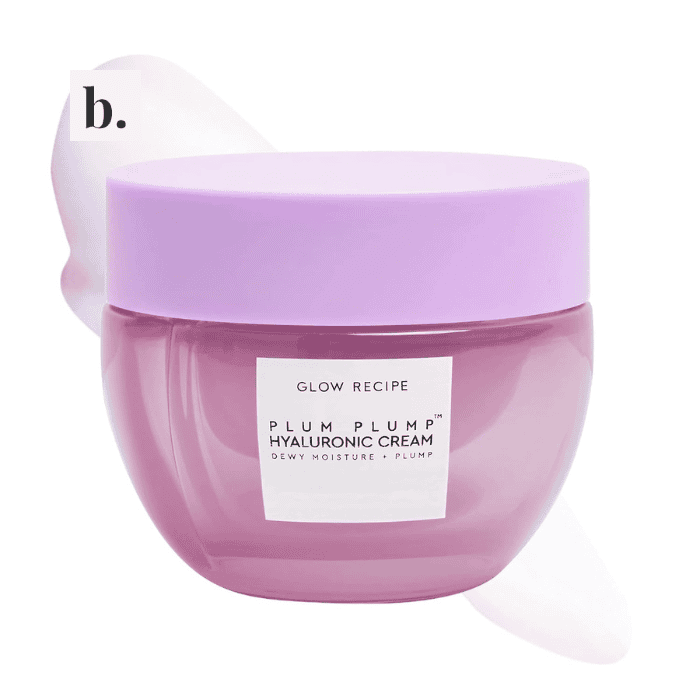
Glow Recipe
Glow Recipe Plum Plump Hyaluronic Cream
If you want lightweight hydration, Plum Plump combines hyaluronic acid forms, glycerin and squalane for a temporarily plumper-looking finish. Its refillable format adds value, but the fragrance and limited wrinkle evidence matter…
Read the BeautyBrief