

Can Skincare Target Senescent Cells? The Senolytic Claim
At a glance
“Senolytic” skincare makes an unusually specific promise: that a topical product can target senescent, or so-called “zombie,” cells involved in skin aging. The biology is real, and human topical research is beginning to move beyond theory. The important buying question is whether today’s serums have actually shown selective senescent-cell clearance—or whether the marketing is getting ahead of what the studies measured.
Skincare brands are increasingly talking about “zombie cells,” cellular longevity, senescence, and senolytic technology as though they are the next step beyond retinoids and antioxidants.
There is real science behind cellular senescence. Senescence-associated cells and markers are found in aging human skin, and human research has linked higher levels of the marker p16INK4a with facial wrinkling and other age-related skin changes.[1]
That makes senescence a legitimate research target. It does not mean an over-the-counter serum has proven that it can selectively remove senescent cells from your face.
That distinction matters because a product can hydrate, smooth, support the barrier, or even change a senescence-associated marker without proving true senolytic action.
In this Briefing
- What “senolytic” actually means
- Why researchers target senescent cells
- What the human topical evidence shows
- Why changing a marker is not the same as clearing cells
- What about fisetin, quercetin, and other “senolytic” ingredients?
- What to expect from a senescence-focused serum
- How to judge a senolytic claim before buying
- Is senolytic skincare worth paying more for?
What does “senolytic” actually mean?
A senolytic is intended to selectively eliminate senescent cells while leaving healthier cells relatively unharmed.
That is a much more specific claim than saying a product “supports healthy aging,” “reduces signs of cellular stress,” or “improves skin longevity.” A formula can change inflammatory signaling, reduce a senescence-associated marker, or suppress parts of the senescent phenotype without actually killing and clearing senescent cells.
You may also see the term senostatic or senomorphic. Those approaches aim to suppress harmful features or signaling from senescent cells rather than eliminate the cells themselves. A 2026 dermatology commentary makes the distinction directly: senolytics are intended to clear persistent senescent cells, while senomorphics modulate or suppress the senescence-associated secretory phenotype without inducing cell death.[2]
So if a brand calls a cosmetic senolytic, the evidence should match that very specific claim. A change in one biomarker is not automatically proof of selective cell clearance.
Why are senescent cells being targeted in skincare?
Senescent cells have stopped dividing but remain metabolically active. They can release inflammatory and tissue-remodeling signals collectively referred to as the senescence-associated secretory phenotype, or SASP.
Human skin research supports a relationship between this biology and visible aging. In a study of 178 adults, greater numbers of p16INK4a-positive cells in sun-protected skin were associated with age-related elastic-fiber changes, and epidermal p16 positivity was associated with more facial wrinkling and higher perceived age.[1]
That is an association. It does not prove that clearing those cells with a cosmetic serum will reverse wrinkles, improve firmness, or make skin biologically younger.
The science makes senescence a promising target. It does not make every senescence-focused product a proven treatment. Senescence is also not universally harmful: transient senescence has protective roles in processes such as wound repair and tumor suppression, which is another reason the biology should not be reduced to “zombie cells are bad.”[2]
Do topical products have human evidence yet?
Yes, but the human evidence is still narrow—and different studies are answering different questions.
An exploratory randomized study of topical rapamycin found reductions in the senescence-associated protein p16INK4a and improvements in some histologic and clinical aging measures after several months of treatment.[3] That is useful evidence that a topical intervention can affect senescence-related biology in human skin. Rapamycin is a drug, however, and the study had substantial attrition. It does not validate over-the-counter senolytic cosmetics.
A 2024 exploratory study of topical human platelet extract reported reductions in high p16INK4a expression, telomere-associated damage, and inflammatory SASP signaling after 12 weeks.[4] That is another meaningful human signal, but the study measured changes in senescence-related markers rather than proving selective senescent-cell clearance.
A 2025 randomized trial of a commercial OS-01 peptide formulation found better hydration and barrier-function measurements than a commercial moisturizer control, along with changes in some circulating inflammatory markers.[5] Those are useful product findings. The trial did not demonstrate selective elimination of senescent cells from facial skin, and several authors were company founders or inventors on the technology.
A 2026 study of another multicomponent topical formula found senostatic, anti-inflammatory, and photoprotective activity in cultured skin cells, while a 50-person patch test supported tolerability.[6] The human portion tested irritation and sensitization—not whether the product cleared senescent cells or improved facial aging.
The field has clearly moved beyond pure theory. It has not reached the point where “senolytic skincare” can be treated as a proven over-the-counter category.
Why is lowering a senescence marker not the same as clearing senescent cells?
This is where a strong marketing claim can outrun a promising study.
Senescence is not defined by one marker alone. Researchers often look at combinations of features such as p16, p21, SA-β-gal activity, DNA-damage signals, SASP factors, cell-cycle behavior, and tissue context.
A topical product can lower p16 expression or reduce inflammatory signaling without proving that it selectively killed and removed the senescent cells producing those signals.
That does not make the finding meaningless. It may show that the formula is affecting a pathway relevant to aging skin. It simply supports a narrower conclusion.
The same rule applies to visible results. Better hydration can make fine lines look softer. A good moisturizer can improve barrier function and make skin feel firmer or smoother. Those benefits do not become evidence of senolysis because the formula also contains a longevity ingredient.
What about fisetin, quercetin, and other ingredients called senolytic?
Fisetin, quercetin, and other compounds appear frequently in the broader senescence literature. Seeing one of those names on a skincare label does not prove the finished product has senolytic activity in human skin.
Preclinical skin research has shown true selective clearance with known senolytic drugs. In a 2022 study, ABT-263 and ABT-737 selectively cleared senescent human dermal fibroblasts in cell models, and treatment of aged mice improved several skin-aging measures.[7]
In the mouse experiments, the senolytic drugs were injected into the skin rather than applied as an ordinary cosmetic cream. The findings therefore do not establish that a topical skincare formula delivers the same effect.[7]
That is useful proof of concept. It is not evidence that a cosmetic cream containing a botanical extract produces the same effect on a human face.
Ingredient reputation is not a substitute for finished-product testing.
What should you expect from a senescence-focused serum?
Start with benefits you can evaluate without relying on the senolytic story.
A good serum may hydrate, make dry skin more comfortable, support the barrier, or improve the look of texture. Niacinamide can be useful without a cellular-longevity claim. A well-formulated vitamin C serum can provide antioxidant support. A suitable retinoid has a much deeper human evidence base for visible photoaging than current cosmetic senolytic claims.
Those familiar benefits are not less valuable because they sound less futuristic.
If a senescence-focused formula hydrates well, feels good on your skin, and gives you useful supporting ingredients at a reasonable price, it can still be a worthwhile product. The harder sell is a substantial price premium justified mainly by the claim that the formula clears “zombie cells.”
How should you judge a senolytic skincare claim before buying?
You do not need to become an expert in cellular biology. Ask questions that connect the science directly to the product.
- Was the finished product tested? Evidence on the serum or cream you can actually buy matters more than research on one raw ingredient.
- Were people tested? Human skin data tell you more about a cosmetic claim than isolated cells or mouse models.
- What did the study actually measure? A lower senescence-associated marker is not automatically selective senescent-cell clearance.
- Did the evidence match the visible claim? If the product promises fewer wrinkles or firmer skin, look for controlled measurements of those outcomes too.
- Was there a useful comparison? Improvement from baseline is less convincing than outperforming a similar control formula.
- Who funded or conducted the research? Company-supported and inventor-led studies can still be useful, but those relationships matter when the evidence is being used to justify a premium commercial claim.
Use the same standard for other cosmetic marketing claims: the strength of the evidence should match the strength of the promise.
Is senolytic skincare worth paying more for?
Not for the word senolytic alone.
A higher price becomes easier to justify when the actual finished product has controlled human testing, the measured results match the claims, and the formula gives you a useful benefit beyond the longevity story.
A proprietary peptide, patent, laboratory pathway, or ingredient with a senolytic reputation does not establish that the finished cosmetic selectively clears senescent cells.
If your main concerns are fine lines, uneven tone, rough texture, or dryness, you are not missing a necessary skincare step if you leave a senolytic serum out of your routine. Daily broad-spectrum sunscreen, a moisturizer that suits your skin, and an evidence-backed treatment for the concern you actually have remain more established places to spend first.
The BB Perspective
Senescent cells are a real and increasingly important target in skin-aging research. That makes senescence-focused skincare worth watching. It does not make senolytic a proven cosmetic category yet.
Human topical studies now show that some interventions can change senescence-associated markers, and some commercial formulas have produced useful improvements in hydration or barrier function. What is still missing is broad, independent evidence that ordinary over-the-counter products selectively clear senescent cells from human facial skin—and that this clearance creates a meaningful visible advantage.
Buy the formula for what it can actually demonstrate. If the senolytic story is the main reason it costs more, the evidence should prove that specific claim rather than simply showing an interesting pathway behind it.
Last reviewed: October 2026
Sources
Waaijer MEC, Gunn DA, Adams PD, et al. P16INK4a Positive Cells in Human Skin Are Indicative of Local Elastic Fiber Morphology, Facial Wrinkling, and Perceived Age. Journals of Gerontology: Series A. 2016;71(8):1022-1028. doi:10.1093/gerona/glv114. PMID: 26286607.
This human biopsy study included 178 adults aged 45 to 81 and found associations between p16-positive cells in sun-protected skin, local elastic-fiber morphology, facial wrinkling, and perceived age. The study establishes association rather than showing that senescent-cell clearance improves skin aging. One author was affiliated with Unilever, and the study received support that included Unilever funding. Return to citation.
Haykal D, Flament F, Garibyan L, et al. Targeting Cellular Senescence in Dermatology: Senolytic and Senomorphic Strategies. GeroScience. 2026;48:6343-6352. Published July 8, 2026. doi:10.1007/s11357-026-02379-5. Accessed September 2026.
This commentary distinguishes senolytics, which are intended to eliminate persistent senescent cells, from senomorphics, which suppress or modify harmful SASP activity without inducing senescent-cell death. It also emphasizes that transient senescence can serve protective roles in wound repair and tumor suppression. BB uses it for current terminology and biological context, not as evidence that an over-the-counter cosmetic has demonstrated senolytic efficacy. One author was affiliated with L’Oréal Research & Innovation, and two were affiliated with Helena Rubinstein, L’Oréal’s luxury division. The authors declared no competing interests. Return to citation.
Chung CL, Lawrence I, Hoffman M, et al. Topical rapamycin reduces markers of senescence and aging in human skin: an exploratory, prospective, randomized trial. GeroScience. 2019;41(6):861-869. PMID: 31761958.
This exploratory placebo-controlled study enrolled 36 adults older than 40 and applied rapamycin and vehicle to opposite hands. Rapamycin was associated with lower p16 expression, higher collagen VII, and improvement in some histologic and clinical measures, but 19 participants discontinued or were lost to follow-up. Rapamycin is a drug, not an ordinary cosmetic ingredient. The study received institutional and public funding, and three authors were shareholders of Boinca Therapeutics LLC. Return to citation.
Wyles SP, Yu GT, Gold M, Behfar A. Topical Platelet Exosomes Reduce Senescence Signaling in Human Skin: An Exploratory Prospective Trial. Dermatologic Surgery. 2024;50(11S):S160-S165. doi:10.1097/DSS.0000000000004426. PMID: 39480039.
After 12 weeks of twice-daily topical human platelet extract, the exploratory study reported reductions in high dermal p16 expression, telomere-associated damage, and pro-inflammatory SASP signaling among participants with higher baseline senescence markers. These results show changes in senescence-associated biology, not proof of selective senescent-cell clearance. The study was supported by Rion Aesthetics; one author was a consultant for Rion Aesthetics and another was a co-founder of Rion, Inc. Return to citation.
Zonari A, Brace LE, Buhrer LB, et al. OS-01 Peptide Topical Formulation Improves Skin Barrier Function and Reduces Systemic Inflammation Markers: A Pilot 12-Week Clinical Trial. Journal of Cosmetic Dermatology. 2025;24(4):e70169. doi:10.1111/jocd.70169. PMID: 40193112.
This randomized double-blind pilot trial involved 60 women aged 60 to 90 and compared an OS-01 topical formulation with a commercial moisturizer. The OS-01 group showed better hydration and barrier-function measurements and changes in some circulating inflammatory markers. The trial did not demonstrate selective clearance of senescent cells from facial skin. Several authors were OneSkin employees, co-founders, or named inventors on the technology. Return to citation.
Rzeszutek I, Tomaszewska A, Rumian D, et al. Integrated photoprotection and senescence modulation: A topical formulation counteracts cellular aging in human skin cells. Biomedicine & Pharmacotherapy. 2026;200:119539. doi:10.1016/j.biopha.2026.119539. PMID: 42161224.
The multicomponent formula reduced several senescence-associated measures and inflammatory signals in cultured fibroblasts and keratinocytes and showed protection against high-energy visible light in cell models. A separate patch test in 50 volunteers supported tolerability, but the human portion did not test senescent-cell clearance or facial anti-aging efficacy. The authors declared no competing interests, although one author listed an affiliation with MGP Cosmetics Sp. z o.o. Return to citation.
Kim H, Jang J, Song MJ, et al. Attenuation of intrinsic ageing of the skin via elimination of senescent dermal fibroblasts with senolytic drugs. Journal of the European Academy of Dermatology and Venereology. 2022;36(7):1125-1135. PMID: 35274377.
This preclinical study found that the senolytic drugs ABT-263 and ABT-737 selectively cleared senescent human dermal fibroblasts in cell models. In aged mice, treatment was associated with increased collagen density and epidermal thickness and lower levels of some senescence-associated secretory factors. It supports the biological concept of senolytic skin treatment but does not establish safety or efficacy for over-the-counter cosmetic products used on human faces. Return to citation.
Related product BeautyBriefs
These BeautyBriefs cover products relevant to the needs discussed in this Beauty Briefing. Inclusion here reflects topic relevance, not a rating or endorsement.

Allies of Skin
Allies of Skin The Lab Drop 10/10/10 Multi GF Exo Advanced Recovery Ampoules
If you are considering Allies of Skin Lab Drop 10/10/10 Ampoules for visible aging, its growth-factor and exosome-themed complexes make an ambitious treatment story. The brand's reported improvements do not establish biological…
Read the BeautyBrief
Schaf
Schaf Moisturizer 3.0
If you prefer a fragrance-free cream, Schaf Moisturizer 3.0 offers rich emollience alongside niacinamide and bakuchiol. Its Premium value rests on how the texture and ingredient blend suit you, not established retinoid-level…
Read the BeautyBrief
Oak Essentials
Oak Essentials Antioxidant Hand Serum
If your hands look dry, Oak Essentials Hand Serum offers humectants and emollients for softness. Its Premium value depends on the scented finish, not unproven cellular regeneration.
Read the BeautyBrief
Neutrogena
Neutrogena Rapid Wrinkle Repair Retinol Regenerating Cream
If your skin tolerates retinol and fragrance, Rapid Wrinkle Repair offers a moisturizing format for gradual fine-line care. Its Mid-Range value rests on texture and convenience rather than a disclosed retinol concentration.
Read the BeautyBrief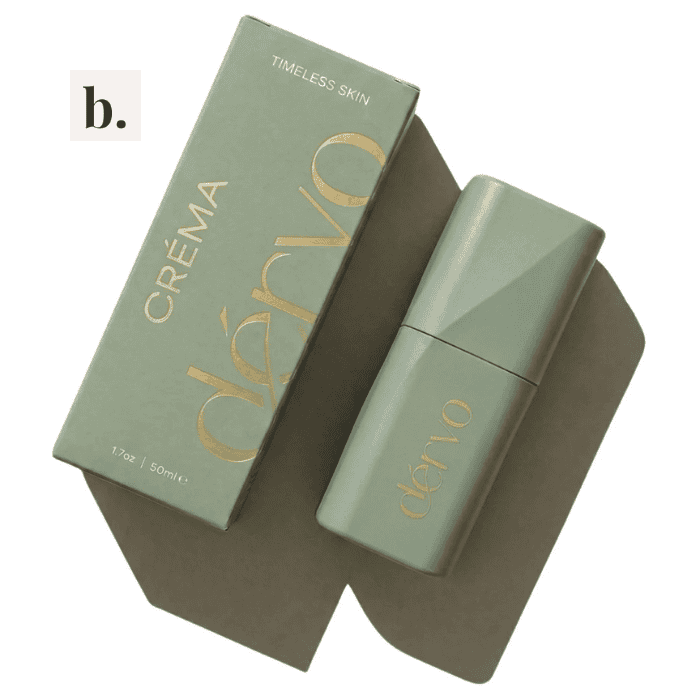
Dérvo
Dérvo Créma Face Moisturizer
If you want a rich facial moisturizer, Dérvo Créma combines humectants, plant-derived emollients and several hyaluronic-acid forms for hydration. Its peptide and botanical ingredients make a treatment-oriented formula, but published marketing claims…
Read the BeautyBrief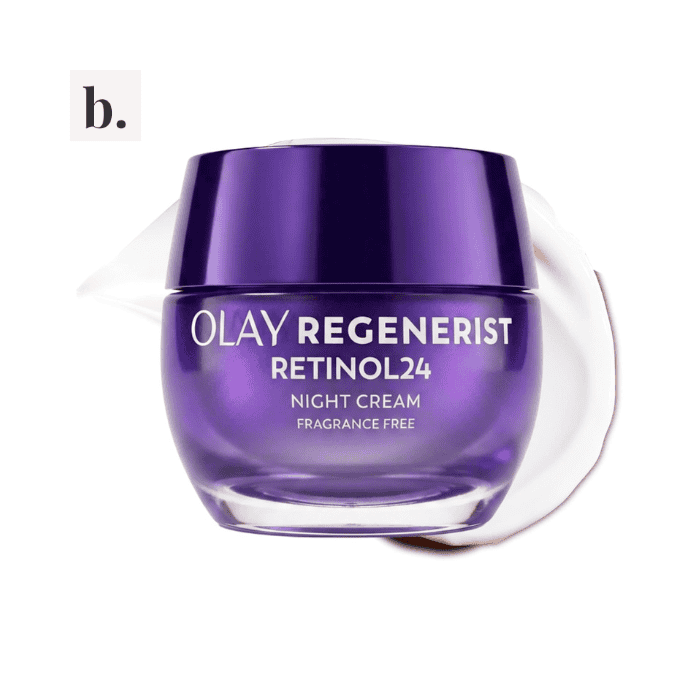
Olay
Olay Regenerist Retinol24 Night Moisturizer
If your skin tolerates retinoids, Olay Retinol24 offers a convenient fragrance-free night moisturizer with two vitamin A derivatives. Its Mid-Range value depends on routine simplicity rather than known retinol strength.
Read the BeautyBrief