

Cetaphil Nourishing & Hydrating Lotion vs. Cream: Which Is Better for Dry, Sensitive Skin?
At a glance
Cetaphil’s new Nourishing & Hydrating Lotion and Cream look like a simple light-versus-rich choice, but the formulas take noticeably different approaches. The lotion includes a broader mix of humectants and skin-conditioning ingredients, while the cream uses a shorter formula with sunflower seed oil, vegetable oil, wax, and silicones. The better choice depends mainly on how dry your body skin actually gets.
If your skin is dry and sensitive, choosing between Cetaphil Nourishing & Hydrating Lotion and Nourishing & Hydrating Cream comes down to more than texture.
Both are fragrance-free body moisturizers developed for sensitive skin, but they are not the same formula in thinner and thicker versions. Cetaphil positions the lotion for normal-to-dry skin and the cream for normal-to-very-dry skin.[1][2]
The useful buying decision is straightforward: do you want a lighter moisturizer with a broader hydration-focused ingredient mix, or a richer cream designed for skin that stays dry despite regular moisturizing?
In this Briefing
- What is actually different between the lotion and cream?
- What stands out in the lotion?
- What stands out in the cream?
- Which makes more sense for sensitive skin?
- Which is better for very dry skin?
- Do the 48- and 72-hour hydration claims matter?
- Do you need both?
- Are these face or body moisturizers?
- How to get more from either moisturizer
- Which one should you buy?
What is actually different between the lotion and cream?
Both formulas combine ingredients that attract water, soften the skin surface, or help slow moisture loss. That is normal moisturizer design. Humectants, emollients, and occlusive ingredients can support hydration in different ways, and a well-designed moisturizer often uses more than one approach.[3]
The difference is how these two products build that moisturizing system.
The Nourishing & Hydrating Lotion lists glycerin second, followed by shea butter, fatty alcohols, dimethicone, panthenol, and several additional humectants and skin-conditioning ingredients farther down the list, including urea, sodium lactate, sodium PCA, trehalose, glucose, sodium hyaluronate, niacinamide, bisabolol, and allantoin. Cetaphil describes it as a lightweight, non-greasy body lotion for normal-to-dry skin and claims up to 48 hours of hydration.[1]
The Nourishing & Hydrating Cream lists sunflower seed oil immediately after water, followed by glycerin, dimethicone, cetearyl alcohol, hydrogenated vegetable oil, synthetic beeswax, sweet almond oil, and vitamin E. Cetaphil positions it as a non-greasy body cream for normal-to-very-dry skin and claims up to 72 hours of hydration.[2]
Ingredient lists do not reveal the exact percentage of most ingredients, so they cannot tell us precisely how much more hydrating or occlusive one formula is. What they can tell us is that the lotion and cream are built differently enough that the choice should be based on your dryness level and texture preference—not simply the matching product name.
What stands out in the Nourishing & Hydrating Lotion?
The lotion has the broader ingredient mix.
Glycerin is high on the list, and the formula also includes panthenol plus several components of the skin’s natural moisturizing factor, including urea, sodium lactate, sodium PCA, and sugars. Sodium hyaluronate adds another humectant, while shea butter, dimethicone, fatty alcohols, and other emollients help soften the skin.
It also contains niacinamide, bisabolol, and allantoin. Their presence does not tell us the concentration or prove that each one contributes a clinically meaningful effect in this formula, but they fit comfortably within a moisturizer designed for dry, easily uncomfortable skin.
Cetaphil says the lotion is fragrance-free, hypoallergenic, paraben-free, and non-comedogenic and positions it for normal-to-dry sensitive skin.[1]
Choose it when you want more than a very basic body lotion but still prefer something described and formulated as the lighter option in the pair.
What stands out in the Nourishing & Hydrating Cream?
The cream uses a shorter ingredient list and puts more emphasis on lipid-rich and film-forming ingredients.
Sunflower seed oil is second after water, and the formula also includes glycerin, dimethicone, hydrogenated vegetable oil, synthetic beeswax, sweet almond oil, fatty alcohols, and vitamin E.[2]
That ingredient pattern fits the cream format and Cetaphil’s positioning for normal-to-very-dry skin. Dermatology guidance also generally favors creams or ointments over lotions when skin is very dry because richer formats tend to reduce moisture loss more effectively.[4]
That does not prove this Cetaphil cream has been independently shown to outperform this Cetaphil lotion. There is no head-to-head clinical comparison cited by the brand on the current U.S. product pages.
The cream is also fragrance-free, hypoallergenic, paraben-free, and non-comedogenic according to Cetaphil.[2]
If you prefer a shorter formula or your main problem is persistent body dryness rather than wanting the widest possible mix of humectants, the cream has the clearer fit.
Which formula makes more sense for sensitive skin?
Both start from a practical advantage: they are fragrance-free and marketed for sensitive skin.[1][2]
Fragrance-free does not guarantee that your skin will tolerate a product, and “hypoallergenic” does not mean reaction-proof. FDA says there is no federal standard or definition governing the use of “hypoallergenic” on cosmetics.[5] Your own history with specific ingredients matters more than a broad sensitive-skin label.
If your skin is sensitive but only mildly or moderately dry, the lotion is the easier starting point. It gives you a lighter format while still including glycerin, shea butter, dimethicone, panthenol, and several additional moisturizing ingredients.
If sensitivity shows up alongside persistent flaking, roughness, or tightness that returns quickly after moisturizing, the cream is the more logical first choice. AAD guidance for very dry and eczema-prone skin generally favors fragrance-free creams or ointments over lotions because they provide more protection against moisture loss.[4]
If you already know your skin reacts to a particular ingredient in either formula, let that history outweigh the general recommendation.
Which is better for very dry skin?
The cream is the better first choice.
Cetaphil specifically positions it for normal-to-very-dry skin, while the lotion is positioned for normal-to-dry skin.[1][2] Its cream format and combination of sunflower seed oil, vegetable oil, synthetic beeswax, silicones, and other emollients also fit the job of leaving a more substantial moisturizing layer.
AAD makes the same broader distinction for dry skin: creams and ointments generally moisturize more effectively than lotions when dryness becomes significant.[6]
Choose the cream first if your shins become rough or ashy again soon after moisturizing, your hands stay dry despite frequent lotion use, or colder weather reliably leaves your body skin tight and flaky.
Texture still matters. If you dislike the cream enough that you apply too little or skip it, the lotion you use generously and consistently can be the better real-world choice.
Do the 48- and 72-hour hydration claims matter?
They tell you how Cetaphil is positioning each product, but they should not be treated as a direct 48-versus-72-hour performance contest.
Cetaphil claims up to 48 hours of hydration for the lotion and up to 72 hours for the cream.[1][2] The current U.S. product pages do not provide enough public study detail to show that the two claims came from the same head-to-head protocol, population, amount applied, or measurement method.
So the extra 24 hours should not be the reason you choose the cream.
The more useful evidence is the product format, the official skin-type positioning, the ingredient-list differences, and how long your own skin stays comfortable after application.
Do you need both?
Probably not.
The formulas are different enough that owning both can make sense, but they still do the same basic job: moisturizing dry body skin.
Start with the one that matches your usual dryness level. If the lotion keeps your skin comfortable, there is little reason to add the cream simply because it promises longer hydration. If the cream works well without feeling unpleasant, you do not need the lotion underneath it.
Owning both makes more sense when your needs change by body area or season. You might prefer the lotion for your arms and torso and the cream for hands, shins, elbows, or feet. You might also use the lotion during humid weather and move to the cream when cold air and indoor heating make your skin noticeably drier.
That is a better reason to own two moisturizers than layering them because they belong to the same line.
Are these face moisturizers or body moisturizers?
Cetaphil lists both products as body moisturizers and describes the lotion as a body lotion and the cream as a body cream on its current U.S. pages.[1][2]
That is the right way to judge them here.
Non-comedogenic labeling does not automatically make either product the best facial moisturizer for you. If you are choosing primarily for your face, sunscreen layering, acne tendency, facial treatment use, finish, and personal texture preference become more important.
For body use, the decision is much cleaner: lotion for lighter everyday moisturization; cream when dryness needs a richer format.
How do you get more from either moisturizer?
How you apply the moisturizer matters almost as much as which jar or bottle you choose.
AAD recommends applying moisturizer while skin is still damp after bathing and reapplying when skin feels dry. It also recommends fragrance-free products for dry, sensitive skin and favors creams or ointments when dryness is more severe.[4][6]
For dry, sensitive body skin:
- Use warm rather than very hot water.
- Keep showers reasonably short.
- Apply moisturizer soon after bathing, while your skin is still slightly damp.
- Use enough product to leave dry areas comfortable rather than applying the thinnest possible layer.
- Reapply to hands and other frequently washed areas when needed.
If very dry patches remain rough or cracked despite regular cream use, an ointment may provide more occlusion than repeatedly applying additional lotion. Persistent cracking, bleeding, oozing, significant pain, severe itching, or a rash that does not improve with basic care deserves medical evaluation rather than another moisturizer experiment.
Which Cetaphil Nourishing moisturizer should you buy?
Choose Cetaphil Nourishing & Hydrating Lotion if your body skin is normal to dry, you prefer a lighter formula, or you want the version with the broader mix of humectants and skin-conditioning ingredients.
Choose Cetaphil Nourishing & Hydrating Cream if your body skin is very dry, rough, persistently tight, or tends to feel dry again soon after a lighter lotion. The cream format and its oil-, wax-, silicone-, and emollient-rich ingredient list make more sense for that job.
For sensitive skin, neither wins simply because of the label. Both are fragrance-free and developed for sensitive skin. Your dryness level, ingredient history, and willingness to apply the product consistently should decide the comparison.
And unless different seasons or body areas genuinely need different textures, you do not need both.
The BB Perspective
This is a useful example of why matching product names do not always mean matching formulas. The lotion and cream are both reasonable fragrance-free body moisturizers for sensitive skin, but Cetaphil has built them for different levels of dryness.
The lotion is the more versatile starting point when you want lighter daily hydration. The cream makes more sense when ordinary lotion is not giving very dry skin enough staying power. The brand’s 48- and 72-hour claims should not outweigh that simpler distinction because the public product pages do not show a direct comparative trial between the two.
Buy one for the level of dryness you actually have. If it keeps your skin comfortable and you use it consistently, you do not need the other formula just because it sits beside it on the shelf.
Last reviewed: October 2026
Sources
Cetaphil U.S. Nourishing & Hydrating Lotion. Accessed September 2026.
The official U.S. product page lists the current formula, identifies the product as a lightweight body lotion for normal-to-dry skin, and states that it is fragrance-free, hypoallergenic, paraben-free, and non-comedogenic. Cetaphil claims up to 48 hours of hydration and describes the formula as developed for sensitive skin. Those are manufacturer claims; the page does not provide a public head-to-head study comparing the lotion with the Nourishing & Hydrating Cream. Return to citation.
Cetaphil U.S. Nourishing & Hydrating Cream. Accessed September 2026.
The official U.S. product page lists the current formula, identifies the product as a body cream for normal-to-very-dry skin, and states that it is fragrance-free, hypoallergenic, paraben-free, and non-comedogenic. Cetaphil claims up to 72 hours of hydration and describes the formula as developed for sensitive skin. Those are manufacturer claims; the page does not establish through a public head-to-head trial that the cream hydrates this population longer than the lotion. Return to citation.
Rajkumar J, Chandan N, Lio P, Shi V. The Skin Barrier and Moisturization: Function, Disruption, and Mechanisms of Repair. Skin Pharmacology and Physiology. 2023;36(4):174-185. doi:10.1159/000534136. PMID: 37717558.
This narrative review describes how humectants, emollients, and occlusives support hydration and skin-barrier function through different mechanisms. BB uses it for general moisturizer-formulation principles, not as evidence that either Cetaphil product is clinically superior. Author Vivian Shi disclosed stock, advisory, investigator, and/or research relationships with multiple companies, including Galderma, Cetaphil’s parent company. Return to citation.
American Academy of Dermatology Association. Atopic Dermatitis: More Dermatologists’ Tips for Managing. Accessed September 2026.
AAD recommends fragrance-free skin-care products for atopic dermatitis and favors fragrance-free creams or ointments over lotions for that population. It also advises applying moisturizer after bathing and whenever skin feels dry. This guidance supports the general preference for richer formats when dryness is significant; it does not independently test either Cetaphil product. Return to citation.
U.S. Food and Drug Administration. Cosmetics Safety Q&A: “Hypoallergenic”. Accessed September 2026.
FDA states that there are no federal standards or definitions governing the cosmetic term “hypoallergenic.” Manufacturers are not required to prove that a product labeled this way will cause fewer allergic reactions than other cosmetics. BB uses this source to explain why the claim is not a guarantee of tolerance for sensitive skin. Return to citation.
American Academy of Dermatology Association. Dermatologists’ Top Tips for Relieving Dry Skin. Accessed September 2026.
AAD recommends gentle fragrance-free skin care for dry, sensitive skin and states that creams and ointments generally add more moisture and are more effective than lotions for overly dry skin. It also recommends applying moisturizer while skin is still damp and reapplying as needed. This is general dry-skin guidance rather than a direct comparison of the two Cetaphil products. Return to citation.
Related product BeautyBriefs
These BeautyBriefs cover products relevant to the needs discussed in this Beauty Briefing. Inclusion here reflects topic relevance, not a rating or endorsement.

Allies of Skin
Allies of Skin The Lab Drop 10/10/10 Multi GF Exo Advanced Recovery Ampoules
If you are considering Allies of Skin Lab Drop 10/10/10 Ampoules for visible aging, its growth-factor and exosome-themed complexes make an ambitious treatment story. The brand's reported improvements do not establish biological…
Read the BeautyBrief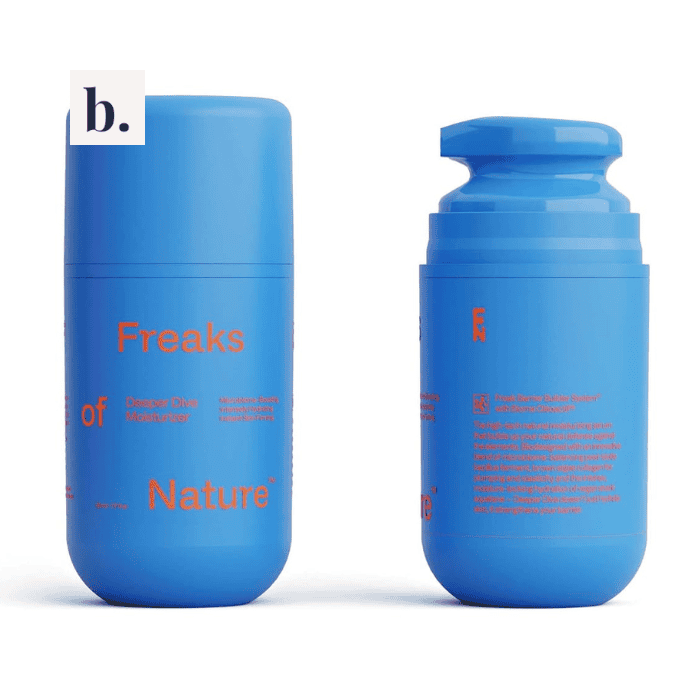
Freaks of Nature
Freaks of Nature Deeper Dive Hydrator
If you prefer an oil-based moisturizer, Deeper Dive offers a short squalane-and-plant-oil formula for surface softness. Its microbiome test does not establish clearer skin or repaired barrier function, so choose it for…
Read the BeautyBrief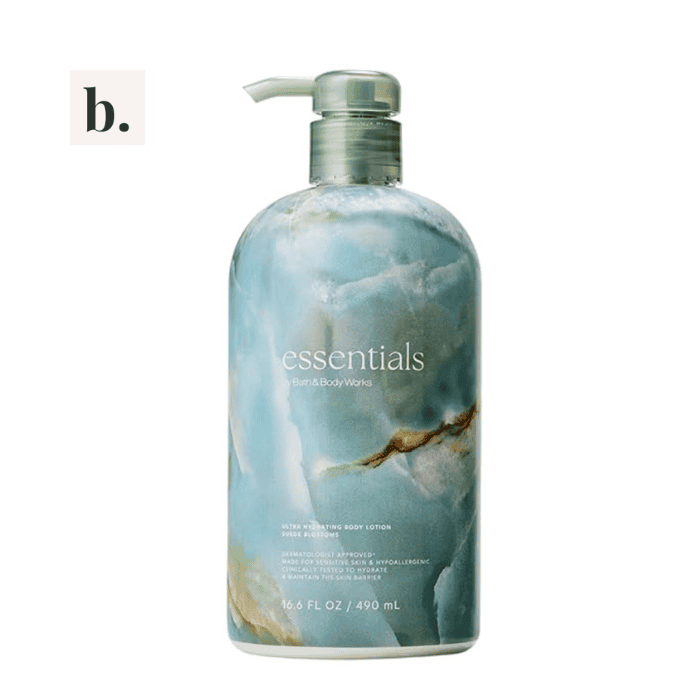
Bath & Body Works
Bath & Body Works Suede Blossoms Ultra Hydrating Body Lotion
If your body skin is normal or dry and you enjoy scented lotion, Suede Blossoms offers familiar humectants and emollients for everyday softness. Its hypoallergenic label does not guarantee fragrance tolerance, and…
Read the BeautyBrief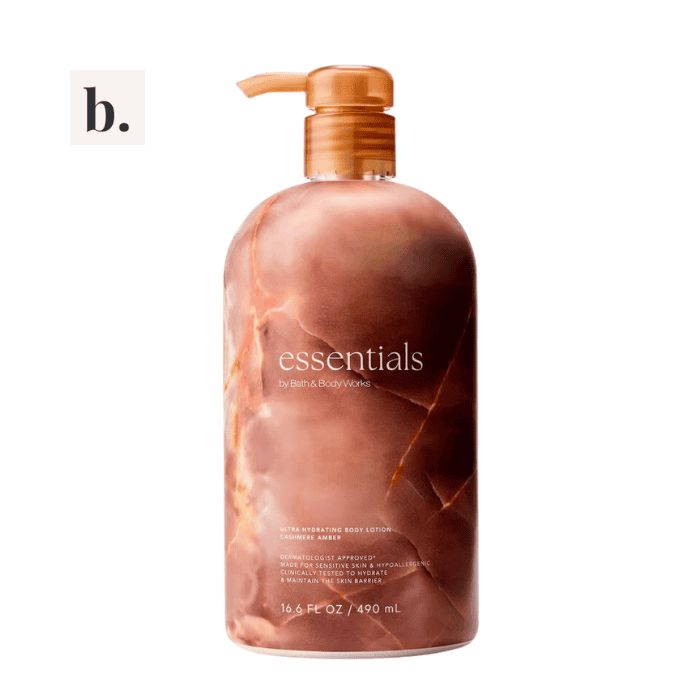
Bath & Body Works
Bath & Body Works Cashmere Amber Ultra Hydrating Body Lotion
If your body skin is normal or dry and you enjoy an amber fragrance, Cashmere Amber offers familiar humectants and emollients for everyday softness. Its hypoallergenic label does not guarantee fragrance tolerance,…
Read the BeautyBrief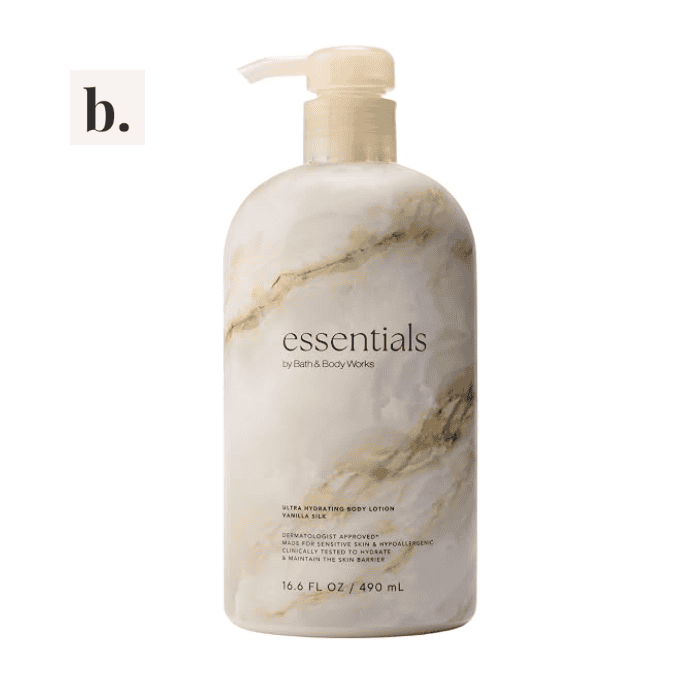
Bath & Body Works
Bath & Body Works Vanilla Silk Ultra Hydrating Body Lotion
If your body skin is normal or dry and you enjoy vanilla fragrance, Vanilla Silk combines humectants and emollients for everyday softness. Its hypoallergenic claim does not guarantee fragrance tolerance, and the…
Read the BeautyBrief
Bath & Body Works
Bath & Body Works Suede Blossoms Skin Replenishing Body Wash
If you enjoy sueded-jasmine fragrance and tolerate scented cleansers, this wash pairs a sulfate-free cleansing system with glycerin for comfort-focused daily use. Its hypoallergenic and dermatologist-approved positioning does not guarantee fragrance tolerance…
Read the BeautyBrief