

Olay Science Cell Repair vs. Regenerist Micro-Sculpting Cream
At a glance
Olay Science Cell Repair is the newer, more premium formula, with seven peptides and a distinct gel-cream texture. Regenerist Micro-Sculpting Cream now uses three of those same peptides alongside the same familiar Olay staples, including niacinamide, panthenol, glycerin, and dimethicone. The real question is whether the extra peptides and texture difference buy you enough to justify the higher price.
Olay Science Cell Repair Peptide Firming Soft Cream sits at a substantial premium to Regenerist Micro-Sculpting Cream on Olay’s current U.S. website.[1][2]
The exact gap varies by retailer, but this is not a same-price comparison: Cell Repair asks you to pay considerably more for its broader formula and different texture.
Science Cell Repair is not simply Regenerist in a more expensive jar. The Soft Cream has a different gel-cream base, four additional peptide ingredients, and several formula extras. But the current 2026 Regenerist formula overlaps much more with it than an older comparison would suggest.
If you want the shared core formula for less, Regenerist remains the stronger value. Cell Repair makes the clearest case when its gel-cream texture is the feature you actually want—not when the selling point is simply “seven peptides instead of three.”
In this Briefing
- How the two creams compare
- What the formulas already share
- Do the extra peptides justify the price?
- Why texture is the clearest Cell Repair advantage
- What Olay’s testing actually tells us
- Which is better if you avoid fragrance?
- Who should choose Cell Repair?
- Who should choose Regenerist?
- What does the Cell Repair upgrade actually add?
How do the two creams compare?
| Feature | Science Cell Repair Soft Cream | Regenerist Micro-Sculpting Cream |
|---|---|---|
| Current price positioning | Premium | Lower-priced |
| Texture | Soft gel-cream | Cream (also marketed as light) |
| Skin-type positioning | Oily to normal | Dry, normal, and oily |
| Shared core ingredients | Glycerin, niacinamide, dimethicone, panthenol | Glycerin, niacinamide, dimethicone, panthenol |
| Listed peptide ingredients | Seven | Three |
| Shared peptides | Palmitoyl pentapeptide-4, palmitoyl dipeptide-7, tripeptide-3 | Palmitoyl pentapeptide-4, palmitoyl dipeptide-7, tripeptide-3 |
| Fragrance | Yes | Yes; a fragrance-free version is also available |
| Best reason to choose it | Gel-cream texture and broader formula | Similar core formula for less |
Prices can vary by retailer. Olay’s current U.S. site positions Cell Repair well above Regenerist, so compare the actual retailer price you would pay rather than treating one posted price as permanent.[3]
Whichever price you use, Cell Repair is the premium product. That means the burden is on the extra formula features to provide something you value enough to pay for.
What do the formulas already share?
Quite a lot.
Both ingredient lists start with water and glycerin and place niacinamide high in the formula. Both also contain dimethicone, panthenol, and the same three peptide ingredients: palmitoyl pentapeptide-4, palmitoyl dipeptide-7, and tripeptide-3.[1][2]
That matters because those shared ingredients cover much of the practical job of an everyday anti-aging moisturizer: hydration, softness, surface smoothing, barrier support, and a peptide component.
Niacinamide has direct human cosmetic evidence behind it. In a 12-week randomized split-face study, 50 women used a moisturizer containing 5% niacinamide on one side of the face and the same moisturizer base without niacinamide on the other. The niacinamide side showed improvements in fine lines and wrinkles, hyperpigmented spots, texture, red blotchiness, and sallowness.[4]
The important limitation is that the authors were all affiliated with Procter & Gamble, and neither current Olay product publicly states that it contains 5% niacinamide. The study supports niacinamide as a useful ingredient; it does not tell us that either of these creams reproduces that exact trial result.
It also does not favor Cell Repair, because Regenerist contains niacinamide too.
Do the extra peptides justify the price?
Cell Repair adds four peptide-related ingredients beyond the three it shares with Regenerist: acetyl hexapeptide-8, carnosine, acetyl tetrapeptide-11, and dipeptide-4. It also includes vitamin E, ascorbyl glucoside, betaine, mannitol, artichoke extract, and truffle extract.[1]
That makes it the more elaborate formula.
It does not automatically make it the more effective one.
Peptides are not one interchangeable ingredient category. Research on one peptide does not prove that adding several more will produce a proportional increase in visible results.
Palmitoyl pentapeptide-4—the best-established peptide shared by both creams—has human evidence behind it. In a 12-week double-blind split-face study, 93 women used a moisturizer containing 3 ppm palmitoyl pentapeptide on one side and the same moisturizer without it on the other. The peptide formula improved wrinkle and fine-line measurements compared with control.[5]
All six authors were Procter & Gamble researchers, and the study did not test either current Olay product. Still, it is relevant here because the researched peptide is present in both formulas.
Olay’s public materials do not provide a head-to-head trial showing that Cell Repair’s seven-peptide blend produces greater wrinkle or firming improvement than the current three-peptide Regenerist formula.
The Cell Repair page also advertises greater peptide penetration versus a “leading competitive Asian peptide cream.” That may support Olay’s delivery story, but it is not a comparison with Regenerist and does not establish better visible results than Regenerist.[1]
For this buying decision, four additional peptides are a formula difference—not proof that the premium buys proportionally better visible results.
Texture is the clearest Cell Repair distinction
This is where the formulas have a useful distinction, rather than a proven performance advantage.
Olay positions the Soft Cream for oily to normal skin and describes it as a lightweight gel-cream that melts into skin, feels non-greasy, and does not pill under makeup.[1]
The formulas use different emollient systems, and Olay positions Cell Repair Soft Cream as a soft gel-cream. Regenerist is also marketed as a light cream, so the ingredient lists alone cannot establish which will feel lighter on your skin. Cell Repair does not use the same combination of isohexadecane and isopropyl isostearate found near the top of the Regenerist ingredient list.[1][2]
That can matter more in daily use than another peptide name.
If Regenerist feels too rich under sunscreen or makeup, a moisturizer with a texture you enjoy using morning and night can be worth more to you—even without proof that it produces greater wrinkle improvement.
If your skin is dry, Cell Repair also comes in an Ultra Rich version for dry to normal skin. That formula adds shea butter, jojoba oil, and a richer emollient base while keeping the seven-peptide blend and the same premium positioning.[6]
So Cell Repair’s strongest practical selling point is not simply “more peptide technology.” It is that Olay offers the same premium peptide story in two clearly different moisturizer textures.
What do Olay’s performance claims actually tell us?
Both products come with strong visible-result claims. The public evidence is not detailed enough to use those claims as a direct comparison.
Olay currently describes visible firming after two days, lifting after seven days, and smoother-looking lines after 28 days for Cell Repair Soft Cream. These are company-reported results, not evidence of superiority over Regenerist.[1]
In its June 2026 U.S. launch announcement, Olay reported that more than 21% of women described more lifted-looking skin after seven days, based on a self-assessment of 57 Chinese women. The announcement’s separate 37-person footnote concerned the collection’s toner, not the creams.[7]
The available public materials do not provide the full study protocol or a direct comparison with the current Regenerist Micro-Sculpting Cream.
Regenerist’s current page says 97% of women saw visible results after two weeks, with additional claims for firmer, brighter skin by day seven and lifted-looking skin with reduced deep wrinkles by day 28.[2]
The January 2026 launch announcement identifies the 97% figure as occurring after two weeks of use, but it does not publicly provide the participant count or a full protocol for that claim.[3]
So both products have Olay-generated performance claims. What is missing is the study that matters most for this article: a direct comparison of the current Cell Repair Soft Cream with the current Regenerist Micro-Sculpting Cream.
Without that comparison, do not treat the more premium claim language or larger peptide count as proof of a better visible result.
Which is better if you avoid fragrance?
Regenerist has the easier answer.
Cell Repair Soft Cream contains fragrance, Yellow 5, and Red 33.[1]
The standard Regenerist Micro-Sculpting Cream also contains fragrance, but Olay currently sells a fragrance-free version with the same three listed peptides, niacinamide, panthenol, glycerin, dimethicone, and broadly similar moisturizer base.[8]
Fragrance does not make Cell Repair ineffective. But if fragranced leave-on products irritate your skin or you simply prefer to avoid them, paying more for Cell Repair becomes difficult to justify when the less expensive product offers a fragrance-free option.
Who should choose Science Cell Repair?
Science Cell Repair Soft Cream makes the strongest case if:
- You have oily to normal skin and find Regenerist too rich. The gel-cream texture is its clearest practical distinction.
- You want the broader formula. Cell Repair contains four additional peptide ingredients plus several antioxidant and conditioning extras.
- You understand that “seven peptides” is not proof of superior results. You are buying the formula and experience, not assuming an ingredient-count advantage.
- You tolerate fragrance and added color.
- The price difference is not meaningful to your budget.
If the texture solves a problem you actually have, the premium can be reasonable even without a head-to-head efficacy win.
Who should choose Regenerist?
Regenerist Micro-Sculpting Cream makes more sense if:
- You want the better value. It currently sits well below Cell Repair on Olay’s own site and may be discounted further at retailers.
- You are comfortable with a traditional cream texture.
- You want the shared niacinamide, panthenol, dimethicone, glycerin, and three-peptide foundation.
- You prefer a fragrance-free option.
- You would rather put the price difference toward sunscreen or a better-established treatment such as a retinoid.
The 2026 Regenerist reformulation is important to this comparison. Olay specifically upgraded the cream around its Triple Collagen Peptide blend, niacinamide, and pro-vitamin B5, making the current formula more similar to the premium Cell Repair positioning than older versions were.[3]
What does the Cell Repair upgrade actually add?
If you are buying mainly for visible anti-aging performance, the public evidence does not show that Cell Repair clearly outperforms the current Regenerist formula.
Science Cell Repair Soft Cream is the more elaborate formula, and its gel-cream texture can be a real advantage if you dislike richer anti-aging creams.
But Regenerist already gives you glycerin, niacinamide, dimethicone, panthenol, and the same three core peptides found in Cell Repair. It also has its own current Olay performance claims and a fragrance-free version.
What Olay has not shown publicly is that the four additional peptide ingredients in Cell Repair produce a meaningful improvement over the current Regenerist formula.
That makes Cell Repair a texture and formula-preference upgrade rather than a proven performance upgrade.
The BB Perspective
Olay Science Cell Repair looks more advanced on paper because it has seven peptide ingredients, more formula extras, and a premium presentation. That is not the same as showing that it works meaningfully better than Regenerist.
The current Regenerist formula matters here. Olay reformulated it in 2026, and it now shares three peptides plus niacinamide, panthenol, glycerin, and dimethicone with Cell Repair. The company has not published the head-to-head finished-product evidence needed to show that four additional peptides justify the price gap.
Choose Regenerist when you want the shared niacinamide, panthenol, moisturizing base, and three-peptide foundation at the lower price. Choose Cell Repair when you specifically prefer the Soft Cream’s gel-cream texture or the broader formula enough to pay the premium—not because seven peptides automatically beat three.
Last reviewed: October 2026
Sources
Olay. Peptide Firming Soft Cream. Accessed September 2026.
The Olay U.S. page confirms the product’s premium positioning, oily-to-normal positioning, full ingredient list, seven listed peptide ingredients, fragrance and color additives, and brand-reported visible-result timelines (firming by two days, lifting by seven days, and smoother-looking lines by 28 days). The page also advertises increased peptide penetration versus a leading competitive Asian peptide cream. Those claims document Olay’s product positioning but do not establish superiority over Regenerist Micro-Sculpting Cream. Return to citation.
Olay. Regenerist Micro-Sculpting Cream Moisturizer. Accessed September 2026.
The current Olay U.S. page confirms that Regenerist is positioned below Cell Repair in price and identifies dry, normal, and oily skin as suitable types. The current formula contains glycerin, niacinamide, dimethicone, panthenol, palmitoyl dipeptide-7, palmitoyl pentapeptide-4, and tripeptide-3. Olay also publishes visible-result timelines and a 97% result claim, but the page does not provide enough public study detail for a direct efficacy comparison with Cell Repair. Return to citation.
Olay via PR Newswire. OLAY Debuts New Regenerist Micro-Sculpting Cream With Triple Collagen Peptide. January 7, 2026.
Olay’s company-issued announcement documents the 2026 Regenerist reformulation around Triple Collagen Peptide, niacinamide, and pro-vitamin B5 and notes that retailer pricing may vary. It also reports company performance claims, including 97% of women seeing visible results after two weeks, but does not provide a full public protocol or sample size for that claim. BB uses the release for reformulation, launch pricing, and brand-claim context rather than independent efficacy evidence. Return to citation.
Bissett DL, Miyamoto K, Sun P, Li J, Berge CA. Topical Niacinamide Reduces Yellowing, Wrinkling, Red Blotchiness, and Hyperpigmented Spots in Aging Facial Skin. International Journal of Cosmetic Science. 2004;26(5):231-238. PMID: 18492135.
Fifty women ages 40 to 60 participated in a 12-week double-blind, randomized split-face study comparing a moisturizer containing 5% niacinamide with the same moisturizer without niacinamide. The niacinamide side improved several visible aging measures compared with control. All listed authors were affiliated with Procter & Gamble. Neither current Olay cream discloses a niacinamide percentage, and this study did not test either finished product. Return to citation.
Robinson LR, Fitzgerald NC, Doughty DG, Dawes NC, Berge CA, Bissett DL. Topical Palmitoyl Pentapeptide Provides Improvement in Photoaged Human Facial Skin. International Journal of Cosmetic Science. 2005;27(3):155-160.
Ninety-three women ages 35 to 55 participated in a 12-week double-blind, randomized split-face study comparing a moisturizer containing 3 ppm palmitoyl pentapeptide with the same moisturizer without it. The peptide side improved several wrinkle and fine-line measurements. All authors were affiliated with Procter & Gamble. The study supports a peptide found in both current Olay creams; it does not compare Cell Repair with Regenerist. Return to citation.
Olay. Peptide Firming Ultra Rich Cream. Accessed September 2026.
The current Olay page positions the Ultra Rich Cream as the premium dry-to-normal counterpart to the Soft Cream. Its ingredient list uses a richer base containing shea butter and jojoba oil while retaining the seven-peptide Cell Repair blend. BB uses this source to show that the Cell Repair range’s clearest differentiation includes moisturizer texture, not simply peptide count. Return to citation.
Olay via PR Newswire. OLAY’s #1 Cream Collection in Asia Comes to the U.S. With Brenda Song as Brand Ambassador. June 8, 2026.
Olay’s launch announcement documents the U.S. Cell Repair collection, its premium positioning, seven-peptide story, and company-reported self-assessment claims. For the Soft and Ultra Rich creams, the release cites a seven-day lifting claim based on a self-assessment of 57 Chinese women. The 37-woman self-assessment footnote applies to the toner claim, not the creams. The announcement does not publish a full study protocol or establish direct superiority over Regenerist. Return to citation.
Olay. Regenerist Micro-Sculpting Cream Moisturizer Fragrance Free. Accessed September 2026.
The current Olay page confirms a fragrance-free Regenerist option containing glycerin, niacinamide, dimethicone, panthenol, palmitoyl dipeptide-7, palmitoyl pentapeptide-4, and tripeptide-3. If you avoid fragrance, this gives you access to the same current three-peptide Regenerist foundation without the fragrance used in the standard Regenerist and Cell Repair Soft Cream. Return to citation.
Related product BeautyBriefs
These BeautyBriefs cover products relevant to the needs discussed in this Beauty Briefing. Inclusion here reflects topic relevance, not a rating or endorsement.

Allies of Skin
Allies of Skin The Lab Drop 10/10/10 Multi GF Exo Advanced Recovery Ampoules
If you are considering Allies of Skin Lab Drop 10/10/10 Ampoules for visible aging, its growth-factor and exosome-themed complexes make an ambitious treatment story. The brand's reported improvements do not establish biological…
Read the BeautyBrief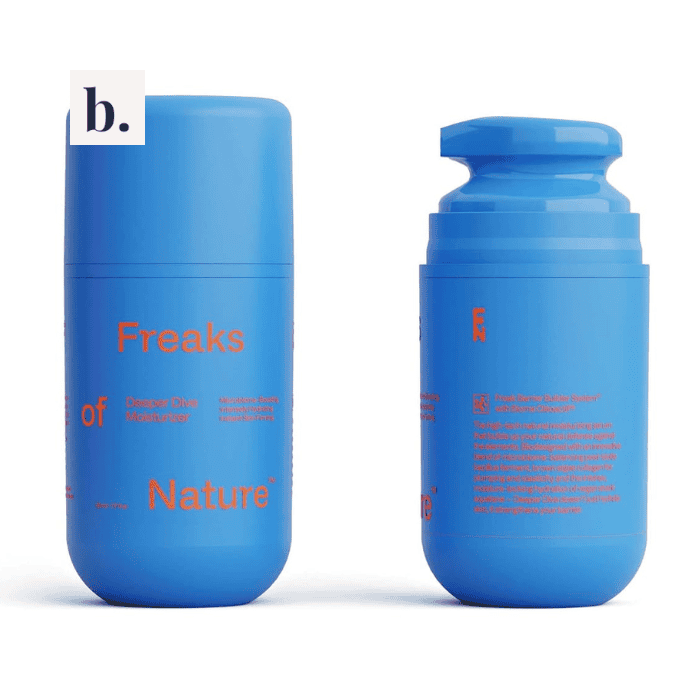
Freaks of Nature
Freaks of Nature Deeper Dive Hydrator
If you prefer an oil-based moisturizer, Deeper Dive offers a short squalane-and-plant-oil formula for surface softness. Its microbiome test does not establish clearer skin or repaired barrier function, so choose it for…
Read the BeautyBrief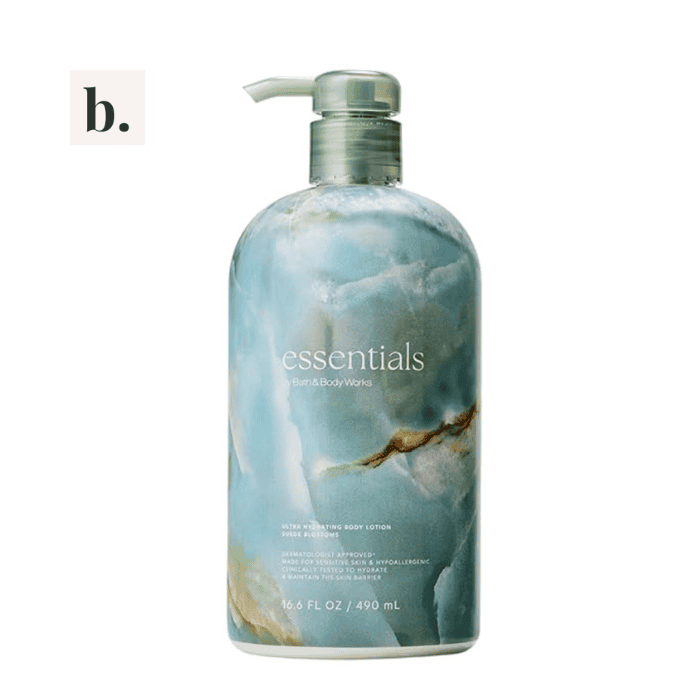
Bath & Body Works
Bath & Body Works Suede Blossoms Ultra Hydrating Body Lotion
If your body skin is normal or dry and you enjoy scented lotion, Suede Blossoms offers familiar humectants and emollients for everyday softness. Its hypoallergenic label does not guarantee fragrance tolerance, and…
Read the BeautyBrief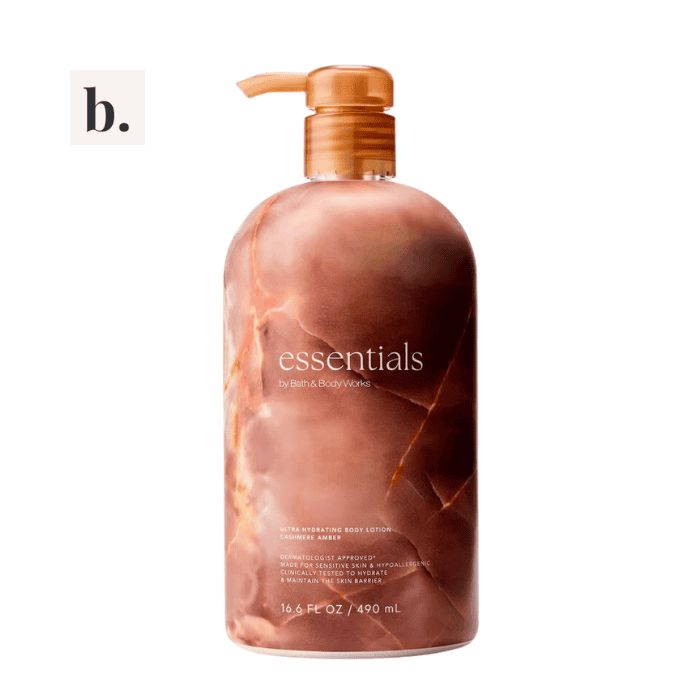
Bath & Body Works
Bath & Body Works Cashmere Amber Ultra Hydrating Body Lotion
If your body skin is normal or dry and you enjoy an amber fragrance, Cashmere Amber offers familiar humectants and emollients for everyday softness. Its hypoallergenic label does not guarantee fragrance tolerance,…
Read the BeautyBrief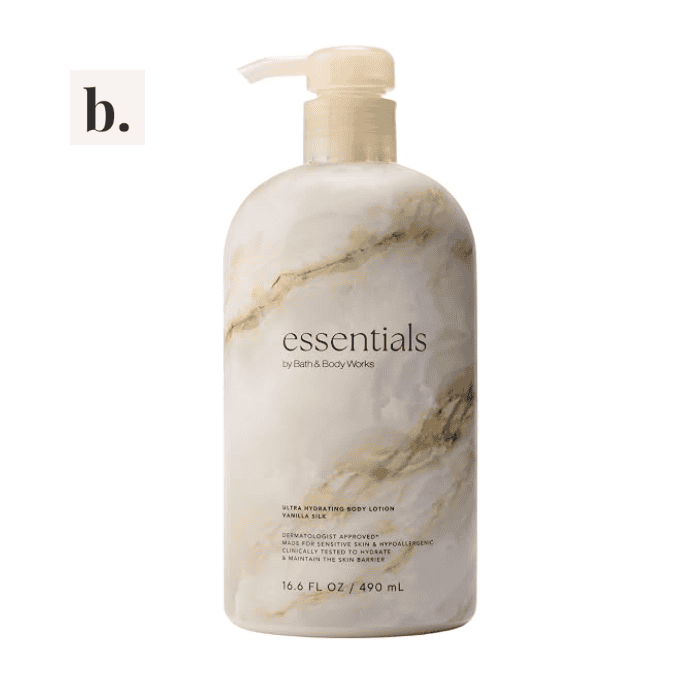
Bath & Body Works
Bath & Body Works Vanilla Silk Ultra Hydrating Body Lotion
If your body skin is normal or dry and you enjoy vanilla fragrance, Vanilla Silk combines humectants and emollients for everyday softness. Its hypoallergenic claim does not guarantee fragrance tolerance, and the…
Read the BeautyBrief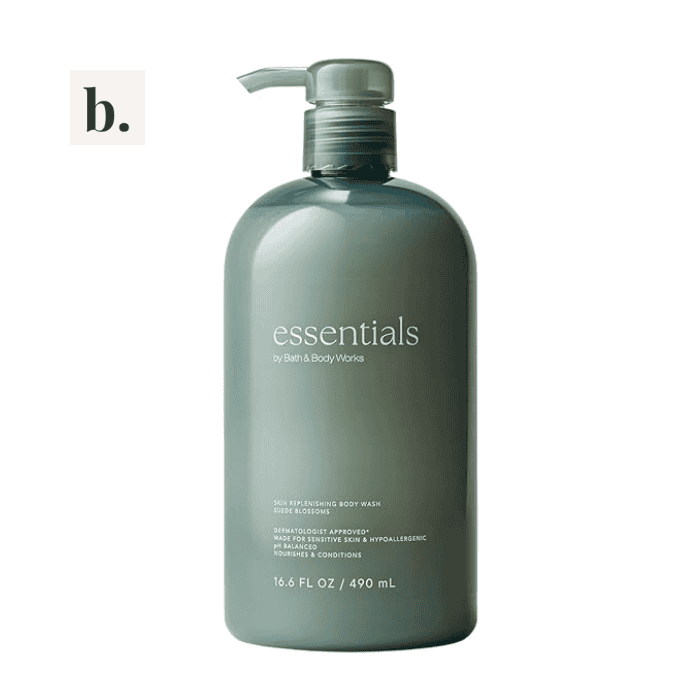
Bath & Body Works
Bath & Body Works Suede Blossoms Skin Replenishing Body Wash
If you enjoy sueded-jasmine fragrance and tolerate scented cleansers, this wash pairs a sulfate-free cleansing system with glycerin for comfort-focused daily use. Its hypoallergenic and dermatologist-approved positioning does not guarantee fragrance tolerance…
Read the BeautyBrief