

Leave-In vs. Rinse-Out Conditioner: Do You Need Both?
At a glance
Rinse-out and leave-in conditioners both reduce friction and improve manageability, but they are designed for different points in your routine. Whether you need both depends less on hair type labels than on what your hair still does after wash day: tangles, frizz, rough ends, heat styling, or none of the above.
A conditioner can make your hair feel silky in the shower and still leave the ends tangled once it dries. That does not necessarily mean the conditioner failed. Rinse-out and leave-in products are designed for different jobs.
Leave-in conditioner is designed to remain on the hair. Rinse-out conditioner is designed to be rinsed away. If a leave-in feels greasy or heavy, use less or choose a lighter formula rather than routinely washing it out, unless the product directions specifically say otherwise.
Rinse-out conditioner gives you slip and softness during washing and detangling. Leave-in conditioner stays on the hair afterward, where it can add another layer of manageability, frizz control, detangling support, or styling protection.
The shopping mistake is assuming that two conditioning steps must be better than one. Start with a rinse-out conditioner that does its job well. Add a leave-in when you can identify a problem that remains after rinsing.
In this Briefing
- What rinse-out conditioner does
- What leave-in conditioner adds
- Whether you need both
- How hair type and condition change the choice
- What “repair” really means
- How to use both without overdoing it
- Which ingredients matter
- When more conditioning becomes too much
- What is worth paying for
- Which conditioner should you buy?
What does rinse-out conditioner actually do?
If you shampoo your hair, a rinse-out conditioner is generally the baseline conditioning step. The American Academy of Dermatology recommends using conditioner after washing to help keep hair manageable and reduce avoidable damage from grooming.[1]
One of its most useful jobs is friction control. Damaged and weathered hair has more negatively charged sites along the fiber, which helps positively charged conditioning agents deposit onto the surface. That coating can reduce static, improve slip, and lower the force needed to comb tangled hair.[2]
You do not need to understand the electrochemistry to judge whether a conditioner is working. The practical signs are easier detangling, less snagging, softer lengths, and hair that is easier to manage after washing.
Rinse-out formulas can also contain fatty alcohols, oils, polymers, proteins, and silicones such as dimethicone to improve lubrication, softness, shine, or surface feel.[2]
If your hair is fine or straight, conditioner may work best mainly through the lengths and ends. If your hair is dry or curly, conditioning more of the hair may give you the moisture and manageability you need.[3]
What does leave-in conditioner add?
Leave-in conditioner gives you conditioning that remains on the hair after the shower.
AAD says leave-in products can make hair easier to comb and style while reducing frizz, static, flyaways, and breakage caused by grooming. They can be especially useful for hair that is long, curly, dry, brittle, color-treated, permed, heat-styled, tangled, or frizzy.[4]
Fine hair is not automatically excluded. The issue is product weight. AAD recommends lighter leave-ins and smaller amounts for fine, straight hair because richer formulas or overapplication can make it look limp or greasy.[4]
A leave-in can also serve as a detangler or styling aid. Some include heat protection, but that benefit should not be assumed from the words leave-in or repair. AAD specifically recommends looking for heat-protection language on the product when that is a benefit you need.[4]
For a product example, BB’s Pantene Abbey Yung Deep Nourishing Cream-to-Mist BeautyBrief evaluates a Budget leave-in designed for detangling and heat-protective styling. Its conditioning formula supports the use case, while the exact advertised heat-protection temperature remains a brand claim.
Do you need both a rinse-out and a leave-in conditioner?
Not automatically.
If your rinse-out conditioner leaves your hair easy to detangle, comfortable through the ends, and manageable until the next wash, a leave-in may add more product than benefit.
A leave-in becomes easier to justify when you can name what it fixes. Maybe your ends tangle again while drying. Maybe curls lose softness quickly. Maybe your hair becomes frizzy after wash day, or chemical processing has left it rough enough that detangling remains difficult after you rinse.
AAD notes that many people can benefit from both rinse-out and leave-in conditioning, particularly when hair is long, fine, color-treated, permed, or regularly heat-styled.[4] That is useful guidance, not a requirement to buy two products.
Do not use the social-media shortcut of diluting your rinse-out conditioner in a spray bottle and treating it as a leave-in. The two product types are formulated for different use conditions, and AAD recommends using each as directed rather than treating them as interchangeable.[4]
How should hair type and condition change the choice?
Fine or easily weighed-down hair
Start with a lightweight rinse-out conditioner and apply it mainly where you need slip. If the ends still tangle or you want extra styling support, try a light spray or fluid leave-in rather than assuming you need a rich cream.
Use the smallest amount that solves the problem. AAD specifically notes that fine hair needs less leave-in than thick hair and is more likely to look greasy when too much is applied.[4]
Curly, coily, coarse, or dense hair
Using both steps often makes practical sense because detangling and maintaining softness can require more conditioning. Rinse-out conditioner provides slip during wash day, while a leave-in can make styling and later detangling easier. AAD notes that curly hair generally needs more conditioning than straight hair.[4]
More is not always better. If multiple creams, oils, leave-ins, and stylers leave your hair dull, coated, or difficult to cleanse, another conditioning layer is unlikely to solve the problem.
Bleached, colored, relaxed, or frequently heat-styled hair
Chemical processing and repeated heat can damage the hair fiber, increase roughness, and make strands more vulnerable to breakage. Conditioning cannot erase that history, but reducing friction and improving combability can help limit additional mechanical stress.[2]
If you regularly use hot tools, choose a product specifically intended to protect hair from heat. AAD recommends limiting excessive heat, using low or medium settings when possible, and applying a heat-protective product.[3]
What does “repair” mean in a conditioner?
Conditioner can make damaged hair look and behave substantially better. That is real performance. It is not the same as restoring a weathered hair fiber to its original undamaged state.
The visible hair shaft is a keratin fiber. Conditioning materials can deposit on the surface, fill or smooth damaged areas, reduce friction, improve flexibility, and temporarily change mechanical or cosmetic properties.[2]
Protein-based conditioners can also improve some properties of damaged hair, but their effects depend on the specific protein, molecular size, formulation, and use conditions. The 2023 conditioning review notes that excess deposited protein is removed with subsequent washing, so these effects should not be confused with permanent biological healing.[2]
This is why a product can make rough, processed hair smoother and easier to comb without literally reversing every structural change caused by bleach, dye, relaxers, or heat.
Judge “repair” products by the result they give you over repeated use: easier detangling, less roughness, better flexibility, reduced breakage during grooming, or improved manageability. A hero ingredient on the front label is not enough by itself.
For claims about specialized structural repair rather than everyday conditioning, read BB’s Do Bond-Repair Hair Products Work? guide. BB’s amika The Kure Intense Strength Repair Mask BeautyBrief also provides a concrete example: its rich conditioning formula and brand-reported finished-product breakage testing deserve separate consideration, without assuming that smoother hair means permanent reversal of damage.
How do you use both without overdoing it?
Use rinse-out conditioner after shampoo, following the product directions. Distribute it where your hair needs conditioning and detangle gently.
AAD recommends minimizing tugging and using a wide-tooth comb when detangling wet or damp hair. For thick or curly hair, detangling in the shower before rinsing out conditioner can be especially useful.[1][3]
For leave-in conditioner, remove excess water so the hair is damp rather than dripping. AAD recommends applying a small amount where it is needed, generally from the mid-lengths toward the ends, and using the least product that gets the job done.[4]
There is no universal pea-size amount or spray count because hair length, density, texture, and product concentration vary too much. Start small and add more only if the hair still feels difficult to detangle, rough, or frizzy.
Keep leave-in off the scalp unless the product is specifically intended for scalp use. AAD notes that applying leave-in conditioner to the scalp can contribute to buildup and irritation.[4]
Which conditioner ingredients actually matter?
You do not need to memorize an ingredient dictionary, but a few categories explain much of how conditioners work.
- Cationic conditioning agents: Ingredients such as behentrimonium chloride and cetrimonium chloride are positively charged conditioners that deposit on the hair surface, helping reduce static and improve combability.[2]
- Fatty alcohols: Cetyl alcohol, cetearyl alcohol, and behenyl alcohol help build conditioner texture and contribute softness and slip.
- Silicones: Materials such as dimethicone and amodimethicone can form films on the hair, reduce friction, improve shine, and support manageability. A 2025 review also notes that some less water-dispersible silicones can accumulate with repeated use, especially when product layering and cleansing do not balance each other well.[5]
- Oils and other emollients: These can improve softness and reduce a rough feel, but richer formulas are easier to overapply on fine or easily weighed-down hair.
- Humectants: Ingredients such as glycerin and hyaluronic acid may support moisture management, but their presence does not tell you whether a conditioner will detangle better than a formula built around more conventional conditioning agents.
Do not reject a conditioner simply because it contains silicones, and do not assume a silicone-free formula is automatically healthier. The useful question is whether the finished product gives you the slip, softness, and control you need without creating a residue problem in your routine.
For a practical way to identify these workhorse ingredients on real labels, use BB’s How to Read a Haircare Ingredient List Before You Buy.
How do you know when more conditioning is too much?
If your hair becomes flatter, greasier, duller, coated, or harder to style after adding a leave-in, the extra product may simply be more than your hair needs.
That does not automatically mean one ingredient is “bad” or that the hair has been damaged by buildup. The amount, formula richness, cleansing routine, and number of overlapping stylers all affect how much residue stays behind.
Silicones are one example. They can reduce friction and improve the feel of damaged hair, while some water-insoluble types can accumulate when repeatedly layered and inadequately removed.[5]
Before buying a separate clarifying treatment or replacing your routine, try using less leave-in, applying it only where the hair needs it, or reducing overlapping oils and styling creams. If manageability improves without the coated feel, you probably needed less product rather than a different hair-care philosophy.
What deserves your money?
Conditioner does not need an elaborate ingredient story. It needs to make your hair easier to manage.
For rinse-out conditioner, notice how much you need, how easily it spreads, whether it improves wet detangling, and how your hair feels after rinsing. An inexpensive conditioner that gives reliable slip can be a better purchase than a premium formula that does not noticeably improve your routine.
For leave-in conditioner, value improves when the product solves more than one problem you genuinely have. A leave-in that detangles, controls frizz, and provides clearly labeled heat protection may replace separate products. If it adds nothing beyond what your rinse-out conditioner and styler already do, you probably do not need the extra step.
Salon branding, price, and a long list of oils or proteins do not tell you how efficiently a conditioner will work on your hair.
Which conditioner should you buy?
Start with rinse-out conditioner if you shampoo and need help with detangling, friction, or manageability after cleansing.
For a color-treated rinse-out example, BB’s amika The Protector Color Protect + Strengthen Conditioner BeautyBrief examines conditioning and color-care ingredients while distinguishing the brand’s strength and fade figures from independently established outcomes. It is a specialized option, not a prerequisite for everyone who shampoos.
Add a leave-in when your hair still has a problem after that step: recurring tangles, rough ends, frizz, styling difficulty, or a need for clearly labeled heat protection.
If you cannot identify what the leave-in changes, you probably do not need another bottle. If it consistently makes your hair easier to comb, style, and manage between washes, then it has a clear job.
The BB Perspective
Rinse-out conditioner and leave-in conditioner are complementary tools, not a mandatory pair.
A good rinse-out conditioner should do the basic work of improving slip and reducing friction after shampoo. A leave-in earns its place only when your hair needs something that remains afterward—more detangling, frizz control, styling support, or protection from heat.
Buy the second product for a result you can actually notice, not because a complete hair routine is supposed to include one. The best conditioning routine is the simplest one that keeps your hair manageable without leaving it coated or weighed down.
Last reviewed: September 2026
Sources
American Academy of Dermatology Association. 10 Hair Care Habits That Can Damage Your Hair. Accessed September 2026.
AAD recommends using conditioner after shampoo and minimizing pulling and tugging during detangling. It advises gentle use of a wide-tooth comb and notes that moisturizing conditioner can help remove tangles. This is consumer hair-care guidance rather than comparative testing of specific conditioner formulas. Return to citation.
Fernandes C, Medronho B, Alves L, Rasteiro MG. On Hair Care Physicochemistry: From Structure and Degradation to Novel Biobased Conditioning Agents. Polymers. 2023;15(3):608. PMID: 36771909.
This review explains hair-fiber damage, surface charge, friction, cationic conditioning, film-forming agents, proteins, and the different roles of rinse-out, deep, and leave-in conditioners. BB uses it to explain conditioning mechanisms rather than to claim that one commercial formula is superior. The work received funding from the Portuguese Foundation for Science and Technology, and the authors declared no conflicts of interest. Return to citation.
American Academy of Dermatology Association. Tips for Healthy Hair. Last updated August 12, 2024. Accessed September 2026.
AAD recommends conditioner after washing, gives different placement guidance for fine or straight versus dry or curly hair, advises gentle detangling with a wide-tooth comb, and recommends limiting excessive heat while using a product designed to protect hair from heat. Return to citation.
American Academy of Dermatology Association. Dermatologists’ Top Tips for Using Leave-In Conditioner. Last updated March 26, 2024. Accessed September 2026.
AAD explains who may benefit from leave-in conditioner, why rinse-out and leave-in products should not be treated as interchangeable, how to adjust product weight and amount for different hair types, and why heat protection should be specifically stated on the packaging. It also recommends applying leave-in mainly to the hair rather than the scalp to reduce buildup and irritation. Return to citation.
de Melo Carvalho R, Melo DF, Kelati A, Tosti A. With or without Silicones? A Comprehensive Review of Their Role in Hair Care. Skin Appendage Disorders. 2025;11(6):586-589. PMID: 40641805.
This review describes silicones as useful conditioning and film-forming materials that can reduce friction and improve hair texture, appearance, and moisture retention. It also discusses accumulation from some water-insoluble silicones and the importance of matching silicone type and cleansing to the hair and routine. The review received no specific grant funding. Antonella Tosti disclosed multiple consulting relationships and was a member of the journal’s editorial board at submission; the other authors declared no conflicts of interest. Return to citation.
Related product BeautyBriefs
These BeautyBriefs cover products relevant to the needs discussed in this Beauty Briefing. Inclusion here reflects topic relevance, not a rating or endorsement.
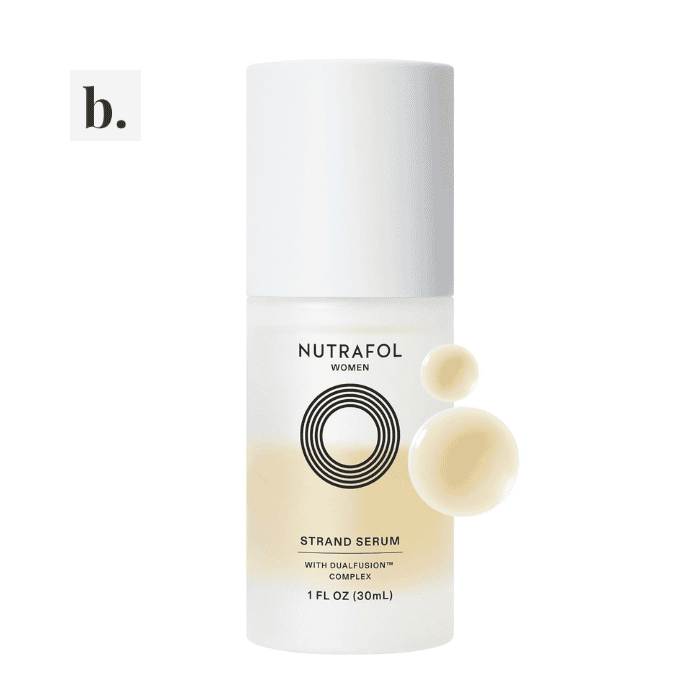
Nutrafol
Nutrafol Strand Serum
If your hair feels fragile, Nutrafol Strand Serum offers conditioning and film support that may help limit breakage. Its Premium value depends on smoothing and protection of existing lengths, while naturally scented…
Read the BeautyBrief
amika
amika The Protector Color Protect + Strengthen Conditioner
If you want a rinse-out conditioner for color-treated hair, The Protector offers relevant brand-reported fade and breakage results. Its ingredient panel currently matches the companion shampoo, so confirm your actual bottle's INCI…
Read the BeautyBrief
amika
amika Bust Your Brass Cool Blonde Strength Repair Conditioner
If your blonde, silver or gray hair looks brassy, Bust Your Brass offers violet toning and conditioning slip. Its reported breakage and strength gains apply to the shampoo-and-conditioner pairing, so choose it…
Read the BeautyBrief
amika
amika The Kure Intense Strength Repair Mask
If your hair feels rough or damaged, The Kure offers a rich weekly conditioning mask with brand-reported improvements in strength and breakage. Its Premium value is strongest for damaged, higher-porosity hair that…
Read the BeautyBrief
Pantene
Pantene Abbey Yung Deep Nourishing Transforming Cream to Mist Spray
If your hair needs smoothing and easier detangling before styling, Pantene's cream-to-mist offers a practical Budget option. Its exact heat-protection threshold remains brand-reported, and fragrance or silicone buildup may affect fit.
Read the BeautyBrief