

Do Bond-Repair Hair Products Work—and Are They Worth the Price?
At a glance
Bond repair sounds like an obvious upgrade when damaged hair keeps snapping, stretching, or feeling weak. But products carrying the label can work in very different ways, and some of what feels like “repair” may come from ordinary conditioning. The useful question is whether your hair needs something beyond better conditioning—and whether the extra step earns its price.
Bond-repair treatments are sold as a more advanced answer to damaged hair. When your hair feels brittle, stretchy, frizzy, or difficult to detangle, it is easy to assume that an internal repair treatment must be better than ordinary conditioner.
Sometimes a targeted treatment is worth the extra cost. Bleach, permanent color, relaxers, perms, and repeated high heat can weaken the hair fiber and make it more prone to snapping. But “bond repair,” “bond building,” and “molecular repair” do not describe one standard technology or guarantee one level of performance.
The useful question is whether a specific product addresses the damage you have and does enough beyond regular conditioning to justify another step and a higher price.
In this Briefing
What does bond repair mean?
The hair you can see above the scalp is a nonliving fiber made mostly of keratin. Bleaching, coloring, chemical straightening, heat, friction, and everyday wear can weaken both its surface and internal structure.[1]
A bond-repair claim usually suggests that a product protects, reconnects, reinforces, or supports part of the damaged hair structure. A conventional conditioner works mainly by improving the hair’s surface: it adds slip, reduces static, lowers friction, and makes strands easier to comb.
Those benefits can overlap. A bond treatment can include familiar conditioning ingredients, while a conditioner can reduce future breakage without claiming to rebuild internal bonds. Smoother hair after one use does not tell you which part of the formula produced the result.
Products using bond language include salon additives, pre-shampoo treatments, masks, leave-ins, conditioners, styling products, peptide formulas, and acid-based treatments. They should not be treated as interchangeable simply because the packaging uses similar words.
Do bond-repair products actually work?
Some products can improve how damaged hair feels and behaves. They may reduce breakage, improve elasticity, make strands easier to handle, or help hair feel stronger after chemical processing. The evidence still needs to be tied to the exact technology and finished product being sold.
Olaplex says its patented bis-aminopropyl diglycol dimaleate is designed to rebuild broken disulfide bonds. K18 says K18PEPTIDE™ repairs damage across polypeptide chains and disulfide bonds. These are brand descriptions of two different proprietary systems—not independent proof that the products are equivalent or that every formula using bond language works the same way.[2][3]
A patent, mechanism diagram, or named technology can make a claim more specific. It does not tell you how much difference you will notice, how long the effect lasts, or whether the product performs better than a well-formulated conditioner.
The most useful testing looks at the finished product on hair with the kind of damage it claims to address. Breakage, combing force, strength under tension, and elasticity tell you more about a repair claim than a photograph showing shine.
Without a fair comparison, you cannot assume that a premium treatment is doing more than the conditioning ingredients around it.
What can a good conditioner do instead?
Conditioning is not a lesser form of hair care. Chemical processing, heat, and everyday wear can make hair rougher and harder to comb. Conditioners temporarily reduce friction at the surface, which can improve slip and reduce the pulling that contributes to breakage.[4]
Conditioners may use conditioning agents, fatty alcohols, oils, polymers, and silicones such as dimethicone. Ingredients such as panthenol and hydrolyzed proteins may also appear. The finished formula can improve softness, slip, static control, shine, and manageability.[5]
That makes conditioner the better first purchase when your main concerns are:
- Dry or rough-feeling lengths
- Frizz, dullness, or flyaways
- Tangling after shampooing
- Poor slip during wet detangling
- Hair snapping because brushing requires too much force
A conditioner does not need to rebuild a named bond to protect damaged hair. If it reduces pulling and snapping during detangling, it is already addressing a meaningful source of breakage.
Try improving the conditioning step before adding a premium repair treatment when softness and manageability are the main problems.
BB’s Leave-In vs. Rinse-Out Conditioner Briefing helps you decide whether another conditioning step is needed. For a color-treated rinse-out example, the amika The Protector Conditioner BeautyBrief separates credible conditioning support from more ambitious brand-reported strengthening claims.
Who may benefit from a bond-repair treatment?
A targeted treatment is easier to justify when your hair has a clear history of structural stress, especially:
- Repeated bleaching or high-lift color
- Frequent permanent color through the lengths
- Relaxing, perming, or chemical straightening
- Regular flat-ironing, curling, or high-heat blow-drying
- A noticeable increase in snapping after a chemical service
- Hair that feels unusually weak or overly stretchy when wet
- Ends that keep breaking despite good conditioning and gentler handling
These signs do not tell you which bonds are damaged, and they do not guarantee that a particular treatment will work. They simply make a product designed and tested for chemically or thermally damaged hair more relevant.
Conditioner usually remains necessary. Many concentrated treatments are not designed to provide enough softness or slip on their own. Follow the directions rather than assuming the repair product should replace shampoo, conditioner, leave-in care, and heat protection.
Hair shedding from the scalp is a different problem from breakage along the shaft. A bond-repair treatment cannot treat the medical, hormonal, nutritional, or inflammatory causes of hair loss.
Is bond repair the same as a protein treatment?
No, although the categories can overlap.
Hydrolyzed proteins and peptides may be used to improve the feel or behavior of damaged hair. A proprietary bond technology may make a narrower claim about a particular part of the hair structure.
The label still does not tell you whether the product will suit your hair. If repeated use leaves your hair feeling stiff, rough, coated, or harder to style, reduce the frequency instead of assuming that more treatment means more repair.
Do not buy a protein treatment and a bond treatment at the same time simply because the names sound complementary. Start with the one that best matches your damage, follow its directions, and see what changes before adding another repair step.
How should you evaluate a bond-repair claim?
Before paying a premium, look for enough detail to understand what the brand is promising and how it tested the product.
- Named technology: The brand identifies the ingredient or system responsible for the repair claim.
- Relevant damage: The product explains whether it is intended for bleach, color, chemical services, heat, or general weathering.
- Finished-product testing: The formula sold to you was tested, not only an ingredient or laboratory material.
- Useful measurements: The testing looks at breakage, elasticity, combing force, strength, or another result connected to the claim.
- A fair comparison: The brand explains whether the product was compared with untreated hair, a baseline, a conditioner, or another treatment.
- Clear directions: Contact time, order of use, amount, frequency, and whether conditioner follows are easy to find.
- A realistic promise: The language focuses on reducing damage or breakage rather than making severely processed hair identical to new hair.
- A workable cost: The package provides enough treatments for you to follow the directions consistently.
“Clinically proven” is not enough on its own. Hair testing is often done on swatches of cut hair in a laboratory rather than on people using the product at home. That can still be useful, but the brand should explain what was tested, what it was compared with, and how large the difference was.
Be cautious when shine, smoothness, or a coated feel is presented as proof of internal repair. Those may be welcome results, but they do not establish the claimed mechanism.
To understand what fatty alcohols, silicones, polymers, and proteins actually contribute before judging a repair claim, see How to Read a Haircare Ingredient List Before You Buy. Ingredient presence alone cannot verify bond reconstruction.
What about heat-activated repair technologies?
Some newer repair technologies are designed to use heat from blow-drying or styling as part of the claimed mechanism. Clariant, for example, says its Genadvance Revive ingredient is activated by heat and reports instrumental testing on bleached hair tresses showing lower friction, easier combing, and improved hair-protein integrity.[6]
That does not mean heat styling becomes harmless. A technology that uses heat as an activation step does not cancel the damage that repeated high temperatures can cause, so heat protection, lower tool temperatures when practical, and avoiding unnecessary passes still matter.
It also matters what was actually tested. Supplier testing on treated hair tresses can support a mechanism or ingredient-level claim, but you buy a finished shampoo, mask, leave-in, or styling product. The real test is whether the finished product delivers a meaningful improvement when you use it as directed, at the concentration and heat exposure built into that formula.
What results are realistic?
A well-matched treatment can make damaged hair feel stronger, less stretchy, smoother, and easier to manage. It may reduce snapping during grooming or help weakened hair tolerate styling better. The improvement can be most noticeable after bleaching or another service that left the hair substantially weaker.
Hair cannot heal itself like living skin. Products can coat, lubricate, reinforce, protect, or change the physical behavior of the existing fiber. That can still produce a worthwhile result.[7]
Do not expect a bond-repair treatment to:
- Make severely overprocessed hair identical to undamaged hair
- Permanently fuse split ends
- Replace a haircut when the ends are extensively split
- Stop shedding that begins at the scalp
- Treat a medical cause of hair loss
- Prevent damage while you continue unrestricted bleaching or high-heat styling
The strongest routine reduces the damage that keeps happening. Use enough conditioner, detangle gently, apply heat protection, lower tool temperatures when possible, and avoid repeatedly overlapping chemical services on already weakened lengths.
Are premium bond-repair products worth the price?
Consider one when your hair is clearly weakened by bleach, color, chemical services, or repeated heat; conditioner improves softness but not the feeling of weakness; and the product has a specific technology with testing that matches its claim.
Start with conditioner when the main problems are dryness, frizz, tangling, dullness, or poor slip. A better conditioner and gentler handling may solve the problem for less.
Do not pay the premium when the brand cannot explain what performs the repair, the formula relies mainly on familiar conditioning ingredients while making dramatic internal-repair claims, or the treatment duplicates something already in your routine.
Judge the product by the problem that led you to buy it. A premium treatment has not earned its price merely because the hair feels smoother after one use. It should make the weakness, stretching, or breakage meaningfully easier to manage when used as directed.
BB’s amika The Kure Intense Strength Repair Mask BeautyBrief is a useful damage-focused example: it evaluates finished-product strength and breakage testing alongside a rich conditioning base. That evidence supports reviewing the mask on its measured outcomes, not assuming every “bond repair” product works by the same mechanism.
Bond repair is not a required category for every routine. It is a targeted option for damaged hair, not an automatic upgrade over good conditioning.
The BB Perspective
Bond repair is best treated as a targeted purchase, not a routine upgrade everyone needs. If bleach, color, chemical services, or repeated heat have left your hair noticeably weaker or more breakage-prone, a well-explained treatment with relevant finished-product testing may earn a place beside your conditioner.
If the main problem is softness, frizz, tangling, or roughness, start with better conditioning and gentler handling. A premium bond claim should have to prove that it adds something useful beyond those basics. The label is not the value; the difference you can realistically get from the product is.
Last reviewed: September 2026
Sources
Gavazzoni Dias MFR. Hair Cosmetics: An Overview. International Journal of Trichology. 2015;7(1):2-15. doi:10.4103/0974-7753.153450.
This review describes hair-fiber structure, chemical and physical damage, coloring, straightening, shampoos, and conditioners. It supports the article’s basic distinction between damage to the hair fiber and the effects of surface conditioning. Return to citation.
Olaplex. Hair Health and Product Safety. Accessed September 2026.
This official company page is used only for Olaplex’s description of bis-aminopropyl diglycol dimaleate and its claimed action on disulfide bonds. It is brand evidence, not an independent comparison showing how much better an Olaplex product performs than other treatments. Return to citation.
K18 Hair. Our Science. Accessed September 2026.
This official company page is used only for K18’s description of K18PEPTIDE™ and its claimed action across polypeptide chains and disulfide bonds. It does not establish that other peptide or bond-repair products work in the same way. Return to citation.
Weiand E, Rodriguez-Ropero F, Roiter Y, Angioletti-Uberti S, Dini D, Ewen JP. Understanding and Controlling the Friction of Human Hair. Advances in Colloid and Interface Science. 2025;345:103580. doi:10.1016/j.cis.2025.103580.
This review explains how chemical, thermal, and mechanical damage can increase hair friction and how conditioners can temporarily reduce friction through materials deposited on the hair surface. Two authors were affiliated with Procter & Gamble; the publication states that the authors declared no known competing financial interests or personal relationships. Return to citation.
D’Souza P, Rathi SK. Shampoo and Conditioners: What a Dermatologist Should Know? Indian Journal of Dermatology. 2015;60(3):248-254. doi:10.4103/0019-5154.156355.
This review describes common conditioner ingredients and their roles in improving manageability, reducing static, adding luster, and making hair easier to handle. It supports trying an effective conditioner before assuming that roughness or tangling requires a premium bond treatment. Return to citation.
Clariant. Clariant launches Genadvance™ Revive bringing hair repair into heat styling. September 22, 2026. Accessed September 2026.
This supplier release describes Genadvance Revive’s heat-activated mechanism and instrumental testing on bleached hair tresses. It supports discussion of the emerging technology, but it is supplier evidence rather than independent proof that finished consumer products containing the ingredient will deliver the same results. Return to citation.
Bolduc C, Shapiro J. Hair Care Products: Waving, Straightening, Conditioning, and Coloring. Clinics in Dermatology. 2001;19(4):431-436. doi:10.1016/S0738-081X(01)00201-2.
This review discusses how cosmetic procedures alter and damage the hair shaft and supports describing hair care as modification and protection of an existing fiber rather than biological healing. Return to citation.
Related product BeautyBriefs
These BeautyBriefs cover products relevant to the needs discussed in this Beauty Briefing. Inclusion here reflects topic relevance, not a rating or endorsement.
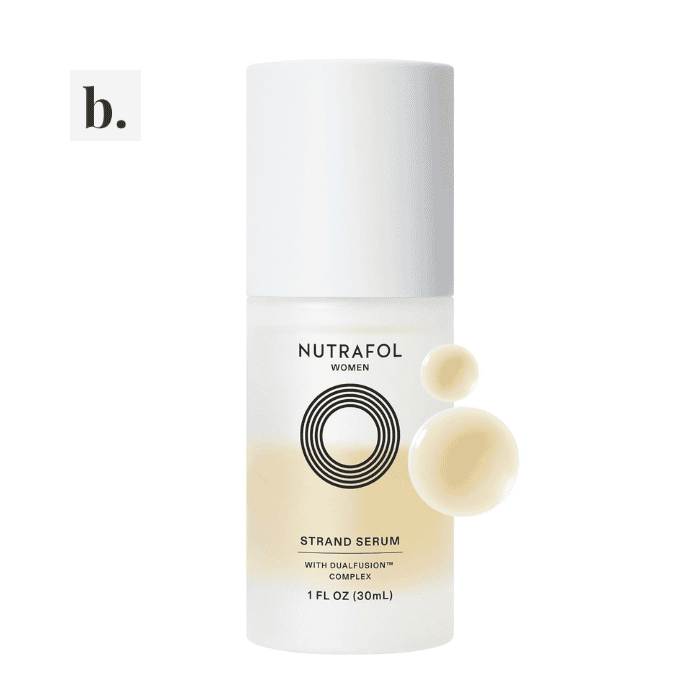
Nutrafol
Nutrafol Strand Serum
If your hair feels fragile, Nutrafol Strand Serum offers conditioning and film support that may help limit breakage. Its Premium value depends on smoothing and protection of existing lengths, while naturally scented…
Read the BeautyBrief
amika
amika The Protector Color Protect + Strengthen Conditioner
If you want a rinse-out conditioner for color-treated hair, The Protector offers relevant brand-reported fade and breakage results. Its ingredient panel currently matches the companion shampoo, so confirm your actual bottle's INCI…
Read the BeautyBrief
amika
amika Bust Your Brass Cool Blonde Strength Repair Conditioner
If your blonde, silver or gray hair looks brassy, Bust Your Brass offers violet toning and conditioning slip. Its reported breakage and strength gains apply to the shampoo-and-conditioner pairing, so choose it…
Read the BeautyBrief
amika
amika The Kure Intense Strength Repair Mask
If your hair feels rough or damaged, The Kure offers a rich weekly conditioning mask with brand-reported improvements in strength and breakage. Its Premium value is strongest for damaged, higher-porosity hair that…
Read the BeautyBrief
Pantene
Pantene Abbey Yung Deep Nourishing Transforming Cream to Mist Spray
If your hair needs smoothing and easier detangling before styling, Pantene's cream-to-mist offers a practical Budget option. Its exact heat-protection threshold remains brand-reported, and fragrance or silicone buildup may affect fit.
Read the BeautyBrief