

Does Dry Air Really Dry Out Your Skin? What Low Humidity Does—and What Actually Helps
At a glance
Low humidity changes how the outer skin layer handles water and can make dryness, tightness, roughness, and irritation more noticeable—especially when cold weather, indoor heat, frequent cleansing, or an already-stressed barrier are part of the picture. The useful response is not to chase a “climate-adaptive” ingredient. Start with the complete moisturizing system and the environment your skin is actually living in.
Winter skin often gets blamed on cold weather alone.
The bigger problem is usually the combination: cold outdoor air holds less moisture, indoor heating lowers relative humidity, hot showers strip surface lipids, and many people keep using the same lightweight routine they liked in summer.
Low humidity does more than make skin feel dry. A 2026 PNAS study found that epidermal keratinocytes actively respond to low-humidity exposure through TRPV4-dependent calcium signaling and downstream stress-response pathways in reconstructed epidermis and mice.[1]
That does not mean you need a product that “targets TRPV4.” It means dry air is a real biological stressor—and the most useful skincare response is still much simpler than the marketing.
In this Briefing
- What low humidity actually does to skin
- What transepidermal water loss means
- Why indoor heating can make winter dryness worse
- Why skin can feel tight, stingy, or rough
- How humectants, emollients, and occlusives differ
- Why hyaluronic acid does not automatically dry skin out
- When a humidifier helps
- How to adjust a routine for dry air
- Which “climate-adaptive” claims still need proof
Does low humidity really dry out skin?
Yes, but the biology is more complicated than “dry air sucks water out.”
Your outer skin layer, the stratum corneum, is designed to slow water loss while maintaining enough water for normal flexibility, enzyme activity, and shedding. Environmental humidity affects that balance.
Dermatology reviews link low humidity and cold conditions with changes in skin hydration, roughness, reactivity, and barrier function, but the literature is heterogeneous. TEWL findings do not all move in the same direction, and TEWL itself is sensitive to temperature, humidity, airflow, body site, and measurement conditions.[2][3]
For you, the practical point is simpler: dry environments can make dry, sensitive, eczema-prone, or treatment-stressed skin harder to keep comfortable.
What is transepidermal water loss?
Transepidermal water loss, or TEWL, is the amount of water vapor moving from inside the body through the stratum corneum and into the environment.
Researchers use TEWL as one way to assess skin-barrier function. Higher TEWL often accompanies a more disrupted barrier, but TEWL is not a standalone “dryness score.” It changes with body site, skin temperature, sweat, airflow, room humidity, and the instrument used.[4]
That is why a brand showing one lower TEWL number after product use has shown something useful—but not necessarily everything you need to know about hydration, irritation, comfort, or long-term barrier repair.
Why does indoor heating make skin feel drier?
Heating cold outdoor air raises its temperature without adding much water. Relative humidity indoors can drop sharply as a result.
AAD notes that winter conditions and indoor heat commonly contribute to dry, chapped skin and recommends richer moisturizers and a humidifier when needed.[5]
Indoor heat also tends to arrive with other drying habits: longer hot showers, more handwashing, heavier clothing rubbing the skin, and greater contrast between outdoor cold and heated indoor air.
No single factor explains every winter flare. The environment and the routine work together.
Why can dry-air skin feel tight or stingy?
Tightness is often a hydration and barrier-comfort signal rather than proof that the skin is “shrinking.”
When the outer layer contains less water, corneocytes become less flexible and the surface can feel rougher. Barrier disruption can also make skin more reactive to cleansing, fragrance, acids, retinoids, benzoyl peroxide, and other products that were previously easier to tolerate.
The 2015 environmental-humidity review found that low humidity and low temperatures can reduce barrier resilience and increase susceptibility to mechanical stress and irritants.[2]
That helps explain why a routine that worked in July can suddenly sting in January without any reformulation.
What is the difference between humectants, emollients, and occlusives?
A good moisturizer often combines all three.
Humectants
Humectants help the stratum corneum hold water. Common examples include glycerin, hyaluronic acid, urea, sodium PCA, panthenol, and some sugars.
They are useful for improving hydration, but a thin humectant serum is not automatically enough for very dry skin.
Emollients
Emollients smooth and soften the spaces between skin cells and improve the feel and flexibility of the surface. Examples include squalane, fatty alcohols, esters, oils, and many silicones.
They help rough skin feel better even when they are not strongly occlusive.
Occlusives
Occlusives reduce water loss by forming a more water-resistant film on the skin surface. Petrolatum is the classic example; dimethicone, waxes, and some heavier oils can also contribute.
In dry air, occlusion often becomes more useful because the goal is not just adding water—it is helping the skin keep it.
A 2023 moisturizer review describes these functions as complementary: humectants attract or retain water, emollients support softness and barrier structure, and occlusives reduce water loss.[6]
Does your moisturizer need ceramides?
No single ingredient is mandatory.
Ceramides are well-supported barrier lipids and can be useful in moisturizers for dry or eczema-prone skin, especially when they are part of a well-built lipid system. But more ceramide names do not automatically mean better performance.
BB’s Ceramides ingredient page explains why processing, lipid organization, supporting cholesterol and fatty acids, and the complete formula matter more than the front-label ceramide count.
If your current moisturizer already controls tightness and dryness, you do not need to replace it just to add ceramides.
Does hyaluronic acid pull water out of your skin in dry weather?
The evidence reviewed here does not support the popular claim that topical hyaluronic acid automatically “pulls water out of your skin” and dries it out when the air is dry.
Hyaluronic acid is a humectant. In a 2026 study of 123 volunteers, the tested HA serum, moisturizer, and layered routine all increased measured hydration at 30 minutes compared with cleanser control; at eight hours, only the layered HA-serum-plus-moisturizer routine remained higher than control. The authors were affiliated with Good Molecules, and the study tested specific finished products rather than HA as a universal ingredient claim.[7]
The part that often gets confused is formula completeness.
A watery HA serum may feel comfortable in humid weather and insufficient in very dry conditions because it provides water-binding support without enough emollient or occlusive support for your skin. If the skin still feels tight, the solution is usually to use a more complete moisturizer—not to conclude that HA stole water from the skin.
BB’s Hyaluronic Acid ingredient page makes the same distinction: HA is a credible hydration ingredient, but very dry skin often needs emollients and occlusives too.
Should you apply humectants to damp skin?
You can, but it is not a magic requirement.
Applying moisturizer after washing while the skin is still slightly damp is useful because it helps trap some of that surface water before it evaporates. AAD recommends moisturizing soon after bathing or washing for dry skin.[5]
That advice applies to the routine as a whole. It does not mean every hyaluronic acid serum becomes ineffective on dry skin or that misting your face repeatedly is necessary.
When does a humidifier help?
A humidifier can help when indoor air is consistently dry, especially during heating season.
AAD specifically recommends a humidifier as one option for dry skin and advises regular cleaning to reduce mold and contamination.[5]
The benefit is environmental: increasing indoor humidity reduces how dry the surrounding air is. It does not replace moisturizer, and it does not treat an underlying dermatitis by itself.
If one room is where you spend most of the night, a bedroom humidifier is often more practical than trying to humidify an entire house.
Keep the unit clean. A dirty humidifier can introduce a different problem.
What humidity level is best for skin?
There is no single skin-specific humidity percentage that guarantees healthy skin for everyone.
Humidity studies vary substantially, and skin response depends on temperature, baseline barrier condition, disease state, age, body site, and exposure duration.[3]
Use comfort and the home environment as practical guides rather than trying to optimize skin to a precise number.
How should you change your routine when the air gets dry?
Change the moisture-retention side first.
- Use a gentler cleanser if washing leaves skin tight.
- Shorten hot showers. Warm water is easier on dry skin than long, hot bathing.
- Move from lotion to cream or ointment when needed. Richer textures generally provide more emollient and occlusive support.
- Apply moisturizer after washing. Do not wait until skin feels painfully dry.
- Reduce optional irritation. If acids, scrubs, or frequent retinoid use suddenly sting, adjust frequency before buying another “barrier rescue” serum.
- Use sunscreen daily. Dry weather does not remove UV exposure.
- Add environmental humidity when indoor air is very dry.
AAD similarly recommends creams or ointments over lotions for very dry skin and emphasizes moisturizing promptly after washing.[5]
Do you need a special winter moisturizer?
Not necessarily.
A “winter moisturizer” is a texture and formula decision, not a special product category.
If your usual moisturizer still keeps the skin comfortable, keep using it. If you develop recurring tightness, flaking, roughness, or stinging, a richer cream or ointment may be more useful than adding several lightweight serums.
The best seasonal change is often one product becoming more occlusive—not the entire routine becoming more complicated.
What about “climate-adaptive” or “weather-responsive” skincare?
Treat those as product claims, not ingredient facts.
The 2026 TRPV4 study shows that low humidity triggers rapid water movement and cell signaling in experimental epidermis and mice. It does not show that a cosmetic can “sense the climate,” block dry-air signaling, switch on adaptive hydration, or protect human skin from environmental stress simply because it contains a botanical, peptide, osmolyte, or proprietary complex.[1]
For a strong climate-adaptive claim, look for finished-product human testing under relevant controlled environmental conditions—not just ingredient biology or a supplier mechanism.
What kind of evidence would make a climate claim stronger?
- Human testing on the exact finished product.
- Controlled low-humidity exposure.
- A meaningful comparator. Vehicle, untreated skin, or an established moisturizer.
- Objective measurements. Hydration, TEWL, roughness, barrier recovery, or irritation measures.
- Enough time to match the claim. A two-hour hydration test does not prove season-long resilience.
- Results across relevant skin types.
- Disclosure of funding and conflicts.
A molecular story about aquaporins, TRPV4, heat-shock proteins, osmolytes, or “environmental sensors” is not a substitute for those data.
When is dry skin more than a weather problem?
See a dermatologist when dryness becomes persistent despite a sensible routine, or when you develop significant itching, cracking, bleeding, widespread scaling, recurrent rash, painful inflammation, or signs of infection.
Eczema, psoriasis, contact dermatitis, medication effects, endocrine conditions, and other problems can look like “winter skin.”
Weather can aggravate those conditions without being the whole explanation.
The BB Perspective
Dry air is a real skin stressor. The outer skin layer responds to changes in environmental humidity, and winter conditions can make an already-demanding routine much harder to tolerate.
But you do not need a futuristic “humidity-sensing” active to solve most dry-air problems.
The useful formula is still familiar: humectants to support hydration, emollients to improve softness, and enough occlusion to slow water loss. Add a humidifier when the environment itself is part of the problem. Reduce avoidable irritation when the barrier is already struggling.
And do not blame hyaluronic acid for doing the opposite of what the evidence shows. If an HA serum is not enough in dry weather, the missing piece is usually the rest of the moisturizer.
Last reviewed: September 2026
Sources
Tanaka M, Chikuma S, Hara-Chikuma M. “TRPV4 mediates low-humidity responses in epidermal keratinocytes.” Proceedings of the National Academy of Sciences of the United States of America. 2026;123(38):e2603334123. doi:10.1073/pnas.2603334123. PMID: 42748142.
Used for mechanistic evidence that low humidity triggers rapid water movement, TRPV4-dependent calcium signaling, MAPK activation, and transcriptional responses in reconstructed epidermal models and mice. The study did not test a cosmetic product or human skincare intervention. The authors declared no competing interests. Return to citation.
Engebretsen KA, Johansen JD, Kezic S, Linneberg A, Thyssen JP. “The effect of environmental humidity and temperature on skin barrier function and dermatitis.” Journal of the European Academy of Dermatology and Venereology. 2016;30(2):223-249. doi:10.1111/jdv.13301. PMID: 26449379.
Used for evidence linking low humidity and low temperature with reduced barrier resilience, dry or itchy skin, and increased susceptibility to mechanical stress and irritants. Return to citation.
Goad N, Gawkrodger DJ. “Ambient humidity and the skin: the impact of air humidity in healthy and diseased states.” Journal of the European Academy of Dermatology and Venereology. 2016;30(8):1285-1294. doi:10.1111/jdv.13707. PMID: 27306376.
Used for broader evidence on humidity, stratum-corneum water content, roughness, elasticity, eczema, and the heterogeneity of TEWL findings across environmental studies. The review concludes that the literature is mixed and further research is needed. Return to citation.
Alexander H, Brown S, Danby S, Flohr C. “Research Techniques Made Simple: Transepidermal Water Loss Measurement as a Research Tool.” Journal of Investigative Dermatology. 2018;138(11):2295-2300.e1. doi:10.1016/j.jid.2018.09.001. PMID: 30348333.
Used to explain TEWL as an objective barrier measurement and its sensitivity to humidity, temperature, airflow, anatomical site, skin temperature, and sweat activity. Return to citation.
American Academy of Dermatology. “Dermatologists’ top tips for relieving dry skin.” Updated January 2, 2026. Accessed September 2026.
Used for consumer guidance on creams and ointments, moisturizing while skin is still damp, warm rather than hot water, humidifier use and cleaning, and when persistent dry skin deserves dermatologic care. Return to citation.
Rajkumar J, Chandan N, Lio P, Shi V. “The Skin Barrier and Moisturization: Function, Disruption, and Mechanisms of Repair.” Skin Pharmacology and Physiology. 2023;36(4):174-185. doi:10.1159/000534136. PMID: 37717558.
Used for the complementary roles of humectants, emollients, occlusives, and complete moisturizer formulation in supporting the skin barrier. Return to citation.
Maldonado López AM, da Silva Souza ID. “A serum and cream moisturization regimen outperforms separate use in sustaining hydration, reducing TEWL, and balancing surface lipids over an 8-h study.” International Journal of Cosmetic Science. 2026. doi:10.1111/ics.70100. PMID: 41906718.
The study randomized 124 volunteers across cleanser control, hyaluronic-acid serum, moisturizing cream, and serum-plus-cream routine groups; 123 completed it. Researchers measured hydration, TEWL, and sebum at baseline, 30 minutes, and eight hours. The findings support the tested products and regimen, not every HA serum. Both authors were affiliated with Good Molecules, LLC. Return to citation.
Related product BeautyBriefs
These BeautyBriefs cover products relevant to the needs discussed in this Beauty Briefing. Inclusion here reflects topic relevance, not a rating or endorsement.

Allies of Skin
Allies of Skin The Lab Drop 10/10/10 Multi GF Exo Advanced Recovery Ampoules
If you are considering Allies of Skin Lab Drop 10/10/10 Ampoules for visible aging, its growth-factor and exosome-themed complexes make an ambitious treatment story. The brand's reported improvements do not establish biological…
Read the BeautyBrief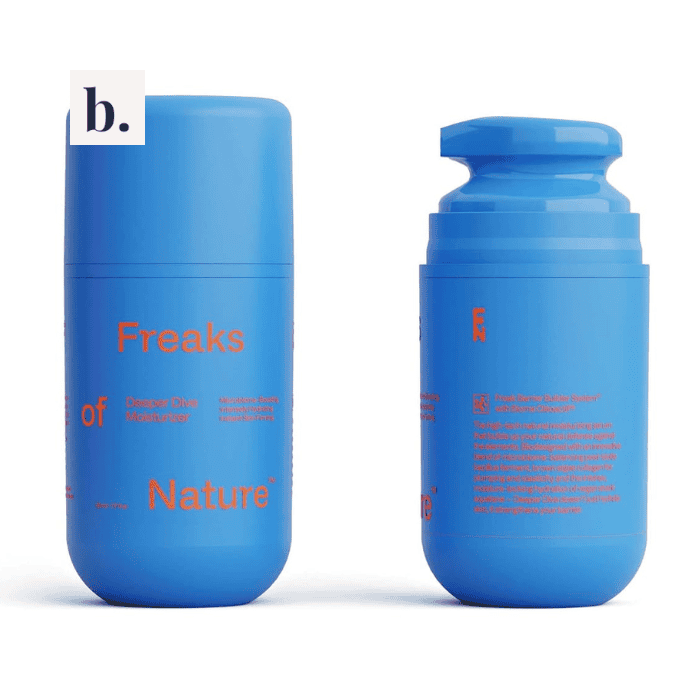
Freaks of Nature
Freaks of Nature Deeper Dive Hydrator
If you prefer an oil-based moisturizer, Deeper Dive offers a short squalane-and-plant-oil formula for surface softness. Its microbiome test does not establish clearer skin or repaired barrier function, so choose it for…
Read the BeautyBrief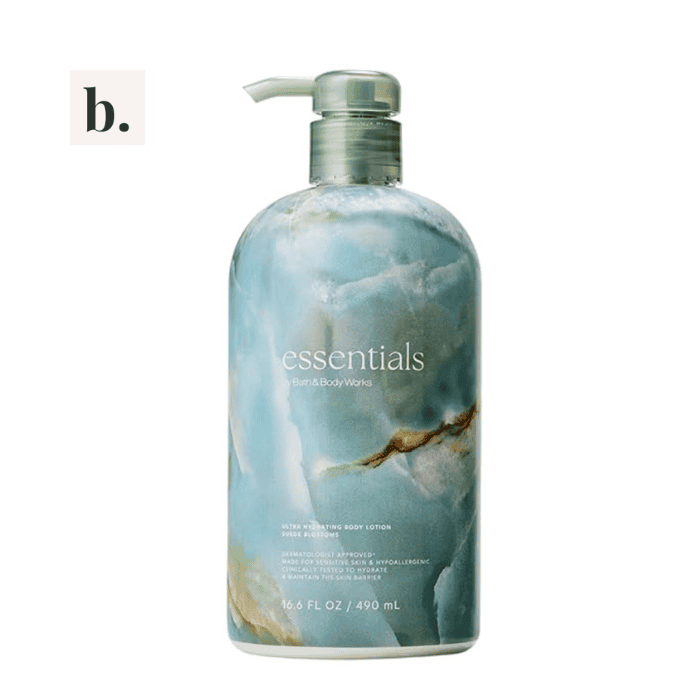
Bath & Body Works
Bath & Body Works Suede Blossoms Ultra Hydrating Body Lotion
If your body skin is normal or dry and you enjoy scented lotion, Suede Blossoms offers familiar humectants and emollients for everyday softness. Its hypoallergenic label does not guarantee fragrance tolerance, and…
Read the BeautyBrief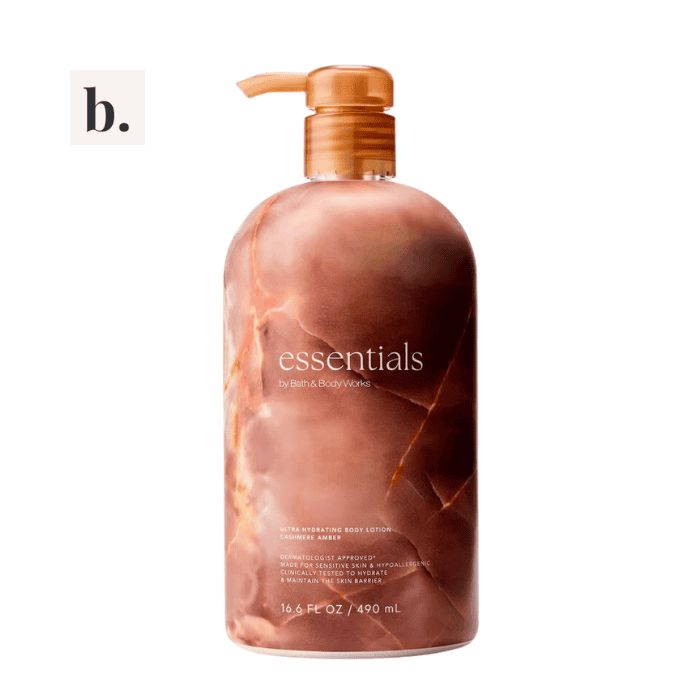
Bath & Body Works
Bath & Body Works Cashmere Amber Ultra Hydrating Body Lotion
If your body skin is normal or dry and you enjoy an amber fragrance, Cashmere Amber offers familiar humectants and emollients for everyday softness. Its hypoallergenic label does not guarantee fragrance tolerance,…
Read the BeautyBrief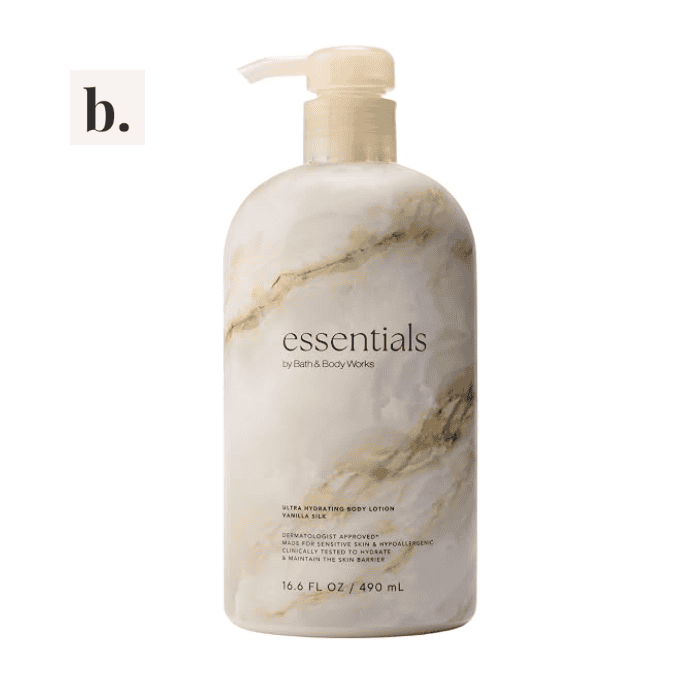
Bath & Body Works
Bath & Body Works Vanilla Silk Ultra Hydrating Body Lotion
If your body skin is normal or dry and you enjoy vanilla fragrance, Vanilla Silk combines humectants and emollients for everyday softness. Its hypoallergenic claim does not guarantee fragrance tolerance, and the…
Read the BeautyBrief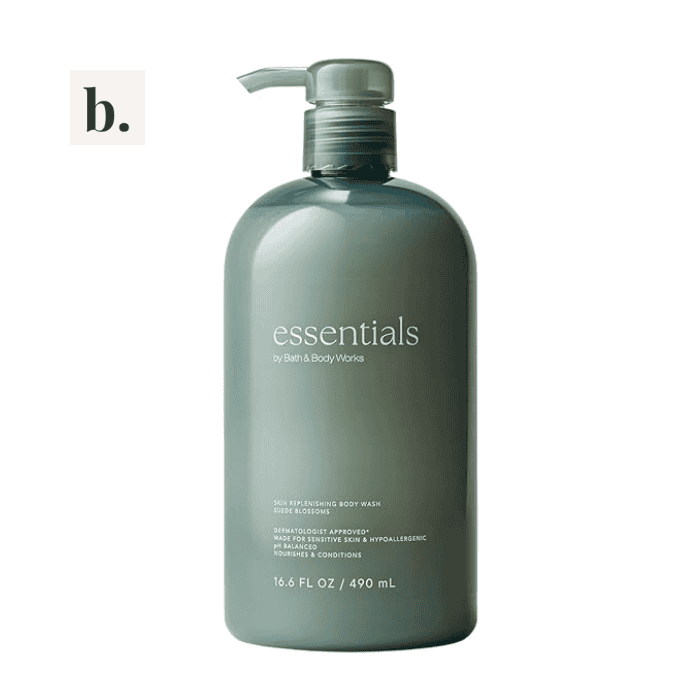
Bath & Body Works
Bath & Body Works Suede Blossoms Skin Replenishing Body Wash
If you enjoy sueded-jasmine fragrance and tolerate scented cleansers, this wash pairs a sulfate-free cleansing system with glycerin for comfort-focused daily use. Its hypoallergenic and dermatologist-approved positioning does not guarantee fragrance tolerance…
Read the BeautyBrief