

Do Microneedle Eye Patches Actually Work for Wrinkles?
At a glance
Several specific dissolving microneedle eye patches have human wrinkle studies behind them, but the research is still small, product-specific, and often industry-involved. Short studies support hydration and surface smoothing, while multi-week trials report improvements in crow’s-feet and elasticity. The format also temporarily disrupts the skin barrier, so the exact patch matters more than the “microneedle” label.
Microneedle eye patches may look like ordinary under-eye patches, but when you turn one over, the working surface is covered with tiny solid projections made from dissolvable materials such as hyaluronic acid.
Those projections press into the outer skin layer and gradually dissolve. That makes them a different delivery system from a hydrogel patch that simply rests on the skin.
The difference is real, but it does not mean every microneedle patch erases wrinkles. Human studies are useful for understanding what the format can do, what remains uncertain, and what you should check before paying more for it.
In this Briefing
- What dissolving microneedle eye patches are
- How they differ from hydrogel patches and microneedling devices
- What human wrinkle studies show
- What hyaluronic acid contributes
- How quickly results appear and how often patches were studied
- Barrier disruption, tolerability, and hygiene
- How they compare with eye cream
- Why product-specific testing matters
- What to look for before buying
- Who this format makes sense for
What is a dissolving microneedle eye patch?
A dissolving microneedle patch uses an array of very small projections designed to enter the outer skin barrier and dissolve after application. Hyaluronic acid is commonly used as the structural material, and some patches also incorporate ingredients such as adenosine, peptides, or vitamin C derivatives.
That means the projections can serve two roles at once: they create the delivery pathway and can carry part of the formula.
The goal is to place selected ingredients past some of the barrier that limits ordinary topical penetration. These patches are not injectable filler, and they are not the same as reusable dermarollers or powered microneedling pens.
How are microneedle patches different from hydrogel patches and microneedling devices?
A traditional hydrogel eye patch rests on the skin surface. Its main effects come from the formula it carries, temporary occlusion, and hydration. A dissolving microneedle patch physically presses tiny projections into the outer skin layer before those projections soften and dissolve.
Evidence from a dissolving microneedle patch therefore does not transfer to an ordinary hydrogel patch simply because both are sold for the eye area.
Reusable and powered microneedling devices are also a different category. They repeatedly insert solid needles into the skin rather than leaving a single-use dissolving array in place. FDA guidance for microneedling devices discusses risks such as bleeding, bruising, pigment changes, infection, and irritation. FDA also says it has not cleared any microneedling device for use with another cosmetic or topical product, which means it has not reviewed the safety or effectiveness of combining the two.[1]
That distinction matters if you are looking at an at-home roller sold as part of a skincare routine. Trinny London currently sells Take Back Time Overnight Hand Transformation, which pairs a leave-on hand concentrate with a reusable 0.5 mm microneedle roller. The brand instructs you to roll the backs of your hands first and apply the concentrate afterward, and it reports results from a 12-week split-hand study in 32 women ages 45 to 70.[2]
That company study is evidence for the tested two-step protocol, not proof that microneedling generally makes every skincare product work better. The public product materials also do not establish how much of the measured improvement came from the roller, the concentrate, or their combination. FDA’s position adds another boundary: the agency has not reviewed microneedling-plus-cosmetic combinations as a class.[1]
Those device warnings should not be treated as direct safety data for dissolving cosmetic patches. They do show why a disposable dissolving patch and a reusable microneedling tool should not be treated as interchangeable DIY versions of the same treatment.
What do human studies show about wrinkles?
The newest human study is useful mainly for short-term skin effects. A 2026 prospective open-label study tested cross-linked hyaluronic-acid microneedle patches in 40 adults ages 22 to 43. Participants used the patches under the eyes and on the forearm for three consecutive nights.[3]
The microneedles averaged about 310 micrometers in length and gradually dissolved over several hours. Researchers reported about a 10% increase in measured hydration, changes in skin-smoothing measurements, and 82% participant-reported visible improvement.[3]
That is not the same as proving durable wrinkle correction. Three nights is better read as evidence that the tested patch changed short-term hydration and surface properties.
Longer studies are more relevant to wrinkle claims. In a 2017 randomized split-face study, 34 Korean women with mild-to-moderate crow’s-feet used a hyaluronic-acid microneedle patch on one side and a topical essence containing the same actives on the other side twice weekly for eight weeks. Both sides improved, but the patch side showed greater wrinkle and elasticity improvement at week eight.[4]
A 2018 comparative study followed 22 women with crow’s-feet for eight weeks. One side received an adenosine-loaded dissolving microneedle patch every three days; the other received an adenosine cream twice daily. The patch produced similar or better measured results across wrinkle depth, dermal density, elasticity, and hydration despite a much lower weekly adenosine dose.[5]
A 2020 study in 23 women also reported improvements in wrinkles, dermal density, and elasticity with adenosine-loaded hyaluronic-acid microneedle patches used every three days for eight weeks.[6]
A 2024 study tested a dissolving hyaluronic-acid microneedle patch containing acetyl octapeptide-3, a vitamin C derivative, and another active against an HA-only placebo microneedle patch. Of 24 participants enrolled, 21 completed the 28-day study. The active patch produced stronger wrinkle improvements than placebo. Although elasticity improved within the active-patch group, the difference between groups was not statistically significant.[7]
Together, these studies support dissolving microneedles as more than a novelty. They do not establish a class-wide wrinkle effect. The studies are small, use different patch designs and payloads, and several include authors affiliated with companies involved in microneedle development or manufacture.[4][5][6][7]
Is hyaluronic acid doing the work, or are the needles?
Both can contribute, and the research does not reduce the answer to one mechanism.
Hyaluronic acid is a well-established humectant that binds water and supports surface hydration in ordinary topical formulas. In a dissolving patch, it can also act as the structural material for the microneedles. That changes how and where it is delivered compared with a serum sitting on intact skin. Read more on the Beauty Briefing Hyaluronic Acid ingredient page.
Some studies also use adenosine, peptides, vitamin C derivatives, or other wrinkle-focused ingredients, so the observed improvement cannot automatically be assigned to hyaluronic acid alone.
Do hyaluronic-acid microneedles work like filler?
No. Injectable hyaluronic-acid filler places a gel into tissue to create structural volume. A dissolving cosmetic patch uses much smaller amounts of material in superficial microprojections.
Short-term plumping from hydration is not the same as facial-volume restoration. If a microneedle patch claims “filler-like” or “injectable-like” results, that claim needs evidence on the finished product.
How quickly do results appear, and how often were patches studied?
Hydration and surface smoothing appear before durable wrinkle changes. The 2026 study found measurable changes after three consecutive nights, but it did not establish long-term wrinkle correction.[3]
The stronger wrinkle studies used repeated treatment for four to eight weeks rather than a single application.[4][5][7]
The schedules also varied. Published studies have used twice-weekly application, every-three-day application, overnight wear on scheduled days, and three consecutive nights depending on the patch design.[3][4][5]
Those schedules belong to the tested products. They are not universal instructions for every microneedle patch, so follow the labeled frequency and wear time for the product you are using.
What does barrier disruption mean for tolerability and hygiene?
Dissolving microneedles work because they cross the outer barrier. That is also the main tradeoff.
In the 2026 study, transepidermal water loss, or TEWL, increased by about 17% after treatment even while measured hydration increased. Mild short-lived redness was reported in 3% of participants, and no severe adverse effects were reported.[3]
The TEWL result is important because it shows that the technology is not simply “hydration pushed deeper.” It temporarily changes barrier function at the same time. The authors called for longer follow-up before stronger conclusions about sustained skin improvement are made.[3]
The small clinical studies generally report good tolerability, but they do not tell you how every highly reactive or barrier-impaired skin type will respond. Product-specific directions matter because needle geometry, adhesive, payload, and wear time vary.
What about hygiene?
A dissolving patch is a single-use product that physically enters the outer skin layer, so the working surface should stay clean. Handle it with clean, dry hands, apply it only as directed, do not share it, and do not reuse it after application.
Reusable microneedling devices have a different contamination problem because their needle components can be reused. FDA guidance specifically warns against sharing home microneedling products and emphasizes cleaning reusable devices according to manufacturer instructions.[1]
Are microneedle patches better than regular eye cream?
Some studies show an advantage over matched topical application, but the answer depends on the finished products being compared.
The 2017 split-face study found greater improvement from the microneedle patch than from a topical essence containing the same actives after eight weeks.[4] The 2018 study likewise found the adenosine patch performed similarly or better than adenosine cream across several measured outcomes.[5]
Those comparisons support the delivery format used in those studies. They do not mean a weak microneedle patch automatically beats a well-formulated retinoid, peptide eye treatment, or moisturizer.
For basic hydration alone, a moisturizer or conventional eye cream is usually the simpler route. Microneedle patches make more sense when you specifically value targeted delivery and the exact patch has evidence that justifies repeated single-use treatment.
Why does product-specific testing matter so much?
Microneedle geometry and composition vary from product to product. Needle length, density, mechanical strength, dissolution time, hyaluronic-acid structure, active payload, adhesive backing, and wear time can all affect delivery.
The 2026 study used microneedles averaging about 310 micrometers and tracked their dissolution under the tested conditions.[3] A retail patch with a different needle height, material, or payload does not inherit those results.
The same rule applies to added peptides, retinoids, niacinamide, growth factors, or other ingredients. A plausible ingredient plus a microneedle format is not the same thing as evidence that the finished patch delivers a meaningful wrinkle benefit.
For a strong product claim, look for testing on the exact retail patch rather than a citation to microneedle technology in general.
What should you look for before buying?
- Exact patch type: confirm that it uses dissolving microneedles rather than a smooth hydrogel surface marketed with “micro” language.
- Needle material: identify what the projections are made from.
- Active payload: check what is actually inside the dissolving projections rather than only in a backing serum.
- Finished-product study: product-specific human data are more useful than general microneedle research.
- Study length: three nights supports a different conclusion from eight weeks.
- Comparator: a split-face or placebo-patch comparison is more informative than user satisfaction alone.
- Wear time and frequency: compare the retail directions with the schedule used in any supporting study.
- Tolerability: look for irritation and barrier measurements, not only wrinkle scores.
- Cost per treatment: repeated single-use patches can add up quickly.
Who is this format most useful for?
Dissolving microneedle eye patches make the most sense if you want a targeted wrinkle treatment, are comfortable with repeated single-use patches, and can verify that the exact product has evidence relevant to the result being promised.
They are less compelling when the goal is basic under-eye hydration or when a brand relies on the microneedle format itself instead of testing the product it sells.
The BB Perspective
Microneedle patches are a real delivery format, not simply hydrogel patches with sharper marketing. Small human studies show that specific dissolving patches can improve short-term hydration and, with repeated use, measured crow’s-feet outcomes. The evidence is still small and product-specific.
If basic hydration is your goal, a moisturizer or conventional eye product is simpler. If you are paying more for repeated single-use patches, look for human testing on the exact retail patch, a realistic treatment schedule, and tolerability data.
Judge the exact patch, not the microneedle label.
Last reviewed: October 2026
Sources
U.S. Food and Drug Administration. Microneedling Devices. Updated October 15, 2025. Accessed September 2026.
FDA guidance is used here to distinguish regulated microneedling devices from dissolving cosmetic patches and to provide device-specific hygiene and risk context. FDA states that microneedling devices are not approved for delivering cosmetics, topical medications, drugs, or blood products into the skin and notes risks including irritation, pigment changes, bleeding, and infection. These warnings do not establish the safety or efficacy of individual dissolving cosmetic eye patches. Return to citation.
Trinny London. Take Back Time Overnight Hand Transformation. Accessed October 2026.
The official U.S. product page describes a two-step system pairing a reusable 0.5 mm microneedle roller with a leave-on hand concentrate and reports results from a 12-week split-hand study in 32 women ages 45 to 70. These are company-reported finished-product results; the public materials do not isolate the contribution of the roller from the concentrate. Return to citation.
Jacyszyn K, Kuzan A, Sopel M. Evaluation of Hyaluronic Acid-Based Microneedle Patches for Anti-Wrinkle Effects and Skin Quality Improvement: A Prospective, Open-Label and Interventional Preliminary Study. Skin Pharmacology and Physiology. Published September 18, 2026. doi:10.1159/spp/aetag012. PMID: 42758679.
Forty adults ages 22 to 43 used cross-linked HA microneedle patches for three consecutive nights. The abstract reports about a 10% hydration increase, surface-smoothing changes, 82% participant-reported visible improvement, 3% mild transient erythema, and an approximately 17% transient increase in TEWL. The open-label, short-duration design does not establish durable wrinkle correction. Return to citation.
Choi SY, Kwon HJ, Ahn GR, et al. Hyaluronic acid microneedle patch for the improvement of crow’s feet wrinkles. Dermatologic Therapy. 2017;30(6). doi:10.1111/dth.12546.
This randomized split-face study enrolled 34 Korean women and compared an HA microneedle patch with topical essence containing the same active ingredients twice weekly for eight weeks. Both sides improved, with greater wrinkle and elasticity improvement on the patch side at week eight. Two authors were affiliated with the R&D Center of Hugel, Inc. Return to citation.
Kang G, Tu TNT, Kim S, et al. Adenosine-loaded dissolving microneedle patches to improve skin wrinkles, dermal density, elasticity and hydration. International Journal of Cosmetic Science. 2018;40(2):199-206. doi:10.1111/ics.12453.
Twenty-two women used an adenosine microneedle patch on one crow’s-feet area every three days and adenosine cream on the other side twice daily for eight weeks. The patch produced similar or better measured outcomes across several parameters. Several authors were affiliated with Juvic Inc. Return to citation.
Jang M, Baek S, Kang G, et al. Dissolving microneedle with high molecular weight hyaluronic acid to improve skin wrinkles, dermal density and elasticity. International Journal of Cosmetic Science. 2020;42(3):302-309. doi:10.1111/ics.12617.
Twenty-three women took part in a 12-week clinical efficacy and safety study. The high- and low-molecular-weight HA microneedle patches were applied every three days for eight weeks; both groups improved on most measured parameters, and the high-molecular-weight HA patch performed better on several outcomes. Multiple authors were affiliated with Juvic Inc.; the published conflict statement also identifies patent and company interests related to microneedle development. Return to citation.
Shin JY, Han D, Yoon KY, Jeong DH, Park YI. Clinical Safety and Efficacy Evaluation of a Dissolving Microneedle Patch Having Dual Anti-Wrinkle Effects With Safe and Long-Term Activities. Annals of Dermatology. 2024;36(4):215-224. doi:10.5021/ad.23.136.
Twenty-four healthy participants enrolled in the 28-day split-face study, and 21 completed it. Wrinkle outcomes favored the active patch, but skin elasticity was similar between groups. Four authors were affiliated with Raphas Co., Ltd., and the paper acknowledges support from Raphas. Its separate disclosures list no funding source and no conflicts of interest. Return to citation.
Related product BeautyBriefs
These BeautyBriefs cover products relevant to the needs discussed in this Beauty Briefing. Inclusion here reflects topic relevance, not a rating or endorsement.

Allies of Skin
Allies of Skin The Lab Drop 10/10/10 Multi GF Exo Advanced Recovery Ampoules
If you are considering Allies of Skin Lab Drop 10/10/10 Ampoules for visible aging, its growth-factor and exosome-themed complexes make an ambitious treatment story. The brand's reported improvements do not establish biological…
Read the BeautyBrief
Schaf
Schaf Moisturizer 3.0
If you prefer a fragrance-free cream, Schaf Moisturizer 3.0 offers rich emollience alongside niacinamide and bakuchiol. Its Premium value rests on how the texture and ingredient blend suit you, not established retinoid-level…
Read the BeautyBrief
Oak Essentials
Oak Essentials Antioxidant Hand Serum
If your hands look dry, Oak Essentials Hand Serum offers humectants and emollients for softness. Its Premium value depends on the scented finish, not unproven cellular regeneration.
Read the BeautyBrief
Neutrogena
Neutrogena Rapid Wrinkle Repair Retinol Regenerating Cream
If your skin tolerates retinol and fragrance, Rapid Wrinkle Repair offers a moisturizing format for gradual fine-line care. Its Mid-Range value rests on texture and convenience rather than a disclosed retinol concentration.
Read the BeautyBrief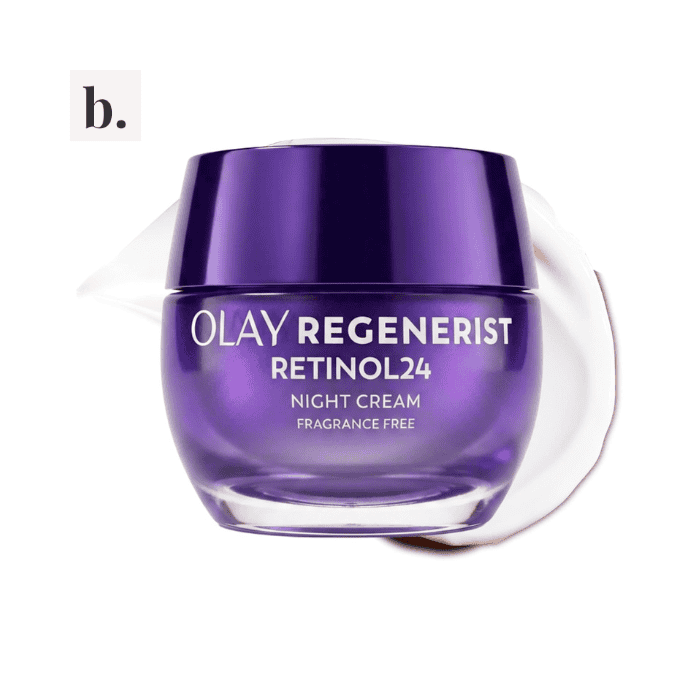
Olay
Olay Regenerist Retinol24 Night Moisturizer
If your skin tolerates retinoids, Olay Retinol24 offers a convenient fragrance-free night moisturizer with two vitamin A derivatives. Its Mid-Range value depends on routine simplicity rather than known retinol strength.
Read the BeautyBrief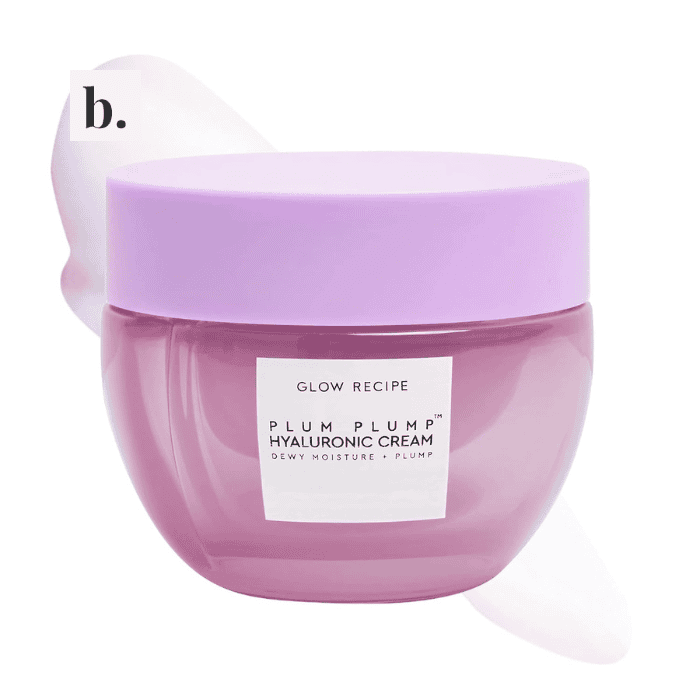
Glow Recipe
Glow Recipe Plum Plump Hyaluronic Cream
If you want lightweight hydration, Plum Plump combines hyaluronic acid forms, glycerin and squalane for a temporarily plumper-looking finish. Its refillable format adds value, but the fragrance and limited wrinkle evidence matter…
Read the BeautyBrief