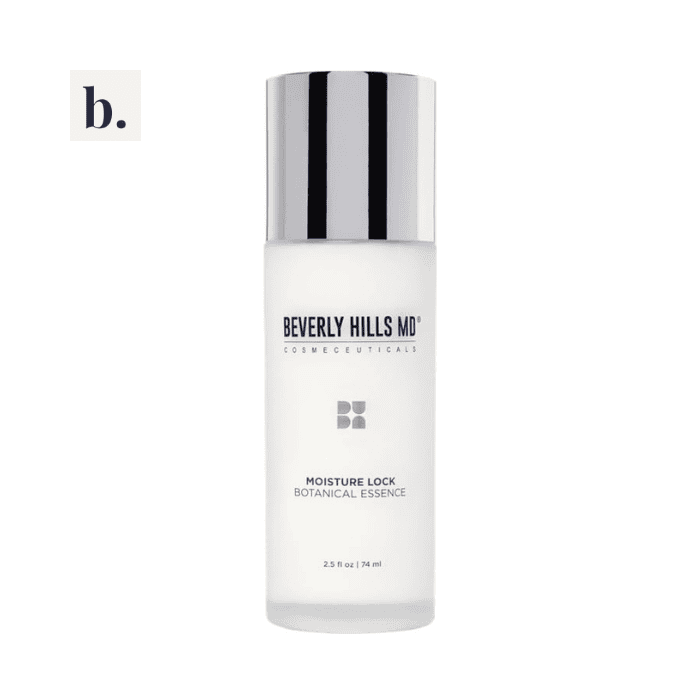

Beverly Hills MD Dark Spot Corrector Review
BeautyBrief™
Brand
Beverly Hills MD
Product
Dark Spot Corrector™
Claims check
Niacinamide, phenylethyl resorcinol, diglucosyl gallic acid, daisy extract, Kakadu plum, sea fern extract, and oligopeptide-68 create a credible multi-path brightening system, but the brand does not disclose principal active concentrations or controlled finished-product pigmentation data.
Shopper fit
- Dry
- Normal
- Combination
- Oily
Formula flags
- Fragrance
- Silicones
Shopper preferences
- None Found
Key ingredients
| Niacinamide | Has controlled topical evidence for improving visible hyperpigmentation and also supports barrier function. |
|---|---|
| Phenylethyl Resorcinol | Provides a targeted pigmentation pathway with ingredient-level clinical support in other topical formulations. |
| Diglucosyl Gallic Acid | Adds a complementary brightening and antioxidant pathway with limited ingredient-level clinical evidence. |
| Daisy Flower Extract | Adds botanical tone-supportive activity within the broader brightening system. |
| Oligopeptide-68 | Adds a peptide-based pigmentation rationale, though the finished-product contribution is not quantified. |
Price tier
$$$ Premium
Value check
The Luxury tier is difficult to justify without disclosed active concentrations or controlled finished-product pigmentation data, even though the formula contains a more substantive multi-path brightening system than a simple botanical spot treatment.
Bottom line
This is a legitimate multi-path dark-spot serum with niacinamide, phenylethyl resorcinol, diglucosyl gallic acid, and supporting botanical and peptide ingredients. The formula supports gradual brightening, but undisclosed active concentrations and the lack of controlled finished-product pigmentation data weaken the value case at the Luxury tier.
Beverly Hills MD Dark Spot Corrector is a Luxury dark-spot serum built around glycerin, niacinamide, phenylethyl resorcinol, diglucosyl gallic acid, daisy flower extract, Kakadu plum, sea fern extract, and oligopeptide-68. The current formula gives the product a credible multi-path brightening architecture, but the brand does not disclose the concentrations of its principal pigmentation-focused ingredients or publish controlled finished-product clinical methodology on the current product page.[1]
That distinction matters at this tier. Several individual ingredients have reasonable pigmentation evidence, but ingredient-level evidence does not establish how much improvement shoppers should expect from this exact finished serum.

What it claims
Beverly Hills MD positions Dark Spot Corrector as a fast-absorbing gel treatment for age spots, sun spots, hyperpigmentation, and uneven tone. The brand says it helps visibly diminish stubborn dark spots, brighten the complexion, and protect skin from environmental stressors without the white-ring effect associated with indiscriminate bleaching around a spot.[1]
Claims vs. formula
The brightening claim has a stronger formula basis than a purely botanical spot treatment. Niacinamide is the fifth ingredient in the current formula, and topical niacinamide has demonstrated reductions in visible hyperpigmentation in controlled clinical studies at disclosed concentrations such as 4% and 5%.[2][3]
Phenylethyl resorcinol adds another targeted pigmentation pathway. Published clinical work on formulations containing 4-(1-phenylethyl)-resorcinol has reported improvement in solar lentigines, although those results belong to the studied formulations rather than to Beverly Hills MD Dark Spot Corrector itself.[4]
Diglucosyl gallic acid also has ingredient-level evidence for tyrosinase inhibition and improvement in visible pigmentation measures in a small cosmetic study.[5] Daisy extract, Kakadu plum, sea fern extract, and oligopeptide-68 add complementary brightening or antioxidant rationale, but the current page does not disclose their concentrations or provide controlled finished-product data isolating their contribution.
The formula also contains dimethicone and fragrance, so BB applies Silicone and Fragrance Formula Flags for transparency. Those ingredients do not negate the brightening system, but fragrance narrows the fit for shoppers who are sensitive to scented leave-on products.
Ingredients that matter
Niacinamide: Has controlled topical evidence for improving visible hyperpigmentation and also supports barrier function.
Phenylethyl resorcinol: Provides a targeted pigmentation pathway with ingredient-level clinical support in other topical formulations.
Diglucosyl gallic acid: Adds a complementary brightening and antioxidant pathway with limited ingredient-level clinical evidence.
Daisy flower extract: Adds botanical tone-supportive activity within the broader brightening system.
Oligopeptide-68: Adds a peptide-based pigmentation rationale, though the finished-product contribution is not quantified.

Niacinamide
Niacinamide is well supported for hydration and barrier support, with additional evidence for uneven tone and visible oiliness. Higher percentages are not automatically better.
Read the IngredientBrief
Glycerin
Glycerin is a well-supported humectant that helps skin hold water and improve dryness. It is common and effective, so the complete formula matters more than a high percentage.
Read the IngredientBrief
Dimethicone
Dimethicone is a well-supported silicone emollient and skin-protecting ingredient that improves slip, smoothness, and surface comfort. Its real moisture benefit depends on the complete moisturizer or skin-protectant formula.
Read the IngredientBrief
Fragrance
Fragrance is a scent blend added mainly for sensory appeal. Many shoppers tolerate it well, while specific fragrance materials can trigger irritation or allergic contact dermatitis in susceptible people.
Read the IngredientBriefWhat to expect in the short term
Expect a lightweight gel-serum texture designed to absorb quickly and layer under moisturizer or sunscreen. Beverly Hills MD directs users to apply the product as a spot treatment one to three times daily depending on the severity of visible discoloration.[1]
Immediate benefits are primarily cosmetic feel and hydration from the glycerin-rich gel base. Meaningful fading of established pigmentation should be judged over repeated use rather than from the first few applications.
What to expect over time
Gradual improvement in uneven tone is plausible because the formula combines several ingredients with pigmentation-focused mechanisms, especially niacinamide and phenylethyl resorcinol. Daily sunscreen remains essential because ongoing ultraviolet exposure can continue to drive visible discoloration regardless of the brightening serum used.
The key limitation is evidence precision. Beverly Hills MD does not publish the concentrations of the principal brightening ingredients or a controlled finished-product trial with objective pigmentation endpoints on the current product page. Shopper expectations should therefore stay more conservative than the marketing language.
Who it fits
The brand describes the formula as appropriate for dry, normal, combination, and oily skin, and its fast-absorbing gel texture works across those skin types when fragrance is tolerated.[1] Sensitive or fragrance-avoidant shoppers have a clearer reason to choose an unscented brightening serum.
No controlled Shopper Preference is carried into BeautyBrief because the current public materials reviewed for this FIX do not provide the certification or product-specific testing documentation required by V2.
Compare before you buy
Beverly Hills MD Activated Retinol Night Treatment is the clearer in-brand alternative when discoloration is part of a broader visible-aging concern and the shopper is willing to use a retinoid at night. That product uses microencapsulated retinol and is positioned for dark spots, uneven tone, fine lines, and firmness, while Dark Spot Corrector stays focused on a non-retinoid brightening approach that can be used during the day.[6]
At the Luxury tier, Dark Spot Corrector has a harder value case than formulas that disclose meaningful active concentrations or publish stronger finished-product clinical data. Its ingredient architecture is credible, but shoppers are paying for a multi-ingredient brightening system without enough transparency to know how aggressively it is dosed.
Final assessment
Beverly Hills MD Dark Spot Corrector is a legitimate multi-path brightening serum rather than a simple fruit-extract spot treatment. Niacinamide, phenylethyl resorcinol, diglucosyl gallic acid, and the supporting botanical and peptide system give the formula a credible basis for gradual improvement in uneven tone. The main limitation is value: at the Luxury tier, undisclosed active concentrations and the lack of controlled finished-product pigmentation data make it difficult to distinguish this serum from less expensive brighteners with more transparent evidence.
Last reviewed: September 2026
Sources
- Beverly Hills MD. Dark Spot Corrector™. Current official U.S. product page. Accessed September 24, 2026.
Used to verify the current 1 fl oz / 30 mL serum, complete ordered U.S. formula, claims, directions, skin-type positioning, current product status, and brand-direct Price Tier context.
- Navarrete-Solís J, et al. A Double-Blind, Randomized Clinical Trial of Niacinamide 4% versus Hydroquinone 4% in the Treatment of Melasma. Dermatology Research and Practice. 2011.
Used only as ingredient-level evidence for topical niacinamide and pigmentation; it is not a study of Beverly Hills MD Dark Spot Corrector.
- Bissett DL, et al. Topical niacinamide reduces yellowing, wrinkling, red blotchiness, and hyperpigmented spots in aging facial skin. International Journal of Cosmetic Science. 2004.
Used only as ingredient-level evidence for 5% topical niacinamide and visible hyperpigmented spots.
- Cameli N, et al. Clinical and instrumental evaluation of a depigmenting agent containing a retinoid, phenolic agent and antioxidant for solar lentigines. Dermatology. 2015.
Used only as ingredient-level/formulation-context evidence for 4-(1-phenylethyl)-resorcinol; the studied product was not this Beverly Hills MD serum.
- Research on antioxidant performance of diglucosyl gallic acid and its application in emulsion cosmetics. PubMed record. 2022.
Used only as ingredient-level evidence for diglucosyl gallic acid; the study was not conducted on Beverly Hills MD Dark Spot Corrector.
- Beverly Hills MD. Activated Retinol Night Treatment™. Current official U.S. product page. Accessed September 24, 2026.
Used only for the in-brand comparison with a retinoid-based discoloration and visible-aging treatment.