

Do Beauty Supplements Actually Improve Skin? How to Read Collagen, PQQ, Ergothioneine and “Beauty From Within” Claims
At a glance
Some oral beauty ingredients have human skin data, but the evidence is not equally strong—and a promising ingredient does not automatically validate every capsule, gummy, powder, or “beauty from within” blend. The useful question is not whether a supplement sounds scientific. It is whether the exact ingredient, dose, finished formula, study design, and measured result support what you are being asked to believe.
Beauty supplements increasingly sit next to skincare in the same buying decision. Collagen powders promise firmer-looking skin. Antioxidant blends highlight ingredients such as ergothioneine or pyrroloquinoline quinone (PQQ). Multi-ingredient capsules point to hydration, elasticity, wrinkles, radiance, or “cellular” skin-aging claims.
The category is confusing because several different kinds of evidence get blended together: laboratory mechanisms, studies on one ingredient, randomized trials, finished-product studies, and marketing language. Those are not interchangeable.
Your practical goal is simple: identify what was actually tested, how convincing the study was, and whether the evidence applies to the supplement in your cart.
Do oral beauty supplements have evidence for skin?
Some do. But the answer depends heavily on the ingredient and the quality of the research.
Collagen is the most studied example. A 2023 systematic review and meta-analysis of 26 randomized controlled trials found that hydrolyzed collagen supplementation was associated with improvements in skin hydration and elasticity compared with placebo.[1] A separate 2025 meta-analysis reached a more skeptical conclusion: when the authors separated studies by funding source and study quality, benefits were not seen in non-industry-funded studies or in higher-quality studies.[2]
That disagreement matters. It does not mean every collagen study is useless, and it does not mean collagen definitely does nothing. It means the evidence is less settled than a front-label “clinically proven” impression may suggest.
What does the collagen evidence actually tell you?
Collagen supplements have a larger human evidence base than many newer beauty-from-within ingredients. If you are comparing oral collagen with collagen creams, BB’s collagen skincare Briefing explains why evidence for an ingestible does not transfer to a topical product. Reviews have reported improvements in outcomes such as hydration, elasticity, and wrinkles, but study design, funding, peptide source, dose, duration, and risk of bias vary considerably.[1][2]
Before paying more for a collagen product, check whether the company is relying on:
- research on generic hydrolyzed collagen rather than its own finished formula;
- a branded collagen peptide studied at the same dose used in the product;
- a multi-ingredient formula in which collagen cannot be separated from the other ingredients;
- a finished-product randomized trial with a placebo or meaningful comparator.
The stronger the product-specific claim, the more closely the study should match the exact formula and dose being sold.
What about ergothioneine?
Ergothioneine is an antioxidant amino-acid derivative found naturally in foods, especially mushrooms. Human skin research exists, but it is still much smaller than the collagen literature. BB’s Ergothioneine IngredientBrief covers topical use separately; oral and topical evidence should not be treated as interchangeable.
One randomized, double-blind, placebo-controlled 12-week trial enrolled 80 healthy women and tested tablets made from an ergothioneine-rich Pleurotus mushroom strain that provided 25 mg of ergothioneine per day. The study reported improvements in selected moisture and facial measurements, but the intervention was an ergothioneine-rich mushroom preparation rather than isolated ergothioneine. The study was funded by Hokuto Corporation, and three authors were salaried employees of the company.[3]
That is more useful than a cell study, but it still does not establish that every ergothioneine supplement improves skin. The tested intervention was an ergothioneine-rich mushroom preparation, not every possible isolated ergothioneine ingredient, dose, or combination formula.
What about PQQ?
Pyrroloquinoline quinone, or PQQ, is increasingly appearing in longevity and beauty-from-within products because of its antioxidant and mitochondrial positioning. The skin story is much earlier.
The most direct human skin evidence is small. A randomized, double-blind, placebo-controlled study assigned 22 women with subjectively dry skin to PQQ or placebo. After three placebo-group withdrawals, 11 women taking PQQ and eight taking placebo completed the eight-week study. The PQQ group took 20 mg per day. At four weeks, the increase in forearm transepidermal water loss was smaller than with placebo, but that between-group difference was not statistically significant at eight weeks. Skin hydration and elasticity measurements did not significantly differ between groups.[4]
That is enough to make PQQ worth watching, but not enough to treat it as established skin-aging proof. The sample was very small, the study did not establish wrinkle or pigmentation benefits, and several authors were affiliated with companies involved in PQQ development or testing. A supplement that combines PQQ with ergothioneine, quercetin, vitamins, or other antioxidants also creates an attribution problem: even when the finished product changes a skin measurement, the study usually cannot tell you which ingredient caused the change.
Does a finished-product study make a supplement proven?
A finished-product study is useful because it tests the formula you can actually buy. But the design still matters.
For example, a 2026 peer-reviewed study tested NatureU Mind Care BeautyU Caps, a multi-ingredient formula providing PQQ 20 mg, ergothioneine 10 mg, quercetin 100 mg, and cranberry extract standardized to 30 mg of proanthocyanidins per daily capsule. Thirty-three women ages 36 to 56 enrolled and 31 completed 56 days. Average cheek-hydration readings increased from 44.3 to 70.3 Corneometer units, a 58.6% within-participant rise.[5]
The finished-product data are useful, but the design sets a clear ceiling on what you can conclude. The study was open-label and single-arm, without a placebo group, and enrollment required relatively low baseline cheek hydration. The paper itself treats the hydration result as hypothesis-generating rather than proof of efficacy and calls for randomized placebo-controlled confirmation. The study’s prespecified primary wrinkle-count outcome also showed a pattern the authors considered more consistent with differences between imaging sessions than a biological effect. They explicitly cautioned that this wrinkle-count result should not be treated as evidence of efficacy. The product also combines four active ingredients, so the study cannot isolate PQQ or ergothioneine as the reason for the change. The sponsor funded the study, supplied the product, and the authors were affiliated with the company behind the supplement.[5]
A large percentage can therefore be accurately reported within a study and still be weaker evidence than it looks in an advertisement.
How should you read “clinically studied” on a beauty supplement?
Start with one question: what exactly was clinically studied? The same evidence-matching principle applies when you read other beauty claims; BB’s Briefing on cosmetic marketing claims explains how to separate a tested claim from a broader marketing impression.
There is a meaningful difference between:
- Clinically studied ingredient: one ingredient has human research, but the finished supplement may not.
- Clinically studied branded ingredient: a specific ingredient preparation has research, ideally at the same dose used in the product.
- Clinically studied finished product: the exact formula was tested.
- Randomized placebo-controlled finished-product study: usually more informative than an uncontrolled before-and-after study.
Then check whether the measured result matches the marketing. A Corneometer hydration reading does not automatically prove wrinkle reduction. A reduction in transepidermal water loss does not establish “younger skin.” A participant questionnaire does not carry the same weight as a blinded instrumental measurement.
What does “FDA compliant” or the supplement disclaimer tell you?
Dietary supplements are regulated differently from drugs. FDA does not approve dietary supplements for safety and effectiveness before they are marketed.[6]
Supplement labels may use certain structure/function claims describing how an ingredient affects normal body structure or function. Those claims are not pre-approved by FDA. The company must have substantiation that the claim is truthful and not misleading, notify FDA as required, and include the standard disclaimer stating that FDA has not evaluated the claim and that the product is not intended to diagnose, treat, cure, or prevent disease.[7]
So “FDA registered,” “manufactured in an FDA-registered facility,” or a structure/function disclaimer should not be interpreted as FDA proof that the product improves skin.
Does third-party testing prove that a beauty supplement works?
No. Independent quality testing can be useful for a different reason: it can help verify that a supplement was properly manufactured, contains what the label says, and does not contain harmful levels of certain contaminants. NIH’s Office of Dietary Supplements notes that quality seals do not guarantee that a product is safe or effective.[8]
That distinction is worth remembering:
- Quality testing asks whether the product contains what it says it contains.
- Efficacy testing asks whether taking it produces the claimed skin result.
A supplement can pass the first test without proving the second.
What should you check before buying a beauty supplement?
Use the same evidence discipline you would use for an expensive serum—then add supplement-specific questions.
- Identify the exact claim. Hydration, elasticity, wrinkle appearance, radiance, hair growth, and “healthy aging” are different outcomes.
- Check what was tested. Ingredient, branded ingredient, or finished formula?
- Compare the dose. Does the product provide the amount used in the cited study?
- Look for a control group. A randomized placebo-controlled trial usually tells you more than baseline-to-endpoint change alone.
- Check the population and duration. Twenty participants over four weeks and 200 participants over six months do not carry the same certainty.
- Look at the measurement. Instrumental hydration, wrinkle imaging, investigator grading, and self-reported satisfaction answer different questions.
- Check funding and author relationships. Industry funding does not automatically invalidate a study, but it belongs in the evidence context.
- Check the complete formula. Multi-ingredient blends make it harder to know which ingredient contributed to a result.
- Separate quality certification from efficacy. A purity or identity seal does not prove a skin benefit.
- Consider safety and interactions. Supplements can interact with medicines, other supplements, and medical care; NIH advises discussing supplement use with a healthcare professional when relevant.[8]
Do beauty supplements replace topical skincare?
No evidence discussed here makes sunscreen, an appropriate moisturizer, or evidence-based topical care unnecessary.
Oral supplements and topical products are different interventions. A study showing a modest improvement in hydration from an oral ingredient does not mean the supplement provides UV protection, replaces a moisturizer, or performs the same job as a topical treatment.
Sun-defense capsules make that distinction especially important. BB’s Sun-Protection Supplements Briefing examines evidence for oral photoprotection while making clear that no capsule replaces appropriate sunscreen, shade, or protective clothing.
If a supplement adds a meaningful benefit for you, it should earn that additional place in the routine rather than being treated as a required foundation of skincare.
When is a beauty supplement more convincing?
The strongest case is not the longest ingredient list or the most futuristic mechanism. It is a product with a clearly disclosed dose, a study that matches the finished formula, a useful control group, objective outcome measures, enough participants and time to interpret the result, transparent funding, and a claim that does not outrun what was measured.
For newer ingredients such as PQQ and ergothioneine, the question is often not “is there any science?” There usually is. The better question is whether the available human evidence is mature enough to justify the specific product claim and price.
The BB Perspective
Beauty supplements are not one evidence category. Collagen has a substantial human literature, but recent reviews disagree about how persuasive that evidence remains after accounting for study quality and funding. Ergothioneine has some controlled human data, while PQQ’s skin evidence is still comparatively early.
The biggest mistake is letting ingredient-level promise become finished-product certainty. A formula containing four interesting ingredients is not four times as proven, and an impressive before-and-after percentage is not automatically strong evidence when there is no placebo group.
Before paying for “beauty from within,” look for the exact dose, the exact formula, the study design, the measured outcome, and the comparison group. The supplement earns its place when the evidence for the product you are actually taking is strong enough to justify adding another daily step—not merely when the ingredient list sounds advanced.
Last reviewed: October 2026
Sources
Pu SY, Huang YL, Pu CM, et al. Effects of Oral Collagen for Skin Anti-Aging: A Systematic Review and Meta-Analysis. Nutrients. 2023;15(9):2080. doi:10.3390/nu15092080. PMID:37432180. PMCID:PMC10180699.
This systematic review and meta-analysis included 26 randomized controlled trials with 1,721 participants and reported pooled improvements in skin hydration and elasticity with hydrolyzed collagen. The authors also identified bias and called for larger randomized trials. The review was funded by Taipei Municipal Wanfang Hospital; the authors declared no conflicts of interest and stated that the funder had no role in the study. Return to citation.
Myung SK, Park Y. Effects of Collagen Supplements on Skin Aging: A Systematic Review and Meta-Analysis of Randomized Controlled Trials. The American Journal of Medicine. 2025;138(9):1264-1277. doi:10.1016/j.amjmed.2025.04.034. PMID:40324552.
This meta-analysis included 23 randomized trials with 1,474 participants. Pooled analyses favored collagen for hydration, elasticity, and wrinkles, but non-industry-funded studies and higher-quality studies did not show significant benefits across those outcomes. The paper reported no funding and no conflicts of interest. Return to citation.
Hanayama M, Mori K, Ishimoto T, Kato Y, Kawai J. Effects of an Ergothioneine-Rich Pleurotus sp. on Skin Moisturizing Functions and Facial Conditions: A Randomized, Double-Blind, Placebo-Controlled Trial. Frontiers in Medicine. 2024;11:1396783. doi:10.3389/fmed.2024.1396783. PMID:38887673. PMCID:PMC11182000.
Eighty healthy women were randomized to an ergothioneine-rich mushroom preparation providing 25 mg/day of ergothioneine or placebo for 12 weeks. Selected moisture and facial measurements improved, but the intervention was a mushroom preparation rather than isolated ergothioneine. Hokuto Corporation funded the study, and three authors were salaried employees of the company. Return to citation.
Nakano M, Kamimura A, Watanabe F, et al. Effects of Orally Administered Pyrroloquinoline Quinone Disodium Salt on Dry Skin Conditions in Mice and Healthy Female Subjects. Journal of Nutritional Science and Vitaminology. 2015;61(3):241-246. doi:10.3177/jnsv.61.241. PMID:26226961.
The human portion randomized 22 women with subjectively dry skin to PQQ 20 mg/day or placebo for eight weeks; 11 PQQ participants and eight placebo participants completed the study after three placebo-group withdrawals. At four weeks, the increase in forearm transepidermal water loss was significantly smaller with PQQ than with placebo, but this between-group difference was not statistically significant at eight weeks; skin hydration and elasticity also did not differ significantly between groups. Several authors were affiliated with Mitsubishi Gas Chemical, Kyowa Hakko Bio, and the contract research organization involved in the work. The small sample substantially limits certainty. Return to citation.
Luo L, Law L. Effects of an Oral Multi-Ingredient Supplement on Crow’s-Feet Wrinkles and Skin Hydration: A 56-Day Open-Label Exploratory Study. Cosmetics. 2026;13(5):253. doi:10.3390/cosmetics13050253.
This single-centre, open-label, single-arm study enrolled 33 healthy women ages 36-56 with baseline cheek hydration below 60 Corneometer units; 31 completed 56 days. The finished supplement provided quercetin 100 mg, cranberry extract 100 mg standardized to 30 mg proanthocyanidins, PQQ 20 mg, and ergothioneine 10 mg daily. Hydration rose 58.57% within participants, but there was no placebo group and the low-hydration entry criterion increases concern about regression to the mean. The paper treats the hydration result as hypothesis-generating and calls for randomized placebo-controlled confirmation. OmniSolutions Laboratory Holdings Limited funded the study and supplied the product; both authors were affiliated with the company. Return to citation.
U.S. Food and Drug Administration. Information for Consumers on Using Dietary Supplements. Current October 2026.
FDA explains that it does not approve dietary supplements for safety and effectiveness before they are marketed and advises consumers to consider risks, interactions, and professional guidance when relevant. Return to citation.
U.S. Food and Drug Administration. Structure/Function Claims. Current October 2026.
FDA explains the requirements for dietary-supplement structure/function claims. These claims are not pre-approved by FDA; firms are responsible for substantiation, required notification, and the statutory disclaimer. Return to citation.
National Institutes of Health, Office of Dietary Supplements. Dietary Supplements: What You Need to Know. Current October 2026.
ODS explains supplement safety, interactions, manufacturing quality, and independent quality-testing programs. Quality seals can indicate that a product was properly manufactured, contains listed ingredients, and does not contain harmful levels of tested contaminants, but they do not guarantee that a supplement is safe or effective. Return to citation.
Related product BeautyBriefs
These BeautyBriefs cover products relevant to the needs discussed in this Beauty Briefing. Inclusion here reflects topic relevance, not a rating or endorsement.

Allies of Skin
Allies of Skin The Lab Drop 10/10/10 Multi GF Exo Advanced Recovery Ampoules
If you are considering Allies of Skin Lab Drop 10/10/10 Ampoules for visible aging, its growth-factor and exosome-themed complexes make an ambitious treatment story. The brand's reported improvements do not establish biological…
Read the BeautyBrief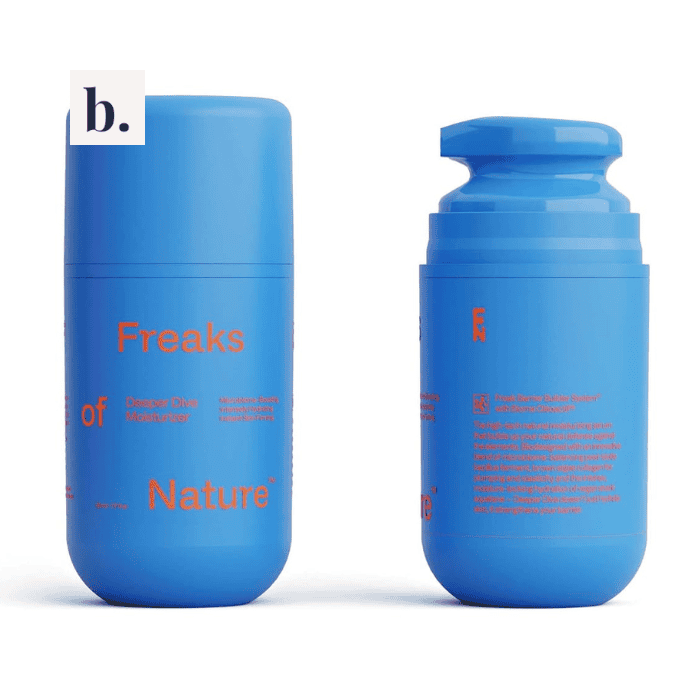
Freaks of Nature
Freaks of Nature Deeper Dive Hydrator
If you prefer an oil-based moisturizer, Deeper Dive offers a short squalane-and-plant-oil formula for surface softness. Its microbiome test does not establish clearer skin or repaired barrier function, so choose it for…
Read the BeautyBrief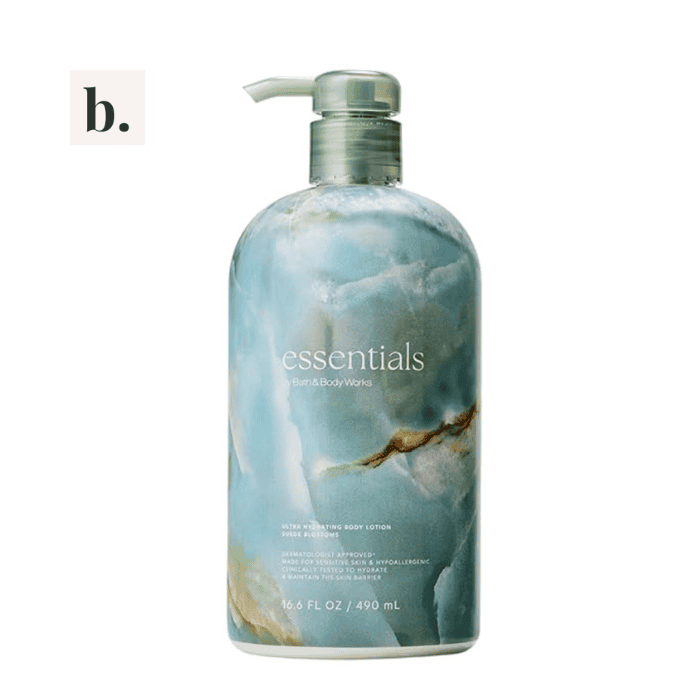
Bath & Body Works
Bath & Body Works Suede Blossoms Ultra Hydrating Body Lotion
If your body skin is normal or dry and you enjoy scented lotion, Suede Blossoms offers familiar humectants and emollients for everyday softness. Its hypoallergenic label does not guarantee fragrance tolerance, and…
Read the BeautyBrief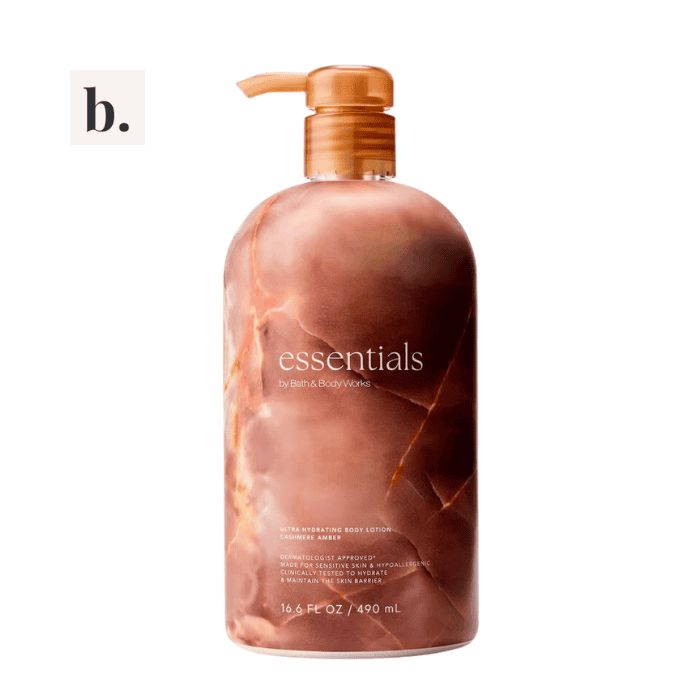
Bath & Body Works
Bath & Body Works Cashmere Amber Ultra Hydrating Body Lotion
If your body skin is normal or dry and you enjoy an amber fragrance, Cashmere Amber offers familiar humectants and emollients for everyday softness. Its hypoallergenic label does not guarantee fragrance tolerance,…
Read the BeautyBrief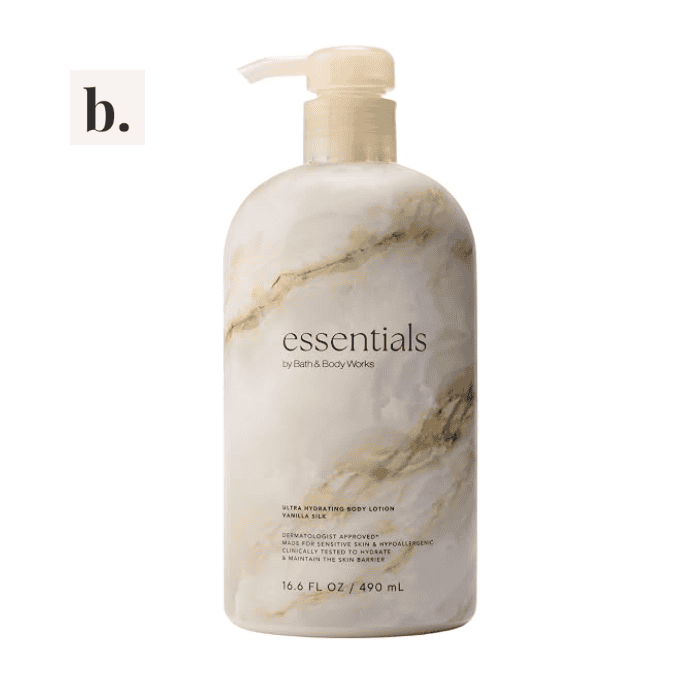
Bath & Body Works
Bath & Body Works Vanilla Silk Ultra Hydrating Body Lotion
If your body skin is normal or dry and you enjoy vanilla fragrance, Vanilla Silk combines humectants and emollients for everyday softness. Its hypoallergenic claim does not guarantee fragrance tolerance, and the…
Read the BeautyBrief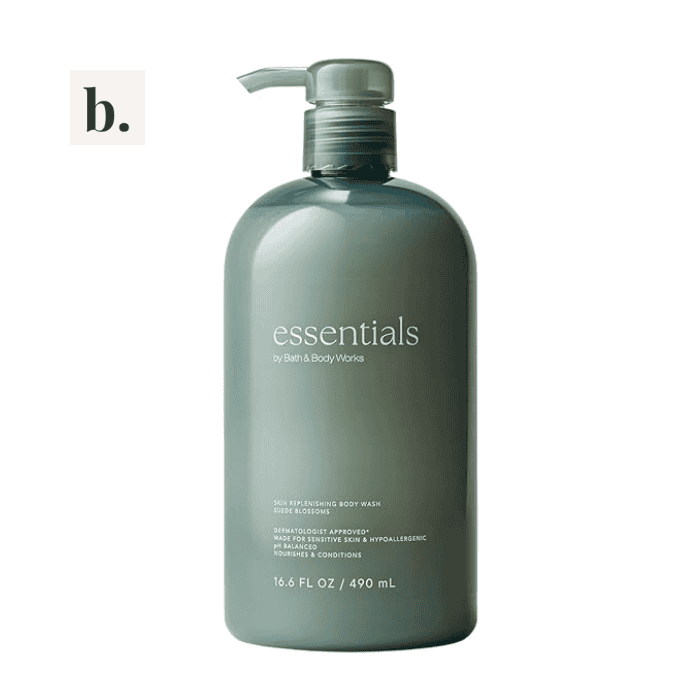
Bath & Body Works
Bath & Body Works Suede Blossoms Skin Replenishing Body Wash
If you enjoy sueded-jasmine fragrance and tolerate scented cleansers, this wash pairs a sulfate-free cleansing system with glycerin for comfort-focused daily use. Its hypoallergenic and dermatologist-approved positioning does not guarantee fragrance tolerance…
Read the BeautyBrief