

Best Dandruff Shampoo Ingredient: Selenium Sulfide vs. Ketoconazole vs. Zinc Pyrithione
At a glance
Dandruff shampoos can look similar on the shelf while relying on very different medicated actives. Selenium sulfide, ketoconazole, and zinc pyrithione each have evidence behind them, but the useful comparison depends on concentration, the finished formula, your symptom pattern, and how the shampoo is used. This Briefing explains what those differences mean before you choose.
If one dandruff shampoo has not helped much, another bottle with a different active ingredient may be worth considering. But not all dandruff shampoos tackle the same problem, and the concentration printed on the label does not tell you how well a formula will work on your scalp.
Selenium sulfide, ketoconazole, and zinc pyrithione each have clinical evidence behind them. Much of that research, however, tests particular formulas, strengths, and treatment schedules rather than every shampoo available to you.
Here is how to compare the evidence, understand where salicylic acid fits, and decide when a medicated shampoo makes sense—or when your scalp needs a different approach.
In this Briefing
- Which dandruff ingredient has the strongest evidence?
- Selenium sulfide: what it does
- Ketoconazole: what it does
- Zinc pyrithione: what it does
- Where salicylic acid fits
- What head-to-head studies actually show
- Why concentration does not tell the whole story
- What scalp-barrier repair claims need to prove
- Dandruff versus seborrheic dermatitis
- How to choose based on your scalp and hair
- When alternating shampoos makes sense
- When dandruff needs a dermatologist
Which dandruff shampoo ingredient has the strongest evidence?
That depends on what you mean by “strongest.”
If you mean the depth of clinical evidence for seborrheic dermatitis and moderate-to-severe dandruff, ketoconazole has one of the better-established records. A systematic review of randomized vehicle-controlled trials found topical ketoconazole effective for seborrheic dermatitis.[1]
But there is an important limitation when you shop: many of the strongest ketoconazole studies used 2% ketoconazole, while current U.S. nonprescription ketoconazole shampoo is sold at 1%.[2]
That means evidence for 2% ketoconazole should not automatically be treated as proof that every 1% OTC ketoconazole shampoo will produce the same result. One randomized study comparing the two concentrations found 2% ketoconazole more effective than 1% in severe dandruff and seborrheic dermatitis.[3]
Selenium sulfide complicates the picture further. Newer randomized trials found strong results for specific 1% and 0.6% selenium disulfide shampoos compared with 2% ketoconazole.[4][5]
So “ketoconazole is best” is too simple.
What does selenium sulfide do?
Selenium sulfide—also called selenium disulfide in some research—is an antifungal dandruff active used in medicated shampoos.
Its practical role is controlling flaking and scaling in dandruff and scalp seborrheic dermatitis, with performance depending on the concentration and finished shampoo.
In the United States, FDA regulations list 1% selenium sulfide and 0.6% micronized selenium sulfide as permitted OTC dandruff actives. Only the 1% strength is listed under the regulation for seborrheic dermatitis.[6]
Older comparative research found both 2% ketoconazole and 2.5% selenium sulfide substantially better than placebo for moderate-to-severe dandruff. Ketoconazole showed an early advantage in that trial and produced fewer reported adverse effects, but both active shampoos reduced dandruff, itching, and irritation.[7]
A randomized 2024 study in 64 adults with moderate-to-severe scalp seborrheic dermatitis compared a 1% selenium disulfide shampoo with 2% ketoconazole. After four weeks, severity improved by 71% with selenium disulfide and 69% with ketoconazole. Both performed well, while the selenium shampoo received higher ratings for cosmetic acceptability. The study was funded by Vichy Laboratoires, and two authors were Vichy employees, which is relevant when interpreting the findings.[4]
A 2026 randomized double-blind trial involving 87 people compared 0.6% micronized selenium disulfide with 2% ketoconazole for six weeks. Both groups showed large reductions in scaling and symptoms, with no significant efficacy difference between them. Participants rated the selenium formula more favorably on several hair-feel measures. One author was affiliated with Vichy Laboratoires, so the cosmetic-preference findings deserve that context.[5]
What this means for you: Selenium sulfide is not simply a weaker alternative to ketoconazole. Certain modern selenium formulas have performed very well in comparative studies. But those results belong to the tested formulas, not automatically to every shampoo containing the same percentage.
What does ketoconazole do?
Ketoconazole is an antifungal that targets Malassezia, a group of yeasts associated with dandruff and seborrheic dermatitis.
Ketoconazole has a substantial record of clinical research for dandruff and scalp seborrheic dermatitis. A systematic review of topical antifungals found that 2% ketoconazole performed better than its inactive shampoo base for seborrheic dermatitis.[1]
A large study of 575 people with moderate-to-severe dandruff or seborrheic dermatitis found a strong initial response to 2% ketoconazole. Among responders who entered the maintenance phase, weekly ketoconazole also reduced relapse compared with placebo.[8]
Ketoconazole has also beaten zinc pyrithione in a direct comparison.
In a randomized study involving 331 participants with severe dandruff or seborrheic dermatitis, 2% ketoconazole produced a 73% improvement in total dandruff severity after four weeks versus 67% for 1% zinc pyrithione. Recurrence was also lower after ketoconazole in that study.[9]
The important limitation
A large part of this evidence involves 2% ketoconazole.
That concentration is not interchangeable with the 1% ketoconazole shampoo you can buy without a prescription in the United States.
The evidence still makes ketoconazole a well-supported active. It just means you should look at the concentration rather than treating every ketoconazole shampoo as equivalent.
What does zinc pyrithione do?
Zinc pyrithione has antifungal and antimicrobial activity and has been used in dandruff shampoos for decades.
In the United States, FDA regulations allow pyrithione zinc at 0.3% to 2% in wash-off dandruff products. Concentrations from 0.95% to 2% are also included for wash-off seborrheic-dermatitis products.[6]
Zinc pyrithione works—but its story illustrates why looking only at the active percentage can be misleading.
A randomized controlled study found that two shampoos containing zinc pyrithione at different scalp-deposition levels did not perform equally. The formula that deposited more zinc pyrithione onto the scalp produced greater antifungal activity and better dandruff control.[10]
Another randomized trial involving 620 participants similarly found that a zinc-pyrithione formula designed to improve active delivery outperformed another zinc-pyrithione-based system on flaking and inflammatory markers. The study was conducted by researchers affiliated with Procter & Gamble, so it is most useful for demonstrating the importance of formulation rather than proving superiority of one commercial product across the category.[11]
What this means for you: A shampoo with “1% zinc pyrithione” on the label is not automatically equivalent to another shampoo with the same concentration.
The vehicle—the rest of the formula—can determine how much of that active actually reaches and remains on the scalp.
Where does salicylic acid fit in a dandruff routine?
If your scalp has flakes that cling to the skin or a buildup of scale and oil, salicylic acid helps loosen and shed that buildup. It is a keratolytic (scale-removing) ingredient. Selenium sulfide, ketoconazole, and zinc pyrithione instead have antifungal activity relevant to Malassezia, a yeast associated with dandruff.
Salicylic acid is still a recognized U.S. OTC dandruff active: FDA lists it at 1.8% to 3% for dandruff and scalp seborrheic dermatitis. But removing visible flakes is not the same as directly targeting the yeast associated with dandruff. You may need an antifungal active when scaling keeps returning, depending on the underlying condition and your scalp’s response.[6]
The October 2026 Head & Shoulders Scalp Care Collection illustrates the difference. Its official U.S. Scalp Purify product page lists 1.8% salicylic acid to loosen flakes and buildup, while the company says other regimens use 1% zinc pyrithione for dandruff. These are different active ingredients doing different jobs. The marketed HydraSC+ complex percentage does not tell you the concentration of each medicated active.[12]
What this means for you: Choose salicylic acid when lifting stubborn flakes and buildup is the job; choose an antifungal-focused formula when you need to manage recurrent dandruff associated with Malassezia. If your scalp is easily irritated, follow label directions rather than adding multiple exfoliating treatments at once.
Selenium sulfide vs. ketoconazole vs. zinc pyrithione
| If your priority is… | What the evidence suggests |
|---|---|
| Strong clinical evidence for moderate-to-severe dandruff or seborrheic dermatitis | Ketoconazole has a substantial research record, especially at 2%. |
| A strong OTC option with newer comparative data | Selenium sulfide has increasingly good head-to-head evidence, including 0.6% and 1% formulations. |
| Everyday dandruff control | Zinc pyrithione is well established, but formula delivery matters substantially. |
| Hair feel and cosmetic usability | Look at the finished shampoo rather than the active alone; newer selenium formulas have performed well on cosmetic ratings in some trials. |
| A shampoo that stopped working | Switching or alternating active ingredients can be reasonable rather than simply buying a stronger percentage of the same active. |
This is not a ranking.
Studies compare different strengths, formulas, schedules, populations, and endpoints. A 2% prescription-strength ketoconazole shampoo studied in severe seborrheic dermatitis cannot be cleanly ranked against every OTC zinc pyrithione or selenium sulfide shampoo on a shelf.
Why concentration does not tell the whole story
Higher percentage does not automatically equal better dandruff control.
The shampoo has to deliver the active ingredient to the scalp during a relatively short contact period. Particle size, suspension, deposition, surfactants, contact time, and how thoroughly the formula stays on the scalp all influence performance.
Zinc-pyrithione research demonstrates this particularly well: shampoos with better scalp deposition produced better clinical results even when the headline active ingredient was the same.[10]
Micronization can also change how an ingredient behaves, which helps explain why a 0.6% micronized selenium-disulfide formula cannot be judged solely by comparing its percentage with a 1% or 2.5% selenium formula.
This is why you should judge the finished shampoo, not just the Drug Facts percentage.
What does a scalp-barrier repair claim actually prove?
A dandruff-prone scalp can have a disrupted protective barrier, which helps explain why itch, dryness, and irritation sometimes continue even when flakes improve. Barrier care and antifungal dandruff control can therefore be complementary, but fewer flakes and a moisturized feel do not automatically prove that a product repaired the scalp barrier.
For a meaningful barrier-repair claim, look for a controlled human study of the finished shampoo or complete regimen, with objective measures such as transepidermal water loss (TEWL, how much water escapes through the skin) and scalp hydration. Useful reporting also tells you the number of participants, what the formula was compared against, when results were measured, whether they persisted, and whether the effect was distinct from ordinary conditioning or reduced flaking. A past controlled scalp-care study measured TEWL and hydration alongside flaking rather than relying solely on participants saying their scalp felt better.[13]
Head & Shoulders claims that its new HydraSC+ regimens remove visible flakes and repair the scalp barrier. Its October 2026 announcement does not disclose enough about participant numbers, comparison groups, or objective barrier measurements to independently assess those claims. For you, a claim that your scalp feels less dry is not the same as evidence that the exact regimen measurably repaired its barrier.[12]
What this means for you: If dandruff treatment leaves your scalp tight or dry, a gentler or more moisturizing formula matters. Just keep the buying questions separate: Did it reduce your flakes? Did it improve measurable barrier function? And was that shown for the exact product you’re considering?
Are dandruff and seborrheic dermatitis the same thing?
They overlap, but they are not always used interchangeably.
Dandruff generally refers to scalp flaking, sometimes with itch, without the more obvious inflammation associated with seborrheic dermatitis.
Seborrheic dermatitis can include redness, inflammation, itching, greasy or adherent scale, and involvement outside the scalp, including areas around the eyebrows, nose, ears, beard, and chest.
Both conditions involve more than simply “too much fungus,” and persistent or inflamed symptoms can require a clinician to distinguish seborrheic dermatitis from other scalp conditions.[14][15]
Malassezia plays an important role, but scalp barrier function, inflammation, oil production, and individual susceptibility also matter.
That helps explain why an antifungal shampoo can work extremely well for one person without completely solving another person’s symptoms.
Which ingredient should you try first?
Start with the severity and pattern of your scalp symptoms rather than the ingredient with the strongest marketing claim.
For ordinary recurring flakes and itch, any of these three actives can be a reasonable starting point when used according to the label.
For persistent or more inflammatory symptoms, ketoconazole and selenium sulfide have particularly relevant comparative evidence.
If a zinc-pyrithione shampoo works well and is comfortable enough to use consistently, there is no evidence-based reason to abandon it simply because another active sounds stronger.
And if a shampoo is not controlling the problem, changing active ingredients can make more sense than continually increasing use of the same formula.
Should you alternate dandruff shampoos?
Sometimes.
The American Academy of Dermatology advises that if one dandruff shampoo is not working, trying or rotating products with different active ingredients can be useful. Available dandruff actives include zinc pyrithione, selenium sulfide, ketoconazole, salicylic acid, sulfur, and coal tar.[14]
Alternating is different from layering several medicated shampoos into the same wash.
Follow each product’s directions, including how often it should be used and how long it should remain on the scalp before rinsing.
The AAD also notes that wash frequency should reflect hair texture. People with straight or oily hair may shampoo much more frequently, while people with curly or tightly coiled hair may use dandruff shampoo less often and focus application on the scalp to limit dryness of the hair lengths.[14]
When is dandruff more than a shampoo-shopping problem?
A medicated shampoo should not be expected to diagnose every flaky scalp.
See a dermatologist when scalp symptoms are severe, painful, unusually inflamed, spreading beyond typical seborrheic areas, associated with hair loss, producing thick plaques or sores, or failing to improve despite appropriate use of dandruff shampoo.
Psoriasis, eczema, contact dermatitis, fungal infections, and other scalp conditions can resemble dandruff.
For diagnosed seborrheic dermatitis, dermatologists may also use prescription antifungal treatments, anti-inflammatory medications, or other therapies when shampoo alone is not enough.[15]
The BB Perspective
You do not need the strongest-sounding ingredient claim to find a dandruff shampoo that fits your scalp.
Ketoconazole has a substantial clinical evidence base, particularly at 2%. Specific 0.6% and 1% selenium sulfide formulas have also achieved substantial improvement in studies comparing them with 2% ketoconazole. Zinc pyrithione has evidence of its own, but research shows why delivery from the finished shampoo matters as much as the label percentage.
If your main problem is stubborn scale and buildup, salicylic acid addresses that differently from antifungal actives. If your scalp feels dry or irritated, the overall formula and its tolerability also matter. Do not pay more for a “barrier repair” claim without meaningful testing of the finished product or regimen.
The useful buying rule is simpler: choose the active that fits your scalp problem, then judge the actual shampoo—not just the ingredient percentage.
If your shampoo is not controlling flakes or itch despite proper use, trying a different medicated active can be reasonable. Persistent or worsening inflammation deserves a dermatologist’s assessment rather than repeated shampoo purchases.
Last reviewed: October 2026
Sources
Okokon EO, Verbeek JH, Ruotsalainen JH, Ojo OA, Bakhoya VN. Topical Antifungals for Seborrhoeic Dermatitis. Cochrane Database of Systematic Reviews. 2015;(5):CD008138. doi:10.1002/14651858.CD008138.pub3. PMID: 25933684.
This Cochrane review included 51 studies with 9,052 participants. Trials supported the use of 2% ketoconazole over placebo, although short follow-up, variation between studies, and industry involvement limit some comparisons. The findings do not establish that every strength or shampoo formula works equally well. Return to citation.
DailyMed. Nizoral — Ketoconazole Shampoo. Label updated March 17, 2026. Accessed September 2026.
This U.S. Drug Facts label identifies ketoconazole 1% as the active dandruff ingredient. A current OTC label does not establish equivalence with the 2% shampoos studied in many clinical trials. Return to citation.
Piérard-Franchimont C, Piérard GE, Arrese JE, De Doncker P. Effect of ketoconazole 1% and 2% shampoos on severe dandruff and seborrhoeic dermatitis: clinical, squamometric and mycological assessments. Dermatology. 2001;202(2):171–176. doi:10.1159/000051628. PMID: 11306850.
This randomized, open-label study reported better results with 2% than 1% ketoconazole for severe dandruff and scalp seborrheic dermatitis. The findings apply to the tested products and population. Return to citation.
Barbosa V, et al. A Comparative Randomized Clinical Study Assessing the Efficacy of a 1% Selenium Disulfide-Based Shampoo versus 2% Ketoconazole Shampoo in Subjects with Moderate to Severe Scalp Seborrheic Dermatitis. Skin Appendage Disord. 2024;10(6):497–504. doi:10.1159/000539209.
Both tested shampoos improved symptoms over four weeks in 64 adults. Vichy Laboratoires funded the study, and two authors were Vichy employees. Those relationships matter when weighing cosmetic-preference findings. Return to citation.
Farris PK, Barbosa V, Houshmand EB, Kovylkina N. Beyond Efficacy: 0.6% Selenium Disulfide Shampoo Matches 2% Ketoconazole for Seborrheic Dermatitis with Superior Cosmesis. J Drugs Dermatol. 2026;25(4):338–344. doi:10.36849/jdd.9476.
This six-week randomized study included 87 participants and found no statistically significant efficacy difference between the tested 0.6% micronized selenium disulfide and 2% ketoconazole shampoos. Participants favored the selenium formula on several hair-feel measures. No statistically significant difference does not prove that all selenium shampoos are equivalent to ketoconazole. Return to citation.
Electronic Code of Federal Regulations. 21 CFR § 358.710: Active Ingredients for the Control of Dandruff, Seborrheic Dermatitis, or Psoriasis. Current through September 25, 2026. Accessed September 2026.
This U.S. regulation lists concentration ranges for pyrithione zinc, salicylic acid, and selenium sulfide in dandruff products, with separate conditions for seborrheic dermatitis. Regulatory permission does not establish which finished shampoo works best for you. Return to citation.
Danby FW, Maddin WS, Margesson LJ, Rosenthal D. A randomized, double-blind, placebo-controlled trial of ketoconazole 2% shampoo versus selenium sulfide 2.5% shampoo in the treatment of moderate to severe dandruff. J Am Acad Dermatol. 1993;29(6):1008–1012. doi:10.1016/0190-9622(93)70282-X.
Both 2% ketoconazole and 2.5% selenium sulfide outperformed placebo in this trial. Ketoconazole showed an early advantage and fewer reported adverse effects; the findings concern those concentrations and formulas. Return to citation.
Peter RU, Richarz-Barthauer U. Successful treatment and prophylaxis of scalp seborrhoeic dermatitis and dandruff with 2% ketoconazole shampoo: results of a multicentre, double-blind, placebo-controlled trial. Br J Dermatol. 1995;132(3):441–445. doi:10.1111/j.1365-2133.1995.tb08680.x.
In a study initially treating 575 people with 2% ketoconazole, most participants improved. Among those entering maintenance, weekly use reduced relapse compared with placebo. An author was affiliated with Janssen Research Foundation. Return to citation.
Piérard-Franchimont C, Goffin V, Decroix J, Piérard GE. A multicenter randomized trial of ketoconazole 2% and zinc pyrithione 1% shampoos in severe dandruff and seborrheic dermatitis. Skin Pharmacology and Applied Skin Physiology. 2002;15(6):434–441. doi:10.1159/000066452. PMID: 12476017.
This study found somewhat greater severity improvement and lower recurrence with 2% ketoconazole than with 1% zinc pyrithione in the tested severe-dandruff or seborrheic-dermatitis population. It does not rank all available shampoos. Return to citation.
Bailey P, et al. A double-blind randomized vehicle-controlled clinical trial investigating the effect of ZnPTO dose on the scalp vs. antidandruff efficacy and antimycotic activity. Int J Cosmet Sci. 2003;25(4):183–188. doi:10.1046/j.1467-2494.2003.00183.x.
This study compared a vehicle with low- and high-depositing zinc pyrithione shampoos. The high-depositing formula achieved better antifungal and dandruff outcomes, illustrating why the complete shampoo matters. Authors worked for Unilever Research & Development. Return to citation.
Schwartz JR, Bacon RA, Shah R, Mizoguchi H, Tosti A. Therapeutic efficacy of anti-dandruff shampoos: a randomized clinical trial comparing products based on potentiated zinc pyrithione and zinc pyrithione/climbazole. Int J Cosmet Sci. 2013;35(4):381–387. doi:10.1111/ics.12055.
This 620-participant trial found better flaking and epidermal histamine outcomes with a zinc-pyrithione formula designed to improve delivery than with a zinc pyrithione–climbazole formula. Industry-affiliated investigators conducted the study. Return to citation.
Procter & Gamble / Head & Shoulders. Head & Shoulders Launches All-New Scalp Care Collection to Prove Healthier Hair Starts at the Scalp. Company press announcement distributed through Business Wire, October 15, 2026. See also official Scalp Purify product information.
The company announced a scalp-care collection and described its own flake and barrier-repair claims. The linked official U.S. product page identifies 1.8% salicylic acid in the Scalp Purify pre-shampoo; the marketing name of a complex is not the percentage of that active. The announcement does not provide sufficient clinical methods to independently establish barrier repair. Return to citation.
Harding CR, Matheson JR, Hoptroff M, et al. A high glycerol-containing leave-on scalp care treatment to improve dandruff. Skinmed. 2014;12(3):155–161. PMID: 25134312.
This eight-week controlled study measured scalp hydration and transepidermal water loss in people using a glycerol-rich leave-on scalp treatment. It shows that barrier outcomes can be measured, not that the newly marketed Head & Shoulders regimen achieves the same results. Return to citation.
American Academy of Dermatology. How to treat dandruff. Last updated December 11, 2023.
AAD explains how to use dandruff shampoos, when trying a different active may help, and how shampoo frequency can differ with hair texture. Return to citation.
American Academy of Dermatology Association. Seborrheic Dermatitis: Diagnosis and Treatment. Last updated May 14, 2024. Accessed September 2026.
AAD explains when medical assessment and treatments beyond OTC shampoo are appropriate for persistent or inflamed seborrheic dermatitis. Return to citation.
Related product BeautyBriefs
These BeautyBriefs cover products relevant to the needs discussed in this Beauty Briefing. Inclusion here reflects topic relevance, not a rating or endorsement.
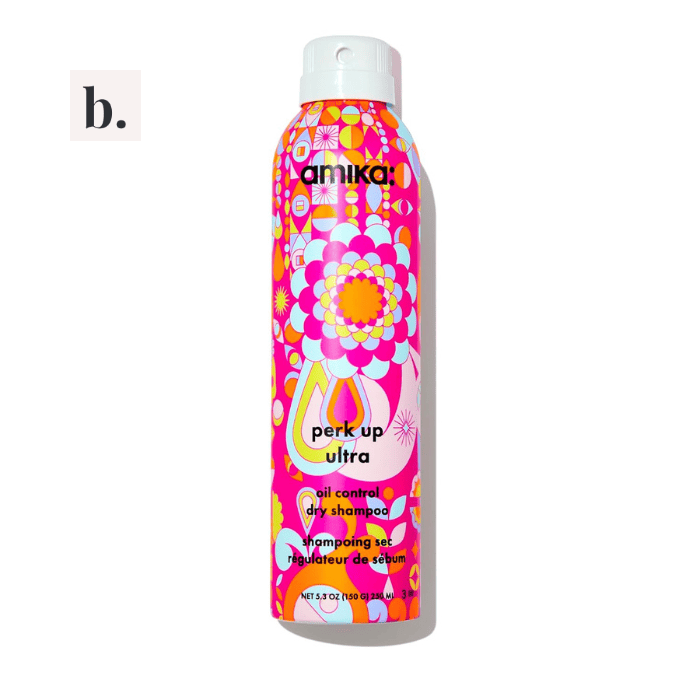
amika
amika Perk Up Ultra Oil Control Dry Shampoo
If your scalp gets greasy quickly, Perk Up Ultra offers a concentrated starch-and-silica refresh between wet washes. The dry aerosol and fragrance narrow its fit for easily irritated scalps, and the stronger…
Read the BeautyBrief
Alchemy 21/12
Alchemy 21/12 AHK Peptide Hair & Scalp Serum
If you want a lightweight scalp serum with disclosed copper-peptide concentrations, this formula offers a coherent cosmetic conditioning approach. It has not been shown to regrow hair in a controlled human study,…
Read the BeautyBrief