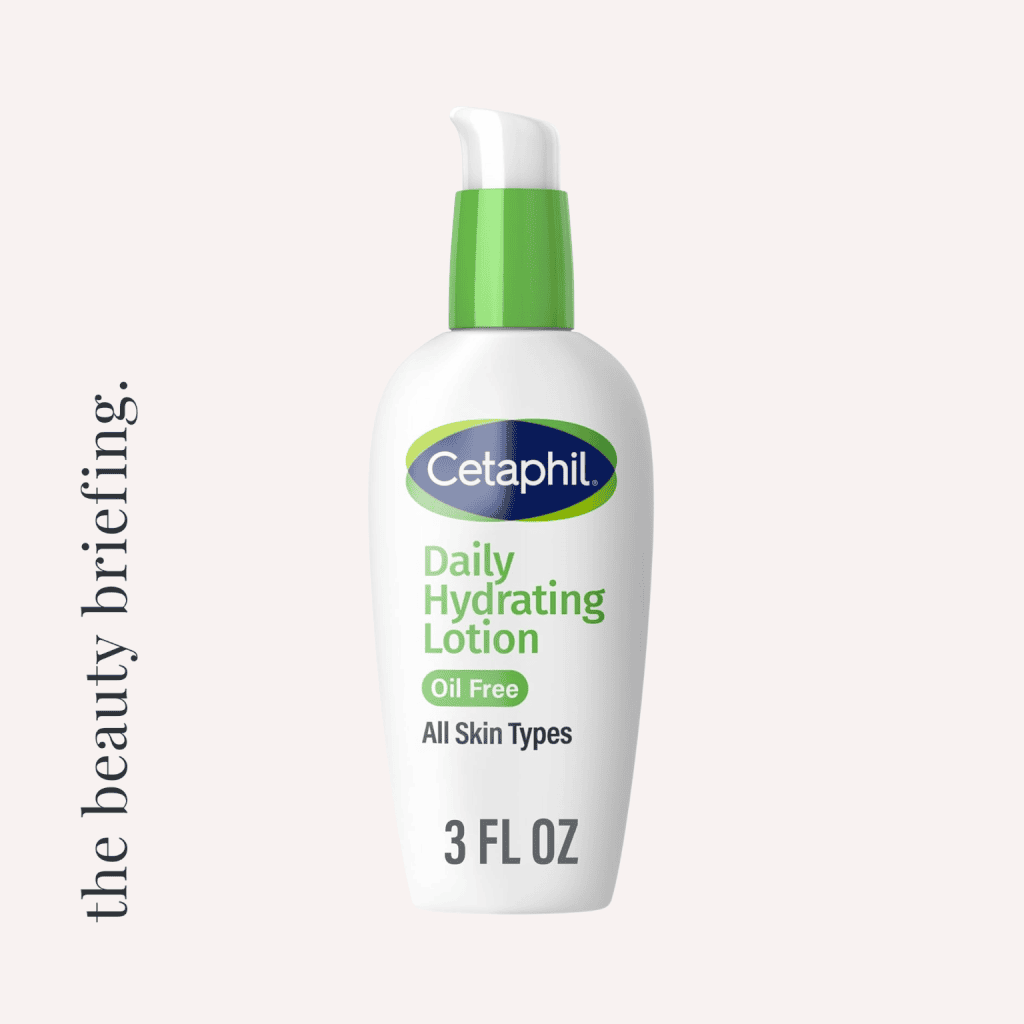
Cetaphil Daily Hydrating Lotion Review
BeautyBrief™
Brand
Cetaphil
Product
Daily Hydrating Lotion
Claims check
You get lightweight moisturizing support from hydroxyethyl urea and other humectants with product-specific hypoallergenic, non-comedogenic and dermatologist-tested claims, but limited public detail on 24-hour performance.
Shopper fit
- Normal
- Combination
- Oily
- Sensitive
Formula flags
- Silicones
Shopper preferences
- Non-Comedogenic
- Dermatologist-Tested
- Hypoallergenic
Key ingredients
| Hydroxyethyl Urea | High-listed water-binding ingredient for lightweight hydration; its presence does not establish exfoliating treatment. |
|---|---|
| Glycerin | Adds established humectant support and reinforces the hydration-focused formula. |
| Hydrolyzed Hyaluronic Acid | Adds water-binding support but does not by itself establish the finished product's 24-hour hydration claim. |
| Sodium PCA | Adds natural-moisturizing-factor-style humectant support within the broader hydration system. |
| Cyclopentasiloxane | A silicone that supports the lotion's quick-spreading feel. |
Price tier
$ Budget
Value check
At the Budget tier, you pay for light oil-free hydration and clear sensitive-skin shopper attributes rather than a rich protective balm.
Where to buy
We may earn a commission through these links at no additional cost to you. This does not affect our BeautyBrief.
Bottom line
If you prefer fragrance-free lightweight moisture, Cetaphil offers useful Budget value with documented shopper-fit claims. If persistent dryness needs greater occlusion, a richer cream may be better.
If you prefer a light lotion instead of a rich cream, Cetaphil Daily Hydrating Lotion combines hydroxyethyl urea, glycerin, hydrolyzed hyaluronic acid and sodium PCA in an oil-free moisturizer with a quick-spreading feel.
Its advantage is straightforward hydration for combination and sensitive skin, not a clinically documented improvement in aging or an absolute guarantee against irritation.
What it claims
Cetaphil calls this a light, oil-free face lotion that provides immediate hydration and locks in moisture for up to 24 hours. It identifies the exact formula as hypoallergenic, dermatologist tested, non-comedogenic and fragrance-free.[1]
The public listing does not publish full methods or a comparator for the 24-hour hydration claim, so its duration remains a manufacturer-reported outcome.
Claims vs. formula
Hydroxyethyl urea is high in the INCI and adds water-binding support, reinforced by glycerin, hydrolyzed hyaluronic acid, sodium PCA and erythritol. Dicaprylyl carbonate and glyceryl stearate add emollient support without creating the heavy finish of a rich cream.
Cyclopentasiloxane is a silicone that helps the lotion spread quickly and feel light. Oil-free does not mean no emollience, and silicone presence alone does not establish pore clogging.
Research on glycerin supports the general hydrating mechanism, but it is not a trial of this finished Cetaphil lotion.[2]
Ingredients that matter
Hydroxyethyl urea and glycerin provide the key humectant functions, while hydrolyzed hyaluronic acid and sodium PCA add to the water-binding system. Cyclopentasiloxane and the light ester base support the smooth, quick-absorbing finish.
These ingredients explain the lotion’s everyday moisturizing role rather than a specific treatment of eczema, pigmentation or wrinkles.

Glycerin
If your skin feels dry or tight, glycerin helps your skin hold moisture. You don't need a high percentage or a separate serum when your moisturizer already works well.
Read the IngredientBrief
Hyaluronic Acid
If your skin feels dry or tight, hyaluronic acid helps your skin hold moisture. You don't need several HA forms or a separate serum when your moisturizer already hydrates well.
Read the IngredientBrief
Sodium PCA
Sodium PCA is a well-established humectant and component of skin's natural moisturizing system. It supports hydration inside a balanced formula but is highly replaceable and usually does not need a…
Read the IngredientBriefSafety and regulatory context
Cetaphil expressly calls this exact product hypoallergenic, but the FDA does not define a standardized hypoallergenic test or threshold. That claim cannot guarantee no allergic reaction.[3]
The non-comedogenic and dermatologist-tested attributes are likewise product-specific shopping information, not a promise that every user will tolerate it.
What to expect in the short term
You get an ultra-light lotion designed to soften and hydrate without a greasy cream texture. It may layer comfortably beneath sunscreen or makeup, while your actual moisture retention depends on your skin and routine.
What to expect over time
Daily use supplies consistent surface hydration when a light lotion is sufficient. If your skin remains flaky or tight, a more occlusive product is a more useful next comparison than expecting a longer-duration claim to solve persistent dryness.
Who it fits
This makes most sense for normal, combination, oily or sensitive skin that prefers fragrance-free, oil-free moisturizer. Dry skin can also benefit, but the texture may be too light when extra barrier sealing is needed.
Compare before you buy
At the Budget tier, Cetaphil’s value comes from familiar humectants, a light silicone-containing base and well-documented product-preference claims. Compare richer creams for chronic dryness and lighter gels if you want almost no emollient feel.
Final Assessment
Cetaphil Daily Hydrating Lotion is a practical Budget moisturizer when your priority is light, fragrance-free hydration with clear non-comedogenic and dermatologist-tested positioning. The exact-product hypoallergenic label adds useful context but does not guarantee tolerance, and the 24-hour claim lacks a publicly assessable study protocol; very dry skin may need a more substantial cream.
Where to buy
Choose a retailer to view current pricing and availability.
We may earn a commission through these links at no additional cost to you.
Last reviewed: October 2026
Sources
- Cetaphil, Daily Hydrating Lotion official U.S. claims and full ingredient list. Read source. Accessed October 15, 2026.
- Fluhr et al., glycerol and skin barrier research, British Journal of Dermatology (2008). Read source. Accessed October 15, 2026.
- FDA, Cosmetics Safety Q&A: Hypoallergenic. Read source. Accessed October 15, 2026.